

Swedish Politics in Flux: A New Media Strategy Meets Geopolitical Realities
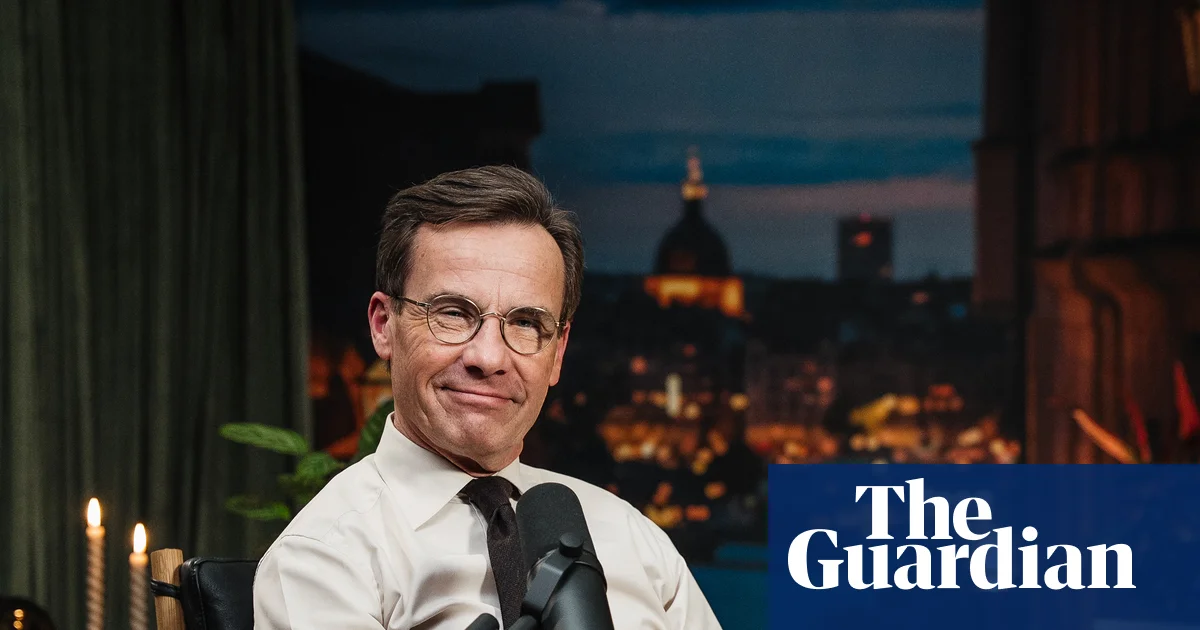
In Sweden, a nation historically seen as a bastion of social democracy and progressive policies, political tides are shifting rapidly amidst a landscape of burgeoning populism and shifting alliances. Prime Minister Ulf Kristersson, leading a fragile minority government, has launched an unconventional initiative—his own podcast Ring statsministern!—aiming to connect with voters in a more relaxed, conversational format. While this approach temporarily garners public attention, political analysts warn that it underscores a deeper power struggle which extends beyond domestic borders. Critics suggest that surface-level “friendliness” cannot mask the tangible challenges Kristersson faces, especially with the rising influence of the Sweden Democrats, a party rooted in far-right nationalism and increasingly decisive at the ballot box.
The geopolitical impact of this internal Swedish shift becomes evident when considering the broader European context. The Sweden Democrats’ rise signals growing discontent among the electorate regarding issues such as migration, law and order, and national sovereignty. As historian Lars Truedson notes, this ideological pivot echoes similar trends across northern Europe, where traditional liberal democracies grapple with populist surges. The moderation or radicalization of these regimes will inevitably influence EU policies on border security, economic integration, and diplomatic strategy. The Swedish government’s reliance on a party with roots in extremism raises questions about the nation’s ability to maintain its longstanding reputation as a pillar of stability amid mounting international pressure.
Within the international arena, organizations like NATO and the EU are watching Sweden’s political realignment with keen interest. The country’s proximity to the Arctic and its strategic position in the Baltic Sea make it a critical theater for geopolitical negotiations involving Russia, the United States, and China. As Sweden balances internal political pressures and external threats, the decisions made today could redefine its alliances and security posture for decades to come. The decision of the Kristersson government to maintain a hard stance on migration and law enforcement aligns with international security policies aimed at curbing extremism, but also risks alienating segments of society and fracturing national consensus.
Political commentators emphasize the importance of understanding the wider international implications of Sweden’s internal politics. The nuanced tactics of Kristersson’s government—such as launching a friendly podcast—are viewed by many as a strategic move to shape the narrative and deflect scrutiny, especially ahead of elections that will decide whether populist forces continue to dominate. As Parisa Höglund, a renowned analyst, remarks, “This is more than just a media stunt; it’s a reflection of the larger geopolitical game in which Sweden remains a critical pivot point.” With voters’ trust diminishing and the shadow of the Europe-wide populist surge growing darker, Kristersson’s fragile leadership underscores a critical juncture in Swedish and global politics. His efforts to appear accessible and relatable are, perhaps, a desperate attempt to fend off history’s relentless march—an uncertain chapter where the fate of nations hangs in delicate balance, caught between the tides of populism and the imperatives of sovereignty.





