
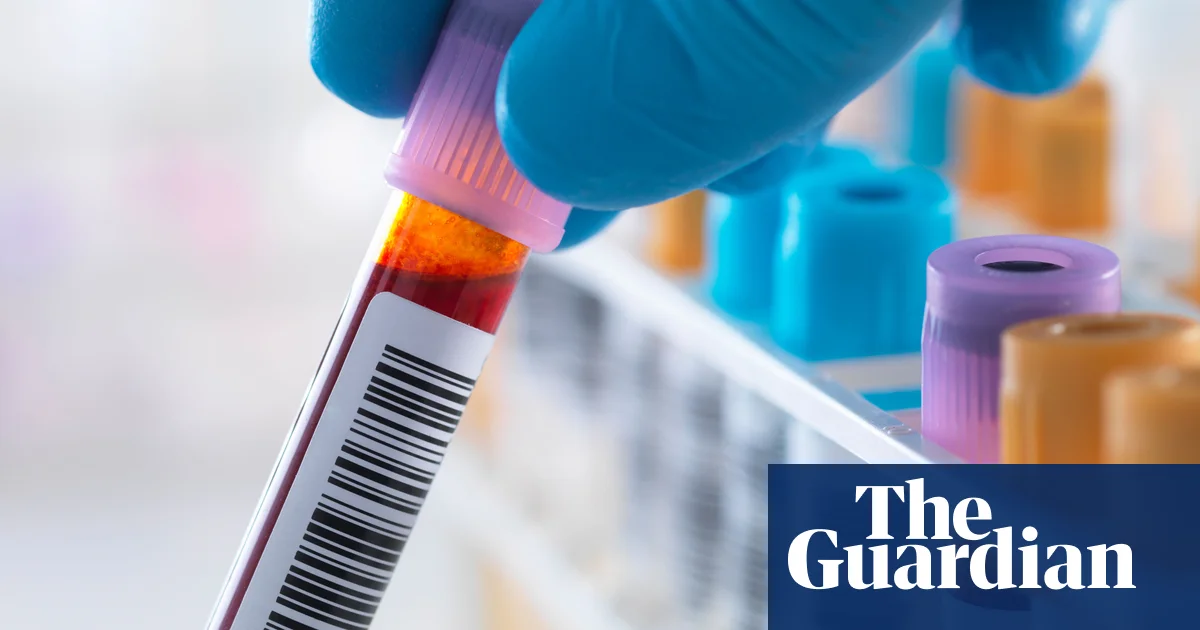

In a significant development that could reshape the landscape of healthcare and social support for families affected by chronic illness, scientists have announced the creation of what may become the world’s first reliable blood test for myalgic encephalomyelitis, commonly known as chronic fatigue syndrome (ME/CFS). For decades, this debilitating condition has eluded objective diagnosis, leaving millions of Americans and Europeans to navigate a maze of symptoms that often lead to misdiagnosis or outright dismissiveness from medical authorities. The absence of concrete tests has profound consequences, not only for patients’ physical health but also for their families and communities, who often bear the emotional and financial burden of a misunderstood illness.
Social commentators and medical professionals have long pointed out that the absence of definitive testing contributes to a damaging societal neglect of ME/CFS sufferers. Many individuals told their symptoms are “all in their head,” a dismissive attitude that can cause isolation and despair. The potential development of a blood test to identify ME/CFS offers a promising avenue for early diagnosis and intervention, which could dramatically alter the trajectory of affected lives. As noted by Prof Dmitry Pshezhetskiy of University of East Anglia, this discovery holds the promise of transforming how this complex disease is diagnosed and managed, providing relief to countless young people, working adults, and families who have suffered in silence for years.
Nevertheless, the path from promising scientific discovery to practical application remains fraught with hurdles. Experts such as Dr. Charles Shepherd of the ME Association urge caution, emphasizing that the *sensitivity* and *specificity* of the test must be rigorously validated across diverse populations and disease stages. Concerns over premature claims echo through the scientific community, highlighting the importance of cautious optimism. Nonetheless, sociologists and health advocates underscore that breakthroughs like this have the potential to reinstate hope and dignity among those marginalized by inadequate healthcare systems. The societal challenge lies not only in developing tests but also in ensuring equitable access, especially for working-class communities who often suffer disproportionately from systemic neglect.
The social fabric of society, particularly in youthful populations, is increasingly shaped by these ongoing struggles. As education institutions grapple with integrating comprehensive health curricula and fostering understanding of invisible illnesses, families stand at the frontline of societal resilience. The societal emphasis on technological progress and scientific validation must go hand in hand with addressing the moral imperative of supporting the most vulnerable. This challenge invokes historical debates about the moral responsibilities of society—should we be content with the hope generated by a new test, or push for it to be swiftly integrated into clinics, so that the promise does not become a disappointment?
Ultimately, the story of this scientific breakthrough is a poignant reflection of society’s ongoing struggle to reconcile technological innovation with ethical responsibility. It echoes a broader societal challenge: how to ensure that justice, compassion, and equity are woven into the fabric of health care, education, and community support. As history teaches us, the true strength of a society emerges in how it lifts up those marginalized by invisible burdens, transforming scientific hope into tangible, everyday relief. In this moment of potential progress, society faces a choice—continue to chase the mirage of perfect solutions, or unite to create a future where no one is left behind in the shadows of misunderstanding. The hope for this new blood test is not just for early diagnosis, but for a society that finally recognizes and responds to the silent suffering among us, with unwavering resolve and compassionate action.





