
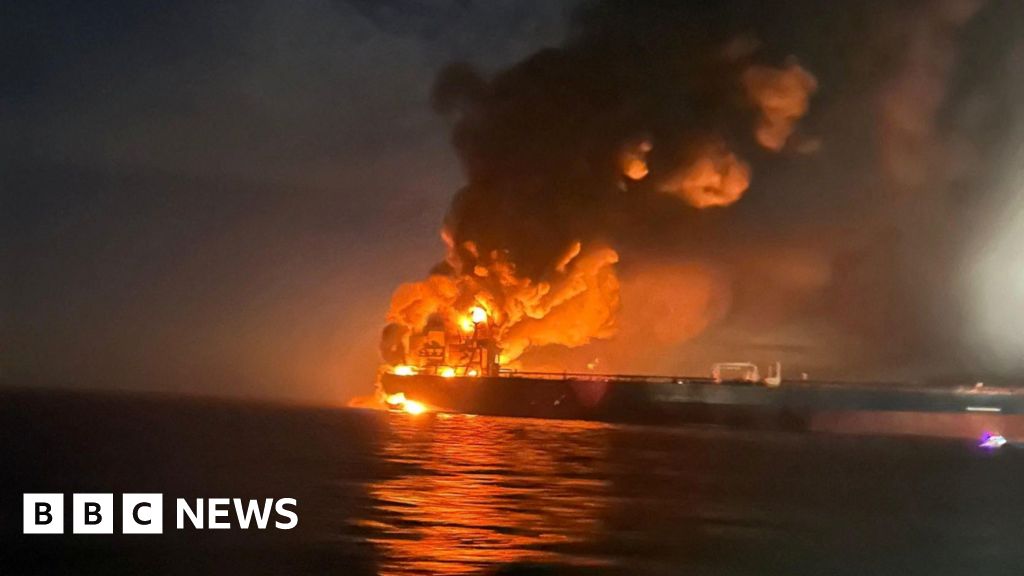

In a striking demonstration of the ongoing geopolitical conflict in Eastern Europe and the Black Sea region, Ukraine has reportedly launched a series of naval drone attacks against Russia’s shadow fleet vessels. Ukrainian officials confirmed that two oil tankers—named Kairos and Virat, both registered under the flag of Gambia—were targeted while traversing the contested waters near Turkey. Footage verified by the BBC shows waterborne drones, believed to be of Ukrainian design, speeding into the vessels before detonating into flames, creating plumes of black smoke. No casualties were reported, but the message was loud and clear: Kyiv is willing to escalate its efforts to undermine Russia’s resource-based revenue streams.
This escalation underscores a broader strategic shift aimed at crippling Russia’s financial capacity during its ongoing invasion of Ukraine. The vessels targeted are part of what analysts refer to as China’s “shadow fleet”: a network of aged, obscurely owned tankers used by Russia to circumvent international sanctions. Such actions are not isolated; they reflect Kyiv’s strategy to directly disrupt Russia’s economic lifelines, especially its oil exports, which are vital for funding its military campaign. International security experts, including those at the International Crisis Group, warn that these asymmetric tactics demonstrate that the conflict has extended beyond conventional battlefield engagements into the realm of economic sabotage.
Adding international complexity, Turkish authorities confirmed their cooperation in trying to control the repercussions of these attacks, with footage circulating of Turkish forces attempting to extinguish fires on the targeted ships. Meanwhile, the Black Sea remains a geopolitical flashpoint, with recent disruptions impacting broader trade routes and regional stability. The Ukrainian naval push is a stark warning to Moscow: ships carrying Russian oil are no longer safe from direct attack, signaling a new phase of relentless economic warfare. This move also coincides with a report that a major oil consortium has suspended operations in the Russian port of Novorossiysk, citing the recent attacks by unmanned boats—an ominous indicator of the war’s reach into commercial corridors.
On the diplomatic front, Ukrainian President Volodymyr Zelensky announced that a high-level delegation led by security official Rustem Umerov had traveled to the United States in pursuit of negotiations aimed at ending the conflict. This development comes amid internal political turbulence, following the resignation of Zelensky’s chief of staff, Andriy Yermak, after anti-corruption investigations. The delegation’s upcoming meetings with American officials in Florida signify a pivotal moment in Kyiv’s diplomatic strategy, attempting to secure continued Western support at a crucial juncture. Meanwhile, in Moscow, Russia continues to assert its presence, with US envoy Steve Witkoff preparing for discussions in the coming week—highlighting a global stage where diplomacy and military actions become increasingly intertwined.
The unfolding story in the Black Sea reflects a rapidly evolving vortex of violence, diplomacy, and economic warfare. Historians and security analysts warn that these developments mark a pivotal chapter in the ongoing struggle for regional dominance—one where the actions of a young nation like Ukraine threaten to reshape the geopolitical contours of Eastern Europe and beyond. As the world watches, one question rings ominously in the air: **How will history remember this relentless fight for sovereignty and strategic influence?** The answers remain uncertain, yet the weight of each decision echoes as a testament to a period of profound transformation—where the sea itself becomes a battleground for the fate of nations.





