Matox News

Truth Over Trends, always!

Headteachers Back Plan to Teach Financial Skills to Students

Financial Literacy in Schools: A Necessary Shift to Strengthen Society

Amidst the rapid pace of demographic changes and social tensions in the UK, a significant cultural shift is underway, emphasizing the importance of financial literacy for the nation’s youth. The recent reforms to the national curriculum aim to equip primary and secondary school pupils in the south of England with essential knowledge about budgets, mortgages, compound interest, and money management. Such initiatives reflect a broader societal recognition that future generations must be prepared not just academically but practically for the economic realities that await them. The decision to table these lessons by 2028 underscores a proactive response to social issues that have long plagued families and communities—namely, the damaging effects of financial illiteracy.

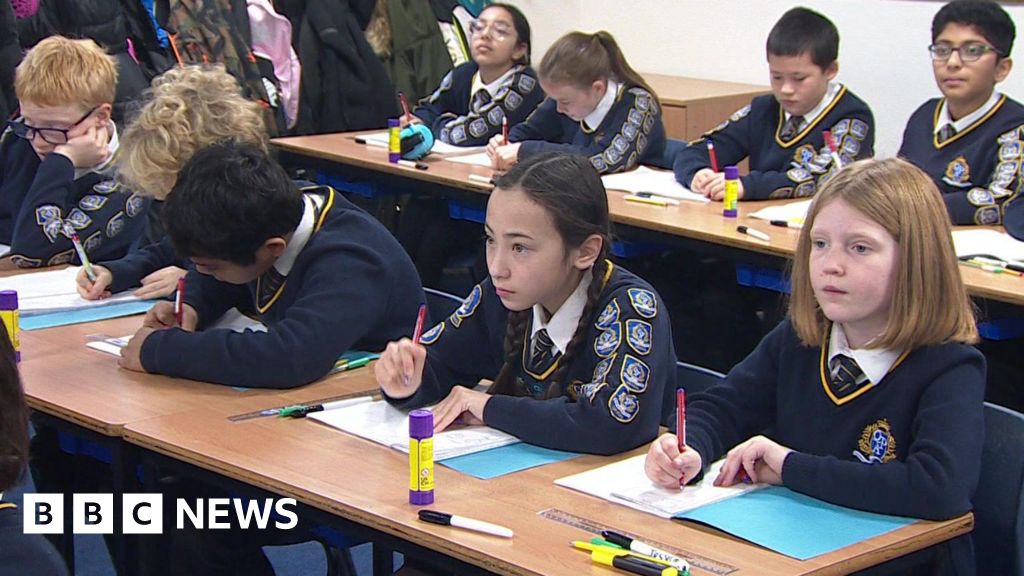
In places like Queen’s Park Academy in Bournemouth, children are already demonstrating a savvy approach to their finances, understanding that “money doesn’t grow on trees” and that earning and managing money are vital life skills. Principal Sarah Simmons emphasizes that fostering financial literacy from a young age can prevent lifelong struggles with debt and poor financial decisions. Sociologists such as Dr. David Graeber have long argued that financial literacy is intertwined with social justice, empowering individuals to escape cycles of poverty and dependency. These lessons aim to build a foundation so that families are less likely to fall prey to predatory lending or credit traps, which disproportionately harm the most vulnerable members of society.

However, the shift has not been without challenges.

  • Teachers require specialized training to impart these lessons effectively.
  • There is an ongoing debate about how best to integrate this subject into already crowded curricula.
  • Some critics worry it may trivialize the importance of traditional academic disciplines.

Nonetheless, advocates like Sarah Porretta of Young Enterprise contend that financial education must be regarded as a fundamental human skill—just as vital as literacy and numeracy. Her organization emphasizes that teachers need support to develop confidence when addressing complex topics such as credit, debt, and investment. For communities, schools act as critical pillars where moral and ethical discussions about consumption, responsibility, and wealth distribution can be fostered, directly shaping how families navigate the economic landscape.

At institutions like the Leaf Studio Academy in Bournemouth, even specialized sports and arts-focused schools already recognize their responsibility to prepare students for life’s financial realities. Headteacher Tim Clark states, “If we don’t teach them about credit and debt, we are doing them an absolute disservice.” Such perspectives reflect a societal understanding that the health of our communities depends on educating our youth about the human impact of financial choices. As educators and social commentators echo this call, society faces a moral imperative to ensure that financial literacy becomes a universal standard, promising a future where informed decision-making reduces inequality and social division.

Reflections on Society’s Challenges and the Road Ahead

Society’s challenge today is not only to teach financial concepts but to foster an environment where ethical considerations and human dignity are central to economic discussions. As historian Yuval Noah Harari suggests, we are living in an era where the stories we tell ourselves about success and consumption shape our collective future. The hope persists that through collective effort—from policymakers to educators and communities—we can forge a society where every family has the tools to thrive, and social mobility is real and attainable. The pupils of tomorrow will inherit not just a currency, but a society that values competence, responsibility, and compassion. With education as their ally, society might yet transform into a place where the cycle of financial hardship is broken, giving way to a generation united in resilience and hope—ready to face the future with clarity and moral courage.


English schools to teach mortgages and AI—preparing youth for a stronger, self-reliant future

Society in Transition: How Modern Educational Reforms Reflect Broader Social Issues

In recent developments, the British government has embarked on an ambitious overhaul of the national curriculum in England, signaling a profound effort to adapt education to the demands of a rapidly changing society. Integrating lessons on financial literacy, AI, misinformation, and climate change, these reforms aim to equip younger generations with essential skills for navigating an increasingly complex world. As Hazel Shearing reports, the focus on preparing students for future economic realities—such as understanding mortgages and budgeting—underscores a pressing societal need to foster financial independence among youth. This initiative recognizes that what children learn today shapes the moral and economic fabric of tomorrow’s families and communities.

The Societal Roots of Educational Change

The revised curriculum reflects more than mere academic updates; it reveals *a societal recognition of the persistent inequalities and cultural shifts shaping social fabric*. Sociologists like Prof. Becky Francis emphasize that these modifications are part of an evolutionary step towards addressing disparities that tend to widen during the transition from primary to secondary education. The aim is to mitigate the attainment gaps faced by disadvantaged children, whose educational trajectories are often hampered by a lack of early support and resources. Yet, critics warn that structural barriers—such as insufficient funding and teacher shortages—may undermine these well-intentioned reforms. Families and communities are deeply affected by educational quality, with gaps in achievement translating into future opportunities or the lack thereof.

Cultural Tensions and the Education Debate

Notably, the review also tackles the contentious issue of cultural representation. While proponents argue that expanding curriculum diversity acknowledges *a global and historical truth*—highlighting contributions from various backgrounds—others, including Shadow Education Secretary Laura Trott, contend this risks weakening the core of national identity. Trott’s critique echoes a broader societal tension: should education prioritize foundational cultural knowledge or foster a more inclusive portrayal of our shared history? Historian David Cannadine notes that such debates are central to understanding how society constructs its identity amid demographic diversification. The government’s decision to exclude some recommendations—such as scrapping the English Baccalaureate (EBacc)—raises questions about whether the focus remains on raising standards or diluting core academic pursuits.

The Road Ahead: Hope and Challenge

Amid the debate, social commentators recognize the potential for education to become a catalyst for societal rejuvenation. As Pepe Di’Iasio from the Association of School and College Leaders notes, meaningful reform requires adequate resources and committed teachers, emphasizing that education is the backbone of community resilience. The challenge remains: how do we foster a society where families, schools, and communities work collectively to uphold high standards while adapting to new cultural realities?

The societal journey set before us is complex and arduous, yet filled with hope—a hope rooted in the belief that education can be the vessel for societal transformation. As society wrestles with its identity and future, the resilience of communities lies in their ability to adapt, nurture, and forge ahead. The story of our times is not just defined by policies or curriculum changes, but by the enduring human spirit to build a society where every child is given the opportunity to thrive and contribute to the collective good. Society’s greatest challenge remains: to ensure that these educational reforms translate not merely into policy, but into a future where hope blooms amidst the shadows of uncertainty.

Social Media Auto Publish Powered By : XYZScripts.com


