Matox News

Truth Over Trends, always!

Top Deals This Week: Nex Playground & Pixel Buds 2A Lead the Charge

Technological Innovation Reshaping Consumer Electronics: The Rise of Interactive and Disruptive Devices

The ongoing holiday season has spotlighted a surge in innovative consumer electronics that are poised to transform the entertainment landscape and redefine how users interact with technology. Among the most notable is the Nex Playground, a cube-shaped console that leverages advanced AI-driven motion tracking to provide a kid-friendly, immersive gaming experience. With a sleek, TV-connected design, this device exemplifies the fusion of interactive AI and traditional gaming, delivering an alternative to conventional controllers and fostering active engagement in digital entertainment. Its feature set—comprising five core games and an extensive catalog accessible through a subscription model—signifies a strategic shift towards service-driven consumption, echoing broader trends in cloud gaming and digital content monetization.

This product’s disruptive potential extends beyond individual entertainment, hinting at a future where adaptive AI and motion-control interfaces become standard in family-centric tech solutions. Industry analysts underscore that devices like the Nex Playground could catalyze a paradigm shift in the gaming and AR/VR markets, aligning with predictions from Gartner that immersive, AI-augmented platforms will dominate consumer hardware by the next decade. The emphasis on family-friendly, motion-enabled play also signals a move away from sedentary gaming consoles towards healthier, more social interaction models—an approach increasingly favored by parents, educators, and health advocates.

Meanwhile, the accessories market continues its disruptive trajectory with products like Genki’s Moonbase. This power strip exemplifies design innovation and multifunctionality that meet the demands of tech-savvy consumers seeking minimalist aesthetics without sacrificing power and utility. Priced at an all-time low of $89.99, the Moonbase’s sleek, retro-futuristic design houses three AC outlets and four USB-C ports capable of delivering up to 240W of total power—making it a potent solution in ultramodern workspaces and digital ecosystems. Its touch-sensitive controls and dynamic LED lighting further elevate user experience, emphasizing that even the most utilitarian devices are now becoming avenues of creative self-expression.

The business implications of such innovations are profound; they demonstrate that product differentiation in a saturated market hinges on integrating advanced functionality with compelling design. Companies that leverage these technologies—both hardware and software—stand to disrupt traditional power accessory manufacturers and carve out niches at the nexus of form and function. Strategic partnerships with AI firms and IoT innovators can amplify these effects, placing big players like Google and Genki at the forefront of a new wave of smart, connected environments. This convergence is also reflected in Google’s recent holiday sales, where flagship products such as the Pixel Buds 2A returned to historically low prices—embodying a market shift towards affordability and value without compromising on advanced features like active noise cancellation and transparency modes.

As we look toward the future, these developments highlight a compelling narrative: disruption, driven by innovation, is rewriting the rules of consumer electronics. The timeline suggests a move away from isolated gadgets to integrated ecosystems where AI, IoT, and immersive experiences combine seamlessly. For industry leaders, this era demands urgency in adopting and investing in emerging technologies—those who fail to innovate risk obsolescence amidst a rapidly evolving landscape. As Elon Musk and Peter Thiel have repeatedly emphasized, the winners in tomorrow’s tech economy will be those who anticipate and steer these disruptive currents today. The innovative wave cresting now signals not just incremental change, but a fundamental redefinition of digital interaction—one that urges us to stay alert and adapt swiftly, or be left behind in the wake of transformation.


2025 Tech Layoffs: The Must-Know List for Young Innovators

2025 Tech Layoff Wave: Disruption and Opportunities in a Shifting Industry Landscape

The persistent wave of layoffs across the technology sector in 2025 has set an unmistakable tone of disruption, signaling fundamental shifts in how industry leaders are navigating innovation and market pressures. Despite the narrative of progress driven by artificial intelligence and automation, over 150,000 tech workers faced job cuts in 2024 alone, with this troublesome trend continuing into 2025. As companies recalibrate their strategies amidst macroeconomic uncertainties and regulatory constraints, the implications for innovation, business models, and market dominance are profound. Forward-looking analysts and industry insiders caution that while layoffs may seem like setbacks, they often precede transformative breakthroughs—forcing companies into leaner, more agile frameworks that could accelerate disruptive innovations.

A closer look at the industry reveals a strategic pivot among tech giants and emergent startups alike. Companies such as Google and Meta are trimming hundreds of roles—specifically in AI and cloud infrastructure—to reallocate resources toward next-generation AI projects and infrastructure. These companies recognize that disruption is the new normal—leaving outdated business models behind in favor of intelligent automation and data-driven services that promise superior scalability and global reach. Notably, Google has cut design positions in its cloud division, signaling a focus shift that could redefine cloud-native solutions, while Meta is streamlining its Reality Labs division, potentially restructuring VR and AR markets altogether. Such moves reflect a market that demands rapid iteration, emphasizing innovation at the expense of legacy operations.

The business implications extend far beyond the layoffs themselves. Disruption is reshaping competitive dynamics, forcing smaller firms and startups to either innovate relentlessly or risk obsolescence. Disruptive startups like GupShup and Wicresoft are shedding significant parts of their workforce—up to 40% in some cases—to position themselves more strategically in emerging AI and cybersecurity landscapes. The wave of consolidation and restructuring, exemplified by Oracle, Siemens, and Brightcove, as well as the collapse of venture-backed ventures like Level, highlights an industry recalibration where only the most adaptable will thrive. Experts such as Peter Thiel emphasize that “survivability in tech künftig demands agility and relentless innovation.” This moment calls for a new breed of entrepreneurs and business leaders who leverage these disruptions as catalysts for breakthrough technologies and new business models.

Looking to the future, the industry is at a critical juncture—posturing itself either to lead or to lag behind. The significant layoffs serve as a stark warning for the importance of innovation, disruption, and strategic foresight. Companies that harness AI, automation, and digital transformation as catalysts rather than mere cost-cutting measures will determine the next wave of market dominance. With institutions like Gartner projecting that AI-driven automation will fundamentally transform customer engagement, supply chain management, and product development, the urgency for industry stakeholders to accelerate R&D investments cannot be overstated. The ongoing layoffs might be viewed as painful, but they are also a signal: the era of incremental innovation is over, and disruption is the new foundation for long-term success. For courageous entrepreneurs and investors, the window of opportunity is now—those who act swiftly in this volatile environment will define the future of tech leadership in the coming decade.

Rivian’s Drive to Autonomy: The Future of Youth-Led Tech

Rivian’s Bold Push Toward Autonomous Driving Disrupts Future of Electric Vehicles

In a paradigm-shifting move, Rivian has announced its accelerated transition into the realm of fully autonomous vehicles, promising a future where “hands-off” driving becomes a reality by 2026. The company’s recent Autonomy & AI Day revealed a series of groundbreaking developments rooted in innovation and disruption—aimed squarely at redefining the EV and autonomous market landscape. This move places Rivian ahead of many traditional automakers, demonstrating how a fresh approach to AI-centric design, powered by transformer-based architectures, can potentially overhaul existing automotive paradigms.

Central to Rivian’s strategy is the development of its Large Driving Model (LDM), a product of a shift from deterministic rule-based systems to a data-driven, AI-first platform. As CEO RJ Scaringe explained, Rivian’s earlier models relied heavily on prescriptive control strategies, but his team quietly pivoted in 2021, adopting a comprehensive transformer-based AI structure similar to innovations pioneered by Tesla with its Full Self-Driving (FSD). This new platform leverages Nvidia’s Orin processors and accumulates data from its fleet to rapidly enhance vehicle autonomy capabilities.

The implications for the automotive business are profound: Rivian’s focus on AI-centric systems is surprising industry veterans who traditionally favored rule-based automation. The company’s goal to achieve “Universal Hands-Free” driving by early 2026, covering over 3.5 million miles in North America, demonstrates a committed disruption to the traditional automobile manufacturing timeline. Should Rivian successfully train its LDM in this tight window, it could establish a new standard for disruptive innovation—shifting consumer expectations from semi-autonomous systems to fully autonomous, driverless operations significantly earlier than competitors.

Advancements in lidar technology and custom hardware, including the unveiling of a new autonomy computer, are set to facilitate this transformation. However, the industry remains cautious. The challenge of transitioning from “eyes-on” to “eyes-off” driving is non-trivial, and even with a state-of-the-art system, safety remains a paramount concern. Nevertheless, Rivian’s transparent communication about product timelines aims to differentiate itself in a crowded market by setting realistic expectations, potentially giving it a competitive edge in consumer trust and brand loyalty.

The broader market impact could be revolutionary. Industry analysts from Gartner and MIT acknowledge that this integration of AI and hardware signifies a fundamental shift—foreshadowing a future where traditional automakers are forced to rethink their strategies. Companies like Tesla have pioneered this space, but Rivian’s approach, emphasizing clarity on timelines and customer choices, signals a new era of agile innovation in the EV sector. Such disruption threatens established giants, paving the way for smaller, nimble challengers leveraging cutting-edge AI to accelerate autonomous capabilities.

Looking ahead, Rivian’s focus on AI-driven software and hardware advancements points toward a future where autonomous mobility is not a distant dream but an imminent reality. The company’s roadmap to roll out progressively capable driver assistance systems, culminating in fully hands-free and eyes-off driving, features a dynamic mix of **innovation, disruption**, and relentless business pragmatism. The industry’s next few years will dictate whether Rivian’s aggressive push can succeed in transforming the automotive landscape—an urgent call for competitors to innovate or risk obsolescence in a rapidly evolving tech-automotive ecosystem.

Next-Gen Carbon Removal Tech Fails to Make a Splash

Innovative Ocean Geoengineering Firm Fades Amidst Unforeseen Risks and Funding Woes

In a striking example of the volatile intersection between technological innovation and environmental risk, Running Tide, a pioneer in marine geoengineering, has effectively shut down its operations following mounting financial challenges and unresolved scientific concerns. Despite promising early commitments from industry giants such as Stripe, Shopify, Microsoft, and the Chan Zuckerberg Initiative, the company’s ambitious plan to utilize ocean-based wood-chip dumping to sequester atmospheric carbon has encountered fundamental scientific obstacles and public skepticism. Odlin, the company’s CEO, publicly confirmed in June 2024 that “there simply isn’t the demand needed to support large-scale carbon removal,” marking a sobering end to a venture that once captured the imagination of climate tech advocates.

The core innovation behind Running Tide was its attempt to leverage natural ocean processes by sinking biomass—primarily wood chips—in hopes of accelerating carbon sequestration. However, scientific feedback from oceanographers and deep-sea experts reveals that such interventions may have unpredictable and potentially devastating ecological effects. For instance, Odlin himself admitted that monitoring the fate of Wood-chip deposits proved impossible after just a few hours post-release, raising serious questions about the viability of accurately assessing the environmental impact of such efforts. Environmental scientists, including Samantha Joye of the University of Georgia, warn that biomass dumping could create “dead zones,” where oxygen deprivation obliterates aquatic life, and could also irreparably damage deep-sea ecosystems that are vital for medical research and understanding Earth’s early history.

This uncertainty underscores a critical challenge: the disruption of seabed ecosystems may hinder the ocean’s ability to naturally absorb carbon rather than enhance it. A recent carbon flux report from the Convex Seascape Survey warns that disturbing seabed sediments can inhibit their capacity to sequester carbon, which runs counter to the intended purpose of biomass sinking initiatives. Such revelations expose the significant *business risks* associated with ocean geoengineering ventures — assets often backed by well-meaning, yet under-informed investors, now faced with mounting scientific doubts and regulatory hurdles.

The demise of Running Tide signals a wider industry reckoning about the *disruption* and *unpredictability* inherent in emerging climate tech solutions. While the promise of harnessing oceans for climate mitigation is enticing, the ultimate challenge remains: merging cutting-edge technological innovation with rigorous scientific validation. As the global community grapples with *climate change*, these failures highlight that “disruption” in green tech cannot come at the cost of ecological stability or scientific integrity. Industry leaders, research institutions like MIT, and forward-thinking investors must now prioritize transparent, interdisciplinary research that refuses to sacrifice ecological health for techno-optimism.

Looking ahead, the rapid acceleration of ocean-based techniques should serve as a warning to policymakers and entrepreneurs alike: true disruption for the sake of innovation demands a cautious approach—one that recognizes the limits of current science and the urgency of ethically responsible innovation. With climate change pressing ever more urgently, the future of technological solutions depends on our capacity to develop methods that are both effective and ecologically sustainable. The path forward must balance youthful ambition with sober scientific scrutiny, ensuring that technological progress does not unwittingly unleash irreversible damage beneath the waves.

Hisense Drops Stylish 32-Inch QLED S5 DécoTV for Just $299.99 at Amazon—The Perfect Blend of Tech and Trend for Young Fans

Revolutionizing Small-Space Living: The Cultural Shift Toward Affordable, Aesthetically Pleasing TVs

In a move that is reshaping how younger generations perceive home entertainment, Hisense recently introduced a sleek new addition to the TV market — the 32-inch DécoTV QLED Fire TV. Priced at just $299.99 on Amazon, this device exemplifies a fascinating trend: the merging of affordable price points with high-end aesthetics. Gone are the days when a practical TV was synonymous with bulky, utilitarian design. Now, thanks to models like Hisense’s latest release, small living spaces such as apartments, bedrooms, and kitchens are becoming focal points for a new cultural wave. These TVs are not just tools for entertainment; they serve as stylish design statements, echoing broader societal shifts towards personalized, Instagram-worthy living spaces.

The Social and Cultural Impact of Design-Oriented Tech

The Themes of form and function are blending in ways that challenge traditional notions of what a television should be. The Hisense DécoTV, with its art-inspired white curved stand, signifies more than just a technology upgrade — it embodies a cultural move towards minimalist elegance and spatial efficiency. Influencers and lifestyle experts are increasingly focusing on the idea that every item in a home should serve both purpose and style. Sociologist Dr. Lisa Chang argues that this trend reflects a broader societal recognition of the importance of visual harmony and personal expression within our living environments. For the digital-native youth, the TV is now a central aesthetic element, a device that complements their curated lifestyles rather than just serving as a screen for binge-watching.

Technology and Lifestyle: A Symbiotic Relationship

Beyond aesthetics, these new budget-friendly TVs carry cutting-edge features that enhance lifestyle convenience. The Hisense S5 DécoTV Fire TV sports an intuitive platform that makes content discovery effortless, aligning perfectly with the tech-savvy nature of younger users who prefer their devices to seamlessly integrate into their daily routines. Moreover, the emphasis on brightness for small spaces showcases an understanding of modern living—most viewers watch during daytime, whether multitasking in the kitchen or relaxing in their bedrooms. The introduction of QLED technology in such affordable models signifies a breakthrough in delivering high-quality visual experiences, especially vital for watching sports or vibrant content in well-lit environments.

This synergy between technology and social behavior pushes the cultural narrative of personal space and self-expression ever forward. Influencers like @ModernLiving and trend analysts note that these TVs are more than gadgets; they’re mediums of self-expression and social engagement. As a result, home entertainment transforms from a purely functional necessity into a lifestyle statement, where affordable design-driven tech fosters a sense of individual identity, especially among younger demographics eager to express their taste without breaking the bank.

The Next Big Question

As the market continues to evolve with these stylish yet budget-conscious TVs, a compelling question looms: Will this shift alter the larger consumer electronics landscape, encouraging brands to prioritize aesthetics and social relevance alongside technological innovation? With small living spaces becoming the norm, and a culture increasingly centered on visual harmony and personal branding, the future of home entertainment might hinge less on size and more on how well these devices integrate into our social identities. Could this be the beginning of a new era where affordability, aesthetics, and social relevance create a new standard for all consumer tech? Only time will tell, but one thing’s clear — the way we define cutting-edge is becoming as much about style and social meaning as it is about technical specs.

Dell Deals: Save 10% This December — Power Up Your Tech Game

Tech Industry Disruption Accelerates Amid Holiday Sales Frenzy

As the year’s final quarter unfolds, the tech sector continues to demonstrate unparalleled resilience and innovation, driven by aggressive holiday sales campaigns by industry giants like Dell. This season’s promotions, which include discounts exceeding $600 on top-performing laptops, monitors, and gaming desktops, exemplify the sector’s relentless pursuit of market disruption. Such deals are not only about consumer savings but also signal a strategic pivot toward integrating advanced technologies—like AI-driven features and compact ecosystems—into mainstream consumer markets.

According to analysts from Gartner and MIT’s Tech Review, the current volume of sales and targeted discounts are testaments to industry-wide efforts to reshape how consumers perceive value in computing hardware. The emphasis on features such as AI-powered PCs, lightweight ultrabooks, and gaming-optimized desktops indicates a shift towards smarter, more versatile devices designed for both work and play. Companies like Dell are leveraging this trend, integrating Microsoft Copilot AI into their latest XPS lineup. Such innovations are not merely enhancements; they represent a fundamental disruption of conventional laptop and PC design, positioning these machines as next-generation hubs capable of AI-assisted productivity and immersive gaming experiences.

Business Implications of Consumer-Centric Tech Disruption

This drive towards integrated AI and high-performance hardware extends well beyond consumer preferences. Industry insiders highlight the strategic importance of such innovation for businesses seeking to competitive edges. Disruptive technologies are enabling firms to redefine operational efficiencies, employee productivity, and customer engagement, with companies like Dell spearheading this transformation through aggressive pricing, discount programs, and bundling offers. The extension of exclusive discounts for students, military personnel, and rewards members signals a conscious effort to foster brand loyalty amid a rapidly changing landscape.

Furthermore, the adoption of innovative financing options and reward programs—such as Dell’s 6% cashback and enrollment benefits—demonstrates a savvy approach to maintaining market share. This focus on customer retention strategies mirrors predictions from industry analysts who emphasize how consumer loyalty and seamless hardware ecosystems will define future success. As Peter Thiel and other industry pioneers suggest, the future belongs to those who can marry cutting-edge innovation with scalable business models, turning hardware sales into long-term engagements.

Future Outlook: A Tech Ecosystem in Flux

Looking ahead, the trajectory of the tech industry indicates a sustained push toward disruptive innovation. Companies are poised to embed AI deeper into everyday hardware, making devices more intelligent, adaptive, and intuitive. As this wave of technological evolution accelerates, market entrants that innovate rapidly and leverage strategic discounts will have the edge in capturing burgeoning demand for high-performance, AI-enabled devices. The battle for consumer loyalty will increasingly hinge on the capacity to integrate innovative features into affordable, user-friendly form factors—shaping a future where technology is seamless, intelligent, and dominant.

In this context, industry leaders and tech entrepreneurs must recognize that the window for disruptive growth is shrinking. The convergence of AI, hardware innovation, and consumer-friendly business models signals an era where speed and strategic agility will determine dominance. For the savvy player, the upcoming years promise a fascinating landscape of opportunity and challenge—one where the winners will be those who anticipate market shifts, innovate relentlessly, and execute with precision. The time to act is now, as the next chapter of technological evolution begins to unfold at an unprecedented pace.

UK Youth Rejecting Waste: 168 Million Christmas Lights and Fast Tech Bottling Up Environmental Damage

Environmental Concerns and Geopolitical Implications of the Wasteful Christmas Season

As London citizens bid farewell to another festive season, recent findings by the non-profit group Material Focus reveal a troubling trend that extends beyond individual consumer habits. An estimated 168 million light-up Christmas items and “fast-tech” gifts have been discarded across the UK just in the past year. This staggering figure, extrapolated from survey data, underscores a significant waste problem that:not only strains environmental resources but also highlights a global issue of reckless consumerism in the face of climate crises and international waste management challenges.

The report indicates that Brits spent approximately £1.7 billion on holiday lighting, including 39 million sets of fairy lights, alongside millions of garlands, wreaths, snow globes, and animated figures. While these items symbolize the holiday spirit for many, their disposability raises questions about the long-term impacts on the environment. The problem is compounded by the way these items are powered—often non-recyclable batteries that, once improperly disposed of, can cause dangerous fires in bins and waste centers. The incident rate of battery-related fires has surged by **71%** over the past year, emphasizing how poor disposal practices can escalate into serious safety hazards and environmental damage.

This pattern of irresponsibility has broader **geopolitical impact**—particularly in regions where waste management infrastructure is inadequate or poorly enforced. International organizations like the United Nations warn that electronic waste is the fastest-growing waste stream globally. A separate study estimates that **1.1 billion** electrical items and **450 million** batteries are irresponsibly discarded each year worldwide, often ending up in developing nations where environmental standards are woefully lax. These practices not only threaten public health but also propagate a cycle of environmental degradation, contributing to climate change and destabilizing social structures. As global citizens, policymakers and governments must confront the environmental fallout of consumer culture and address the international flow of electronic waste.

Prominent analysts, such as environmental historian Dr. Jane Williams, argue that the disposable culture fostered during festive seasons is symptomatic of a broader societal tendency toward overconsumption. She emphasizes that *“unless nations implement strict recycling regulations and promote durable, repairable products, the mounting waste will continue to have devastating global consequences.”* The UK’s efforts to promote responsible disposal—via campaigns urging proper recycling of electricals and batteries—are a phase in a larger international uphill battle against waste proliferation. The call for local accountability echoes at the global level, where international treaties and agreements must evolve to combat the rising tide of **e-waste** and prevent environmental crises that threaten to destabilize both economies and societies.

As the world stands at this crossroads, with humanity grappling with both the tangible and intangible scars of consumer excess, history reminds us of the urgent need for systemic change. Decisions made now—regarding waste management, international cooperation, and individual responsibility—will echo for generations. The dark shadow of a planet burdened by discarded light-ups and fast tech becomes a stark symbol of how fleeting traditions can have lasting, irreversible consequences. The unfolding story of environmental neglect, driven by the consumerist urges of today’s holiday season, leaves us with a haunting question: will we choose to break free from the cycle of waste and forge a sustainable path, or will history remember this as the moment when recklessness tipped the scales beyond repair?

FTC stands firm: Stalkerware pioneer Scott Zuckerman banned, tech watchdogs celebrate

The Federal Trade Commission (FTC) has decisively upheld its 2021 ban against Scott Zuckerman, the controversial founder behind Support King and its associated stalkerware products. This move underscores the ongoing clash between relentless disruption of traditional privacy norms and regulatory measures aimed at protecting consumers and vulnerable individuals from invasive surveillance technology. The FTC’s stance remains firm despite Zuckerman’s recent petition to revoke or modify the ban, citing mounting financial and operational burdens.

At the heart of this controversy lies the alarming pattern of innovation in illicit surveillance. When it first enacted the ban, authorities highlighted that Zuckerman’s product SpyFone facilitated stalking by secretly monitoring personal devices, exposing users’ most sensitive data. A major breach in 2018, involving over 3,600 phones, revealed that the company had left sensitive content—including selfies, messages, and audio recordings—vulnerable online due to extremely lax security protocols. This incident not only exposed personal information but also exposed the inherent risks of disruptive business models built around invasive monitoring.

  • Innovative breach exploitation exposed vulnerabilities in stalkerware security.
  • Demonstrated the potential for hackers to hijack sensitive personal data stored by these apps.
  • Highlighted the failure of regulatory frameworks to keep pace with rapidly evolving surveillance tech.

The case reveals a disturbing trend: repeat offenders attempting to circumvent regulation through clandestine operations. Less than a year after the FTC ban, evidence suggested Zuckerman’s team was running a clandestine secondary operation, SpyTrac, with ties back to the original Support King empire. Leaked data showed direct links to SpyFone and access keys to OneClickMonitor, raising questions about whether regulatory crackdowns can truly contain such disruptive entrepreneurs whose innovations push legal boundaries. Experts like MIT’s cybersecurity researchers warn that these activities threaten to erode privacy standards, fueling a clandestine market that’s difficult to regulate.

Industry analysts such as Gartner warn that the continued proliferation of such invasive technologies signals a need for robust enforcement and innovative reforms. The implications extend beyond individual privacy; they threaten to reshape the competitive landscape, driving legitimate tech firms to innovate smarter security and privacy solutions. As Peter Thiel and others argue, disruption in the surveillance tech realm could redefine the boundaries of personal liberty and corporate responsibility. The FTC’s refusal to relax the ban is a statement: regulation must evolve in tandem with innovation—crucial for safeguarding future technological progress.

Looking ahead, this high-stakes case serves as a stark warning to entrepreneurs and investors betting on disruptive tech: without strong ethical boundaries and regulatory compliance, even the most innovative ideas risk becoming regulatory casualties. As the industry braces for a wave of new innovations, the importance of urgently establishing clear legal and ethical frameworks will determine which companies lead the next revolution and which fall by the wayside. The future of technology rests on striking the right balance—fostering innovation while fiercely defending individual rights against invasive surveillance. Time remains of the essence; the clock is ticking for regulators and entrepreneurs alike to shape a secure, responsible digital frontier that can withstand the disruptive forces at play.

HP OmniBook 5 14 Review: OLED Dreams, Just Missing the Mark

Disruptive Innovation in the Laptop Market: HP’s OmniBook 5

The technology sector is witnessing a paradigm shift, with OEMs like HP pushing the boundaries of innovation through affordable yet highly advanced hardware. The recent launch of the HP OmniBook 5 and its compelling features exemplifies this disruption, challenging the traditional cost structures for premium displays and high-performance laptops. Retailing at an accessible $699.99 but often available on sale for less than $500, the OmniBook 5 makes OLED screen technology accessible to the mainstream consumer, a market historically dominated by models costing over a thousand dollars. Such developments are poised to reconfigure industry standards and consumer expectations, especially in the highly competitive thin-and-light laptop segment.

What makes the OmniBook 5 standout is its integration of OLED display technology—a feature previously reserved for premium models—at an unprecedented price point. Equipped with a 1920 x 1200 OLED screen, the device provides rich black levels and vibrant colors that are otherwise rare in budget laptops. Although its refresh rate is only 60Hz and it lacks HDR, the display’s contrast and color fidelity are disruptive to the entrenched notion that high-quality visuals must come at a prohibitive cost. Analysts from Gartner and MIT agree that these innovations are indicative of a broader sectoral shift, where cost-effective OLEDs could soon become the norm with increased adoption, fueling disruption across multiple price tiers.

Business Implications and Market Dynamics

The introduction of the Snapdragon X Plus processor coupled with options from Intel and AMD signifies that legacy chip manufacturers are facing intensifying competition from ARM-based solutions in mainstream laptops. This convergence of ARM efficiency and x86 compatibility is transforming the economic landscape of portable computing, fostering a wave of disruptive hybrid hardware options. The Omnibook’s long-lasting 59Whr battery, capable of powering users through an entire workday without recharge, further amplifies its appeal. This is especially relevant as data indicates that younger consumers prioritize battery longevity and portability over raw power, sparking a decisive industry pivot.

  • Competitive pricing undercuts traditional premium models
  • OLED screens at accessible price points redefine visual standards
  • Multi-chip support from Intel, AMD, and Qualcomm extends market reach
  • Battery life and keyboard usability appeal to mobile professionals

These advances are not happening in isolation. Industry giants like Apple, Microsoft, and Samsung are closely monitoring these trends, which align with broader predictions from MIT’s latest reports on hardware affordability and usurpation of high-margin niches. The challenge now is for traditional players to innovate faster or risk being overshadowed by more agile, disruptive entrants that leverage cutting-edge manufacturing techniques and supply chain efficiencies.

Looking Ahead: The Next Frontier of Computing

As AI-powered features, 5G connectivity, and edge computing continue to evolve, the market’s trajectory indicates that cost-effective, high-performance devices like the OmniBook 5 may catalyze a new wave of democratized technology access. Industry leaders and analysts alike recognize that the next few years will define the competitive landscape for portable computing and consumer electronics. Companies must innovate at an unprecedented pace, or risk losing relevance in an era where disruption is the default.

Ultimately, the surge in affordable OLED laptops signals a foundational shift—one driven by disruption, bold innovation, and the relentless pursuit of consumer value. The market’s response to these changes will determine the winners and losers in the coming decade. For now, industry watchers should prepare themselves for a future where technology becomes not just more capable, but more accessible than ever before.

Japan’s Aging Crisis: Will Tech Be the Solution to Dementia?

Japan’s Aging Crisis Spurs Technological Innovation with Geopolitical Consequences

Amidst a rapidly aging society, Japan finds itself at a critical juncture, where demographic shifts threaten to undermine social stability and economic vitality. With over 30% of its population aged 65 and older—second only to Monaco globally—the island nation confronts a mounting crisis in elder care. Last year alone, more than 18,000 elderly individuals with dementia wandered off their homes in search of safety, with nearly 500 succumbing to the risks. Such tragic statistics are emblematic of a society under mounting pressure, worsened by a shrinking workforce and strict limits on foreign workers, which constricts the nation’s capacity to meet the burgeoning demand for elder care services. International experts, including those from the World Bank, have warned that without innovative strategies, the social fabric of Japan could face profound destabilization.

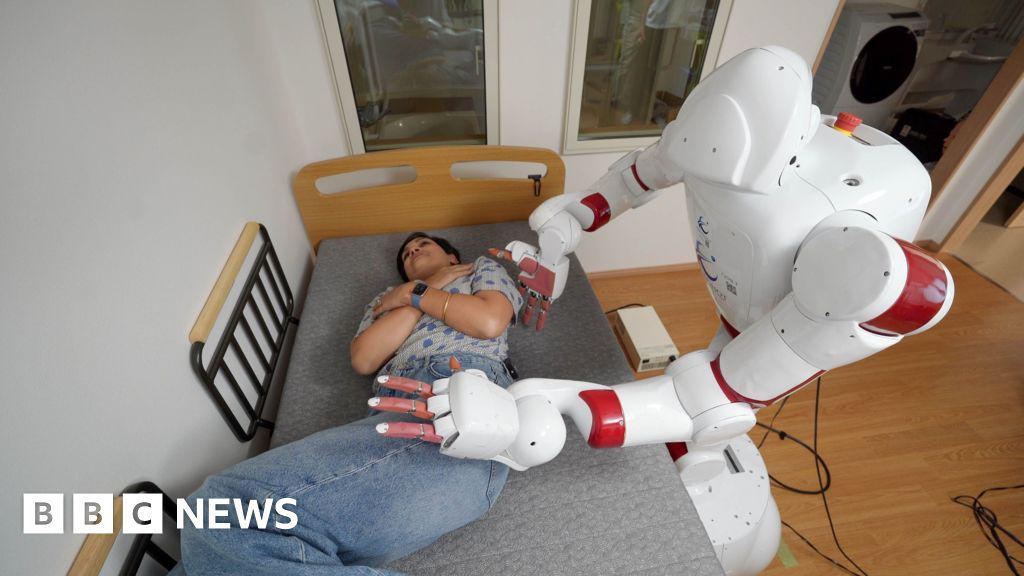
In response, Tokyo’s government is rapidly pivoting towards technological solutions, placing a heavy emphasis on artificial intelligence and robotics to fill the void traditionally occupied by human caregivers. Recent developments include GPS-based tracking systems for wandering seniors, AI tools like Fujitsu’s aiGait that analyze gait and posture to detect early signs of dementia, and humanoid robots such as Waseda University’s AIREC, designed to assist with everyday tasks like dressing, cooking, and even changing diapers. These innovations are intended not merely as conveniences but as essential pillars supporting the nation’s social order. Such strategic shifts reflect a broader recognition within the geopolitical sphere that technological prowess becomes a critical national asset; the ability to develop and deploy affected elder care can serve as a form of soft power, signaling to the world that Japan remains a leader in innovative resilience amidst demographic decline. But these decisions also carry geopolitical weight, with neighboring powers looking on, aware that the technological race in elder care could shape regional influence for decades.

How decisions made now will ripple through future geopolitics is not lost on international analysts. Some experts argue that China and South Korea, watching Japan’s innovations, are likely to accelerate their own technological investments to secure regional dominance. Meanwhile, Western nations face their own aging crises, turning to Japanese expertise and investments as examples of where technology meets social necessity. Reports from institutions like OECD highlight that the integration of AI and robotics into elder care may reshape labor markets across the globe, reducing dependency on human caregivers and redefining societal notions of human interaction and compassion. Whether these advancements will supplement or supplant the human touch remains a contested debate—one that will influence international perceptions of morality, humanity, and technological supremacy.

As Japan’s government invests heavily in robot caregivers and AI early detection systems, the unfolding story encapsulates a broader theme—a society desperately seeking solutions while confronting the harsh realities of a dwindling nation. The world watches as technological milestones are achieved, yet the true test lies in balancing innovation with empathy—an enduring question in the age of automation. In this crucible of societal change, history is forging new chapters, and the weight of what comes next will resonate far beyond borders—shaping the destiny of humanity amidst the relentless tide of time.

Social Media Auto Publish Powered By : XYZScripts.com