Matox News

Truth Over Trends, always!

One in 12 teens in school face weekly isolation, new study reveals

Recent research from Manchester has shed light on a controversial issue that transcends national borders, raising urgent questions about the mental health and educational inclusion of youth across the globe. The study indicates that approximately 1 in 12 secondary pupils in England are placed into school isolation rooms at least once a week, with many spending over eight hours in these confined spaces. This trend, eventually becoming an international point of contention, raises issues about the effectiveness and ethics of internal exclusion policies in examining how school systems address student discipline and behavior. Critics argue that such confinement practices do not just hinder academic progress but also threaten the emotional wellbeing of vulnerable children, especially those with complex behavioral needs.

Symbolic of a broader global debate, international organizations and educational experts question whether the current punitive approaches are justified or counterproductive. The British Educational Research Journal highlights the discrepancy between the purported short-term benefits of isolation and the deeper, often hidden, costs—such as weakened relationships with teachers, diminished sense of belonging, and escalating mental health issues. Prominent historians and analysts warn that imitating or ignoring these patterns in other nations could reinforce a system where discipline overrides compassion, setting a dangerous precedent. Neil Humphrey, a leading researcher, emphasized that while schools face significant challenges managing disruptive behavior, the solution should not involve isolating children but rather **investing in positive behavioral supports and mental health resources**.

Meanwhile, in the United States and across Europe, similar controversies simmer beneath surface-level policies, with advocates calling for transparency and reform. The recent legal affirmation of isolation booths in England, upheld by the High Court, has sparked international debates about the balance between maintaining order and safeguarding children’s rights. Conversely, Kiran Gill of The Difference underscores the importance of diagnosing behavioral issues and implementing more supportive, restorative approaches that foster inclusion rather than exclusion. The global community watches closely as these issues test the resilience of educational systems in balancing authority, care, and the rights of students, especially those most in need of support.

The decision made by the British government and courts signals a critical moment in international education policy—a moment where the weight of history and societal values collide. Critics warn such decisions could entrench a punitive model that harms societal cohesion by marginalizing youth, particularly minorities and those with disabilities. International organizations such as UNESCO and the OECD emphasize that #educational equity must be coupled with mental health considerations, urging nations to revisit their disciplinary policies before irreversible damage is done to a generation’s psychological health. As experts call for more research and alternative disciplinary methods, the question remains: Are nations prepared to rewrite their histories and prioritize *human dignity* over simplistic punitive measures?

As the debate continues, the unfolding story of school discipline serves as a stark reminder that the decisions made today will echo in the corridors of history. Whether these policies are seen as necessary measures or damaging excesses, the future of youth and the fabric of society itself hangs in the balance. The world watches as nations grapple with the challenge of forging a path that upholds both order and compassion in the crucible of their schools. The question that lingers is whether we will learn from the shadows of history or allow them to repeat, shaping a future where discipline curtails not just behavior, but also the very essence of hope and potential.

Digital Decluttering: The Swedish Death Cleaning Trend for Teens and Beyond

Innovative Strategies Transform Digital Legacy Management in End-of-Life Planning

As the digital age accelerates, a critical yet often overlooked frontier is digital estate management—the methodical organization of personal data for end-of-life scenarios. The recent case involving Adam Liljenberg’s family highlights a burgeoning industry shift: technology firms and service providers are stepping in to revolutionize the way our digital legacies are handled. From malware-laden phones to complex, multi-layered data silos, the challenges facing heirs and executors demand innovative solutions that go beyond traditional physical estate planning.

Disruption and Innovation Fueling Digital Death Cleaning

The concept of Swedish death cleaning, long favored for organizing physical belongings, is now gaining momentum in the digital realm. Companies like Stow & Behold and other emerging startups are deploying intelligent software and AI-driven tools to automate digital asset management. These platforms are designed to facilitate tasks such as scanning physical documents, organizing photos, and encrypting sensitive information to prevent leaks—anticipating a future where digital inheritance management is seamlessly integrated into estate planning.

  • Automation of digital inventory logging
  • Advanced encryption and privacy controls
  • Cloud-based access for authorized heirs
  • AI-driven categorization and contextual tagging

This disruption is not happening in isolation. Think tanks such as Gartner and MIT are emphasizing the strategic importance of digital resilience and cybersecurity in personal data management. As Elon Musk and Peter Thiel warn about the vulnerabilities in our digital footprints, industry leaders recognize that a proactive approach to digital estate planning could be a significant business opportunity with profound societal impacts.

Business Implications and Future Trajectory

The shift towards comprehensive digital estate solutions signals a broader transformation in how businesses approach data security and user experience. By integrating digital death cleaning into mainstream estate planning, companies can position themselves as essential intermediaries in a highly sensitive market—one that combines personal data, privacy concerns, and technology. This trend not only opens doors for new business models but also compels legacy firms to innovate rapidly, adopting SaaS platforms, AI, and blockchain for secure data transfer and ownership verification.

Moreover, the industry is responding to a rising demand for personalized digital care. For example, the emphasis on safeguarding sensitive content—be it memories, financial records, or private correspondence—underscores the importance of customizable privacy settings. Such features are critical in avoiding situations where unexpected data leaks cause emotional distress or legal complications for heirs. Innovations like these also underscore a broader push: the digital estate industry is not just about logistics but an ethical imperative to protect personal dignity and privacy at life’s end.

The Urgency of Embracing Digital Estate Management

As digital assets expand exponentially, the imperative for comprehensive, secure, and user-friendly digital estate management solutions becomes undeniable. Industry experts from institutions like Gartner forecast that by 2025, over 60% of digital heirs will rely on specialized platforms to manage their inherited data, up from negligible figures today. This prodigious growth underscores the necessity for early adoption—both from individual users aiming to secure their digital legacy and businesses poised to lead this disruptive wave.

In this rapidly evolving landscape, those who ignore the importance of digital death planning risk being left behind. With technology advancing at breakneck speed, organizations that leverage innovation—be it AI, blockchain, or cloud computing—will shape the next chapter of personal data management. The message is clear: the future belongs to those who act now, integrating digital estate solutions into the core of estate planning and cybersecurity strategy.

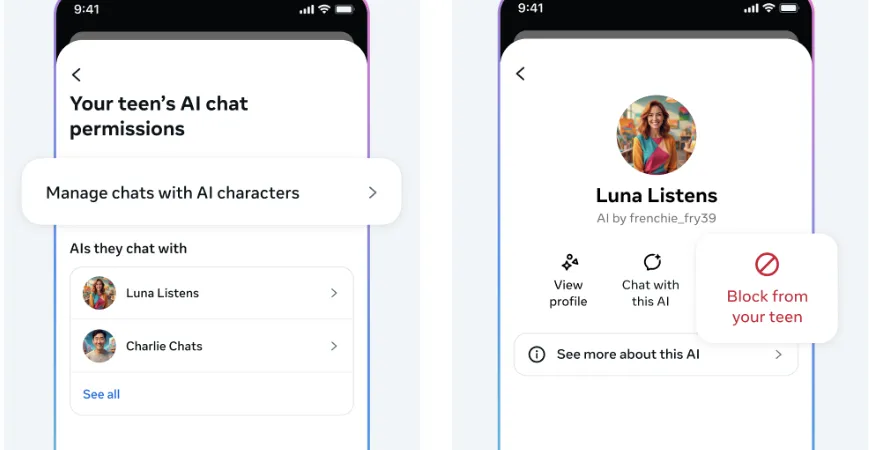
Meta’s Instagram rolls out AI-powered parental controls for teens next year

In a significant move toward responsible AI deployment, Meta has rolled out its first major safety update for its AI chatbots, integrated across Facebook, Instagram, and WhatsApp. This update marks a pivotal milestone in the technology giant’s ongoing efforts to mitigate risks associated with AI interactions at scale. Coming on the heels of recent regulatory pressures and heightened public scrutiny over misinformation and harmful content, this development underscores the urgent need for robust safety protocols in AI systems. As AI continues to embed itself into daily digital interactions, the imbalance between innovation and safety becomes a focal point for industry leaders, investors, and policymakers alike.

The timing of Meta’s safety enhancements coincides with broader industry trends emphasizing responsible AI development. Notably, the company’s move follows recent policy shifts targeting teen safety on social platforms, including Instagram’s new restrictions designed to emulate PG-13 standards—an effort to address mounting concerns over youth exposure to unsuitable content. Analysts from Gartner and MIT urge tech firms to prioritize transparency and accountability as AI tools become more sophisticated and pervasive. Meta’s actions reflect a recognition that disruption alone will no longer suffice; sustainable innovation demands built-in safeguards without stifling user engagement or technological advancement.

This evolution is not just about user safety. Enhanced safety protocols could redefine business models in the digital landscape. Companies that invest in AI safety capabilities position themselves as industry leaders, gaining a competitive edge through increased trust and reduced liability. Yet, the path forward is fraught with challenges: balancing innovation with regulation, avoiding censorship backlash, and maintaining a seamless user experience.

  • Potential for increased regulatory scrutiny
  • Risk of reputational damage from safety lapses
  • Opportunities for monetization through safer AI products

The implications are clear: the era of unrestrained AI experimentation is giving way to a more disciplined, safety-conscious phase of development. Visionaries like Elon Musk and innovations from institutions such as MIT emphasize that the future of AI hinges on embedding ethical considerations into core algorithms. For investors and entrepreneurs, this shift signals the need to leverage emerging safety standards as a strategic advantage rather than an obstacle. As industry giants race to refine artificial intelligence, the pressure to deliver disruptive yet responsible solutions will intensify—pushing the frontier toward an AI-enabled future that balances progress with prudence. The question now remains: how swiftly and effectively will organizations adapt to this new paradigm? The answer will likely determine their position in the next wave of digital innovation.

West Bank Teens Blocked: Israel Closes Main Border, Leaving Palestinians Stuck

The Middle East continues to navigate the tumultuous aftermath of recent events, as Israel has uniquely shut down the only crossing between the Israeli-occupied West Bank and neighboring Jordan. This strategic move effectively cuts off access for more than two million Palestinians, severing a vital lifeline in a region where mobility and access are already heavily restricted. The closure, announced by the Israeli airports authority and carried out “at the direction of the political leadership,” has left many Palestinians stranded, unable to travel abroad or reunite with family members across borders. Prominent Palestinian voices, such as Mustafa Barghouti, have condemned this act as “dangerous,” emphasizing that it essentially imprisons the Palestinian population inside the West Bank, intensifying existing hardships.

This move comes amid a backdrop of escalating violence and international tension. Just days prior, two Israeli soldiers were shot dead near the Allenby Bridge by a Jordanian gunman—an incident that briefly shut down the crossing but was later reopened. The King Hussein Bridge, as it’s historically known, represents more than just a border crossing; it is a critical corridor for commerce, humanitarian aid, and the movement of people—especially for those Palestinians who cannot use Israeli-controlled airports. As historians and analysts note, such closures are not merely tactical but carry profound geopolitical impact, damaging the fragile relationships and perspectives that hold regional stability at bay. The decision impacts everyday lives—medical students like Maxim Giacaman, whose plans for medical electives in Germany have been dashed, exemplify how such actions extend beyond politics into personal futures, disrupting generations of aspirations.

In parallel, international responses have been polarized and fraught with tension. The recent moves by countries such as the UK, France, Australia, and Canada to recognize the State of Palestine have been met with fierce condemnation from Israel, which branded these efforts a “reward for terrorism.” Ultranationalist ministers within Israel have called for even more drastic actions, including the blatant prospect of outright annexation of the West Bank—an act that would irreparably reshape the territorial landscape and escalate the risk of outright conflict. Since the Hamas-led attack that resulted in the deaths of around 1,200 Israelis and the taking of 251 hostages, Israel has intensified its security apparatus—erecting hundreds of checkpoints, accelerating settlement expansion, and engaging in broader military operations aimed at Palestinian resistance groups. Such measures have been internationally scrutinized, with many accusing Israel of transforming the West Bank into an open-air prison while the international community struggles to curb its expansive policies.

This crisis underscores a fundamental question of sovereignty, resistance, and the international order’s capacity to uphold justice in an unstable region. As the United Nations and veteran analysts observe, Israel’s recent actions — especially the indefinite closure of key border crossings — exemplify a pattern of escalating repression. The decisive militarization and expansion threaten to write a new chapter of conflict, with history warning that such policies often engender long-term cycles of violence and despair. The weight of this unfolding chapter in history challenges whether global institutions and nations will succeed in their efforts to foster peace or merely watch as the fabric of an already fractured society unravels further. As the world’s eyes remain fixed on the Middle East, the true impact of these decisions will echo through generations—ultimately defining whether this region is destined for continued chaos or a chance at stability, however distant that hope may seem. The pages of history are turning, and the story of Palestinians and Israelis is far from finished—yet each stroke writes them deeper into the annals of a conflict that has endured far too long, a testament to human resilience and failure in equal measure.

Fact-Check: New Study Finds Lower Smartphone Addiction Rates Among Teens

Investigating the Truth Behind Claims of Transgender Individuals as Mass Shooters

In recent debates surrounding gun violence and transgender rights, a recurring narrative suggests that transgender individuals are responsible for a disproportionate number of mass shootings in America. Prominent figures like Donald Trump Jr. and Sebastian Gorka have cited figures that imply a significant connection between gender identity and violent acts, with claims of dozens of mass shootings involving transgender perpetrators over the last few years. However, a rigorous review of available data from reputable sources reveals a starkly different reality. When scrutinized with precise definitions and verified data, the number of transgender mass shooters in the U.S. remains exceedingly small, accounting for less than 0.1% of incidents over the past decade.

According to the Gun Violence Archive (GVA), an independent organization that tracks gun-related incidents, only five mass shootings have been confirmed to involve transgender suspects since 2013. These incidents include the tragic Chattanooga church shooting, the Highland Ranch school shooting, the Memphis warehouse shooting, the Colorado Springs gay bar attack, and Minneapolis’ recent church shooting. Notably, in cases like that of Anderson Lee Aldrich in Colorado, who identified as nonbinary, the gender identity was verified during court proceedings. When comparing these five incidents against the thousands of annual shootings, the proportion remains negligible—less than 0.1%.

It’s crucial to emphasize that the term “transgender” encompasses a broad spectrum; not all—particularly nonbinary individuals—may identify as transgender. This nuance complicates any direct causal link. Experts like James Densley, co-founder of The Violence Project, clarify that transgender individuals are statistically underrepresented among known mass shooters. Their comprehensive database, which applies a stricter definition—such as four or more victims killed or injured in a public setting—documents 201 cases since 1966, with only a single confirmed transgender perpetrator. Moreover, Dr. Ragy Girgis, a psychiatrist specializing in mass violence, states plainly: “Being transgender is not a causative factor in mass shootings.” The data overwhelmingly support that violence is committed almost exclusively by men, with over 97% of mass shooters being cisgender males, well aligning with societal patterns rather than challenging them based on gender identity.

Despite the clear data, misinformation persists. Figures like Gorka or the claims of “many” transgender shooters tend to rely on loose definitions or anecdotes, which inflate the perception of a link where none exists. As one fact-checker summarized, “even if you expand the definitions, transgender individuals responsible for mass shootings remain a tiny fraction of such crimes, overshadowed by the broader trend of male perpetrators.” The numbers tell a straightforward story: most mass shootings are carried out by men, across all gender identities, and transgender individuals are statistically rare among these perpetrators. This accurate data is vital, not only for honest debate but also for upholding the integrity of our democratic discourse, where facts must guide policy and public understanding.

Conclusion

In a democracy, informed citizens are the backbone of responsible policy—especially on issues as consequential as gun laws and gender rights. The evidence demonstrates that the narrative linking transgender identity to mass violence is deeply misleading. It is essential that we differentiate between anecdotal claims and comprehensive, verified data. As experts confirm, the presence of transgender individuals among mass shooters is vanishingly small, making it clear that gender identity is not a factor in violent behavior. Only through accurate information can we foster a fair, informed debate that respects both facts and responsible citizenship, foundational to our shared democracy.

Social Media Auto Publish Powered By : XYZScripts.com