Matox News

Truth Over Trends, always!

Australian teens targeted online by gangs to carry out violent acts

In a striking display of the evolving geopolitical landscape of digital security, Australia has unveiled alarming revelations regarding a new, twisted form of online crime that transcends national borders. Australian authorities, led by AFP Commissioner Krissy Barrett, have identified an insidious trend where networks of violent extremists are coercing vulnerable girls into acts of violence—against themselves, their families, or even pets—within a disturbing “gamification” framework. This emerging threat underscores a broader issue: the rapid proliferation of how digital platforms are weaponized in modern ideological conflicts. With already three arrests within Australia and nine more internationally, this phenomenon highlights the urgent need for global coordination. The international community must grapple with the implications, as these online networks exploit digital spaces the same way that traditional armies once fought on physical battlefields.

The accused, largely aged in their late teens or early twenties from Western backgrounds, have been recruiting young girls through gaming platforms like Roblox and messaging apps such as Discord and Telegram. This recruitment tactic, reminiscent of a well-orchestrated underground movement, reveals how the boundaries between online gaming and violent extremism are blurring. Analysts warn that these groups—whom Commissioner Barrett calls “crimefluencers”—subscribe to a nihilistic and sadistic ideology rooted in Nazism, satanism, and other extremist doctrines. Their purpose, however, exceeds mere ideological posturing; it is driven by a desire for amusement, social dominance, and the thrill of inflicting harm without accountability. This new frontier in gender-based violence complicates the traditional paradigms of international security, demanding an urgent, multi-national response.

This troubling development occurs against the backdrop of Australia’s proactive efforts to curb online harm, exemplified by the impending introduction of a pioneering social media ban targeting users under 16. Yet, the exemption of gaming and messaging platforms from these restrictions signals a deeper geopolitical challenge: regulating digital environments that have become breeding grounds for extremism. The Five Eyes alliance—comprising the US, UK, New Zealand, and Canada—is actively collaborating with Australia to dismantle these transnational networks. Such cooperation highlights a crucial recognition: that the digital space is now a contested arena where national security and societal stability are at stake. As international organizations such as INTERPOL advocate for increased cyber law enforcement, it becomes clear that the fight against these malicious online communities will define the next chapter in global security policy. The rise of these “gamified” violence networks raises profound questions about the efficacy of existing laws and the future of international cooperation in combating digital extremism.

Ultimately, this disturbing trend is not merely an isolated issue but an unfolding chapter in the ongoing contest for influence over our digital future. As historians and analysts warn of the dangerous convergence of technology and ideology, the world stands at a pivotal crossroads. The weight of history suggests that the choices made today—how nations respond, cooperate, and regulate—will shape the boundaries of acceptable conduct in the digital age. With the eyes of the world fixed on Australia’s bold stance, the message is clear: the battle for the soul of the internet has begun, and its outcome will determine the course of societal stability for generations to come. The unfolding story underscores one timeless truth—when the digital frontier is exploited for violence and ideological conquest, the entire spectrum of humanity risks paying a heavy toll. Only time will reveal whether global resolve can stem this tide of chaos, or whether we are destined to watch as history is rewritten in the shadows of cyberspace.

Teen’s Record-Breaking 9-Month Livestream with Pig Kidney Comes to an End

Revolutionizing Organ Transplantation: The Breakthrough of Genetically Engineered Pig Kidneys

In a significant stride toward addressing the global organ shortage crisis, Massachusetts General Hospital has successfully transplanted a genetically engineered pig kidney into a living human recipient — a 67-year-old man from New Hampshire. This landmark procedure, confirmed by hospital officials, marks a pivotal moment in biomedical innovation and disruption, extending the functional lifespan of xenotransplants to nearly nine months, surpassing previous attempts by a sizable margin. The breakthrough directly responds to the staggering demand for kidneys, with the US alone experiencing a backlog of nearly 90,000 patients awaiting transplants, and only about 28,000 kidney transplants performed annually. This innovative approach promises to revolutionize healthcare by drastically reducing waiting times, which in many cases, can extend to years or even decades.

The transplantation of pig organs is a testament to the rapid advancement of gene editing technologies—particularly CRISPR-Cas9 and other genetic engineering tools—that are now enabling scientists to mitigate the issue of organ rejection. Due to the inherent genetic differences between pigs and humans, unmodified pig organs would be almost immediately rejected by the recipient’s immune system. To combat this, scientists have turned to sophisticated genetic modifications aimed at making pig organs more compatible with human physiology. Since the first genetically engineered pig heart transplant attempts at the University of Maryland in 2022 and 2023, which unfortunately resulted in patient mortality within two months, ongoing experiments have demonstrated improved outcomes and increased viability. The recent success at Massachusetts General indicates that we are on the cusp of a new era where biological innovation could become as routine as robotic surgery.

Major industry and academic players—including MIT, and various biotech startups—are pushing forward with this disruptive technology, viewing it as an urgent business opportunity with transformative implications. The ongoing evolution of xenotransplantation is poised to disrupt traditional transplant models and foster the emergence of an entirely new market for genetically engineered organs, which could generate billions in economic activity over the next decade. Additionally, regulatory adaptations are underway as agencies like the FDA begin to formulate frameworks suited for approving such experimental, life-saving procedures. Experts like Peter Thiel have expressed optimism that this convergence of biotech innovation and systemic market disruption could unlock vast economic and societal benefits, especially as organ shortages continue to threaten healthcare sustainability.

Looking ahead, the mounting success stories from Massachusetts General and other institutions—such as the recent transplant of a genetically modified pig kidney into a 54-year-old man—highlight an accelerating trajectory toward commercialization. This rapidly progressing landscape underscores a critical need for forward-looking policies, technological investments, and ethical frameworks that can keep pace with this disruptive wave. The future of transplantation—powered by synthetic biology, advanced gene editing, and AI-driven diagnostics—must be navigated with a sense of urgency, as the potential to save millions of lives hinges upon our ability to innovate and adapt. As the industry moves toward broader adoption, it’s clear that the traditional boundaries of medicine are being redrawn—disrupting longstanding paradigms and shaping the future of healthcare at an unprecedented pace.

Are Youth Still Chasing Careers in Tech?

Next-Generation Innovators Drive Disruption in AI and Healthcare

The emerging wave of youth-driven innovation underscores the transformative potential of artificial intelligence (AI) and healthcare accessible through community-focused initiatives. A recent survey highlighting perspectives from high school seniors across the United States reveals a generation poised to lead disruptive breakthroughs, emphasizing disruption at the core of technological and social paradigms. These aspiring scientists and technologists are not only witnessing rapid AI advancements but are already actively involved in solving attendant challenges, such as data privacy and ethical deployment.

One standout example is Laksh Patel, a 17-year-old from Willowbrook, Illinois, who exemplifies the new tech frontier. Patel’s pioneering work on algorithms that prevent AI models from disclosing private data such as API keys signals a crucial step toward establishing more secure, trustworthy systems. As AI, especially Large Language Models (LLMs), become embedded in everyday life, it’s clear that security features will define the future competitive landscape. Analysts from Gartner emphasize that the industry must prioritize robust privacy measures to sustain user confidence and prevent regulatory crackdowns. Companies like OpenAI and Google are racing to implement such safeguards, knowing that any breach could undermine entire markets and user trust.

This generation’s focus extends beyond just technological innovation; it reflects a broader disruption of traditional career pathways. Laksh Patel and his peers are questioning the necessity of formal degrees, as skills-based hiring gains traction in the tech sector. Non-traditional routes into industry, including direct industry entry and independent research, are now seen as viable alternatives, pressuring educational institutions to adapt swiftly. Such shifts could redefine the business landscape, favoring nimble startups and decentralized development. Institutions like MIT and industry giants like Elon Musk’s Tesla underline that adaptability is essential for future dominance, especially in AI where timing and execution are everything.

The transformation in healthcare access, as described by young advocates, adds another layer of disruption. Innovators emphasize that community-based efforts are vital for democratizing healthcare, ensuring that underserved areas are not left behind amid digital health revolutions. The advent of AI-powered diagnostics and personalized medicine signals enormous potential but also raises questions about equitable deployment. Forward-looking policymakers and startups like IBM Watson Health are prioritizing scalability and affordability in their innovations, recognizing that the true power of AI lies in its capacity to serve the most vulnerable populations. As Peter Thiel and other tech visionaries argue, the real market disruptors will be those who harness technology for social good, turning disparate communities into empowered hubs of innovation.

In sum, this new generation’s engagement in AI and healthcare signifies an epoch-defining shift. Their focus on security, skills-based pathways, and community health illustrates a future in which disruption is no longer a threat but a driver of progress. The industry must act swiftly to harness this energy, investing in innovation and infrastructure that can meet their expectations. With the pace of technological evolution accelerating, the time to lead is now—those who recognize this urgency will shape the blueprint of tomorrow’s digital economy, where agility and purpose become the new currency of success.

Left’s tech teens plead for scraps — now they demand the whole feast

Automation Disrupts Youth Employment and Industry Landscape: What the Future Holds

Across the globe, innovative automation technologies are dramatically reshaping the traditional employment landscape, with startling implications for the coming decade. In Japan, these disruptions are already visible, where robots stock convenience store shelves. However, the question remains—when will the United States follow suit? Corporations like Walmart have experimented with robot-assistants, though their initial ventures into shelf-scanning technology were eventually abandoned. This suggests a rapid evolution in machine vision and AI capabilities—advancements that promise to revolutionize retail, logistics, and beyond, with disruptive implications for employment and the economy.

The decline in youth participation in the labor force underscores the profound shift caused by automation. Data from the U.S. Census Bureau shows that between 2000 and 2025, the percentage of Americans aged 16–19 actively engaged in the workforce has plummeted from 52.3% to just 34.8%. This contraction is driven largely by technological displacement—a trend that reduces entry-level opportunities such as stocking shelves, flipping burgers, or delivering pizza. As Elon Musk and other tech visionaries predict, these innovations—while boosting corporate profits—contribute to a labor market increasingly hostile to entry-level workers.

  • Automation reduces labor costs for employers
  • Workers face fewer opportunities for skill development
  • Youth miss critical early work experiences essential for long-term career growth

Moreover, the disruption extends into the gig economy, with autonomous delivery robots like those tested by Uber Eats and DoorDash stepping into markets traditionally served by young human drivers. This technological pivot is fueled by stagnant wages and rising living costs, pushing adults into low-wage side gigs—further squeezing out the next generation from meaningful employment opportunities. As Gartner’s industry analysts warn, the race to automate essential services could accelerate, creating a future where jobs for young adults become relics of the past.

Indeed, these trends threaten to erode the foundational opportunities that foster independence and economic literacy among teens. Historically, early job experiences offered invaluable lessons in managing finances, interpersonal skills, and responsibility. Now, as offshoring and automation complete their sweep, the remaining jobs are increasingly competitive and scarce. As Peter Thiel and other Silicon Valley thinkers emphasize, this technology-driven disruption necessitates urgent policy and industry shifts to preserve the pathway to economic self-sufficiency for future generations. Moving forward, the rapid pace of innovation demands that business leaders, policymakers, and educators act decisively—if the opportunity for young people to learn and grow in the labor market is to survive the oncoming storm.

Autistic teen's plea for extra exam time overlooked by council, raising concerns about inclusive support
Autistic teen’s plea for extra exam time overlooked by council, raising concerns about inclusive support

Discrimination and the Struggle for Inclusivity in Education

Recent cases like that of Joshua, a 10-year-old boy diagnosed with autism and ADHD, have cast a spotlight on the ongoing \_battle for fair treatment within our education system.\_ Despite professional recommendations that he be granted 25% extra time during his 11+ exams—necessary accommodations to support his neurodiverse needs—Kent County Council (KCC) denied this request, citing adherence to established \_equalities law\_.

Joshua’s mother, Nicky, a qualified teacher and leader in special educational provision, expressed her dismay, asserting that her son was \_let down\_ by the system that should be designed to embrace inclusivity. Her critique echoes a broader societal tension: while our laws advocate for equality, their implementation often falls short for vulnerable communities, especially when bureaucratic procedures overlook professional advice or individual circumstances.

Communities and Families Bearing the Brunt of Systemic Gaps

Families like Nicky’s exemplify the profound personal toll. Her advocacy underscores how social issues extend beyond policy documents, directly influencing familial well-being and the future prospects of children with special needs. The disconnect between official guidelines—such as those from the Joint Council for Qualifications—and local authorities’ interpretations reveals a \_cultural gap\_ that hampers genuine inclusion.

Within many communities , families are torn between fighting for their children’s rights and grappling with systemic indifference. Sociologist Dr. Alan Goodman notes that social policies often unintentionally perpetuate \_demographic divides\_, especially affecting working-class families who lack the resources for persistent legal or bureaucratic battles. This disparity fuels a cycle where children with neurodivergence, instead of receiving tailored support, are simply sidelined or dismissed, contributing to a social fabric increasingly frayed at its edges.

Transformative Potential Through Education and Cultural Shift

Experts like Jess Hendrickx, a neurodivergent assessor and author, emphasize that **education alone isn’t enough; a societal shift toward **\_greater understanding and empathy\_\_** is essential.** The conversation around \_neurodivergence\_ has gained unprecedented momentum, yet the challenge lies in translating awareness into action. As sociologist Dr. Emily Carter underscores, \_inclusivity is a cultural commitment\_ that requires local authorities, educators, and communities to prioritize personalized support over rigid standards.

  • Implement comprehensive training for teachers and officials on neurodivergent needs
  • Develop policies flexible enough to accommodate diverse learning styles
  • Engage families as equal partners in educational planning
  • Ensure legal adherence while respecting individual circumstances

Ultimately, the core issue remains the society’s moral obligation to nurture its youngest members, ensuring no child is left behind simply because bureaucratic procedures are ill-equipped to recognize human diversity.

As society stands at this crossroads, the hope of transformation flickers like a distant star—fragile but enduring. The challenge is to build a future where social justice in education is no longer an aspiration but an unwavering reality, lightening the path for souls like Joshua, and reminding us all that in our collective striving, humanity’s true strength is found.

Teens laud Droitwich project for turning around school attendance struggles

Society at a Crossroads: The Growing Crisis of School Attendance and Its Broader Social Implications

Over the past several years, the disruption caused by the Covid-19 pandemic has cast a long shadow over the fabric of our society, illuminating and exacerbating existing social issues. Among the most troubling of these is the alarming rise in pupil absenteeism, which directly impacts families, community cohesion, and the future of our educational institutions. Recent data reveals that since the 2018-19 academic year, the number of students missing more than a tenth of their school days has nearly doubled, soaring from approximately 771,863 to over 1.48 million in 2023-24. Experts, sociologists, and educators express grave concerns that this trend could undermine the foundation of societal stability, as education is intrinsically linked to upward mobility and social cohesion.

Within this context, individual stories such as that of Tamsin and Amber serve as poignant reflections of a broader educational emergency. Tamsin, from Droitwich, Worcestershire, experienced her attendance plummet to just 52% after the pandemic lockdowns, due to her struggles with anxiety and panic attacks that worsened with social exposure. Her case exemplifies a larger demographic shift—children and adolescents facing mental health challenges that schools are ill-equipped to handle without targeted support systems. Amber, similarly, grappled with the transition back to traditional schooling, having been educated in smaller, less intimidating classes during lockdowns. Her mother, Becki, notes how the school’s innovative program called “The Link,” a flexible learning approach, profoundly changed her daughter’s trajectory, encouraging her to regain confidence and pursue her GCSEs. These stories underscore how educational institutions must adapt their approaches to meet diverse mental health needs, reinforcing the moral imperative to prioritize student well-being alongside academic achievement.

Schools developing programs such as the Link demonstrate the resilience and ingenuity necessary to address this crisis. Developed at Droitwich Spa High School, this initiative enlists specialist teachers to teach as few as seven students for two hours daily, emphasizing personalized attention and flexible learning environments—such as optional uniforms and sensory gardens. Such approaches acknowledge the social and emotional toll of the pandemic on vulnerable learners and aim to reintegrate students through tailored support. Co-head teacher Gemma Lloyd Davies emphasizes that these efforts are crucial, noting that previously, some students could only attend a single day per week, but now, many are accessing education every day. The success stories—from Tamsin’s college ambitions to Amber’s aspiration to become a teacher—highlight firsthand the transformative effect of targeted, compassionate intervention. Here, educational leaders are not merely imparting knowledge but are actively rebuilding trust and confidence within fragmented communities, embodying a moral commitment to all children’s futures.

However, the societal challenge extends beyond individual schools. The Department for Education reports a concerted effort to curb persistent absenteeism, claiming that 140,000 fewer pupils are now classified as persistently absent. Still, the need for broader, systemic reforms remains pressing. Addressing the root causes—mental health crises, social disconnection, and the erosion of traditional community bonds—necessitates a societal shift that prioritizes early intervention, mental health support, and community engagement. As social commentators and historians observe, this era demands a moral reckoning: will we allow a generation to slip into social and educational marginalization, or will we harness innovation and compassion to forge a society resilient to crises? For many families, the hope is that society collectively recognizes this challenge—and chooses the path of renewal, ensuring that no child is left behind, not by neglect, but by conscious, moral resolve.

Ultimately, society’s greatest strength lies in its capacity for renewal. As families like Becki’s and community institutions rally around their children, there remains a spark of hope—an enduring belief that even amidst society’s greatest trials, the human spirit can adapt, uplift, and transform. The journey ahead is undeniably complex, but within it lies the potential for a society that values every child’s promise and acknowledges that the future of our communities depends on the compassion and ingenuity we bring today.

One in 12 teens in school face weekly isolation, new study reveals

Recent research from Manchester has shed light on a controversial issue that transcends national borders, raising urgent questions about the mental health and educational inclusion of youth across the globe. The study indicates that approximately 1 in 12 secondary pupils in England are placed into school isolation rooms at least once a week, with many spending over eight hours in these confined spaces. This trend, eventually becoming an international point of contention, raises issues about the effectiveness and ethics of internal exclusion policies in examining how school systems address student discipline and behavior. Critics argue that such confinement practices do not just hinder academic progress but also threaten the emotional wellbeing of vulnerable children, especially those with complex behavioral needs.

Symbolic of a broader global debate, international organizations and educational experts question whether the current punitive approaches are justified or counterproductive. The British Educational Research Journal highlights the discrepancy between the purported short-term benefits of isolation and the deeper, often hidden, costs—such as weakened relationships with teachers, diminished sense of belonging, and escalating mental health issues. Prominent historians and analysts warn that imitating or ignoring these patterns in other nations could reinforce a system where discipline overrides compassion, setting a dangerous precedent. Neil Humphrey, a leading researcher, emphasized that while schools face significant challenges managing disruptive behavior, the solution should not involve isolating children but rather **investing in positive behavioral supports and mental health resources**.

Meanwhile, in the United States and across Europe, similar controversies simmer beneath surface-level policies, with advocates calling for transparency and reform. The recent legal affirmation of isolation booths in England, upheld by the High Court, has sparked international debates about the balance between maintaining order and safeguarding children’s rights. Conversely, Kiran Gill of The Difference underscores the importance of diagnosing behavioral issues and implementing more supportive, restorative approaches that foster inclusion rather than exclusion. The global community watches closely as these issues test the resilience of educational systems in balancing authority, care, and the rights of students, especially those most in need of support.

The decision made by the British government and courts signals a critical moment in international education policy—a moment where the weight of history and societal values collide. Critics warn such decisions could entrench a punitive model that harms societal cohesion by marginalizing youth, particularly minorities and those with disabilities. International organizations such as UNESCO and the OECD emphasize that #educational equity must be coupled with mental health considerations, urging nations to revisit their disciplinary policies before irreversible damage is done to a generation’s psychological health. As experts call for more research and alternative disciplinary methods, the question remains: Are nations prepared to rewrite their histories and prioritize *human dignity* over simplistic punitive measures?

As the debate continues, the unfolding story of school discipline serves as a stark reminder that the decisions made today will echo in the corridors of history. Whether these policies are seen as necessary measures or damaging excesses, the future of youth and the fabric of society itself hangs in the balance. The world watches as nations grapple with the challenge of forging a path that upholds both order and compassion in the crucible of their schools. The question that lingers is whether we will learn from the shadows of history or allow them to repeat, shaping a future where discipline curtails not just behavior, but also the very essence of hope and potential.

Digital Decluttering: The Swedish Death Cleaning Trend for Teens and Beyond

Innovative Strategies Transform Digital Legacy Management in End-of-Life Planning

As the digital age accelerates, a critical yet often overlooked frontier is digital estate management—the methodical organization of personal data for end-of-life scenarios. The recent case involving Adam Liljenberg’s family highlights a burgeoning industry shift: technology firms and service providers are stepping in to revolutionize the way our digital legacies are handled. From malware-laden phones to complex, multi-layered data silos, the challenges facing heirs and executors demand innovative solutions that go beyond traditional physical estate planning.

Disruption and Innovation Fueling Digital Death Cleaning

The concept of Swedish death cleaning, long favored for organizing physical belongings, is now gaining momentum in the digital realm. Companies like Stow & Behold and other emerging startups are deploying intelligent software and AI-driven tools to automate digital asset management. These platforms are designed to facilitate tasks such as scanning physical documents, organizing photos, and encrypting sensitive information to prevent leaks—anticipating a future where digital inheritance management is seamlessly integrated into estate planning.

  • Automation of digital inventory logging
  • Advanced encryption and privacy controls
  • Cloud-based access for authorized heirs
  • AI-driven categorization and contextual tagging

This disruption is not happening in isolation. Think tanks such as Gartner and MIT are emphasizing the strategic importance of digital resilience and cybersecurity in personal data management. As Elon Musk and Peter Thiel warn about the vulnerabilities in our digital footprints, industry leaders recognize that a proactive approach to digital estate planning could be a significant business opportunity with profound societal impacts.

Business Implications and Future Trajectory

The shift towards comprehensive digital estate solutions signals a broader transformation in how businesses approach data security and user experience. By integrating digital death cleaning into mainstream estate planning, companies can position themselves as essential intermediaries in a highly sensitive market—one that combines personal data, privacy concerns, and technology. This trend not only opens doors for new business models but also compels legacy firms to innovate rapidly, adopting SaaS platforms, AI, and blockchain for secure data transfer and ownership verification.

Moreover, the industry is responding to a rising demand for personalized digital care. For example, the emphasis on safeguarding sensitive content—be it memories, financial records, or private correspondence—underscores the importance of customizable privacy settings. Such features are critical in avoiding situations where unexpected data leaks cause emotional distress or legal complications for heirs. Innovations like these also underscore a broader push: the digital estate industry is not just about logistics but an ethical imperative to protect personal dignity and privacy at life’s end.

The Urgency of Embracing Digital Estate Management

As digital assets expand exponentially, the imperative for comprehensive, secure, and user-friendly digital estate management solutions becomes undeniable. Industry experts from institutions like Gartner forecast that by 2025, over 60% of digital heirs will rely on specialized platforms to manage their inherited data, up from negligible figures today. This prodigious growth underscores the necessity for early adoption—both from individual users aiming to secure their digital legacy and businesses poised to lead this disruptive wave.

In this rapidly evolving landscape, those who ignore the importance of digital death planning risk being left behind. With technology advancing at breakneck speed, organizations that leverage innovation—be it AI, blockchain, or cloud computing—will shape the next chapter of personal data management. The message is clear: the future belongs to those who act now, integrating digital estate solutions into the core of estate planning and cybersecurity strategy.

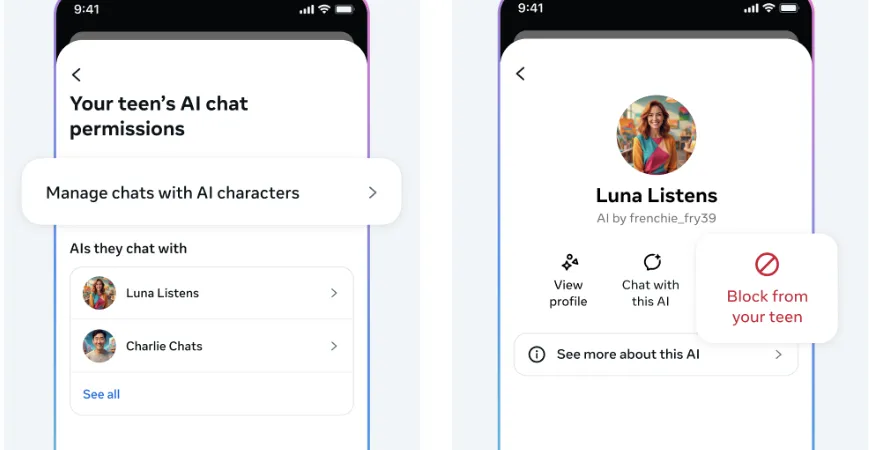
Meta’s Instagram rolls out AI-powered parental controls for teens next year

In a significant move toward responsible AI deployment, Meta has rolled out its first major safety update for its AI chatbots, integrated across Facebook, Instagram, and WhatsApp. This update marks a pivotal milestone in the technology giant’s ongoing efforts to mitigate risks associated with AI interactions at scale. Coming on the heels of recent regulatory pressures and heightened public scrutiny over misinformation and harmful content, this development underscores the urgent need for robust safety protocols in AI systems. As AI continues to embed itself into daily digital interactions, the imbalance between innovation and safety becomes a focal point for industry leaders, investors, and policymakers alike.

The timing of Meta’s safety enhancements coincides with broader industry trends emphasizing responsible AI development. Notably, the company’s move follows recent policy shifts targeting teen safety on social platforms, including Instagram’s new restrictions designed to emulate PG-13 standards—an effort to address mounting concerns over youth exposure to unsuitable content. Analysts from Gartner and MIT urge tech firms to prioritize transparency and accountability as AI tools become more sophisticated and pervasive. Meta’s actions reflect a recognition that disruption alone will no longer suffice; sustainable innovation demands built-in safeguards without stifling user engagement or technological advancement.

This evolution is not just about user safety. Enhanced safety protocols could redefine business models in the digital landscape. Companies that invest in AI safety capabilities position themselves as industry leaders, gaining a competitive edge through increased trust and reduced liability. Yet, the path forward is fraught with challenges: balancing innovation with regulation, avoiding censorship backlash, and maintaining a seamless user experience.

  • Potential for increased regulatory scrutiny
  • Risk of reputational damage from safety lapses
  • Opportunities for monetization through safer AI products

The implications are clear: the era of unrestrained AI experimentation is giving way to a more disciplined, safety-conscious phase of development. Visionaries like Elon Musk and innovations from institutions such as MIT emphasize that the future of AI hinges on embedding ethical considerations into core algorithms. For investors and entrepreneurs, this shift signals the need to leverage emerging safety standards as a strategic advantage rather than an obstacle. As industry giants race to refine artificial intelligence, the pressure to deliver disruptive yet responsible solutions will intensify—pushing the frontier toward an AI-enabled future that balances progress with prudence. The question now remains: how swiftly and effectively will organizations adapt to this new paradigm? The answer will likely determine their position in the next wave of digital innovation.

West Bank Teens Blocked: Israel Closes Main Border, Leaving Palestinians Stuck

The Middle East continues to navigate the tumultuous aftermath of recent events, as Israel has uniquely shut down the only crossing between the Israeli-occupied West Bank and neighboring Jordan. This strategic move effectively cuts off access for more than two million Palestinians, severing a vital lifeline in a region where mobility and access are already heavily restricted. The closure, announced by the Israeli airports authority and carried out “at the direction of the political leadership,” has left many Palestinians stranded, unable to travel abroad or reunite with family members across borders. Prominent Palestinian voices, such as Mustafa Barghouti, have condemned this act as “dangerous,” emphasizing that it essentially imprisons the Palestinian population inside the West Bank, intensifying existing hardships.

This move comes amid a backdrop of escalating violence and international tension. Just days prior, two Israeli soldiers were shot dead near the Allenby Bridge by a Jordanian gunman—an incident that briefly shut down the crossing but was later reopened. The King Hussein Bridge, as it’s historically known, represents more than just a border crossing; it is a critical corridor for commerce, humanitarian aid, and the movement of people—especially for those Palestinians who cannot use Israeli-controlled airports. As historians and analysts note, such closures are not merely tactical but carry profound geopolitical impact, damaging the fragile relationships and perspectives that hold regional stability at bay. The decision impacts everyday lives—medical students like Maxim Giacaman, whose plans for medical electives in Germany have been dashed, exemplify how such actions extend beyond politics into personal futures, disrupting generations of aspirations.

In parallel, international responses have been polarized and fraught with tension. The recent moves by countries such as the UK, France, Australia, and Canada to recognize the State of Palestine have been met with fierce condemnation from Israel, which branded these efforts a “reward for terrorism.” Ultranationalist ministers within Israel have called for even more drastic actions, including the blatant prospect of outright annexation of the West Bank—an act that would irreparably reshape the territorial landscape and escalate the risk of outright conflict. Since the Hamas-led attack that resulted in the deaths of around 1,200 Israelis and the taking of 251 hostages, Israel has intensified its security apparatus—erecting hundreds of checkpoints, accelerating settlement expansion, and engaging in broader military operations aimed at Palestinian resistance groups. Such measures have been internationally scrutinized, with many accusing Israel of transforming the West Bank into an open-air prison while the international community struggles to curb its expansive policies.

This crisis underscores a fundamental question of sovereignty, resistance, and the international order’s capacity to uphold justice in an unstable region. As the United Nations and veteran analysts observe, Israel’s recent actions — especially the indefinite closure of key border crossings — exemplify a pattern of escalating repression. The decisive militarization and expansion threaten to write a new chapter of conflict, with history warning that such policies often engender long-term cycles of violence and despair. The weight of this unfolding chapter in history challenges whether global institutions and nations will succeed in their efforts to foster peace or merely watch as the fabric of an already fractured society unravels further. As the world’s eyes remain fixed on the Middle East, the true impact of these decisions will echo through generations—ultimately defining whether this region is destined for continued chaos or a chance at stability, however distant that hope may seem. The pages of history are turning, and the story of Palestinians and Israelis is far from finished—yet each stroke writes them deeper into the annals of a conflict that has endured far too long, a testament to human resilience and failure in equal measure.

Social Media Auto Publish Powered By : XYZScripts.com