
Nigeria’s Judicial Crackdown on Separatism: A Landmark Verdict and Its Geopolitical Reverberations
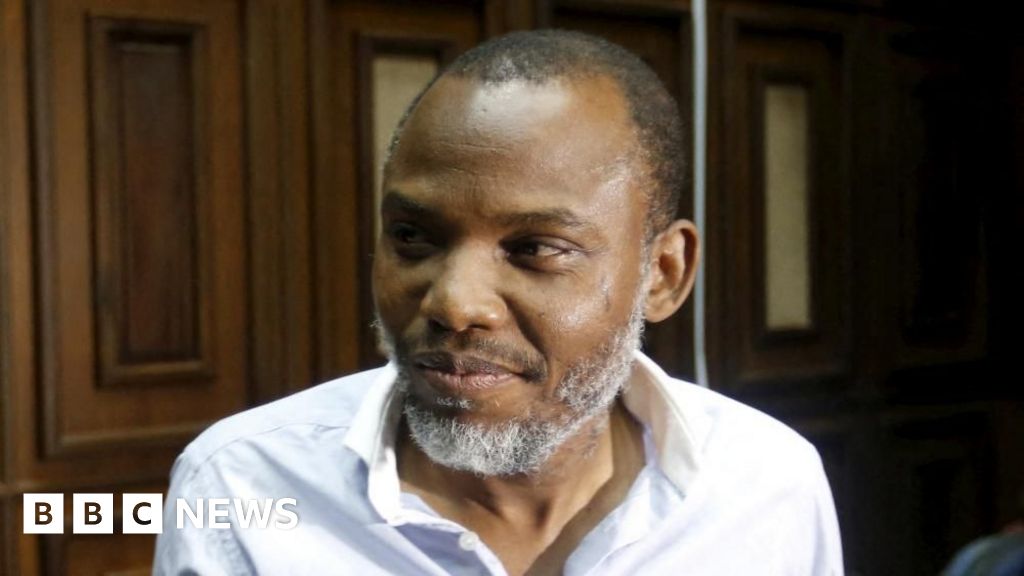
In a decisive move that highlights the enduring tensions within Nigeria, a court in Abuja has found separatist leader Nnamdi Kanu guilty of terrorism, treason, and conspiracy, sentencing him to four concurrent life sentences. This landmark ruling, delivered by Judge James Omotosho, signals a definitive stance by the Nigerian government against secessionist movements, particularly the Indigenous People of Biafra (Ipob). While the prosecution pushed for the death penalty—a reflection of the severity with which authorities are tackling threats to national sovereignty—the judge emphasized evolving perspectives on capital punishment, stating that executions are now “frowned upon.” This decision marks a potential turning point in Nigeria’s domestic policy on militancy and separatism, with wider implications for regional stability across West Africa.
The trial and conviction of Kanu also underscore the complex web of geopolitical and societal factors that underpin Nigeria’s ongoing struggle with internal divisions. Kanu, a British-Nigerian citizen who came to prominence through a London-based radio station calling for a separate Biafra state, has long been a symbol of Igbo aspirations for independence. His movement, once banned as a terrorist organization and connected to violent outbreaks, embodies deep-seated grievances rooted in historical marginalization. Analysts from the International Crisis Group and renowned historians contend that Nigeria’s government seeks to suppress non-state actors that threaten its territorial integrity, but critics argue this approach risks inflaming regional tensions further and undermining democratic dialogue. As Kanu’s supporters threaten protests, security around the court was heightened, reflecting the intelligence community’s fears of unrest, yet the muted response in southeastern Nigeria raises questions about the movement’s genuine popular support.
A Historical Shadow: The Legacy of Biafra and Africa’s Fragile Peace
- In 1967, Igbo leaders declared the secession of Biafra, igniting a brutal civil war that resulted in the deaths of one million people. The defeat of the Biafran uprising left emotional scars and a legacy of marginalization that still influences regional politics today.
- Since then, the drive for independence has persisted symbolically, but the Nigerian state has maintained a firm stance against secessionist groups, viewing them as threats to national unity and stability.
- In 2022, Nigeria’s judiciary appeared divided over Kanu’s case, with an appeal court ordering that charges against him be dropped due to illegal detention abroad—an order that was subsequently overturned by the Supreme Court.
This saga exemplifies the intense struggle facing Nigeria—and the broader West African region—where calls for independence are intertwined with complex issues of ethnicity, history, and sovereignty. The verdict against Kanu not only serves as a warning to other separatist factions but also fuels the debate on how states must balance security with respecting cultural identities. International organizations and regional powers observe with caution, as Nigeria’s internal stability has repercussions for regional security, migrant flows, and economic partnerships across Africa and beyond.
As the weight of history presses heavily on the present, the case of Nnamdi Kanu stands as a stark reminder of the fragile path toward national cohesion. The echoes of the Biafran war still resonate, and the decisions made today could shape the narrative of Nigeria’s future for decades to come. The world watches as a nation at the crossroads grapples with its history—faced with the dilemma of how to forge unity from fragmentation before the tides of division are irreversible. In this unfolding drama, the true cost of unresolved grievances and the price of sovereignty remain painfully clear—history’s pen is never silent, and its questions are as urgent as ever.