
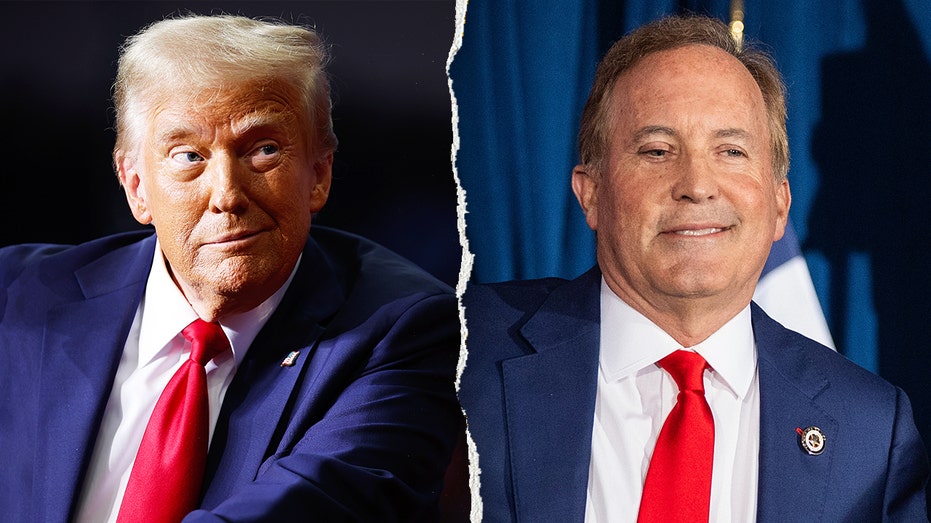

Texas Attorney General Ken Paxton has attributed his commanding victory in the Republican Senate primary to former President Donald Trump’s eleventh-hour endorsement, a development that vividly underscores Trump’s enduring influence within the GOP and sets up a closely watched general election battle with national implications.
In a significant display of political power, former President Donald Trump’s endorsement proved a potent force in the recent Texas Republican Senate runoff. Attorney General Ken Paxton secured the nomination, successfully challenging incumbent Senator John Cornyn in a hard-fought contest. Paxton’s decisive win, fueled by Trump’s backing, highlights the former president’s continued ability to shape primary outcomes and raises the stakes considerably for the upcoming midterm elections, where Republicans are striving to maintain their slim majorities in Congress.
The Enduring Power of a Presidential Endorsement
Paxton’s victory against a long-serving senator demonstrates the profound impact of Trump’s support on the Republican base. Speaking exclusively to Fox News Digital minutes after delivering his victory speech, Paxton explicitly stated, “The president’s endorsement is the most valuable endorsement in this country.” This sentiment reflects a growing trend where Trump’s backing can often outweigh traditional political advantages, including extensive incumbency and established campaign infrastructure. The outcome in Texas reaffirms that loyalty to the former president remains a significant, often decisive, factor for many Republican primary voters, signaling a profound shift in the party’s internal dynamics and candidate selection process.
Midterm Implications and the Texas Challenge
While Trump’s influence secured the primary for Paxton, the general election presents a new and formidable set of challenges. Paxton will now face state Representative James Talarico, a rising star within the Democratic Party. This contest is poised to be one of the most closely watched and expensive in the nation, potentially determining whether Republicans can retain their crucial 53-47 majority in the U.S. Senate. The Democratic Party views this race as a significant pickup opportunity, hoping that the intensity of the primary, combined with broader national political currents, could create an unexpected opening in the traditionally conservative Lone Star State. The focus now shifts dramatically from internal party contests to a broader electoral battle for the control of the upper chamber, with both parties mobilizing substantial resources.
Trump’s Expanding Grip on the Republican Party
The Texas primary is not an isolated incident but rather the latest example of former President Trump successfully asserting his influence across the Republican Party. Just three weeks prior, Trump played a pivotal role in the purging of five state senators in Indiana’s primary who had opposed his push for congressional redistricting. Similarly, only a week and a half before the Texas runoff, the president actively pushed to oust Senator Bill Cassidy of Louisiana, who had voted to convict Trump in his second impeachment trial. These consistent actions collectively illustrate a deliberate and effective strategy by Trump to consolidate control over the Republican Party, rewarding allies and systematically challenging those who have defied him. This pattern of flexing political muscle suggests a long-term reshaping of the GOP’s leadership and ideological alignment, with significant implications for future policy and party direction.
“The president’s endorsement is the most valuable endorsement in this country.”
The results from Texas underscore a pivotal moment for the Republican Party. While demonstrating the undeniable strength of former President Trump’s influence in primary contests, it also highlights the strategic complexities of the upcoming general election. The ability of the GOP to unite effectively behind its nominees and mount a robust campaign against Democratic challengers will be crucial in determining the balance of power in Washington. As the national political landscape continues to evolve rapidly, the interplay between grassroots support, institutional loyalty, and the decisive impact of key endorsements will undoubtedly remain a central theme heading into the critical November midterms.






