Matox News

Truth Over Trends, always!

France plans to strengthen its nuclear forces and extend deterrence to tighten security across Europe

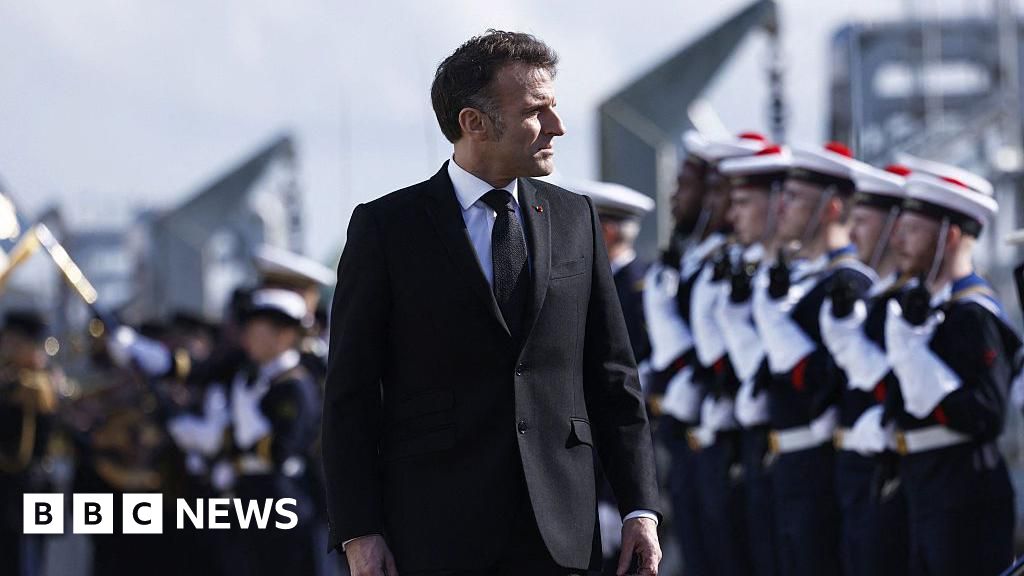
In a move that signals a shift in European and global security dynamics, France‘s President Emmanuel Macron announced that eight countries could soon benefit from Paris’s nuclear protection, a development that has sent ripples across international corridors of power. While the explicit intent is to bolster regional security—and potentially reposition France as a central player in nuclear diplomacy—the decision underscores a complex balancing act: extending protective umbrella without relinquishing sovereignty.

According to Macron, these nations will enjoy nuclear protection, yet all remains under the strict control of Paris. “France will retain sole decision-making power,” Macron asserted in a recent statement. This assurance emphasizes that, even as alliances and security commitments deepen, France seeks to maintain its strategic independence. This approach resonates with traditional Gaullist principles, framing nuclear security as a sovereign prerogative that cannot be shared or delegated. The European security landscape, historically dominated by NATO and the United States, is now witnessing a nuanced reconfiguration, with Paris positioning itself as a pivotal regional power.

International analysts suggest that this move may be aimed at countering the influence of Russia and China in Europe and beyond. By extending nuclear deterrence to select allies, France appears to be creating a layered security posture that could challenge the existing transatlantic dominance. Historian Pierre Lorrain, an expert on French military policy, notes that this move “reasserts France’s unique role as a nuclear power capable of independent influence, signaling a subtle but clear rejection of American hegemony in Europe.” The decision may also foster a sense of sovereignty among these nations, but how this impacts NATO cohesion remains uncertain.

From a geopolitical perspective, the nuclear sharing arrangement reveals broader strategic ambitions. The United States and European Union are closely watching how this development may recalibrate alliances. The shift could inspire other small or medium-sized states to push for independent deterrent options—thus complicating existing security architectures. Conversely, critics warn this could fragment collective defense, weakening established alliances, especially if nations begin to question their reliance on American nuclear umbrella. According to an analysis by the International Crisis Group, sustainable security depends on trust and shared sovereignty, which are challenged by unilateral decisions like Macron’s recent announcement.

As history unfolds, the international community watches with bated breath, aware that such decisions—though carefully couched in sovereignty and security—can have unforeseen consequences. The move by France could either fortify regional security or deepen divisions, depending on how the proposed alliances are maintained and if they evolve into competing power centers. One thing remains certain: the delicate balance of global diplomacy hinges on these choices, and the world’s future may soon be shaped by how these nations and their leaders navigate the treacherous waters of nuclear diplomacy, leaving an indelible mark on the fabric of international security. With history watching silently, the question lingers—who truly controls the ultimate defensive firepower, and at what cost to global stability?

Starbase teams up with Cameron County to tighten security and crack down on lawbreakers

Starbase Emerges as a Pioneering Model in Autonomous Urban Development

In a bold move that signals a transformative shift in urban governance and corporate influence, Starbase, a city built around SpaceX’s bustling rocket operations, has officially transitioned into a unique hybrid jurisdiction. Less than a year after its residents voted for incorporation, the city has struck formal agreements with Cameron County to provide essential services, including law enforcement. This arrangement exemplifies the disruptive potential of corporate-driven urban development, blurring the traditional lines separating municipality from enterprise.

While many emerging-tech hubs emphasize innovation and technological disruption, Starbase’s governance model underscores a broader trend—the rise of company towns that operate with minimal local government intervention. The interlocal deals entail Cameron County dedicating eight deputies to city security, with only a fraction on duty at any time, effectively outsourcing public safety. This model allows rapid scaling of municipal functions without the need to establish full bureaucratic infrastructures—a feat made possible by strategic legal agreements and a tightly integrated corporate-community ecosystem.

Innovation in Public Safety and Business Implications

Highlights of the Starbase model include:

  • Delegation of law enforcement to county authorities, ensuring legal consistency and resource efficiency
  • Flexible law enforcement deployment—only two deputies patrol at a time, optimizing operational costs
  • Retention of public records with county agencies—maintaining transparency while protecting corporate interests
  • Provision for special event policing, enabling rapid response to episodic needs—an essential feature for a facility focused on frequent Rocket launches

This innovative governance approach signals a new era where corporate innovation extends beyond product development into the realm of urban administration. Elon Musk’s vision of building a self-sustaining city around space tech is increasingly feasible, disrupting traditional notions of municipal boundaries and public safety. Industry analysts note that such models could revolutionize how future spaceports and high-tech hubs operate, attracting investors by reducing bureaucratic overhead and accelerating project timelines.

Business Disruption and Future Trajectories

The business implications are profound. By establishing a controlled but flexible local governance framework, SpaceX can focus on core activities—rocket manufacturing, testing, and launches—while external entities handle compliance and safety. This arrangement could serve as a precedent for other sectors—such as renewable energy or biotech—where corporate innovation demands a specialized governance paradigm.

Technology giants and startups alike are watching this experiment closely. Industry leaders and think tanks like MIT and Gartner predict a future where private enterprise could effectively operate entire cities, especially in niche domains like space exploration and sustainable infrastructure. Such developments are likely to catalyze a wave of entrepreneurial urbanism, emphasizing speed, efficiency, and adaptability over traditional bureaucratic channels.

Looking Ahead: An Urgent Call for Strategic Adaptation

As this disruptive model gains momentum, stakeholders—regulators, investors, and residents—must adapt quickly to the shifting landscape of governance and business. The success of Starbase could accelerate a trend toward decentralized, corporate-led metropolitan areas—challenging existing political paradigms and redefining urban development in the 21st century. The urgency for policymakers to craft flexible, forward-thinking regulations has never been greater, especially as technology continues to outpace traditional governance structures. The era of company towns is upon us, and those who anticipate this shift now will lead the future of innovation-driven urban landscapes.

Retail Spending Slumps in March as Young Consumers Tighten the Belt

The United States economy is experiencing a crucial inflection point that could have profound geopolitical repercussions in the coming years. Recent data from the Commerce Department reveal a decline in retail sales for March, with spending dropping by 1% compared to the previous month. While seemingly small, this decline exceeds analysts’ expectations and signals a potential slowdown in the world’s largest consumer market. The fall in consumer expenditure, particularly in departments such as general merchandise and gas stations, underscores a broader shift driven by retreating income expectations and lingering recession fears. Central to this economic shift is the impact of recent banking crises, which have fundamentally shaken investor confidence and prompted households to curb spending.

Economists and analysts note that this decline is not solely a short-term anomaly. Bank of America analysts suggest that the lull in refunds issued by the IRS—down by approximately $25 billion relative to last year—has dampened household liquidity, further constraining consumer activity. Simultaneously, the expiration of pandemic-era benefits has taken a toll on disposable income and spending power. How these decisions ripple through society becomes evident as household savings rates potentially decline and the specter of an impending recession looms larger. Despite these setbacks, some resilient fundamentals remain—such as a 2.9% year-over-year rise in retail spending and steady wage growth, albeit at a slower pace—yet the overall picture indicates signs of faltering consumer confidence.

The Federal Reserve and other global institutions watch these signals with caution. The latest employment figures do not indicate a collapsing labor market; employers added 236,000 jobs in March, yet the pace of growth is diminishing, and the Job Openings and Labor Turnover Survey reflects a 17% decrease from last year’s peak. Additionally, higher inflation expectations, fueled by rising gas prices, threaten to erode real wages and consumer purchasing power. This combination of tightening labor markets and inflationary pressures is forcing policymakers into a delicate balancing act, trying to stave off a recession while combatting inflation. Historian analyses point out that history shows such periods often precede significant geopolitical shifts, as economic downturns tend to strain international alliances and domestic stability.

The international community remains alert to the potential geopolitical fallout of America’s economic trajectory. Declining consumer confidence and rising inflation could prompt China and other rival powers to accelerate their strategic ambitions, sensing for opportunity as the U.S. grapples with internal uncertainties. Major global institutions like the IMF warn that a U.S. recession could destabilize emerging markets, which rely heavily on American trade and investment. This delicate web of interconnected economic and geopolitical forces underscores the vital importance of decisions made today. As analysts warn that the effects of recent banking turmoil and fiscal policies are still unfolding, the specter of history—where economic tremors evolve into full-blown crisis—serves as a stark reminder: the world’s balance of power is increasingly defined by these subtle yet profound shifts. The narrative of this ongoing chapter is written in the language of uncertainty, and only time will reveal whether the U.S.—and indeed the global order—can navigate this turbulent period without succumbing to the chaos of the fall.

Social Media Auto Publish Powered By : XYZScripts.com



