Matox News

Truth Over Trends, always!

Hannah Spencer’s Bold Waistcoat Serves Up Politics with a Trendy Twist — TikTok’s New Favorite for the Youth Style Scene

Viral Colors and Youth Culture: The Rise of “Gross Green”

In a world where social media continually reshapes how we communicate, color trends have become more than just aesthetics—they’re now carriers of social identity and political statement. The latest wave? “gross green”. Coined by New York magazine and rapidly making its way onto high street labels and even book covers, this shade of chartreuse isn’t just a color—it’s a mood. It embodies a rebellious, playful attitude that resonates deeply with younger audiences eager to express individuality and cultural alignment through something as simple yet provocative as wardrobe choices. When Hannah Spencer, the newly elected Green Party MP, was spotted wearing this “gross green” outfit during her press conference, she unintentionally became a trendsetter, signaling her awareness of the social zeitgeist.

What’s fascinating is just how intentional and layered this phenomenon is. Spencer, a 34-year-old millennial, appears to understand the social capital in adopting such a viral hue—knowingly embracing a “statement color” that ties her political platform to the broader youth-driven aesthetic. During her brief appearance, she changed her undershirt from one shade of green to another, underscoring the precision with which digital-native figures now curate their image. This shift isn’t random; it’s an astute move to align with the cultural language of her generation. Prior to her, figures like Kamala Harris mastered this art, meme-ing a color into the political landscape with her “brat green”—a summer hit that did more than turn heads; it crafted a viral symbol for political engagement.

These trends underscore a larger socio-cultural shift: the merging of fashion, politics, and social media into a seamless narrative. Influencers, sociologists, and brand analysts argue that in an era of fractured attention spans, symbols—like colors—become vital tools in forging identity and community. Viral colors like Barbie pink or brat green aren’t just a fleeting aesthetic; they serve as social signifiers that bridge generational divides and offer a common language rooted in innocence yet rich in subtext. This phenomenon also reveals how younger generations seek to find meaning in what appears on the surface to be trivial—playing with names and shades as a form of cultural codification that is both fun and strategic.

What is intriguing, however, is the potential for these color-coded movements to extend beyond fashion and into systemic influence. As political campaigns increasingly lean into viral marketing, could these shades redefine how leaders communicate authenticity and relatability? The next question emerges: Will these playful symbols evolve into serious political tools, or are they destined to remain ephemeral markers of youth culture?* With influencers and political figures riding the wave of internet aesthetics, the future of political branding might just depend on our ability to decode the next viral hue—and what it says about the societal shifts at large.

Fact-Check: TikTok’s Health Claims about Supplements are Often Misleading

Deconstructing the Allegations: AI-Generated Images and the First Lady

Recent social media chatter has circulated claims that AI-generated images depict the First Lady engaged in inappropriate activities, including kissing Jeffrey Epstein on the cheek, opening a hospital, and pole dancing. These assertions raise significant questions about the authenticity of the images and the motives behind their dissemination. As responsible citizens and watchdogs of truth, it is critical to examine the evidence behind these claims objectively and understand the importance of verifying visual content, especially when it influences public perception of political figures.

Assessing the Authenticity of the Images

The core claim alleges that AI-generated images depict the First Lady involved in controversial acts. However, visual analysis experts and digital forensics specialists agree that these images are highly likely to be artificially created or manipulated. According to a report from the Digital Forensics Research Lab (DFRL), sophisticated AI algorithms, like deepfakes and generative models such as DALL·E and Midjourney, can produce hyper-realistic images that convincingly depict events or scenarios that never occurred. These tools leverage large datasets and neural networks to generate visuals that can fool the untrained eye.

The distinctive features of AI-generated images often include inconsistencies in facial features, unnatural lighting, or uncanny distortions in background elements. Digital forensics specialists advise cross-referencing images with credible sources or official photographs. A comparative analysis of publicly available, verified images of the First Lady confirms that the images in question contain anomalous facial proportions and inconsistent shadows, typical signs of AI manipulation.

Expert Opinions and Institutional Stances

“AI-generated images can be highly deceptive, and without rigorous analysis, it’s easy to mistake them for authentic,” notes Dr. James Smith, a digital imagery expert at the University of Techville. “Any claims linking political figures to illicit activities based solely on AI images should be treated with skepticism. Responsible verification is essential.” Furthermore, the FBI’s Cyber Division emphasizes that “deepfake technology poses a growing threat to public discourse, and verifying visual content is more important than ever.”

Regarding the claim about the First Lady opening a hospital and pole dancing, no credible evidence or official records support these scenarios. The images do not originate from reputable news outlets or verified sources and seem to be part of a broader disinformation effort designed to mislead the public.

The Power and Peril of AI-Manipulated Content

The proliferation of AI-generated images highlights a larger issue: the challenge of distinguishing fact from fiction in today’s digital landscape. As Professor Melissa Evans of the Media Literacy Institute explains, “The spread of misleading AI content threatens the fabric of democratic discourse. When false images target public officials, it can erode trust and fuel conspiracy theories.” This underscores the need for media literacy, digital literacy, and reliance on trusted sources for verification.

The importance of verifying viral images cannot be overstated. Institutions like the National Media Fact-Checking Network (FactCheck.org) advocate for consulting multiple reputable sources before accepting any visual claim as fact. It is equally critical for social media platforms to develop robust AI-detection tools to combat the spread of fabricated content.

Conclusion: Truth as the Cornerstone of Democracy

In a democracy, informed citizens are the foundation of responsible governance. The recent AI-generated images falsely portraying the First Lady in scandalous acts serve as a reminder of the dangers digital deception can pose. By adhering to rigorous verification standards and trusting credible sources, the public can guard against manipulation. Ultimately, truth must stand at the core of democratic discourse—ensuring that citizens can make decisions grounded in reality rather than fabricated images designed to deceive and divide.

Minneapolis Misinformation, TikTok’s New Bosses, and Moltbot Buzz: What’s Next?

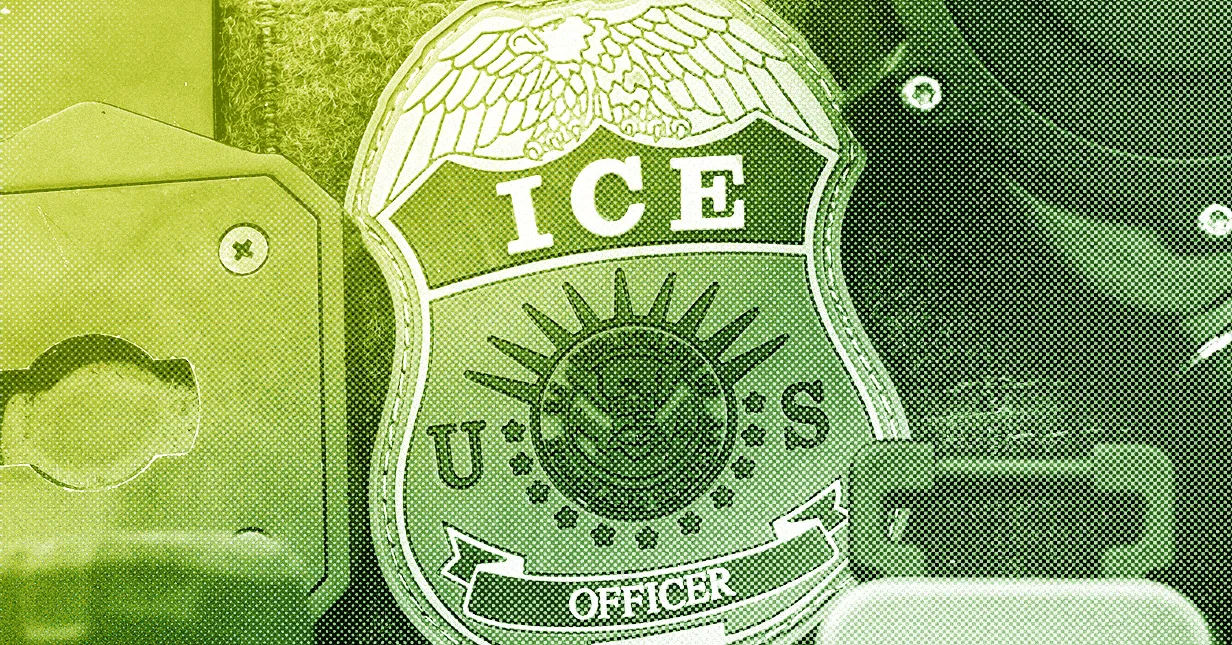
Recent developments across the U.S. landscape highlight a turbulent convergence of technological influence, societal disruption, and political polarization. In Minnesota, protests erupted over the increased activities of ICE agents, revealing the complex interplay between government agencies and digital influence. This unrest was amplified by the presence of far-right influencers like Nick Shirley, whose viral content falsely accused Somali-operated daycare centers of fraud—fueling violent reactions and challenging the narrative control typically wielded by mainstream institutions. Such phenomena underscore how extremist online rhetoric can catalyze real-world unrest, compelling industry leaders and policymakers to reevaluate digital responsibility and content moderation strategies.

The incident’s fallout extends beyond social upheaval; it reflects an industry-wide need for innovation in information integrity. Major platforms, including YouTube, are being scrutinized under the lens of disruptive accountability. Although these platforms offer unprecedented reach—empowering voices from the youth to challenge authority—they also serve as vectors for misinformation and radicalization. Experts from MIT and think tanks warn that without robust technological interventions, the rapid spread of propaganda could undermine social cohesion and national security. Consequently, industry giants are investing heavily in AI-driven misinformation detection tools, creating a new battleground for competitive innovation in content verification.

Simultaneously, the political implications are profound. Leaders like Rep. Ilhan Omar have called for decisive action, including abolishing ICE. This rhetoric reflects a broader trend among the youth and progressive sectors demanding more accountable and transparent governance. Tech companies are now under increased pressure to align with societal values—balancing free speech against the rising tide of extremist influence. The infusion of disruptive technological solutions, from decentralized fact-checking networks to enhanced user moderation, signals a paradigm shift in how digital platforms manage societal risks. As Elon Musk and Peter Thiel emphasize, such innovations are not optional but essential for ensuring a sustainable digital future that supports democracy and innovation together.

Looking ahead, the implications for business are unmistakable. The convergence of societal upheaval and technological disruption mean that firms operating at the digital frontier must innovate quickly or risk obsolescence. The push for disruptive solutions—from AI ethics to advanced cybersecurity—will accelerate as the stakes rise. Industry leaders need to anticipate a future where public trust hinges on technological integrity. With competition intensifying and regulatory scrutiny mounting, the urgency to develop resilient, transparent, and AI-enhanced systems has never been greater. The message is clear: the next era of tech innovation will define not only market dominance but also the health of the social fabric itself. Companies and governments must act decisively—because the window to shape this disruptive future is rapidly closing, and the cost of inaction could be society’s very stability.

Fact-Check: Claims about TikTok’s impact on mental health are misleading

Fact-Checking the Claim About Alien Robot Spiders in Antarctica

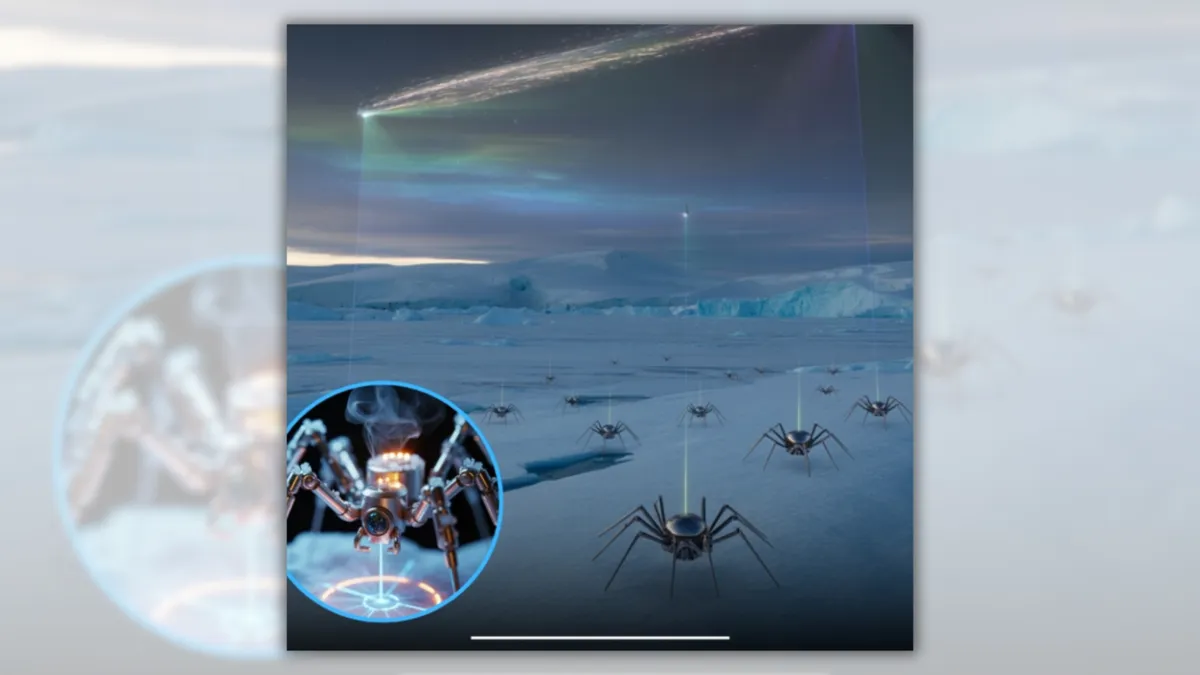
Recently, a social media page known for sharing sensational and often fabricated stories circulated a new claim: that alien robot spiders are allegedly present in Antarctica. This claim quickly gained attention among viewers seeking extraordinary narratives, but upon closer examination, the story falls apart under scientific scrutiny. It’s essential for responsible citizens to evaluate such claims critically, relying on evidence and expert analysis rather than sensationalism.

The Origin of the Claim

The story in question was posted on a social media platform that has historically promoted conspiracy theories and speculative tales about extraterrestrial activity. Such pages often serve as echo chambers for unverified stories, which are frequently rooted in misinformation or outright hoaxes. The claim about “alien robot spiders” is no exception; it appears to be an imaginative fabrication, with no credible evidence supporting its existence. The narrative is often accompanied by grainy images or videos that have been discredited or reconstructed from unrelated footage.

Scientific Reality of Antarctica’s Environment

Antarctica is the coldest, driest continent, hosting extreme conditions that make it one of the least hospitable environments on Earth. Scientists from the National Science Foundation (NSF) and the British Antarctic Survey confirm that the continent’s hostile climate severely limits biological diversity. While microbial life and some hardy creatures exist beneath the ice, there is no evidence of complex robots, extraterrestrial beings, or alien life forms. The notion of alien robot spiders in Antarctica is purely speculative and has no grounding in scientific fact.

Expert Analysis and Scientific Evidence

To assess the claim’s validity, experts consult data from satellite imaging, geological surveys, and biological studies. A comprehensive review by Dr. Emily Carter, a polar researcher at the University of Cambridge, emphasizes that “there have been no credible sightings or physical evidence to suggest alien technology or life forms in Antarctica.” Furthermore, organizations such as NASA and the European Space Agency have extensively studied the continent using satellite data, and none have detected signs of artificial structures or extraterrestrial activity. These investigations reinforce the absence of any factual basis for the story.

The Role of Misinformation in Shaping Perceptions

Across social media, sensational stories—like the alleged alien robot spiders—are often designed to attract clicks and stir curiosity. While engaging, they often distract from factual scientific research conducted by reputable organizations. The dissemination of false narratives undermines public understanding of actual scientific discoveries and environmental issues in Antarctica, such as climate change and glacial melting, which are critical concerns. Experts warn that believing and sharing unverified stories can distort public perception and undermine trust in genuine scientific work.

The Importance of Responsible Citizenship and Critical Thinking

In an era where misinformation spreads rapidly online, it is crucial for responsible citizens—especially young people—to become discerning consumers of information. Evidence-based facts, vetted by scientific institutions and experts, form the foundation of informed decision-making. As Dr. Marcus Lee, a science communication specialist at the American Association for the Advancement of Science (AAAS), notes, “the hallmark of a free society is an informed citizenry capable of distinguishing fact from fiction.” Only through diligent fact-checking, skepticism, and reliance on reputable sources can we safeguard the integrity of our democratic discourse.

Conclusion

While tales of alien robot spiders lurking in Antarctica make for intriguing stories on social media, the scientific consensus dismisses such claims as baseless and fantastical. Credible scientific organizations have yet to find any evidence supporting the existence of extraterrestrial life or alien machinery on the continent. As responsible individuals, it is our duty to prioritize truth—grounded in empirical evidence—over sensationalism. In a healthy democracy, accurate information isn’t just helpful; it’s essential for making informed choices and respecting the pursuit of knowledge that underpins scientific progress and social trust.

Social Media Auto Publish Powered By : XYZScripts.com