Matox News

Truth Over Trends, always!

Pete Hegseth’s Pentagon AI crew: Ex-Uber exec and private equity titan join the squad

AI and Geopolitics: Pentagon’s Disruptive Move Toward Private Sector AI Dominance

In recent developments that signal a seismic shift in military-grade artificial intelligence, the Pentagon’s negotiations with leading AI developers underscore a new era of disruption and strategic vulnerability. The Department of Defense (DoD) has engaged in intense contract negotiations with Anthropic, whose advanced language model, Claude, is at the center of the controversy. This situation exemplifies how innovation-driven disruptions in AI are rapidly affecting national security frameworks—placing the traditional defense procurement model under unprecedented strain. With pent-up demands for secure, classified AI systems, the Pentagon’s push to secure multi-vendor contracts and mitigate single-supplier vulnerabilities reflect a clear adoption of best practices in tech risk management, yet reveal profound implications for the future of AI sovereignty.

The negotiations have drawn international attention, largely because of Pentagon’s urgency to establish at least two cleared AI vendors capable of handling classified data. Interestingly, despite current contracts with Google’s Gemini and xAI’s Grok, the security and capability differential among these models is stark. Google’s Gemini, considered a close competitor to Anthropic’s Claude, is on the verge of being cleared for classified deployments, while xAI’s Grok is viewed as less reliable. This “model shuffle” points to a broader industry consensus: the supply chain for classified AI models is fragile, and the risks of dependency on any single, possibly compromised, vendor could be catastrophic—especially as critics and analysts such as Gartner emphasize that “concentration risk remains the Achilles’ heel of AI deployment in high-stakes environments.”

The real business implications of this crisis are significant. Disruptive entries such as Anthropic have established themselves as indispensable—even as concerns about their morals and security practices persist. As Axios reports, Pentagon officials are explicitly aware that they are dependent on Anthropic’s AI precisely because “they are that good.” This paradox illustrates the core challenge for future defense procurement: balancing the need for cutting-edge innovation against security vulnerabilities. The negotiation process also demonstrates a broader shift where the private sector’s aggressive pursuit of AI dominance directly influences, and sometimes complicates, military strategy.

This evolving landscape foreshadows a future where the disruption of traditional defense models becomes inevitable. As the Biden administration emphasizes diversification of AI supply chains per new national security guidelines, the Pentagon’s procurement of multiple models—including discussions around the deployment of Gemini and potential exclusivity with Anthropic—emphasizes a move towards an AI-driven arms race. With tech giants and defense contractors like Emil Michael—whose controversial history at Uber signals the ruthless nature of business-driven tech innovation—now navigating a complex nexus of geopolitics and security, the industry is primed for a turbulent, hyper-competitive evolution.

Looking ahead, the implications for the broader tech ecosystem are clear: disruption is accelerating, and industry players with the most advanced models will wield outsized influence—not only in national security but also in the global power balance. The urgency surrounding diversifying AI vendors underscores the necessity of swift innovation, surgical risk management, and strategic alliances. Failure to adapt could result in catastrophic vulnerabilities, while those who lead the charge will dominate the emerging AI-augmented geopolitical landscape. As experts like Peter Thiel warn, “The future belongs to those who can manipulate the fabric of AI and national infrastructure faster than their rivals.” The question is no longer if disruption will come; it’s whether industry and government can harness it before they are overtaken by the relentless wave of technological revolution.

Will Hong Kong’s media titan Jimmy Lai face a prison death? – The Latest | Jimmy Lai

Jimmy Lai Sentenced in Hong Kong: A Turning Point in Global Politics

In a move that signals a pivotal shift in the geopolitical landscape of Asia, Hong Kong‘s judiciary has handed down a 20-year prison sentence to renowned media mogul and pro-democracy advocate Jimmy Lai. The verdict, rooted in charges of sedition and conspiracy to collude with foreign forces, represents a stark escalation of Beijing’s tightening grip on the semi-autonomous city, where the balance between civil liberties and unified control is increasingly fragile. Lai’s conviction follows a series of escalating measures aimed at stifling dissent, with critics warning that this marks a new era of authoritarian assertiveness disguised as legal action.

The Chinese Communist Party (CCP) leadership explicitly views Lai’s case as a warning against foreign interference and a lesson in loyalty. Historically celebrated as a champion of free press and democratic values, Lai now faces a prolonged imprisonment amidst his declining health at age 78. This case is not merely about one individual but is emblematic of broader efforts to recalibrate Hong Kong’s special status since the 2019 protests. Analysts argue that this demonstrates how the CCP leverages legal systems to consolidate power, signaling to international observers that any challenge to its sovereignty will be met with unwavering harshness.

  • In December, Lai was convicted after pleading not guilty to the charges—an act seen by many as a statement of protest against what critics characterize as Beijing’s erosion of Hong Kong’s promised freedoms. The sentence has triggered international condemnation, with governments like the United States and United Kingdom issuing statements warning of the diminishing autonomy of Hong Kong and the threat to global standards of human rights.
  • The verdict is also a reflection of how the National Security Law, imposed by Beijing in 2020, has reshaped Hong Kong’s legal landscape, bypassing the common law system that once protected free speech. This legal framework has effectively criminalized dissent, making Lai’s case a high-profile example of what critics call the crackdown on civil society.
  • International organizations, including Amnesty International and the United Nations, warn that such measures threaten the global reputation of China and undermine the principles of democracy and rule of law cherished worldwide.

This case’s reverberations extend beyond Hong Kong, impacting regional stability and US–China relations at a time when geopolitical tensions are already at a boiling point. The United States, by reaffirming its commitment to human rights and free expression, is positioning itself as a counterbalance to Beijing’s authoritarian ambitions, which many see as part of a larger struggle for influence across the Indo-Pacific.

As historians and analysts debate whether Lai’s imprisonment marks a new chapter of international authoritarianism or a temporary setback in Hong Kong’s fight for democracy, the global community must grapple with the truth that history is now being written in the shadows of Chinese tanks and courtrooms. The weight of the past lingers, but the future remains uncertain—yet undeniably, the actions taken today will echo into the coming generations as either the preservation of liberty or its irreparable loss. With each legal salvo, the unfolding story reminds us of how fragile freedom can be when neglected or suppressed, and how history’s pen is never at rest.

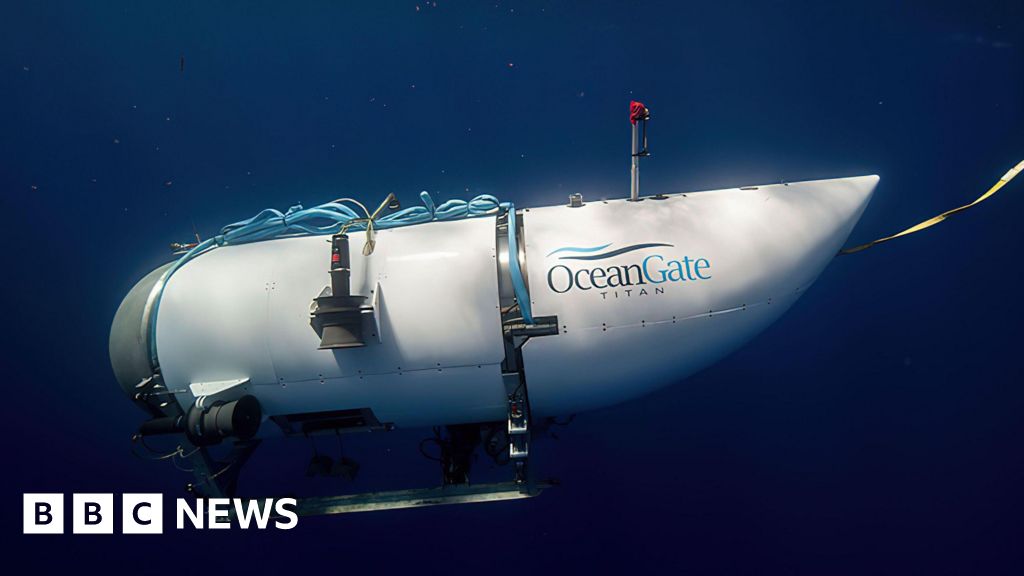
US officials confirm Titan sub’s tragic implosion due to faulty engineering—youth concerns grow

OceanGate’s Titan submersible disaster has ignited a fierce debate across international corridors about the responsibilities of private firms venturing into deep-sea exploration. The implosion of Titan in June 2023, which resulted in the tragic loss of all five onboard—including OceanGate’s chief executive—has cast a stark spotlight on **faulty engineering practices** and **lukewarm regulatory oversight**. According to a recent report by the US National Transportation Safety Board (NTSB), the tragedy was not an unforeseen act of nature but a consequence of **”inadequate” engineering processes that failed to meet established safety standards**. Such findings underscore how, in the pursuit of adventure and profit, safety deficiencies are often brushed aside, with deadly consequences.“

At the core of this catastrophe lies a **daring yet dangerously flawed vision**—one where a private firm sought to capitalize on ultra-wealthy thrill-seekers paying up to $250,000 for a seat in an experimental deep-sea vessel. It was the company’s reckless disregard for adequate testing that set the stage for disaster. The NTSB’s report elucidates how OceanGate’s testing protocols were superficial at best, leaving critical structural weaknesses unaddressed and the vessel unfit to withstand the immense pressures of the North Atlantic’s depths. This failure to ensure safety not only endangered lives but highlighted a broader systemic issue—how the lack of stringent regulation allows profit-driven entities to gamble with human lives under the guise of exploration.

The **geopolitical impact** of this incident extends beyond the oceanic depths. It raises urgent questions about the regulation of commercial deep-sea operations—a sector increasingly driven by private enterprise and ambitious billionaires’ projects. Analysts warn that such failures threaten to erode public trust and could result in international calls for tighter oversight. International organizations and regional governments are watching closely—fearful of a domino effect that might embolden similar risky endeavors across other frontier zones such as space or uncharted territories. Furthermore, the incident underscores how the decision to prioritize profits over safety can undermine the diplomatic stature of nations hosting or regulating such activities. Several experts, including maritime safety authorities and historians of exploration, emphasize that this tragedy is a stark reminder of the perils of deregulating high-stakes ventures.

In the wake of the investigation, revelations of **internal culture and alleged corruption** at OceanGate have raised alarms about the nature of private sector involvement in hazardous exploration. The NTSB’s findings reveal that some internal employees voiced concerns over **”safety being ignored”** and even criticized the *business model*, which involved **accepting paying clients as “mission specialists,”** contrary to US safety regulations that prohibit transporting passengers in experimental vessels. Disturbingly, accounts describe how OceanGate’s leadership, including Stockton Rush, allegedly dismissed these warnings, with reports suggesting attempts to manipulate oversight through corrupt political influence—an issue that many analysts argue highlights the risks of privatized exploration operating outside the bounds of strict governance.

As history unfolds, it becomes clear that the maritime tragedy involving Titan is emblematic of a broader shift in how nations and societies negotiate the boundaries of exploration and commerce. While mankind’s quest for discovery is integral to progress, it must not be unchecked. The sinking of Titan, and the subsequent revelations, serve as a grim warning **that unchecked greed and lax regulation** can turn daring ambitions into existential dangers. In the face of this deadly lesson, international institutions and governments are increasingly called upon to assert control—integrating strict safety standards with accountability—to ensure that the wave of exploration does not drown mankind in its wake. As the oceans remain veiled in mystery, the danger now is that history’s ongoing struggle with tragic hubris may repeat itself, leaving future generations to ponder whether we learned enough from the depths’ darkest secrets.

Social Media Auto Publish Powered By : XYZScripts.com