Matox News

Truth Over Trends, always!

Australia Today: Universities’ Racism ‘Systemic,’ Angus Taylor Shuns Leaked Migration Plan

International Alert as Australia’s Political Landscape Faces Turmoil

The political environment in Australia is rippling with controversy following revelations about a proposed immigration policy fragment that has sparked international concern. An unreleased document, reportedly drafted under the leadership of former Sussan Ley, has outlined a plan to severely restrict migration from regions associated with terrorist activities across 13 countries. The plan, which aims to rapidly remove up to 100,000 asylum seekers and visitors on student visas, has been widely condemned by human rights and international watchdogs as a blatant exercise in discrimination. The Refugee Council of Australia labeled it an “appalling idea,” echoing global fears about rising populism and exclusionary policies that threaten Australia’s reputation for fairness and our commitment to humanitarian principles. Despite the current opposition leader Angus Taylor declaring he had no knowledge of the document, the internal divisions within the Liberal Party expose a troubling shift towards more hardline, Trump-inspired border policies.

Global Impact of Regional Policies and the Rise of Systemic Racism

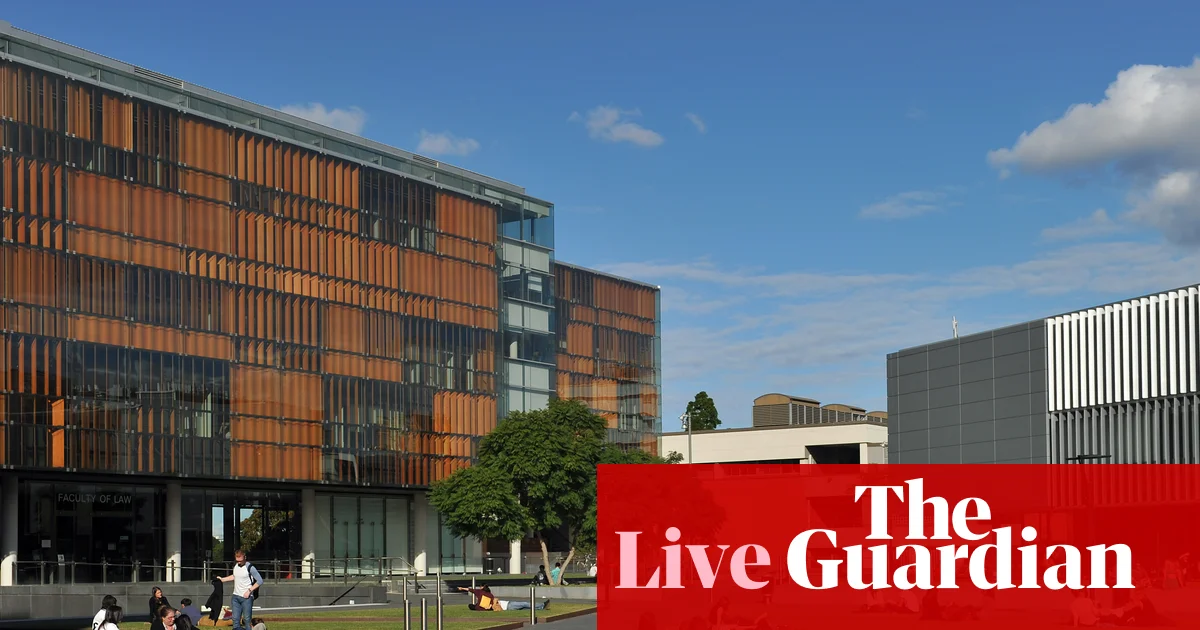
The leaked proposals underscore a broader shift in global politics, emphasizing national sovereignty and security concerns over traditional humanitarian commitments. Such policies resonate with nationalistic narratives pushed by populist leaders worldwide, contributing to a dangerous normalization of prejudice. Meanwhile, international organizations like the United Nations warn that policies based on indiscriminate bans threaten to enlarge the gulf of distrust and xenophobia. In Australia, this trend is compounded by a disturbing report exposing the pervasive systemic racism endemic within the university sector. According to the Australian Human Rights Commission, a landmark study found that 70% of survey respondents had experienced indirect racism, with Palestinian and Jewish students experiencing rates as high as 90%. These findings highlight the damaging impact of institutional bias, which threatens the fabric of multicultural societies and undermines core democratic values. Critics argue that if such discrimination remains unchecked in education, it is only a matter of time before societal tensions escalate further, potentially igniting unrest on the streets.

How Decisions Shape Future Societies and the Winds of History

As analysts warn, the decisions taken today will reverberate for generations, shaping the moral and geopolitical landscape of the 21st century. Governments that resort to discriminatory policies in the name of security risk unleashing a wave of social fragmentation, fostering extremism rather than preventing it. Historical figures such as George Orwell and Hannah Arendt warned that totalitarian tendencies often emerge from fear and prejudice cloaked in national security rhetoric. The international community watches keenly as Australia’s internal conflicts reflect a wider, global struggle—whether to uphold the timeless ideals of justice and fairness or succumb to the siren call of exclusion. Underneath the surface, these decisions expose societal fractures rooted in ignorance and fear, threatening to derail the progress of multiculturalism and inclusion. The weight of history lingers, a reminder that the pathways chosen today define the societies of tomorrow—whether as beacons of hope or shadows of despair, remains an unfolding narrative on the scale of nations and civilizations.


Teen admits to killing 12-year-old Leo Ross—sentencing today | UK news

Recent events across the United Kingdom have once again brought to light the profound implications of juvenile justice and criminal accountability. In Birmingham, a 15-year-old who admitted to the *senseless* murder of 12-year-old Leo Ross is set to be sentenced, igniting a complex debate over the intersection of juvenile rehabilitation and public security. While the defendant’s identity remains under strict legal restrictions, the case underscore the challenges nations face when balancing transparency with the imperative to foster a humane justice system—a debate echoed by international human rights advocates and constitutional commentators worldwide.

As the court deliberates, the case exemplifies how *both domestic and international influences* shape sentencing principles, especially when minors are involved in life-altering crimes. The defendant, who carried out a *random, unprovoked attack*, had previously caused harm but was still only 14 years old at the time of his offense. The proceedings highlight a stark reality: criminal acts committed by juveniles can trigger *global discourse* about whether the focus should be on rehabilitation or punishment—a dilemma that has polarized societies and policymakers. With the potential lifting of reporting restrictions, the case raises important questions about *the role of public transparency* versus the *potential risks to the offender’s future* and societal healing—a dilemma that resonates far beyond Britain’s borders.

International organizations, from the United Nations to regional judicial bodies, continue to grapple with these issues, emphasizing the importance of *balanced justice*. Analysts note that *the influence of international law* and *human rights norms* often pushes jurisdictions to reevaluate juvenile sentencing standards—sometimes at odds with traditional justice policies. The UK’s legal debates occur against a backdrop where the consequences of such decisions hold geopolitical weight; they send signals about how nations treat their most vulnerable offenders and influence global standards. Historians warn—in particular, scholars like Professor Michael Hart of the University of Oxford—that such cases can set *precedents* which ripple through *the fabric of international law*, impacting *security policies* and *societal norms*.

Moreover, the case highlights a larger turning point in criminal justice—one that invites international scrutiny and calls for *more nuanced policies*. While the court’s decision on whether to name the juvenile offender will be pivotal, it is *the broader implications* that truly reveal *the hotly contested terrain* of justice reform—an arena where political will, human rights, and societal safety collide. As the world watches, the outcome threatens to influence *future legislative reforms*, shaping how governments across continents approach juvenile crime amidst *the shifting tides of geopolitics*. The weight of history presses down as the court prepares to cast its verdict, a defining moment that will echo across time, marking a chapter where law, morality, and society itself stand at a crossroads—an unfolding saga in the relentless pursuit of what justice really means in our interconnected world.

Join the Unlocking the World newsletter—empower your future today!

As the world stage shifts rapidly in 2023, international alliances and strategic interests are once again at the forefront of global affairs. The resurgence of confrontations and realignments among major powers signals a new era in geopolitics, challenging the post-Cold War order established over the past three decades. Experts like Dr. Matthew Johnson, a renowned historian, argue that these trends underscore a fundamental reassertion of national sovereignty in face of what many perceive as an overreach by international institutions. Nations across the globe are recalibrating their security policies, economic strategies, and diplomatic outreach, prompting intense debates about the future of global stability and leadership.

The United States continues to assert its influence through renewed military commitments and strategic partnerships, notably in the Indo-Pacific region. Its efforts aim to counterbalance the expanding assertiveness of China, whose policymakers are pursuing aggressive territorial claims and economic diplomacy under the umbrella of the Belt and Road Initiative. Meanwhile, Russia remains entrenched in conflicts in Ukraine and asserts its role as a speculative titan, challenging Western dominance and complicating NATO’s stability. The Russian leadership, citing geopolitical necessity, views NATO’s eastward expansion as a direct threat. These tensions have rekindled fears of a broader conflict, compelling analyst think-tanks like the International Institute for Strategic Studies to warn of a fragile peace that requires vigilant management.

In this climate, international organizations such as the United Nations are often criticized for their perceived inability to adapt swiftly to evolving threats. Some analysts argue that the UN’s structural limitations hinder effective conflict resolution, leading nations to pursue bilateral or regional agreements instead. The recent uprising of nationalist movements in various nations further complicates the global balance, with governments prioritizing sovereignty over international cooperation, especially in areas like trade, military alliances, and climate policy.

  • Major economies are revisiting trade treaties, emphasizing self-reliance over multilateral agreements.
  • Strategic autonomy is gaining precedence among rising powers questioning existing global governance frameworks.
  • Military modernization efforts are intensifying as states prepare for a possibly more turbulent era.

The geopolitical impact of these decisions is profound: societies are experiencing a shift toward heightened nationalism, with doubts about the efficacy of supranational institutions. Historian Carl Jensen points out that history suggests periods of intense nationalism often foreshadow global conflicts, urging caution in the current climate. Nations are increasingly reasserting their sovereignty, internal policies are aligning with external pressures, and the global order appears to be leeched into a new, unpredictable phase. As the world watches these developments unfold, the question remains: will diplomacy prevail, or are we walking into a confrontation that history might judge as inevitable? The weight of this moment, thus, is not merely measured in treaties or wars but in the enduring legacy of how nations choose to shape their destinies amidst the storm of change.

Social Media Auto Publish Powered By : XYZScripts.com



