
Matox News

Truth Over Trends, always!

Alta Teams Up with Public School to Bring Sharp Styling Tools to Your Favorite Sites

Revolutionizing Fashion with Virtual Reality: Alta Sets the Stage for Industry Disruption

In a bold move demonstrating the transformative power of artificial intelligence (AI) and virtual environments, Alta, an innovative tech startup founded by Jenny Wang, is carving a niche at the intersection of fashion and digital innovation. Having secured an $11 million funding round led by Menlo Ventures, Alta is pioneering a virtual closet ecosystem that allows millions of users worldwide to create digital wardrobes, style outfits, and try them on using hyper-realistic avatars. This disruption is not merely a flashy display of technology—it’s a strategic overhaul of how consumers interact with brands, heralding a new era where digital and physical shopping converge seamlessly.

The business implications are profound: traditional retailers are facing mounting pressure to adapt to these rapid technological shifts. Alta’s collaboration with industry heavyweight brands such as Public School exemplifies how established designer names are embracing AI-driven storytelling and immersive customer engagement. As Wang highlights, the company’s app has already generated over 100 million outfit simulations since its 2023 launch, attracting attention from publications like Time and Vogue—a clear marker of mainstream industry recognition. This datastream signals a pivotal shift towards personalization and immersive shopping experiences, compelling brands to rethink their digital strategies if they are to stay competitive.

What makes these developments standout is the integration of digital fashion with e-commerce platforms. Alta’s platform now features interactions with thousands of brands, providing a direct avenue for consumers to style, test, and purchase fashion items within a unified AI-driven environment. Notably, the recent integration with Public School signifies a major milestone—marking the first time a high-profile designer embeds a fully personalized avatar styling tool directly into its website. This innovation fundamentally alters the consumer journey: shoppers can now style pieces on their Alta avatar directly from brand pages, removing friction and increasing engagement. Such features signal a future where digital try-ons become standard, shifting power away from brick-and-mortar stores and into the hands of data-driven, digitally native brands.

Looking ahead, industry analysts from Gartner and MIT suggest that these must-have technologies will influence broader retail strategies across sectors, blurring the lines between digital entertainment, social media, and commerce. As The Economist warns, the rapid adoption of avatar personalization and AI-enhanced storytelling could lead to “industry disruption on a scale comparable to the advent of online shopping itself.” For entrepreneurs, investors, and established players alike, the message is clear: embracing virtual innovation is no longer optional—it’s imperative for survival. The next wave of tech-driven fashion brands will leverage these tools to personalize experiences at scale, fostering loyalty and unlocking new revenue streams.

In this swiftly evolving landscape, Alta and its peers are setting the pace for a future where virtual identities, AI, and digital fashion not only disrupt but redefine consumer interaction. With investments pouring in and visionary brands like Public School actively integrating these innovations, the race is on to harness these breakthroughs at an industry-wide level. For those who ignore these signals, the risk is clear: being left behind as the digital revolution in commerce accelerates at a relentless pace. The future of retail is digital, personalized, and undeniably disruptive—those who adapt today will dominate the markets of tomorrow.

4 Must-Have Tools Fueling the Next Tech Bubble

Tech Giants Accelerate Capital Expenditures Amid AI Boom

In a clear signal of disruption in the technology sector, leading companies are channeling unprecedented levels of capital into expanding their infrastructure, particularly focusing on artificial intelligence (AI) capabilities. During this earnings season, industry analysts have observed a notable trend: corporations like Google, Microsoft, and Amazon are aggressively increasing their capital expenditures (CapEx) to build out data centers and AI-specific infrastructure. This shift not only underscores their commitment to dominance in next-generation tech but also signals a strategic move to redefine competitive landscapes across digital ecosystems.

The implications are profound. As Lauren Goode from WIRED highlights, tech firms are not merely sitting on piles of cash—they are actively deploying these resources into expansive infrastructure projects, focusing heavily on AI hardware and data processing capabilities. Industry giants recognize that the future of tech hinges on the ability to process exponential data loads while enabling real-time, AI-driven decision-making. This aligns with insights from Gartner analysts who forecast that AI-driven data infrastructure will constitute over 50% of enterprise IT spending by 2025, challenging existing hardware paradigms and accelerating the disruption of traditional data center models.

Technological innovation is at the heart of this surge, with companies leveraging advances in semiconductor fabrication and edge computing. Disrupting established players like Cisco or traditional server providers, new entrants are pioneering energy-efficient and scalable AI hardware solutions designed to meet the massive computational demands of modern machine learning workloads. Experts such as Elon Musk have long emphasized that the next wave of tech supremacy depends on autonomous systems and AI infrastructure, pushing companies to pour billions into infrastructure that can support a future dominated by intelligent, autonomous systems.

  • Massive investments in data centers tailored for AI workloads
  • Development of custom AI chips to improve processing efficiency
  • Integration of edge computing to reduce latency and enhance real-time insights
  • Strategic partnerships with semiconductor firms to accelerate innovation

This dynamic shift signifies more than just infrastructure buildup; it bears the potential to __________________ the tech business model itself. Companies capable of scaling AI capabilities quickly will gain significant market share, disrupt traditional industries, and create new revenue streams. Critics warn that such rapid investment could inflate valuations and foster a tech bubble, but current industry trajectories suggest bold moves are necessary for those seeking dominance in an increasingly AI-centric world.

Looking ahead, the accelerated CapEx cycle in tech signals that the race for AI supremacy is more urgent than ever. Industry leaders and smaller innovators alike must adapt swiftly or risk being left behind as the foundational architecture for tomorrow’s digital economy takes shape. Disruption is imminent, and the companies that push the boundaries now will set the tone for the industry’s future. Those with the foresight and agility to innovate will define the next chapter of technological progress, making it clear that the era of AI-driven infrastructure is just beginning—and the stakes have never been higher.

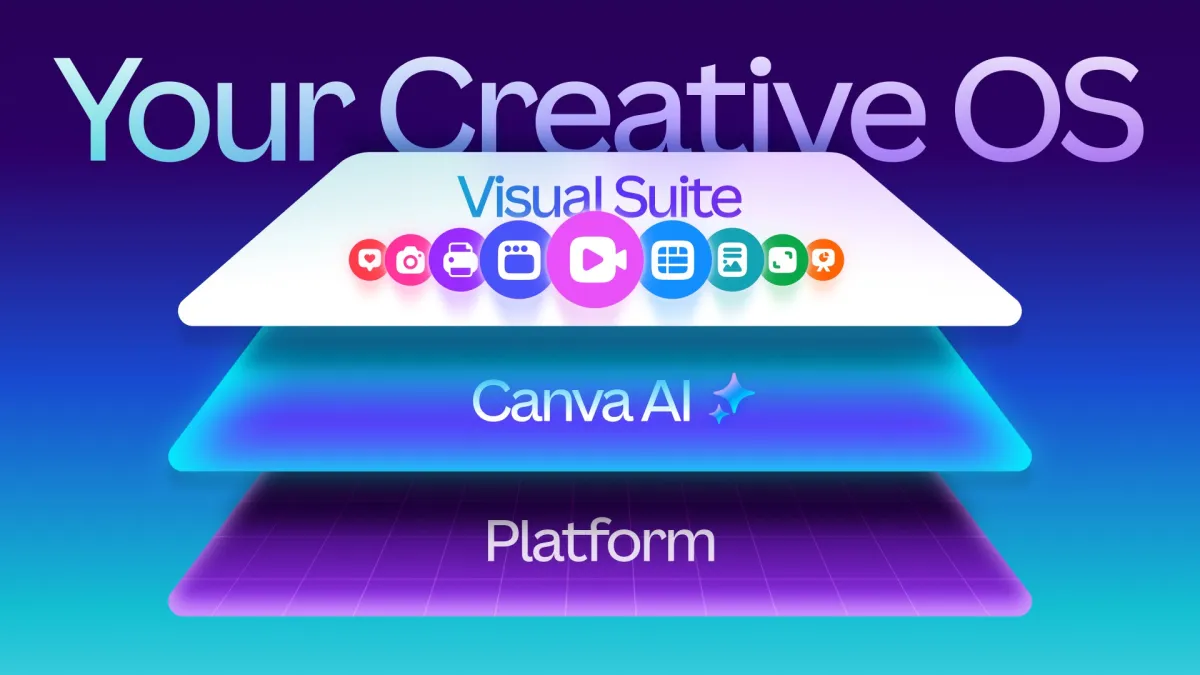
Canva rolls out new AI tools and its own design model, empowering creators and boosting creativity

Canva Unveils Revolutionary AI-Powered Design Platform, Signaling Industry Disruption

In a bold move that underscores the rapid acceleration of AI-driven innovation in creative software, Canva announced the launch of its own state-of-the-art foundational AI model on Thursday. Moving beyond the era of simple diffusion-based image generation, Canva’s new model delivers **multi-layer, editable designs**—a game-changer for visual content creation. This strategic development exemplifies how tech disruptors are challenging legacy giants like Adobe and Figma, positioning Canva as a serious contender in the $40 billion creative SaaS industry.

The new model, trained on Canva’s extensive element library, enables users to generate versatile, multi-format designs—from social media posts to full-fledged websites—with the ability to manipulate individual layers and objects. “Where traditional diffusion models produce flat images, ours offers **editable, dynamic compositions**, elevating the user’s ability to iterate seamlessly,” explained Robert Kawalsky, Canva’s global head of product. This evolution aligns with industry analysts’ predictions (Gartner, 2023) that future creative tools will prioritize flexibility and user control, disrupting existing workflows and fostering innovation at an unprecedented pace.

Infusing AI Into the Creative Ecosystem: Business Implications & Future Trends

Canva’s integration of AI further extends into interactive features, such as real-time media suggestions, 3D object generation, and design style replication—saving time and reducing skill barriers for users. The platform’s bond with its recent acquisition, Affinity —a professional-grade design suite—illustrates a clear strategy to bridge casual content creation with high-end professional tools, effectively challenging Adobe’s dominance. Canva’s decision to make Affinity free permanently not only enhances value but signals a disruptive shift in the software licensing paradigm, encouraging broad adoption of high-fidelity, non-destructive editing capabilities.

Additional updates bolster Canva’s position as an integrated ecosystem. The introduction of form creation substitutes *Google Forms* for client input, alongside branded email templates designed with AI assistance, deepening the platform’s value for digital marketing. As MIT’s recent study suggests, such multi-functional platforms are steering the industry toward **ecosystem dominance**, where seamless interoperability between tools becomes essential for staying ahead.

  • Innovative features include AI-generated 3D objects and style-mimicry, advancing visual storytelling capabilities.
  • The tight integration of Affinity with Canva’s interface unifies vector, pixel, and layout considerations under one roof—streamlining designer workflows.
  • The ability to transfer objects between tools and leverage AI within Affinity sets a new standard for professional creative suites, blurring the line between amateur and professional design.

Looking Ahead: A Racedur for Market Leaders & Startups Alike

This advancement reaffirms the narrative that **disruption is not merely about innovation but strategic repositioning**, with Canva challenging entrenched industry incumbents through AI democratization and ecosystem expansion. As Elon Musk’s Neuralink and Peter Thiel’s Palantir have demonstrated, early adoption of scalable, AI-driven platforms can redefine market power and influence. Gartner forecasts that by 2026, over 70% of digital content will be AI-enhanced, emphasizing the urgent need for industry players to innovate or face obsolescence.

In a landscape where rapid technological shifts are defining winners from the rest, Canva’s convergence of AI, professional-grade tools, and ecosystem integration signals a clear message: the future belongs to those who can harness disruption as a strategic advantage. Companies and creators alike must adapt swiftly, as the next wave of radical innovation is set to reshape how visual content is designed, understood, and monetized—making it imperative for industry stakeholders to stay alert, agile, and prepared for the inescapable march of AI-driven transformation.

How Developer Tools Are Crushing It at Disrupt 2025

The annual TechCrunch Disrupt 2025, taking place October 27-29 in San Francisco, has become a pivotal arena for exploring groundbreaking shifts in the technology industry. Among the most compelling discussions centers around the evolving role of developer tools and the controversial idea of hiring the “first critical engineer,” a concept that encapsulates the intersection of innovation and industry disruption. Industry leaders, including Lauri Moore of Bessemer Venture Partners, David Cramer of Sentry, and Zach Lloyd of Warp, are convening to dissect how these tools are transforming early-stage development and startup agility.

Innovation in developer tooling is accelerating at an unprecedented pace, driven largely by advancements in AI integration and infrastructure. As disruption becomes the norm, the industry’s focus is shifting towards minimizing overbuilding while maximizing product velocity. Cramer’s experience with Sentry illustrates how strategic tool adoption can reduce development cycles, empowering startups to move faster without compromising quality or stability. Meanwhile, Lloyd’s AI-powered terminal aims to shake up the coding workflow at its core, promising a future where developer experiences are less about rote command input and more about seamless, intelligent interactions.

  • Enhanced efficiencies through AI-driven debugging and automated workflows
  • Reduced time-to-market with smarter, more adaptable infrastructure tooling
  • Shifts in hiring—prioritizing expertise in AI and automation over traditional engineering roles

According to industry analysts such as Gartner and MIT’s Digital Economy Research, these innovations are not merely incremental improvements but are actively reshaping the very fabric of software development. The concept of hiring the “first critical engineer” is being reevaluated in light of AI’s capabilities to perform core engineering tasks, raising questions about traditional hiring models and the future role of human developers. This evolving landscape offers both enormous opportunities and significant risks—particularly for startups aiming to stay ahead in hyper-competitive markets. As Peter Thiel and Elon Musk warn, failure to embrace these disruptive trends could lead to obsolescence in a matter of years.

As this new era unfolds, the importance of agility and innovation becomes ever more apparent, urging startups, developers, and investors alike to adapt quickly or risk being left behind. The business implications are profound: companies that leverage next-generation tools and AI-driven automation will likely lead the charge into the future, establishing new standards for speed, quality, and scalability. The message is clear: the future belongs to those who act swiftly and decisively. With every breakthrough in developer tooling and infrastructure, the urgency to innovate intensifies — setting the stage for an industry-wide leap forward that demands both bold vision and tactical execution. Now is the moment for industry leaders and emerging startups to seize these innovations, redefine what’s possible, and lead the disruption that will shape the next decade.

Social Media Auto Publish Powered By : XYZScripts.com