Matox News

Truth Over Trends, always!

Top Samsung Phones of 2026: What Young Tech Fans Need to Know

Samsung’s Latest Innovations Signal a Disruption-Driven Future in Smartphone Ecosystems

In an era where technological disruption reshapes consumer expectations and industry standards, Samsung continues to lead with groundbreaking innovations that push the boundaries of what smartphones can do. Their recent rollout of the Galaxy S25 series, featuring Galaxy AI with Gemini as the default voice assistant, exemplifies the integration of advanced artificial intelligence directly into user devices. This move signals a shift toward AI that operates seamlessly across multiple apps and real-time media inputs, effectively transforming smartphones into versatile, AI-powered command centers. Industry analysts from Gartner and MIT highlight this as a pivotal moment, emphasizing the increasing importance of on-device AI processing for privacy, speed, and reduced latency—elements crucial for youth and power users alike seeking disruption in everyday tech.

Furthermore, the advent of Galaxy AI’s Drawing Assist and real-time video capabilities underscores how Samsung is leveraging AI not just for productivity but for creative expression and immersive experiences. Experts suggest that this fusion of AI with hardware marks a new chapter, where smartphones evolve from communication tools into dynamic content creation platforms. The industry implications are profound: Samsung is positioning itself as a pioneer capable of challenging Apple’s longstanding dominance in integrated ecosystems—a strategic move that could recalibrate market power dynamics and user loyalty. The company’s ecosystem, including the Galaxy Watch8 and Galaxy Buds3 Pro, now further embedded with AI features, exemplifies a holistic approach. It is crafted to entice a younger demographic hungry for innovation, disrupting traditional boundaries and emphasizing hardware and software synergy as the new battleground for market supremacy.

Perhaps most disruptive are Samsung’s foldables, the Galaxy Z Fold6 and Flip6, which redefine the form factor landscape with near “normal” smartphone experiences on the exterior and expansive tablet-like screens when unfolded. According to industry insiders, including Elon Musk and Peter Thiel, foldables symbolize a paradigm shift toward flexible, multi-modal devices—an essential leap to stay ahead in the disruptive innovation race. While criticisms remain about battery life and performance—particularly in non-flagship models—these form factors exemplify disruption that could fundamentally alter device lifecycle and upgrade patterns. This innovation pushes hardware boundaries and challenges the industry to think beyond traditional screen sizes, creating fertile ground for business models that capitalize on versatility and user engagement.

Market implications extend further as Samsung’s ecosystem, now rivaling Apple’s in hardware integration, offers unprecedented opportunities for app developers and accessory manufacturers. With Samsung’s expanding AI capabilities and foldable hardware, the company enables a cohesive environment capable of supporting next-generation applications—be it real-time video, AI-assisted creativity, or seamless cross-device workflows. As Gartner’s latest forecasts suggest, disruption driven by AI and flexible form factors will be critical in shaping the next decade of mobile computing. Samsung’s move to integrate AI deeply within its hardware and software stack signals a clear intent to disrupt complacency and accelerate transformation—urging the entire industry to adapt swiftly or risk obsolescence.

Looking forward, urgent innovation and strategic disruption are vital for companies seeking to lead the next wave of technological evolution. Samsung’s aggressive push into AI, foldables, and interconnected ecosystems demonstrates that those who harness innovation with urgency will shape the future of mobile computing. For the younger generation driven by rapid, disruptive tech, the time to watch—and participate—is now. The coming years will be decisive, with Samsung reinforcing its position as a trailblazer prepared to challenge entrenched norms and redefine what is possible in the universe of consumer electronics.

Top 9 Winter Boots Women Swear By—Enduring Style & Toughness, No Compromises | Life & Style

As the chill of winter tightens its grip, so too does the imperative for adaptation and resilience. For many of today’s young explorers eyeing the great outdoors, selecting the right pair of winter boots isn’t merely about fashion; it’s about embracing a lifestyle of active wellbeing, adventure, and long-term durability. The days of settling for fleeting seasonal trends are waning, replaced by a pursuit of buy-it-for-life quality that aligns with a growing mindset shift—from disposable fashion to sustainable, functional choices. Experience has shown that a high-quality pair of boots can transform your winter, whether you’re navigating icy city streets or venturing into remote wilderness.

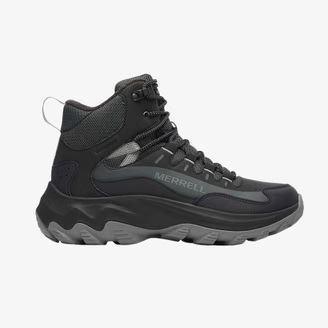
Among the trailblazers shaping this movement is trail runner and former National Geographic “Adventurer of the Year,” Mirna Valerio, who emphasizes the importance of rugged, performance-oriented footwear. She champions brands like Merrell, whose Thermo Chill 2 Mid Waterproof Boots are lauded not just for their warmth and waterproof integrity but for their rugged design suited for active pursuits. These boots exemplify a lifestyle where outdoor activity is accessible and inspiring, encouraging youth to step confidently into the winter season. Meanwhile, outdoor photographers like Danielle Pittman highlight the importance of gear that balances fashion and function. Her preference for boots like the North Face Shellista VI underscores how stylish design can meet the demands of icy conditions and provide the comfort necessary for extended excursions.

Winter Footwear Essentials for the Modern Adventurer

  • Performance boots that withstand cold and snow: Merrell Thermo Chill
  • Everyday stylish options like L.L. Bean Suede Snow Boots for casual outings
  • Extreme weather gear such as Baffin Titan Overboots with safety features for the coldest days
  • Fashion-forward styles including Ugg Classic Ultra Mini Platforms for those mild winter days
  • Technical overboots like Neos Navigator for ultra cold adventures and dog sledding

The evolution in winter footwear is driven by a new generation of experts and consumers seeking durability without sacrificing style. For example, Slope-style ski instructor Tamar van Delen advocates for boots that balance warmth, comfort, and aesthetic appeal—whether she’s guiding on snow-covered slopes or taking casual strolls. The fact that such versatile options now exist signifies an accelerating shift towards intentional, lifelong investments that serve not only as functional gear but as an extension of one’s lifestyle identity. From thick wool-lined interiors to waterproof shells, each boot reflects its wearer’s readiness—not just to withstand winter but to conquer it.

For the young, restless spirit eager to explore, the message is clear: the right gear becomes a catalyst for transformation—of health, leisure, and inspiration. The journey to embracing quality and durability in winter boots reminds us that true adventure starts with a single step—supported by footwear designed to endure and inspire. As more youth seek to connect with the outdoors and push their limits, the significance of choosing wisely becomes a metaphor for life itself: investing in a pair of boots that will carry you through seasons of challenge and change, forging resilience and confidence along the way. The story of winter wear is, ultimately, a story about embracing the journey, one grounded step at a time.

Top 8 winter jackets for guys: Expert-approved gear to keep you stylish and warm all season long

As winter’s final days loom, the quest for the perfect, long-lasting winter jacket becomes more than just a fashion choice; it’s a lifestyle necessity for those who spend significant time outdoors—be it explorers, professionals in extreme environments, or dedicated enthusiasts braving the elements. Recent insights from experts who have experienced the cold firsthand reveal that choosing a high-performance, ultra-warm jacket is not only about comfort but also about personal health and resilience. Whether you’re navigating icy terrains in the Arctic, reporting live from Toronto’s brisk streets, or simply enduring America’s colder regions, the right gear can define your winter experience, making style and function a seamless blend.

In a landscape where brands like Canada Goose, Shackleton, and Scandinavian-inspired Rains dominate the premium winter wear scene, the focus has shifted toward jackets that combine elegance, sustainability, and unprecedented warmth. For instance, Canada’s infamous cold climate has cultivated a tradition of serious outdoor apparel, and their models like the Langford Parka have become iconic not only for their durability but also for their understated style. As Winston Sih, a seasoned broadcast journalist in frigid environments, points out, a jacket that holds up in extreme conditions—with generous coverage and insulation—becomes essential when your outside time exceeds a few minutes.

Furthermore, innovation meets lifestyle with eco-friendly options like the WeatherWool All-Around Jacket. Made from 100% wool sourced locally in Connecticut, this jacket exemplifies an era where sustainability and quiet comfort are prioritized. Such pieces appeal strongly to a new generation of outdoor lovers eager to maintain their personal impact on the environment without sacrificing high-level performance. As Carl Murawski, a licensed electrician and outdoor gear reviewer, emphasizes, wool’s water resistance, strength, and warmth—qualities far superior to cotton—make it a standout choice for the socially conscious and adventurous alike. These jackets serve not just as attire but symbolize a lifestyle rooted in authentic connection to nature and responsibility.

The evolution of winter fashion is also about finding the perfect blend of luxury and utility. Premium options like the Goldwin Pertex Quantum Down Jacket or the Shackleton Titan Challenger exemplify jackets that are lightweight yet capable of withstanding the harshest cold snaps—ideal for those who view their outdoor gear as a personal statement of resilience. Such apparel, often transforming packability into an art form, allows wearers to move fluidly from winter hikes to urban commutes—embracing a lifestyle that prioritizes versatility, durability, and self-expression. As fashion historian Elizabeth Semmelhack describes, the modern jacket is an extension of individual identity, a reflection of values that include adventure, sustainability, and the pursuit of well-being—motifs that define the contemporary outdoor ethos.

In embracing these lifestyle shifts, young explorers and outdoor enthusiasts are creating a narrative where quality over quantity and personal impact become compass points. It’s about understanding that the ‘journey’—whether through winter storms or urban landscapes—is a pursuit of authenticity, strength, and wellness. By selecting apparel crafted with intention—be it from resilient wool, innovative down, or Scandinavian design—individuals are not merely dressing for the cold but consciously shaping their identity in a world that values a resilient spirit and self-reliance. As we look to the horizons of resilience and stylish practicality, it becomes clear that true outdoor lifestyle is not just about gear but about the commitment to forge a path where personal wellness and environmental consciousness walk hand in hand.

  • Invest in versatile, _weather-resistant jackets_ that serve multiple environments.
  • Prioritize _sustainable and ethically-made_ options to minimize impact.
  • Choose long-length, well-insulated pieces to ensure _core warmth_ during extended outdoor activities.
  • Remember, your clothing is a _reflection of your lifestyle_, resilience, and values—make it count.

The journey to embracing winter is ultimately a metaphor for life itself: a path requiring strength, choice, and adaptation. Every layer, every fabric, becomes more than just protection against cold—it embodies a desire to live intentionally, to challenge oneself, and to find joy in resilience. In a world where climate and culture intersect to forge our identities, these jackets stand as silent witnesses to our personal impact, guiding us not only into the cold but into a life of purpose and self-reliance.

Top Women’s Winter Jackets You Can’t Miss — President’s Day Deals Slashing Prices Up to 75%! | Life & Style

After a winter that tested the resilience of many with record-low temperatures and relentless storms, it’s clear that embracing winter wellness is an essential part of a balanced lifestyle. For outdoor enthusiasts and city residents alike, bundling up is no longer just about staying warm—it’s a statement of resilience, self-care, and adventure. Wellness experts, like Dr. Jordan Peterson and outdoor lifestyle influencers, emphasize that investing in quality gear not only protects your health but also inspires a life full of adventure and confidence. From skiing to urban winter strolls, the right apparel bolsters not just physical comfort but fosters an inner sense of empowerment.

Warmth Meets Style: Jackets That Last

In the modern era, personal impact extends beyond mere functionality—it’s about expressing identity and embracing an active lifestyle. Among the top recommendations from seasoned explorers and fashion-forward outdoor enthusiasts are brands like Michael Kors, Lululemon, Patagonia, and Oysho. These brands are redefining winter apparel with designs that offer warmth, durability, and style. For instance, the Michael Kors Faux Fur Trim Belted Puffer Jacket exemplifies the blend of high fashion and utility, now available at nearly 75% off during seasonal sales. Such investments in versatile, long-lasting gear elevate the everyday experience—whether you are commuting or conquering mountain trails.

Active Winterwear for Outdoor and Athletic Pursuits

For the youth seeking to keep active despite the cold, brands like Lululemon have pioneered designs like the Another Mile Jacket. Praised by trail runners and outdoor athletes, this piece is lightweight yet highly insulated, with features like windproof fabric and thumb holes—elements vital for maintaining performance and comfort in extreme weather. Such apparel choices underscore the idea that, with the proper gear, anyone can turn winter challenges into opportunities for adventure and self-discovery, making health and leisure an integrated part of life rather than obstacles.

Investing in Quality for a Lifetime of Experiences

From Patagonia’s Down With It Parka to premium options from Canada Goose, assembling a wardrobe that endures multiple seasons is a conscious choice toward wellness and sustainability. Repair programs offered by Patagonia exemplify a lifestyle that appreciates longevity, aligning with a cultural shift towards mindful consumption. The investment in such apparel dramatically impacts health by ensuring consistent warmth—a crucial factor as you pursue outdoor activities or face cold-weather commutes. Beyond practical benefits, owning high-quality gear becomes an inspiring testament to embracing life’s colder seasons with resilience and style.

  • Research brands that prioritize sustainability and durability for long-term value
  • Layer clothing to enhance comfort and adaptability in fluctuating temperatures
  • Consider technical features like water-resistance and insulation for performance outdoors
  • Seek adventure even in winter to boost mental health and maintain an active lifestyle

In embracing the winter season, the journey transforms into more than just staying warm—it becomes a narrative of self-empowerment, health, and endless exploration. The right jackets and activewear serve as catalysts for a lifestyle that refuses to be subdued by cold days. As cultural voices like author and wellness advocate Mark Manson remind us, “The pursuit of wellness is an ongoing adventure,” and that adventure begins with your wardrobe. When you choose to invest in gear that lasts and empowers, you foster a personal impact that echoes in every invigorating breath of winter air—a reminder that life’s coldest days are just opportunities to embrace the warmth within.

The Verge’s 2026 Top Tech Gifts for Her—Feel the Love, Upgrade Your Game

Emerging Technologies and Market Disruption Signal a New Era for Business Innovation

As the technological landscape accelerates at an unprecedented pace, industry leaders are closely monitoring breakthrough innovations that threaten to reshape the global economy. Artificial Intelligence (AI), quantum computing, and biometric authentication are leading the charge, disrupting established sectors and opening pathways for new business models. According to recent analyses from Gartner and top-tier research institutions, these advancements could redefine competitive advantages across tech-driven markets. Marketers and entrepreneurs alike must prepare for a future where agility and technological literacy are no longer optional but essential for survival.

One of the most compelling shifts is led by AI-powered automation, which is rapidly transforming industries from finance to healthcare. Companies like Microsoft and Google are deploying AI systems capable of complex decision-making, dramatically reducing costs and increasing speed. Similarly, the advent of quantum computing—a domain long considered theoretical—has entered practical testing phases at institutions like MIT and tech giants such as IBM. These technologies promise to unlock processing power that can solve previously intractable problems, undermining traditional encryption and data analysis methods used by legacy firms.

The disruptive potential extends beyond operational efficiencies; it impacts competitive strategies and market dominance. Analysts warn that pioneering companies embracing these innovations will gain substantial first-mover advantages, potentially cornering major sectors and upending market share. Biometric authentication and decentralized blockchain solutions are also gaining ground, offering enhanced security and transparency. This wave of innovation enforces a shift toward a more decentralized and digitally secured marketplace, challenging the historical dominance of centralized institutions. Firms that adapt quickly will be positioned for future growth, whereas those slow to innovate risk obsolescence.

Looking forward, the convergence of these technologies suggests a future where the boundaries between digital and physical realities blur, accelerating a technological arms race that demands urgent strategic recalibration. As Elon Musk and Peter Thiel emphasize, disruption is an inevitability; the question is whether organizations will be the disruptors or the disrupted. Now is the critical moment for businesses to leverage innovation, invest in R&D, and foster a culture of agility. With market shifts occurring faster than ever, future success hinges on recognizing emerging trends early and capitalizing on disruptive opportunities before competitors do. The urgency to innovate has never been greater—those who act decisively today will define the industry standards of tomorrow.

Labour's Tim Allan, Keir Starmer’s top strategist, steps down
Labour’s Tim Allan, Keir Starmer’s top strategist, steps down

Recent developments within United Kingdom political circles signal a tumultuous period that could reshape not only domestic governance but also influence legacy international alignments. The resignation of Tim Allan, the director of communications for Prime Minister Keir Starmer, after only five months underscores internal power struggles and mounting discontent at the highest levels of government. His departure, coupled with the recent resignation of Morgan McSweeney, the chief of staff, reflects a broader crisis of confidence and uncertainty enveloping the current leadership. These upheavals come at a time when the UK is navigating complex global terrains, especially in its relations with the United States and wider NATO alliances.

This political disarray coincides with a scandal that threatens to undercut Starmer’s credibility: the controversial appointment of Peter Mandelson as ambassador to Washington. Critics, including prominent historians and international analysts, point to Mandelson’s notorious associations, including links to the convicted Jeffrey Epstein. The decision has ignited furious debates over accountability, transparency, and how foreign policy decisions are made behind closed doors. In particular, it raises questions regarding the responsibilities of diplomats in safeguarding national reputation and the potential impact of such scandals on UKAmerica relations, especially amid intensifying geopolitical tensions.

On the international front, these internal disturbances are emblematic of a broader shift in global power dynamics, with China and Russia increasingly asserting their influence. Analysts warn that internal instability within Western nations, including the UK, could weaken their stance in ongoing conflicts and diplomatic negotiations. Organizations such as the International Crisis Group have pointed out that political fractures in key allies threaten to undermine coordinated responses to pressing crises, from Eastern Europe to the Indo-Pacific. European nations, observing these developments, brace for potential repercussions—ranging from diminished alliance cohesion to shifts in the balance of global influence—decisions that will echo through history’s unfolding chapters.

As Britain grapples with its internal struggles and controversial international appointments, the overarching narrative remains clear: the decisions made today will either fortify or fracture a delicate geopolitical landscape. The weight of history presses heavily on these fleeting moments; each crisis, scandal, and reshuffle signals not merely a moment in time but the potential redefinition of alliances and power structures. As the world watches, the question persists—will these internal upheavals serve as a catalyst for renewed strength, or will they herald a period of decline and disarray that shapes the global order for generations to come?

Top Vacuum Picks of 2026: Cordless, Robots & Dyson’s Best for the Next Gen Home

The landscape of household cleaning technology might seem mundane at first glance, yet beneath the surface, the latest innovations signal a broader wave of disruption sweeping through the consumer appliance industry. Brands like Dyson, BISSELL, and Tineco are pushing forward with advanced cordless and robotic models that exemplify how technology-driven innovation is replacing traditional upright vacuums. These developments are not just about convenience—they are redefining the very fabric of how businesses approach product design, security, and future scalability in a fragmented yet fiercely competitive market.

Recent market shifts pointed out by industry analysts from Gartner highlight that cordless stick vacuums now dominate revenue streams, challenging the legacy supremacy of upright models. They combine portability, multifunctionality, and AI-powered features, allowing consumers to perform targeted, efficient cleaning without being tethered to outlets. This segment’s growth underscores a fundamental trend: disruption fueled by mobility and smart technology. Furthermore, the incorporation of self-emptying dock stations like Tineco’s, and power-packed handheld models from Dyson, signals that consumer preference is rapidly evolving toward integrated, maintenance-free solutions.

  • High-capacity, self-emptying docks: boosts convenience and maintains suction power longer.
  • AI-enabled sensors in vacuums: optimize cleaning routes and improve efficiency.
  • Specialized designs for pet owners: Dyson’s HEPA-filtered models leverage disruptive HEPA technology for allergen control, addressing a vital niche.

However, these innovations carry significant business implications. Traditional vacuum manufacturers, often rooted in decades-old designs, face existential challenges if they fail to innovate rapidly. Startups and tech giants outside the hardware space—like Elon Musk’s Tesla or Peter Thiel-backed ventures—are already showing interest in applying AI, IoT, and machine learning to consumer appliances, creating a potential nexus for *disruption on a massive scale*. The market is already witnessing a shift where AI-powered maintenance, predictive diagnostics, and subscription-based services could become standard, fundamentally altering revenue models. These trends echo the MIT research on ‘Industry 4.0’, emphasizing that smart, interconnected products will become the norm rather than the exception.

The disruption extends beyond product innovation into the business model space. Companies that successfully leverage IoT data and integrate AI to enhance after-sales support will have a competitive advantage. As Gartner notes, the era of ‘product-as-a-service’ is upon us, urging firms to rethink how they generate recurring revenues. Meanwhile, consumer demands for smarter cleaning devices—integrating voice commands, automation, and health monitoring—drive this technological evolution rapidly. This scenario defies complacency: companies not embracing these shifts risk falling behind in an industry where innovation cycles are getting shorter and where the future belongs to pioneers capable of integrating AI, hardware, and service platforms.

Looking ahead, the industry’s trajectory suggests a convergence where disruption fuels innovation across every facet of household tech. The influx of AI, robotics, and IoT into everyday appliances will likely extend into broader sectors—smart kitchens, connected security, even personal health. To stay competitive, firms must prioritize agility, investment in R&D, and strategic partnerships with AI and hardware developers. Those who do will not only reshape the market but could gain unparalleled market dominance in the next decade. The clock is ticking for legacy players and newcomers alike: the future is being written now, and only the most innovative will thrive in the face of relentless technological advancement.

Top French Politician Resigns from Leading Institute Over Epstein Ties

European Influence in Crossfire as French Cultural Icon Faces Epstein Scandal

France has found itself embroiled in an international controversy that extends its shadow across diplomatic and cultural landscapes. The fallout from the Jeffrey Epstein scandal, which has rocked the global political and social order, continues to unearth disturbing revelations about prominent figures within European spheres of influence. Jack Lang, a revered cultural figure in France and a former Minister of Culture under François Mitterrand, has been forced to resign from his post as head of the prestigious Institut du Monde Arabe. This decision follows a disturbing investigation by French authorities into his alleged contacts with the convicted sex offender and financier, Jeffrey Epstein, who died in prison in 2019 under controversial circumstances.

Recent disclosures, stemming from files released by the US Department of Justice, have publicly linked Lang and his daughter, Caroline, with Epstein, revealing over 600 references in private correspondence. While Lang maintains his innocence, insisting his interactions were purely philanthropic, the **geopolitical impact** of this scandal reverberates far beyond France’s borders. How European elites are intertwined with American financial networks and illicit social circles is now under scrutiny, adding a new layer of complexity to international relations and perceptions of transparency. International organizations, including human rights and anti-corruption watchdogs, warn that such revelations threaten to erode trust in cultural and political institutions, fueling a narrative of decadence and moral decay among Europe’s ruling classes.

How Decisions Shake Societal Foundations and International Relations

  • The investigation underscores the persistent vulnerability of high-profile individuals amid rising demands for accountability in an era of heightened transparency.
  • Lang’s resignation and the ongoing probes highlight how **international diplomacy** is increasingly shaped by scandals that threaten to destabilize diplomatic goodwill and cultural diplomacy.
  • European nations face mounting pressure to confront internal hypocrisies, as the Epstein revelations expose uncomfortable truths about the network of elite influence that spans continents.

Comments from analysts and international organizations point to a **shift in the global perception** of Western moral authority. “This scandal exemplifies how clandestine networks operated by the elite are now being exposed at an unprecedented rate,” notes Dr. Marie Dubois, a geopolitical analyst. Such disclosures are likely to fuel populist sentiments across Europe, demanding greater scrutiny of both political and cultural elites. Moreover, historians warn that these crises serve as stark warnings of how unchecked power and influence can undermine societal foundations, leading to a potential crisis of legitimacy.

International Repercussions and the Broader Power Struggle

The Epstein case has become a litmus test for **international accountability**. The scandal’s reach extends into other global centers of power, raising questions about the extent of influence wielded by shadowy financial figures. As investigative authorities continue to scrutinize the connections between Epstein’s network and political figures across Europe, the **geopolitical landscape** may experience shifts in alliances and trust structures. Nations dependent on diplomatic goodwill, especially with *France*, now find themselves confronting uncomfortable truths that threaten to challenge their societal narratives.

Meanwhile, some political commentators argue that these revelations might catalyze reform, pushing nations to address systemic corruption. Conversely, others suggest that the scandal could entrench populist and nationalist movements, which thrive on anti-elite rhetoric. The **real legacy of this crisis** will hinge on how effectively international institutions and governments respond to the calls for transparency and justice. As history watches, the unfolding story of deception, power, and accountability remains a stark reminder of how **secret networks** can threaten the very fabric of modern democracy.

As the dust settles, one truth remains undeniable: the weight of history is still being written, and the actions taken today will shape the global narrative for generations to come. The scandal underscores perhaps the most profound lesson of our era—that the corridors of influence are fraught with peril and that the true price of power is often paid in the currency of integrity and trust. The emerging story is not merely about scandal but a test of societal resilience in an age where shadows often eclipse the light of truth.

Top 4 Space Heaters Americans Trust for Rapid Warmth — Stay Cozy and Ready This Winter

In an era where wellness and comfort intertwine with our daily routines, the quest for the perfect home environment has taken on new urgency. With the recent surge in extreme weather patterns—ranging from record-breaking cold snaps to unseasonal heat waves—the importance of selecting reliable heating solutions cannot be overstated. As the landscape shifts, so does the way young, dynamic households approach warmth and lifestyle optimization. Today, embracing smart heating technology isn’t just about comfort; it’s about asserting control over one’s environment and, by extension, one’s health and productivity amid unpredictable climates.

Among the most sought-after solutions are innovative space heaters designed to balance efficiency with noise reduction and aesthetic appeal. Industry leaders like Vornado and Honeywell have revolutionized this sector, offering models that cater to the modern youth’s desire for quiet, stylish, and multifunctional appliances. For instance, the Vornado AVH10 stands out as a whisper-quiet marvel, capable of casting air over impressive distances thanks to its ceramic element. Its sleek design, coupled with features like under-the-unit cord storage and fan-only modes, appeals to those who value both form and function. The inclusion of a digital display and safety features demonstrates a commitment to safety-first wellness standards, aligning with advice from wellness experts like Dr. Michael Breus, who emphasizes the connection between physical comfort and mental clarity.

For more targeted heating, portable and wall-mounted units like DeLonghi’s HMP1500 excel with their efficient mica heating elements and customizable mobility options. Young homeowners are increasingly drawn towards home modifications that reflect individual lifestyles—be it turning a garage into a personal gym or creating a cozy nook. The DeLonghi’s space-efficient design and low-energy settings align perfectly with this trend, encouraging users to tailor their spaces while prioritizing sustainable living. Meanwhile, models like the Honeywell HCE840B offer a sleep-friendly operation—recognized particularly by sleep scientists as critical for maintaining restorative health. The quiet operation and automatic shutoff functions make it an excellent choice for young adults who seek uninterrupted rest while safeguarding their wellness.

Ultimately, choosing the right space heater is more than a purchase—it’s a lifestyle statement. It symbolizes a shift toward mindful living, where individual comfort and health are paramount amidst environmental uncertainties. As the modern youth continues to seek ways to optimize their surroundings, the embrace of innovative, safe, and stylish heating options denotes a broader cultural movement: a conscious effort to take control of one’s environment, prioritize wellness, and foster resilience. In this journey, every decision, down to the choice of a space heater, becomes an act of rebellion against the chaos of weather and a testament to the pursuit of a truly **inviting home**. Embrace this shift, and see your environment not just as a shelter, but as a canvas for personal empowerment and lifestyle evolution.

Canada sends top officials to establish Greenland consulate, signaling strong regional ties

The geopolitical landscape of the Arctic is once again at the forefront of international affairs, as nations jockey for strategic dominance amid shifting global priorities. Canada has publicly affirmed its move to demonstrate solidarity with Greenland, amid rumors suggesting the United States may have plans to establish a presence on an Arctic island. This diplomatic stance occurs despite reports indicating that the initiative was in motion prior to former President Donald Trump’s recent suggestion to purchase Greenland—a proposal that stunned global analysts and diplomatic observers. The timing of these developments underscores the multifaceted nature of Arctic geopolitics, where historic territorial claims, resource competition, and environmental concerns intertwine.

Analysts from institutions such as the International Crisis Group and various geopolitical think tanks emphasize that the Arctic has become a strategic arena—not just for resource extraction, but for projecting military power and influence across the northern hemisphere. The United States’ interest in Greenland, long discussed but seldom publicly activated, now appears to be gaining momentum as climate change accelerates ice melt, opening new shipping routes and access to untapped reserves of oil, gas, and minerals. Critics argue that the push for territorial claims in the Arctic echoes Cold War dynamics, with major powers seeking to secure their own interests before others can tighten their grips on the diminishing polar frontier.

Canada’s move to express solidarity with Greenland—a territory long associated with Denmark—comes amid broader concerns of potential encroachments and destabilization. Prime Minister Justin Trudeau has emphasized that this gesture aims to reinforce the importance of multilateral cooperation in the face of emerging threats and unilateral ambitions. Meanwhile, the North Atlantic Treaty Organization (NATO) has remarked that the Arctic’s strategic importance will only grow, urging member states to remain vigilant. For many analysts, including historians specializing in Cold War history, the current maneuvers could very well mark the beginning of a new chapter—a modern-day contest over Arctic dominance that could have sweeping geopolitical impacts.

Yet, the situation remains fluid and unpredictable. Russia continues to assert its own claims under the 2015 Arctic Council agreement, leveraging its military and scientific presence across the region. Meanwhile, China, increasingly vocal about its “near-Arctic” ambitions, is pushing for a role in future resource development and shipping routes. International organizations warn of the risks of escalation, but few agree on a clear path forward. As nations prepare for what many describe as an impending new Cold War in the high latitudes, history warns that these seemingly isolated disputes could spiral into a confrontation with global repercussions.

Ultimately, the decisions taken today in the Arctic are not merely about regional dominance—they reflect a broader contest for global influence in the 21st century. As iconic historian Paul Kennedy and geopolitical analysts observe, the unfolding elements of this silent, frigid struggle may determine the future balance of power. For those who sense the gravity of these shifts, it is clear that the stakes could not be higher—the Arctic, once a remote wilderness, now stands as a gateway to the tumultuous, uncharted corridors of international conflict. The weight of history presses heavily on this icy frontier, which could—in the span of a few decisive years—become the theater of a new, unanticipated global confrontation.

Social Media Auto Publish Powered By : XYZScripts.com