Matox News

Truth Over Trends, always!

Peer Calls Out Environment Agency for Neglecting Toxic Dump in Wigan—Rats, Maggots, Fumes Threaten Local Youth

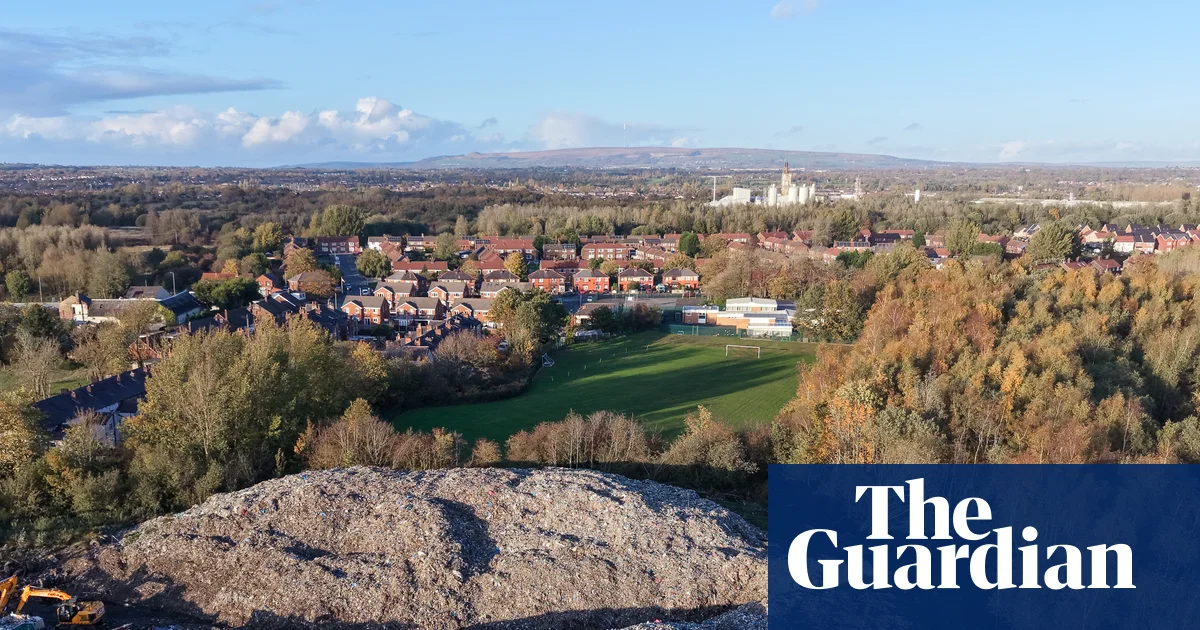
In a troubling display of environmental negligence with significant geopolitical impact, the recent revelations from the United Kingdom expose a deepening crisis that extends beyond local concerns. A 25,000-tonne illegal waste dump adjacent to a primary school in Wigan serves as a stark reminder of how unchecked waste crime can threaten public health, undermine local governance, and challenge national sovereignty over land management. Despite claims by agencies like the Environment Agency that they lack sufficient funds to tackle such dumps, the problem persists, casting doubt on the UK government’s capacity to uphold environmental standards amid rising criminal activity and economic constraints.

Historian and environmental analyst Dr. James Craig warned that the proliferation of waste crime across the UK reflects a broader, international trend of environmental disorder that threatens to destabilize societal norms. The infamous incident last summer, when the Wigan dump caught fire for ten days—forcing school closures and releasing hazardous fumes—illustrates how such illegal activities can escalate into major public safety emergencies. Meanwhile, drone footage reveals a “mountain” of fly-tipped waste in Oxfordshire, with videos circulating as grim visual evidence of a crisis spiraling out of control. These events are no longer isolated; they are part of a pattern that analysts say risks undermining trust in local authorities and national institutions.

For international organizations and environmental watchdogs, this crisis signals a danger that transcends national borders. The United Nations and the European Union have long emphasized the importance of international cooperation in combating transnational waste crime, which often involves cross-border smuggling and organized networks. Yet, the UK’s internal refusal or inability to mobilize sufficient resources to clean up sites like Bolton House Road in Wigan exposes a key vulnerability: when nations falter in enforcing environmental laws, the ripple effect weakens global efforts against ecological degradation. Experts like environmental lawyer Laura Simmons warn that if this trend continues, it will embolden criminal syndicates and erode the foundations of international environmental agreements.

While the government highlights ongoing criminal investigations—four arrests have been made in relation to the Kidlington site—the overarching issue of land ownership complicates efforts to remediate the damage. Ownership of the affected land in Wigan now rests with the Duchy of Lancaster, which, under common law principles, complicates enforcement. Critics argue that bureaucratic delays and ambiguity in land rights serve as barriers to swift cleanup, thereby prolonging environmental hazards and endangering communities. Such procedural bottlenecks, according to political analyst Mark Selby, threaten to undermine public confidence and exemplify how bureaucratic inertia can impede national security and environmental resilience.

In an age where global instability often arises from internal fault lines, the UK’s waste crisis is a microcosm of larger, geopolitical struggles over sovereignty, resource management, and law enforcement. As nations across the world grapple with similar issues—whether in former colonial territories, emerging economies, or established powers—the question remains: are current political and economic frameworks equipped to confront the rising tide of environmental chaos or will the shocks of future crises catch them unprepared? The unfolding story of illegal waste dumping and legislative inertia underscores a profound truth: history is still shaping itself at the intersection of environmental stewardship and national security, with the weight of the future resting heavily on the decisions made today.

DeepFakes: How a Toxic AI Porn Empire Is Exploiting Innocents and Threatening Society

The Hidden Threat of Deepfake Porn: Society’s Growing Crisis

In recent years, technological advances have brought both convenience and peril to families, education, and communities. Among these emerging dangers, the proliferation of deepfake pornography stands out as a disturbing societal challenge that threatens to erode personal dignity and safety. What was once the domain of speculative fiction or fringe tech circles has now become a dangerous reality, with tools that can generate hyper-realistic fake images of anyone, often without their consent. Such technology not only victimizes individuals but also underscores a larger cultural shift marked by misogyny and societal intolerance. Its growth signals a future where privacy is increasingly compromised, and innocent lives are often violated with impunity.

The emergence of Mr DeepFakes, a notorious website dedicated exclusively to producing and distributing fake pornographic images, epitomizes this societal alarm. Originally appearing around 2017-2018 amid the ban on deepfake content on social media giants like Reddit, the site quickly gained notoriety for offering hundreds of videos featuring celebrities, politicians, and ordinary individuals. As the sociologist Dr. Laura Spencer notes, “The internet has become a playground where the boundaries of morality are constantly pushed, and deepfake technology has become a tool for degrading those who dare to step into the public eye.” The site’s creators justified their work by claiming that consent was irrelevant because these images were mere fantasies. Critics argue, however, that this perspective dismisses the human suffering inflicted on victims— especially women—whose images are stolen and manipulated to serve the malicious intent of anonymous perpetrators.

Despite the shutdown of Mr DeepFakes in May 2023, the societal damage endured. Investigations suggest that the behind-the-scenes creators and networks—motivated by money, notoriety, or ideological hatred—continue to operate through less-visible channels and underground forums. The rise of accessible apps and user-friendly AI tools has transformed deepfake creation from clandestine hacker work into a commodity available to anyone with a smartphone. According to social analyst Patricia Higgins, “The problem is no longer confined to specialized tech geeks; it’s embedded in the mainstream internet ecosystem now. This democratization of harmful content makes regulation even more urgent.” It reveals a disturbing truth: social tolerance for misogyny and lawlessness has grown, feeding a cycle of exploitation that further destabilizes family units and community trust. As history demonstrates, unchecked technological abuse can eventually corrode societal fabric, leaving vulnerable groups exposed to ongoing harm.

The demographic changes and cultural shifts fueling this crisis are striking. Predominantly, women and young girls are targeted, their images systematically exploited in digital spaces that are often beyond effective regulation. The language used on these sites—overtly misogynistic, hateful, and dehumanizing—reveals a core societal malaise: a willingness to devalue and degrade at the expense of human dignity. Social commentators like Dr. Marcus Evans warn that “failure to confront this issue head-on risks normalizing violence and misogyny in digital culture, which inevitably translates into real-world consequences.” The rise of such behavior furthers a dangerous narrative—that women’s value is contingent upon their presence in a sexual market determined by images and superficial validation—shortchanging the foundations of a respectful, equitable society. Whether it is through inadequate legislation or cultural apathy, society will **pay the price** for tolerating this erosion of respect and morality.

Yet, through awareness, legislation, and cultural resilience, hope persists. The recent movement by small groups of activists and legal reformers exemplifies society’s capacity to confront this digital erosion. Initiatives that criminalize the creation and distribution of non-consensual deepfake sexual images are gaining traction globally. While technology continues to evolve faster than laws can keep pace, the moral imperative remains clear: society must prioritize human dignity over technological convenience. As the civil rights advocate Sarah Miller reminds us, “We are at a crossroads where we must choose between enabling harmful innovation or protecting our humanity. The strength of our communities depends on the moral courage to set boundaries against abuse.” Society faces a formidable challenge, but as history has shown, every wave of moral awakening begins with just a few brave voices—those who refuse to accept decay as inevitable. It is within these efforts that society’s hope for genuine transformation resides, fostering a future where respect, dignity, and justice are not casualties of technological progress but its guiding force.

Social Media Auto Publish Powered By : XYZScripts.com



