
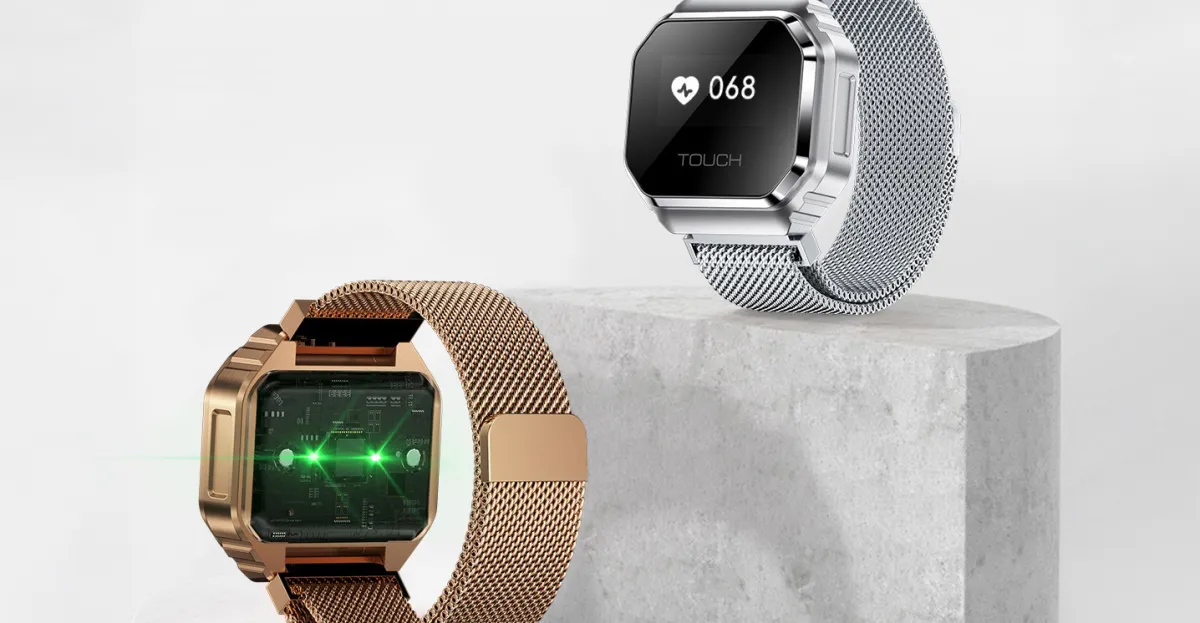

The wearable technology landscape is experiencing a significant disruption with the launch of the Fusion ring watch, an innovative product that is redefining accessible health & fitness tracking in a compact form factor. Priced competitively at $49.99—a stark contrast to traditional counterparts from brands like Casio and Timex, which retail above $100—the Fusion leverages cutting-edge miniaturized display and sensor technology to deliver a multifunctional device in a sleek, ring-shaped form. The introduction of this product signals a strategic move toward democratizing wearable tech, disrupting established industry giants that have historically dominated the premium segment.
The Fusion’s standout feature is its 0.49-inch OLED screen, which offers a crisp display for time, date, and health metrics. This compact yet powerful display challenges the notion that functionality must come at the expense of style or size. Equipped with an optical heart rate sensor and a suite of motion sensors capable of tracking over 100 different sports, this device exemplifies disruption through miniaturization. Its impressive battery life of approximately five days of active usage and up to eight days on standby ensures extended utility, a crucial criterion in consumer adoption. Such tech innovations are poised to warp the traditional wearable market, pushing other brands to innovate beyond basic smartwatches and fitness bands.
Industry analysts, including Gartner and researchers from MIT, emphasize that this product heralds an era where wearable devices are becoming more integrated into daily life through seamless form factors. Innovation driven by miniaturization and multi-sensor integration places a premium on features traditionally reserved for larger devices, now condensed into a ring — a radical shift in hardware design paradigms. This product’s breakthrough challenges the established notion that advanced health metrics and comprehensive monitoring require bulk and cost. It also opens pathways for business model innovation, with potential for integration into broader health ecosystems, enterprise wellness programs, and even fashion tech. Tech giants and startups alike are closely monitoring this development, recognizing that the next frontier lies in pervasive, unobtrusive biometrics tracking.
Looking ahead, the advent of products like the Fusion ring reveals a broader trend: disruption driven by innovation, affordability, and user-centric design. As Peter Thiel and Elon Musk have often cautioned, the future belongs to those who dare to reimagine possible, and this device exemplifies that philosophy — blending hardware prowess with urban, youth-oriented aesthetics. With other tech incumbents facing rising pressure to redefine their offerings, market competitors must adapt quickly. As the industry accelerates toward a future where wearable tech is ubiquitous and invisible, stakeholders must embrace the urgency of innovation — or risk being left behind. The next chapter of wearables is being written today, and it’s characterized by agility, disruption, and unrelenting ambition.





