Matox News

Truth Over Trends, always!

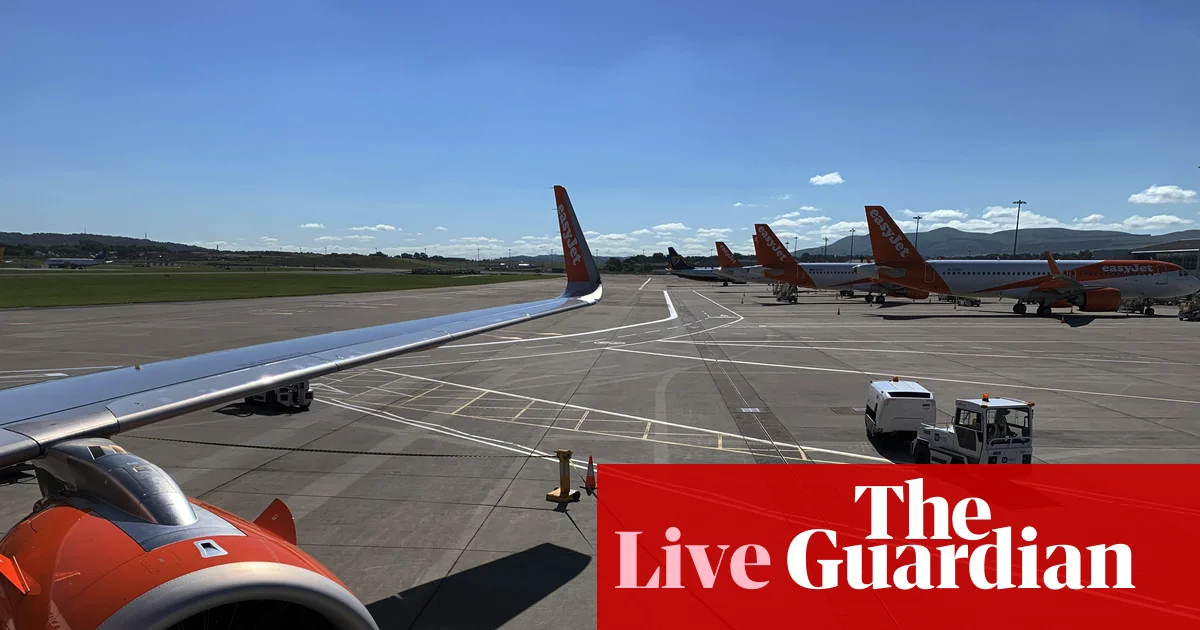
Flights back on at Edinburgh Airport after air traffic control glitch—what you need to know

Global Infrastructure Struggles: Edinburgh Airport’s Technical Crises and Broader Implications

In a startling turn of events, Edinburgh Airport, Scotland’s busiest aviation hub, temporarily suspended all flights due to an unforeseen technical issue with its air traffic control provider. The crisis unfolded Friday morning, with airport authorities swiftly grounding flights to prevent potential air safety hazards. According to official statements posted on social media, teams are working diligently to resolve the problem, yet the disruption underscored the fragility of critical infrastructure that nations and societies rely upon daily. With Edinburgh serving over 15.8 million passengers in 2024, the ramifications of such a disruption ripple beyond mere inconvenience, threatening national connectivity and economic stability.

Historical analysts and infrastructure experts have long emphasized the interconnectedness of modern transportation systems, warning that even minor technical failures can cascade into major crises. The incident at Edinburgh acts as a stark reminder that the backbone of international mobility—the air traffic control systems—remains vulnerable to technological glitches, cyber threats, and systemic failures. This disruption not only stranded countless travelers but also exposed the vulnerabilities inherent in centralized aviation management. As international organizations such as the International Civil Aviation Organization (ICAO) evaluate their contingency plans, the event sparks renewed debate over securing infrastructure critical to global commerce and national security.

The geopolitical impact of such incidents extends far beyond the shores of Scotland. In an age where governments are increasingly scrutinized for maintaining resilient networks, the Edinburgh case prompts a broader reflection: how decisions regarding infrastructure investments and technological reliance influence national sovereignty and societal resilience. For many nations in Europe and across the Atlantic, the stability of air travel is intertwined with their economic health and diplomatic leverage. Economic leaders and security analysts warn that continued dependence on interconnected, technologically complex systems might be a double-edged sword—vulnerable to cyberattacks, technical faults, and even deliberate sabotage. The incident, albeit localized, exemplifies the pressing need for international cooperation, robust safeguards, and contingency frameworks to mitigate future crises before they spiral into wider destabilization.

Contrasting this incident with recent global events, the perspectives of historians and geopolitical strategists suggest a pattern: technology’s double-edged role in 21st-century geopolitics. As nations contemplate their infrastructure priorities, the Edinburgh episode serves as a warning—highlighting that the stability and security of societies hinge on the resilience of their foundational systems. The unfolding narrative of global connectivity is fraught with risks, and the decisions made today will determine the course of international stability. As the world observes, the weight of history presses down, reminding us that even in times of technological sophistication, the fragile fabric of human progress can unravel in an instant, leaving societies to navigate the aftermath and rebuild amidst uncertainty.
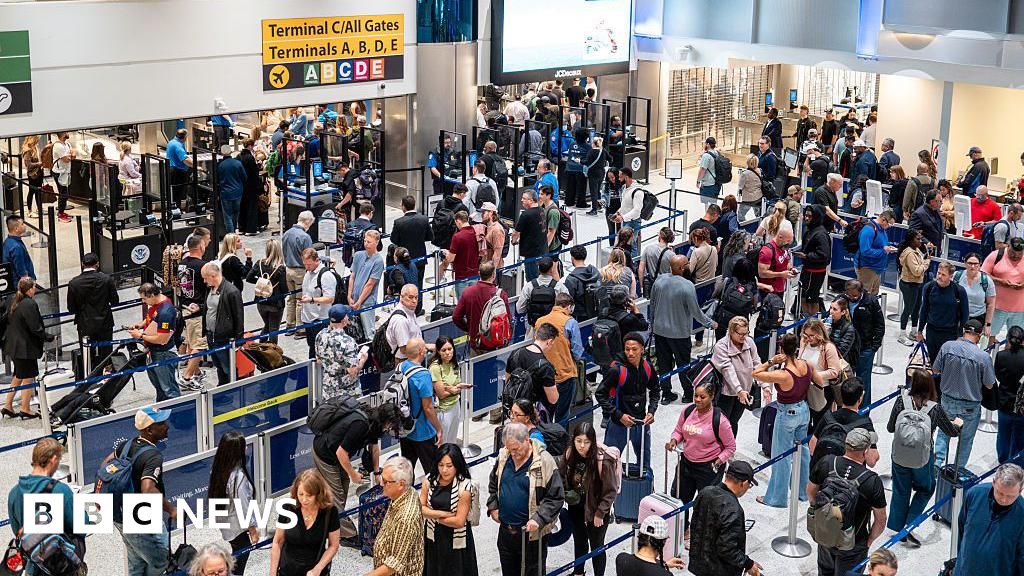

Over 1,000 flights grounded as US air traffic disruptions hit second day

The US Government Shutdown: A Crisis of Governance with Far-Reaching Geopolitical Impact

As Washington remains embroiled in an enduring standoff, the longest government shutdown in American history continues to reveal the fragility of its political system. The shutdown, now into its 39th day, has left over 1.4 million federal workers without pay, disrupting vital public services and instigating chaos across the nation’s infrastructure. The impact stretches beyond ordinary Americans—airports, one of the nation’s busiest sectors, are feeling the consequences acutely. Over 1,000 flights to, from, or within the US were canceled last Saturday, with nearly 4,000 more delayed, according to FlightAware. The Federal Aviation Administration (FAA) has mandated reductions in air traffic capacity at 40 of the country’s busiest airports, citing worker fatigue among air traffic controllers working unpaid—highlighting a systemic failure with urgent warnings of safety risks and economic fallout.

The turbulence in the skies is symptomatic of a broader political paralysis that has persisted since the shutdown’s inception on October 1. The impasse between Republicans and Democrats has not only paralyzed legislative progress but also ignited a crisis of confidence in U.S. governance. Lawmakers are at a standstill, with bipartisan negotiations ongoing over the weekend in an effort to resolve the deadlock. Yet, the divergence on key issues, notably funding and border security, underscores a profound division that extends deep into American societal fabric. Analysts from institutions like the Council on Foreign Relations warn that such internal discord diminishes the U.S.’s standing on the international stage, undermining efforts for multilateral cooperation and fueling instability in a hyper-connected world driven by American diplomacy and economic power.

Moreover, the consequences are ripple effects felt far beyond domestic borders. As the world’s preeminent superpower grapples with self-inflicted wounds, rival nations, particularly China and Russia, seize opportunities to widen their geopolitical influence. The disruption of U.S. air travel, along with the general paralysis in federal affairs, signals an erosion of America’s perceived stability and reliability as a global leader. These signs of internal weakness are of acute concern to international observers, with historian Dr. Anne-Marie Slaughter warning that prolonged internal chaos “emboldens adversaries and diminishes the soft power that has historically underpinned U.S. leadership.” The disruption also highlights how political gridlock can rapidly cascade into broader vulnerabilities that threaten allies and global markets alike.

As the crisis deepens, the sharp contrast between ideological factions reveals the daunting challenges of governance in an era marked by polarization. With the Thanksgiving holiday approaching—a period typically associated with unity and tradition—the nation faces an uncertain future. The civic toll extends beyond the immediate economic disruptions; public confidence in the federal government’s ability to manage crises is eroding. The renewed strain on security agencies, including TSA agents and air traffic controllers working unpaid, signifies not only a humanitarian crisis but also a profound failure of leadership at a time when global stability depends on resilient American institutions. The path forward remains clouded, and history watches—a wary eye on a nation caught in the tumult of its own making, its future still unwritten, yet inevitably shaped by decisions made in the storm of political discord. The world waits, as the relentless march of history continues to unfold, leaving behind a legacy defined by internal division and external uncertainty.

Train Smashes into Lorry Carrying Vehicles in Texas—Disrupts Traffic

The recent series of rail-related incidents in Shertz, Texas, signals a concerning trend that extends beyond the immediate safety concerns of local authorities. Just this week, an 18-wheeler transporting a full load of vehicles collided with a passing train, an event that underlines the ongoing vulnerabilities within critical infrastructure in the United States. Remarkably, no injuries were reported, and the train avoided derailment, but the incident underpins broader issues that warrant international scrutiny and urgent attention from policy makers worldwide.

The incident is not isolated. Earlier this week, on 28 October, a similar event occurred when an Amtrak passenger train collided with a semi-tractor trailer carrying rocks — a crash that produced only minor damage to the train and no injuries. These two separate but related events reveal a pattern of risk that, according to transportation analysts and critics, could have turned catastrophic. The recurrent nature of such accidents in a single city—an urban microcosm—serves as a potent reminder of the necessity for robust safety measures, increased technology, and international best practices in rail safety regulations.

Broadly, these incidents highlight the significance of infrastructure resilience in a changing global landscape. As the United States grapples with aging railway systems and increasing freight volume, many security experts and transportation historians emphasize the importance of international learning and cooperation. Retired transportation safety expert Dr. Harold Jenkins underscores that such accidents are often the result of a combination of human error, outdated infrastructure, and insufficient technological safeguards. These events serve as warnings—touchpoints where local failures could ignite larger crises, especially as global trade increasingly relies on complex and delicate supply chains.

  • The first incident involved an 18-wheeler stopping on the tracks—a tragic misjudgment or an operational failure?—and raises questions about driver awareness and signaling systems.
  • The second, with the rocks-laden train, involved a collision of a lighter nature, yet it amplifies concerns over transportation regulations and the integration of automated safety controls.
  • Both incidents could tarnish Texas’ image as a gateway for international commerce, impacting trade flows and foreign investment.

The geopolitical impact of these seemingly local events stretches far beyond Shertz. They resonate in the corridors of power in Washington D.C., where discussions about infrastructure investments and modernization schemes are persistent but often underfunded. International organizations like the World Bank and the OECD have issued warnings about the dangers of neglecting critical infrastructure in an era of increasing global economic volatility. These incidents serve as natural experiments—warning signs—highlighting how neglect, if unchecked, can lead to disruptions with ripple effects across borders, affecting supply chains, economic stability, and national security.

As the world watches the idiosyncratic yet interconnected evolution of transportation networks, the relentless march of history presses forward—reminding us that the decisions made today can reverberate through generations. Another collision, another wake-up call. The weight of these events is not merely local; it is a chapter in the ongoing saga of modern civilization’s struggle to balance progress with safety. The question remains: will urgent international cooperation and modernization efforts turn these harbingers of future calamities into catalysts for secures and resilient infrastructure—or are we destined to repeat history’s darker lessons in the shadow of complacency?

Social Media Auto Publish Powered By : XYZScripts.com



