
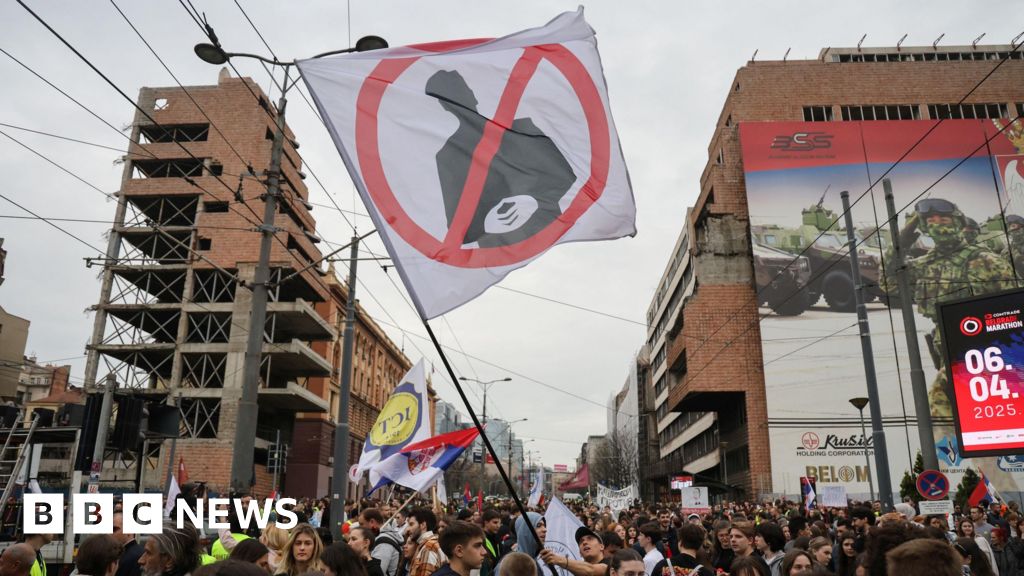

In a move that underscores the shifting sands of geopolitical influence, Serbia has recently passed legislation facilitating a controversial property development led by Jared Kushner, President Donald Trump’s son-in-law and head of Affinity Partners. This decision marks a significant pivot in Serbia’s domestic and international stance, as the government authorizes the transformation of a site imbued with historical symbolism—the former Yugoslav Army headquarters bombed during NATO’s 1999 intervention—into a luxury hotel and residential complex. Such developments are not merely economic in scope but resonate deeply within the societal fabric, touching on national identity, remembrance, and regional sovereignty.
The move has sparked fierce domestic protests and legal battles, illustrating the contentious nature of foreign-led developments transforming local landscapes. Critics within Serbia have condemned the legislation for undermining national heritage and violating constitutional principles, with opposition figures warning that the site will be replaced by casinos and frivolous entertainment. Meanwhile, the decision to strip the building’s protected status and lease it for 99 years to Kushner’s firm has intensified longstanding concerns about transparency, with investigations probing potential forgery of documentation used to facilitate this legal overhaul. The scenario exemplifies how internal political calculations intertwine with international diplomatic pursuits, culminating in a palpable tension that echoes far beyond Belgrade’s borders.
On the international stage, Serbia‘s strategic dance between Washington and Moscow is becoming increasingly delicate. While Vucic’s government seeks to bolster relations with the United States—evident in the professed desire to ‘overcome the burden from 1999’—it also maintains ties with Russia, especially in the spheres of energy and security. The decision to prioritize American investment, seemingly at the expense of historical memory, could have far-reaching consequences, threatening regional stability and complicating Serbia’s aspirations for broader European integration. Analysts warn that this development could ignite local opposition and possibly alienate Serbia’s traditional allies, setting the stage for a more polarized geopolitical environment.
As international observers and historians scrutinize the unfolding events, one thing remains clear: the decisions made today will shape the policies, identities, and allegiances of generations to come. With each passing moment, the legacy of the 1999 NATO intervention—once a symbol of international military intervention—transforms into a symbol of sovereignty challenges, economic shifts, and geopolitical contestation. The narrative of Serbia is still being written, and its next chapter will be dictated not only by its leaders but by the relentless undercurrents of history that choose to reveal or conceal the truth behind its rapidly evolving landscape.





