
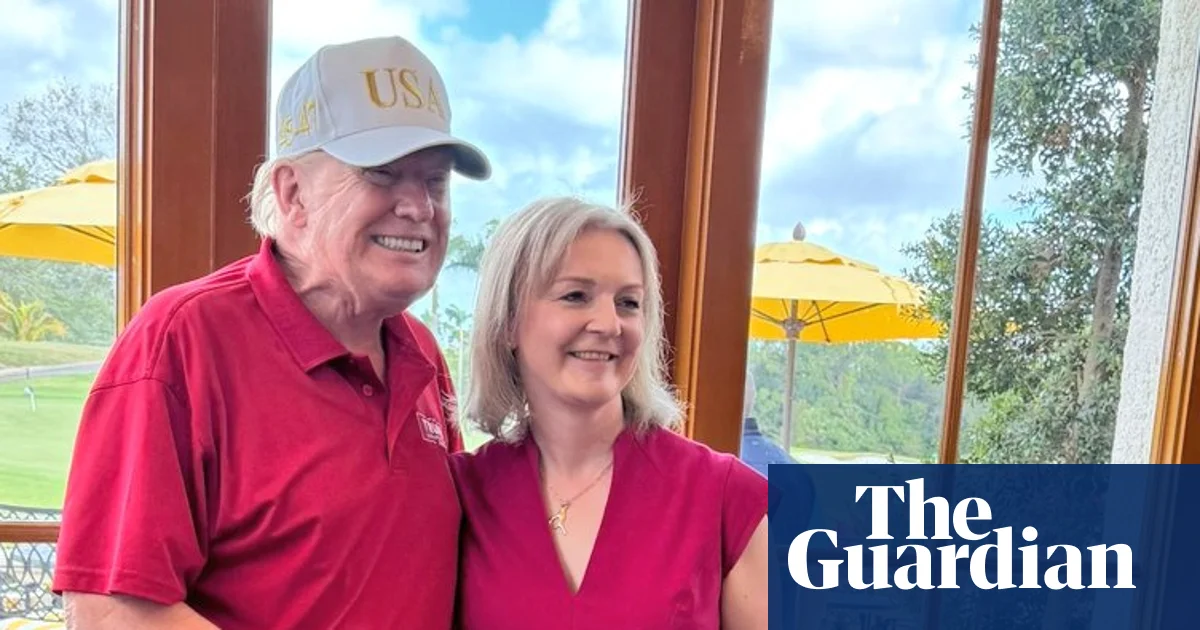

In a clear demonstration of shifting geopolitical alliances and the resurgence of populist sentiment, Liz Truss, the brief and embattled former Prime Minister of the United Kingdom, has reemerged onto the global stage not through policy or leadership, but through symbolic gestures that signal her alignment with American right-wing populism. Her recent encounter with Donald Trump at his Mar-a-Lago estate underscores the increasingly blurred lines between domestic political figures and transatlantic ideological blocs. Truss’s decision to publicly pose with Trump, and her accompanying boast about being “Right about everything,” suggest a calculated move to position herself within the ranks of the America-first movement—a clear sign that her ambitions, however marginal in British politics, are now more firmly rooted in transatlantic alliances.
Her presence at the Conservative Political Action Conference (CPAC) in Maryland last year, where she delivered incendiary speeches criticizing Britain as “failing” and praised the burgeoning ties between right-wing populists worldwide, illustrates how the global landscape is increasingly polarized. Analysts such as Dr. Rebecca Sanderson of the International Institute of Politics emphasize that figures like Truss capitalizing on this mood reflect a broader geopolitical shift, where the traditional power dynamics of Western democracies are mediated through populist rhetoric and anti-establishment sentiments. The rise of such figures signals a fundamental redefinition of ideological borders, with countries like the UK and the US acting as symbols of resistance against what many see as the decline of liberal consensus.
Meanwhile, within the UK, Truss’s attempts to re-establish her influence extend beyond politics into entrepreneurship, with her efforts to launch her own club—The Leconfield—underscoring her desire to cultivate new power bases outside formal government structures. Her association with the property tycoon Robert Tchenguiz and her solicitation of founding members for half a million pounds reflect a speculative pursuit of influence, one that many see as emblematic of a broader crisis of legitimacy in contemporary British politics. Her short-lived tenure as Prime Minister, lasting only 49 days, and her subsequent electoral defeat, mark her as a figure on the fringes of mainstream politics, yet her international positioning indicates her desire to stay relevant on a global scale.
The geopolitical impact of these developments cannot be overstated. As Western democracies grapple with internal divisions and a fragile post-pandemic recovery, the influence of populist actors like Truss and Trump accelerates the disintegration of traditional alliances and norms. International organizations such as the European Union and the United Nations observe these shifts warily, recognizing their potential to redraw power structures and foster instability. History warns us that the rise of such populists often coincides with heightened global tensions and the erosion of diplomatic consensus. As the pages of history continue to turn, the world waits to see whether the current alignment of figures like Truss and Trump will forge a new ideological axis—or push the world toward a precipice from which current global order may never return. In this unfolding story, the delicate balance of peace and chaos remains on a knife’s edge, scripted by the audacious ambitions of those who believe they are rewriting the rules of the game.





