Matox News

Truth Over Trends, always!

Can the Swedish PM’s new podcast turn the tide in this year’s election? | Sweden

Swedish Politics in Flux: A New Media Strategy Meets Geopolitical Realities

In Sweden, a nation historically seen as a bastion of social democracy and progressive policies, political tides are shifting rapidly amidst a landscape of burgeoning populism and shifting alliances. Prime Minister Ulf Kristersson, leading a fragile minority government, has launched an unconventional initiative—his own podcast Ring statsministern!—aiming to connect with voters in a more relaxed, conversational format. While this approach temporarily garners public attention, political analysts warn that it underscores a deeper power struggle which extends beyond domestic borders. Critics suggest that surface-level “friendliness” cannot mask the tangible challenges Kristersson faces, especially with the rising influence of the Sweden Democrats, a party rooted in far-right nationalism and increasingly decisive at the ballot box.

The geopolitical impact of this internal Swedish shift becomes evident when considering the broader European context. The Sweden Democrats’ rise signals growing discontent among the electorate regarding issues such as migration, law and order, and national sovereignty. As historian Lars Truedson notes, this ideological pivot echoes similar trends across northern Europe, where traditional liberal democracies grapple with populist surges. The moderation or radicalization of these regimes will inevitably influence EU policies on border security, economic integration, and diplomatic strategy. The Swedish government’s reliance on a party with roots in extremism raises questions about the nation’s ability to maintain its longstanding reputation as a pillar of stability amid mounting international pressure.

Within the international arena, organizations like NATO and the EU are watching Sweden’s political realignment with keen interest. The country’s proximity to the Arctic and its strategic position in the Baltic Sea make it a critical theater for geopolitical negotiations involving Russia, the United States, and China. As Sweden balances internal political pressures and external threats, the decisions made today could redefine its alliances and security posture for decades to come. The decision of the Kristersson government to maintain a hard stance on migration and law enforcement aligns with international security policies aimed at curbing extremism, but also risks alienating segments of society and fracturing national consensus.

Political commentators emphasize the importance of understanding the wider international implications of Sweden’s internal politics. The nuanced tactics of Kristersson’s government—such as launching a friendly podcast—are viewed by many as a strategic move to shape the narrative and deflect scrutiny, especially ahead of elections that will decide whether populist forces continue to dominate. As Parisa Höglund, a renowned analyst, remarks, “This is more than just a media stunt; it’s a reflection of the larger geopolitical game in which Sweden remains a critical pivot point.” With voters’ trust diminishing and the shadow of the Europe-wide populist surge growing darker, Kristersson’s fragile leadership underscores a critical juncture in Swedish and global politics. His efforts to appear accessible and relatable are, perhaps, a desperate attempt to fend off history’s relentless march—an uncertain chapter where the fate of nations hangs in delicate balance, caught between the tides of populism and the imperatives of sovereignty.
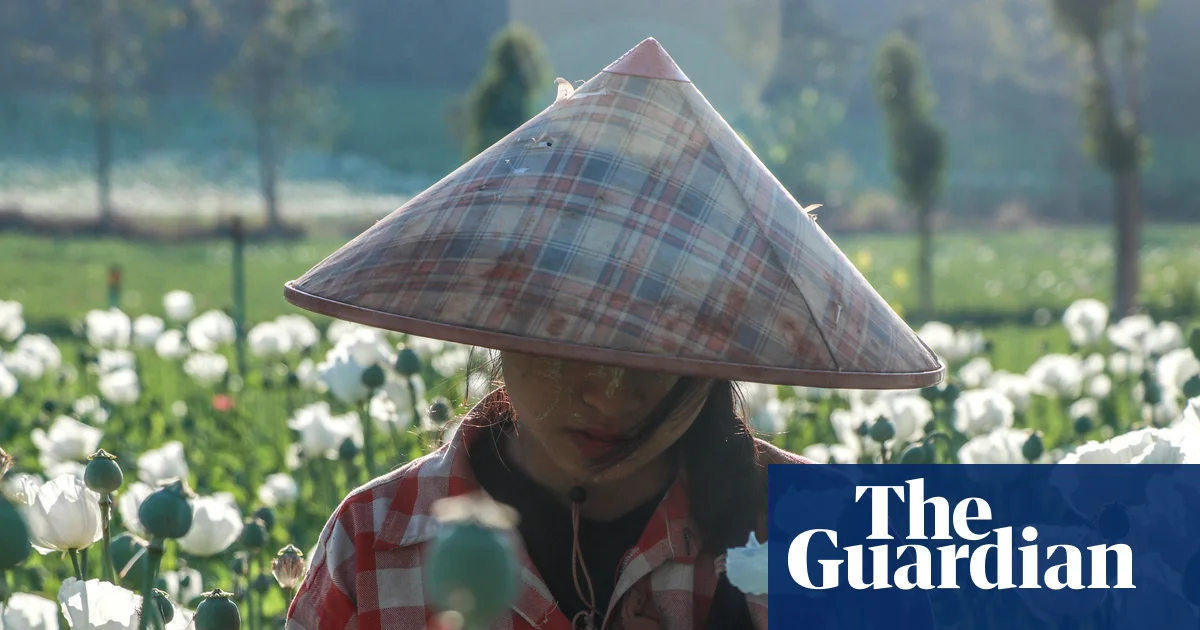
Myanmar farmers turn to opium as conflict drives them into illegal trade

Amid the chaos of Myanmar’s ongoing military conflict and political upheaval, a disturbing trend has emerged: the resurgence of opium poppy cultivation, which has surged to its highest level in a decade. The United Nations Office on Drugs and Crime (UNODC) reports a 17% increase in poppy cultivation this year alone, totaling over 53,000 hectares—the largest footprint since the early 2010s. This expansion underscores a grim reality: the illicit drug economy thrives where chaos reigns, fueling not only regional instability but also deeply impacting families, education, and communities across the nation.

This rising tide of illicit cultivation is primarily driven by conflict and economic hardship that continue to plague Myanmar, intensifying poverty and pushing farmers towards the lucrative but dangerous world of opium. As sociologist Dr. Emily Carter notes, “When legitimate livelihoods are destroyed by violence and political upheaval, many farmers turn to illegal crops as a last resort, creating a vicious cycle of dependence and violence.” The expansion of poppy farming in eastern Shan State and Chin State—both regions embroiled in ongoing clashes between military forces and armed groups—reflects the geographic spread and escalation of this social crisis. With the southern Shan State remaining the primary center of cultivation, and new pockets emerging in Sagaing Region, the problem is no longer confined but expanding, threatening to destabilize neighboring countries as well.

However, beyond its economic and political ramifications, the rise of opium cultivation exerts a profound toll on families and communities. Children growing up amidst violence and poverty are often robbed of access to education, their futures dimmed by the specter of addiction and social disintegration. Social commentators warn that the drug economy’s growth undermines human dignity and societal cohesion, making it harder for stable communities to reclaim their sense of normalcy. And while the Myanmar military prepares for an election amid a raging civil war, the UNODC warns that the expansion in cultivation signals a potential for further growth, reinforcing a cycle of despair and violence. Historically, history’s sociologists like Norbert Elias have emphasized how social disintegration feeds on itself in conditions of prolonged conflict—an observation as relevant today as ever.

Addressing this crisis requires more than military or political solutions; it demands a concerted effort to rebuild trust, economic stability, and social cohesion within Myanmar’s fractured landscapes. The challenge remains: to restore hope and opportunity where despair has taken root. As society watches the unfolding tragedy, we are called to reflect on the moral imperative of supporting resilient communities, advocating for just economic reforms, and fostering international cooperation. For these communities, the road to recovery is long, often littered with the shadows of lost innocence and broken dreams. Yet, if society dares to remember the resilience of its youth and the strength of moral resolve, there exists the possibility of turning society’s darkest hour into a dawn of renewal—a testament that even amid chaos, hope endures, waiting quietly for those brave enough to nurture it.

Met Police Call on Epping Sex Offender to Turn Himself In Amid Rising Concerns

London is once again at the center of a geopolitical debate, this time over the failure of its justice and immigration systems. The recent case involving Hadush Gerberslasie Kebatu, an Ethiopian national and convicted sex offender, underscores the profound risks and vulnerabilities associated with current domestic policies. Kebatu, who was wrongly released from HMP Chelmsford after serving only 31 days of a 12-month sentence, has become the focal point for international criticism on bureaucratic incompetence, human error, and the broader implications for public safety. This incident, which forced a major police manhunt across London, highlights the dangerous intersection of migration, national security, and judicial oversight—issues that resonate far beyond Britain’s shores.

The UK Prime Minister, Keir Starmer, condemned the release as “totally unacceptable,” emphasizing its disastrous implication for public confidence in the nation’s justice and immigration systems. The event appears to be less an isolated mistake than a symptom of systemic exhaustion. Records reveal a troubling 128% increase in prisoners released in error over the past year, with 262 cases, according to government data. International analysts warn that such failures jeopardize the geopolitical stability of a nation grappling with complex migration challenges and domestic security concerns. Critics argue that UK authorities lack the capacity and resilience to handle an influx of migrants arriving via small boats, which, according to reports from HM Inspectorate of Prisons, has resulted in “national capacity issues” and staff shortages—especially in critical pre-release and reception areas.

Historians and geopolitical analysts warn that Britain’s current predicament may be emblematic of a broader pattern seen across Western nations where immigration policies are often misaligned with capacity and resource constraints. For instance, international organizations such as the European Court of Human Rights and United Nations have previously issued cautious warnings about the pitfalls of overwhelmed detention systems and inconsistent deportation practices. Such warnings serve as a stark reminder of how international shifts in migration policy and domestic political will directly influence national security and societal stability. The Kebatu case, in particular, has been exploited by far-right factions seeking to amplify fears about immigration and public safety, thereby increasing societal polarization and complicating diplomatic efforts aimed at cooperative migration management.

As Kebatu was seen wandering London, seeking assistance and questioning his direction, the incident exemplifies how individual errors can cascade into crises with far-reaching geopolitical impact. His case underscores the urgency of comprehensive reforms—both in prison administration and immigration oversight—that could prevent further incidents of this magnitude. International observers warn that Britain’s ongoing struggles to balance leniency, security, and immigration control threaten to weaken its position in an increasingly polarized world. The weight of history bears heavily on this unfolding disaster, with each failed policy, each negligent release and each exploited fear shaping the future of Britain’s global standing. In this maelstrom of mistakes and missed opportunities, the question remains: will this be a turning point that galvanizes urgent reform, or simply another chapter in a narrative of decline under mounting pressure?

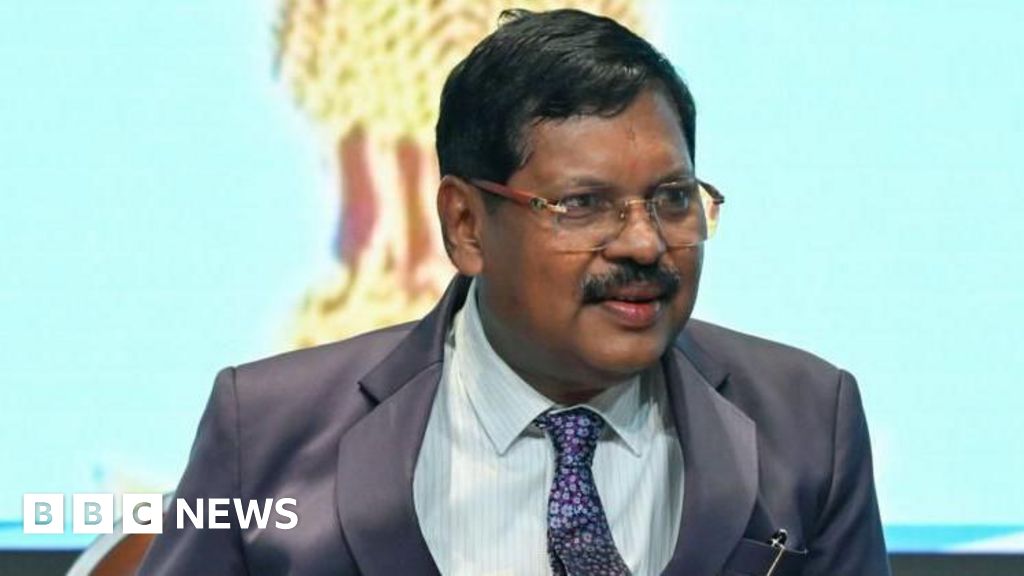
Youth protests turn violent as shoe hurled at India's chief justice over religious row
Youth protests turn violent as shoe hurled at India’s chief justice over religious row

India’s Judicial Integrity shaken: Shoe hurled at Chief Justice amid religious controversy

The recent incident in India where an attorney launched a shoe at Chief Justice BR Gavai during a courtroom session has ignited a firestorm across the nation, exposing the profound tensions simmering beneath its democratic veneer. The act, widely condemned by leadership across the political spectrum, underscores a volatile intersection of religious sensitivities and the fragile fabric of Indian society. As Prime Minister Narendra Modi denounced the attack as “utterly condemnable,” analysts warn that the upheaval signals deeper fissures within the country’s delicate balance between tradition, law, and nationalism.

The confrontation appears rooted in escalating religious tensions, particularly surrounding comments made by the Chief Justice about a recent court petition involving Hindu beliefs. When Chief Justice Gavai dismissed a plea to reconstruct a revered idol of Lord Vishnu, his remark—”This is purely publicity interest litigation… Go and ask the deity himself to do something”—sparked accusations of mockery directed at Hinduism, one of India’s most influential religions. Although Gavai later articulated respect for all faiths, the controversy reflects the ongoing challenge of navigating religious sensitivities within an increasingly polarized nation. Historians and social commentators caution that such disputes, if unmitigated, could further entrench societal divisions and undermine the rule of law.

The attacker, Rakesh Kishore, was immediately detained and later suspended from his legal practice, yet the broader implications extend beyond individual culpability. The incident epitomizes a cultural clash—where traditional expressions of protest, like a shoe-throwing gesture, are symbolic acts of humiliation and disrespect. In recent history, similar acts have punctuated global moments of political unrest: in 2008, an Iraqi journalist hurled his shoe at then-U.S. President George W. Bush, and earlier this year, a shoe was thrown at Kenyan President William Ruto. These acts, though shocking, reveal how deeply frustrations with leadership and societal injustices have reached a boiling point. For India, the gesture may symbolize a dangerous shift where respect for institutions is eroding, replaced by raw protests that threaten stability.

Expressing concern over the ramifications, international organizations and foreign analysts emphasize that such confrontations threaten the very tenets of democratic discourse. The United Nations and regional watchdogs have historically warned that respect for judiciary independence and religious harmony are pillars of national stability. Failure to address these sources of tension, analysts argue, could lead India down a path marked by increasing societal polarization and diplomatic isolation. Prime Minister Modi’s intervention emphasizes the importance of societal cohesion, yet critics argue that without addressing underlying causes—religious intolerance, political polarization, and miscommunications—the cycle of conflict will only intensify.

The incident leaves the world at a pivotal juncture, with India’s future precariously balanced. As history witnesses moments when societal fractures threaten to escalate into conflicts, the weight of the unfolding crisis in India reminds us that the boundaries between respect, dissent, and chaos are ever fragile. The remarkable resilience of India’s democracy will now be tested—whether it can heal its scars or succumb to new forms of unrest remains an open question, emerging from a chapter where tradition and modernity clash in the shadow of history yet to be written.

Young entrepreneurs turn abandoned Japanese house into thriving guesthouse

Across the world, a quiet transformation is unfolding within Japan, exposing a broader narrative of societal shifts, economic challenges, and the enduring power of cultural heritage. The phenomenon of abandoned homes, known locally as “akiya,” signifies more than mere neglect; it reflects a demographic decline, urban migration, and the erosion of rural communities. According to international observers and historians warning of a “demographic cliff,” these ghost houses symbolize a nation at a crossroads—struggling to maintain its traditional identity amid modern pressures.

Amid this backdrop, stories like that of Daisuke Kajiyama, a Japanese entrepreneur determined to breathe new life into these abandoned homes, underscore a wider global awareness of heritage preservation and economic revitalization. Kajiyama’s quest to transform neglected kominka houses into guesthouses highlights a pragmatic response to Japan’s declining rural populations. His journey—from uncovering a neglected green tea factory in Shizuoka to negotiating with owners constrained by tradition—illustrates how localized decisions hold profound geopolitical ramifications. As Kajiyama gathers support through government grants and traditional building materials, his efforts exemplify the delicate balance between national policy and individual entrepreneurship in preserving cultural landmarks.

Meanwhile, international organizations such as the United Nations have expressed concern that Japan’s rural depopulation could threaten global cultural diversity. Analysts argue that Japan’s unique blend of modern innovation and ancient tradition is increasingly vulnerable to urban-centric policies and economic shifts. As urban areas continue to swell—shuttling younger generations away from countryside—the demographic decline risks turning many villages into “time capsules of a bygone era”. Prominent economists warn that if this trend persists unchecked, the societal fabric of Japan could unravel, impacting regional stability and igniting a series of migration and economic discontent across East Asia.

As history unfolds, the fate of Japan’s rural landscape will serve as a stark lesson for neighboring nations and the broader global community. Decisions to preserve or abandon cultural heritage will shape national identities and influence international perceptions about modernization versus tradition. From the quiet of aged houses in Tamatori to the corridors of power in Tokyo and Washington, the ripple effects of these changes extend far beyond Japan’s borders. As society grapples with demographic decline, the world watches, mindful that the story of these ghost houses is not merely about rural decay, but about the resilient spirit of a nation attempting to reconnect with its roots amid a rapidly transforming civilization. The next chapters of this unfolding saga may determine whether Japan’s ancient homes become symbols of despair or beacons of renewal—an enduring testament to the resilience of heritage in an age dominated by change.

Fashion’s Grim Turn: Youth Style Moves Toward Old-School Backslide

Fashion’s Evolution Mirrors International Societal Changes Amid Medical and Cultural Shifts

In 2023, the global fashion industry has once again unveiled its complex relationship with societal standards, body diversity, and medical advancements. This season’s runway shows across New York, London, Milan, and Paris reveal a disconcerting trend: a pronounced decline in the representation of plus-size models, echoing a broader societal pattern that privileges a narrow definition of beauty. Despite early progress driven by pioneers like Jill Kortleve, Paloma Elsesser, and Precious Lee—who broke the traditional sample size mold—this past season marked a stark regression. Industry analysts and fashion observers emphasize that this shift is not merely aesthetic but deeply intertwined with how international society perceives health, worth, and beauty.

Adding fuel to the fire is the advent and expanding accessibility of weight loss medications like Wegovy and Ozempic. These pharmaceuticals, originally designed to assist those with obesity or weight-related health issues, are increasingly being sought for purely aesthetic purposes though often at the expense of health risks. The European Medicines Agency recently issued warnings about shortages of Ozempic, underscoring the growing demand and potential for misuse. Critics such as global health experts warn that the normalization of such drugs, combined with a fashion industry retreat from size diversity, threaten to reinforce damaging societal narratives. As Dr. Lash, a prominent endocrinologist, cautions, “These drugs are not benign, and their use outside medical supervision can cause serious health complications.”

The significance of these developments extends well beyond individual health. According to historians and sociologists, these trends reflect a societal shift where the pursuit of an ultra-thin ideal is increasingly driven by consumer culture and pharmaceutical influence. Industry insiders point out that long-standing practices—such as creating exclusive sample sizes optimized for efficiency—are often cited by legacy brands as justifications for lacking size inclusivity. However, as White and other advocates argue, this is a matter of industry prioritization over societal well-being. Calls for a unified industry standard that mandates size diversity on runways are gaining momentum, aiming to combat the entrenched archetype of skinny beauty that has persisted for decades.

Despite these setbacks, a handful of smaller brands and emerging designers continue to push for change. Labels like Esther Manas, Di Petsa, and some collections by Christian Siriano exhibit a compelling commitment to celebrating all body types. This resistance symbolizes a broader cultural struggle—whether the fashion industry will embrace a definition of beauty that is inclusive, rather than exclusive. As the debate rages, critics warn that these decisions impact societal attitudes—shaping how future generations perceive self-worth, health, and diversity. The industry’s reluctance to fully integrate size inclusivity risks perpetuating a cycle where societal standards are dictated by narrow aesthetics and pharmaceutical solutions.

Ultimately, the narrative of body image and medical intervention is a portrait of a society at a crossroads. As social media platforms amplify conversations about health, beauty, and authenticity, and as international regulators grapple with medication shortages and misuse, history’s verdict remains unwritten. Will the global fashion industry and society at large choose authentic diversity and health over fleeting trends and pharmaceutical shortcuts? The unfolding story suggests we are entering a defining chapter—one where the choices made today will echo through future generations, shaping the very fabric of cultural identity and societal standards. The weight of history hangs heavily in the balance, whispering that the path forward must be carved with both conscience and courage.

Social Media Auto Publish Powered By : XYZScripts.com