Matox News

Truth Over Trends, always!

20 Years Later: The Tweet That Started It All

The origin of one of the most influential social media platforms, Twitter, dates back to March 21, 2006, when Jack Dorsey posted the now-iconic message “just setting up my twittr.” This initial spark fueled a technological revolution that would reshape digital communication, social interaction, and business innovation. Over the years, Twitter’s transformation into X, under the ambitious leadership of Elon Musk, exemplifies disruption at its finest—a case study of how legacy platforms can be reimagined through aggressive innovation.

Musk’s strategic acquisition and subsequent rebranding of Twitter into X symbolize a groundbreaking metamorphosis, where the platform now encapsulates an vision far beyond microblogging. Incorporating cutting-edge AI technology like xAI and its chatbot Grok, Musk aims to establish a new frontier for generative AI-powered social ecosystems. This move not only disrupts conventional social media paradigms but poses significant business implications, positioning X as a potential AI-driven powerhouse that challenges existing giants like Meta and TikTok. Meanwhile, Musk’s push for integration with space exploration through SpaceX’s involvement signals a future where digital and physical frontiers blur in high-velocity innovation.

However, rapid innovation does not come without controversy. Critical issues such as AI safety and ethics have surfaced, notably with Grok’s deployment leading to scandals involving sexual deepfakes and offensive AI behavior. The case echoes ongoing industry debates about AI accountability and the necessity for robust regulation—topics extensively analyzed by institutions like MIT and Gartner. As the platform pivots toward more powerful AI tools, critics warn that unchecked technological expansion could undermine public trust and invite legal challenges. Nevertheless, Musk’s aggressive push into AI-driven social media signals a strategic gamble: dominate the next wave of digital interaction before the competition adapts.

Looking ahead, the trajectory of X underscores a broader trend of disruption in digital communication. Innovators like Musk are reshaping the landscape with advanced AI, blockchain integrations (as seen with Dorsey’s NFT sale of his first tweet), and cross-industry alliances, intensifying competition and accelerating technological cycles. Industry analysts, including those from Gartner and MIT, highlight that businesses that fail to adopt or adapt to AI-driven platforms risk obsolescence in a rapidly evolving market. The urgency lies in harnessing this disruptive wave responsibly—balancing innovative prowess with ethical oversight to ensure sustainable growth. The future of technological evolution, therefore, hinges on our ability to innovate fiercely but wisely, staying one step ahead in a relentlessly fast-moving digital age.

Fact-Check: Viral Tweet about Climate Change Simplified and Clarified

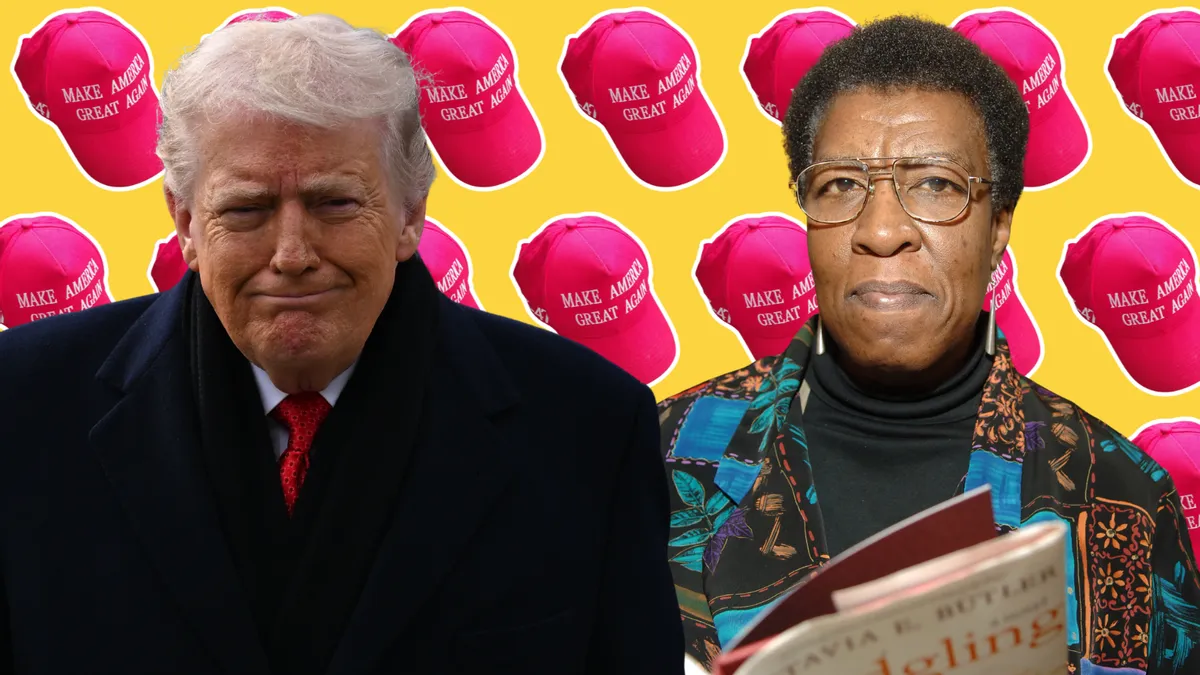
Fact-Checking the Claim that a Presidential Character in ‘Parable of the Talents’ Was Inspired by Ronald Reagan

Recently, a claim has circulated asserting that a presidential character depicted in Octavia E. Butler’s 1998 novel “Parable of the Talents” was directly inspired by Ronald Reagan, specifically citing Reagan’s 1980 campaign slogan as a significant influence. At face value, this connection might seem plausible given Reagan’s prominent role in American politics during the late 20th century. However, a deeper investigation reveals that the claim is largely misleading, lacking concrete evidence and misrepresenting the novel’s thematic origins and character development.

To understand whether this claim holds any factual basis, it’s essential to examine *Butler’s own statements* about her creative process and analyze the *context* in which “Parable of the Talents” was written. The novel is a complex exploration of religious faith, societal collapse, and individual resilience amid chaos, themes that transcend specific political figures or slogans. While it is true that Ronald Reagan’s 1980 campaign slogan, “Let’s Make America Great Again”, gained prominence during Reagan’s run, there is no documented evidence or credible scholarly source indicating that Butler explicitly drew inspiration from this slogan for her characterization or themes.

Assessment of the Claim’s Foundations

  • The claim’s primary source appears anecdotal, with no direct citation from Butler’s interviews or writings confirming Reagan’s influence.
  • Ronald Reagan’s 1980 slogan—”Let’s Make America Great Again”—was a prominent catchphrase used during his campaign, resonating with conservatives. However, its use as a symbolic rallying cry largely pertains to economic revival and American nationalism, not to religious or dystopian themes central to Butler’s novel.
  • Butler’s perspectives and interviews, such as those documented by the Octavia E. Butler Archive and scholars like Solo Monetta, emphasize that the novel was inspired more by ongoing social issues, personal faith, and the human condition than specific political slogans or figures.

Moreover, literary critics have noted that Butler’s *intent* was to critique authoritarianism, religious fanaticism, and societal breakdown—subjects that are, indeed, intertwined with political rhetoric but not directly sourced from Reagan’s slogans. Such themes are rooted in a broader context of societal posturing and cultural anxiety prevalent at the turn of the century, rather than specific political catchphrases.

Expert Analysis and Historical Context

*According to Dr. Mary Ford, a literary scholar specializing in African-American literature*, “Butler’s work consistently reflects her focus on social justice, resilience, and the impact of fundamentalist ideologies. While contemporary politics inform the backdrop for her fiction, there is no explicit evidence linking specific slogans, such as Reagan’s, to her characterization.” Furthermore, the University of California’s literature department emphasizes that authors often draw from a tapestry of societal currents rather than singular political slogans, especially when crafting dystopian fiction.

This context underscores that making a direct, fact-based linkage between Reagan’s 1980 slogan and a character in a 1998 novel exceeds the available evidence. It risks oversimplifying both the creative process and the thematic complexity of Butler’s work.

The Importance of Fact-Based Discourse

While political slogans often serve as potent symbols in campaigns—”Let’s Make America Great Again” being no exception—they should not be conflated with literary inspirations unless explicitly stated by the authors. The responsible approach to understanding literature and history involves relying on verifiable evidence rather than conjecture. Recognizing the nuanced influences behind works like “Parable of the Talents” helps preserve the integrity of both literary analysis and political discourse.

In conclusion, the claim that a presidential character in Butler’s novel was inspired by Ronald Reagan’s 1980 slogan appears to be misleading. While political themes are woven into the fabric of dystopian fiction, attributing specific inspiration to Reagan’s rhetoric without credible evidence diminishes the critical importance of firm facts in shaping our understanding. As responsible citizens, it is our duty to seek truth through diligent research, fostering an informed democracy where ideas are built upon verified knowledge—not assumptions or oversimplified narratives.

Social Media Auto Publish Powered By : XYZScripts.com