Matox News

Truth Over Trends, always!

Uber teams with Rivian on $1.25B robotaxi push—next-gen rides for the youth generation

Rivian and Uber Join Forces in Revolutionary Robotaxi Venture

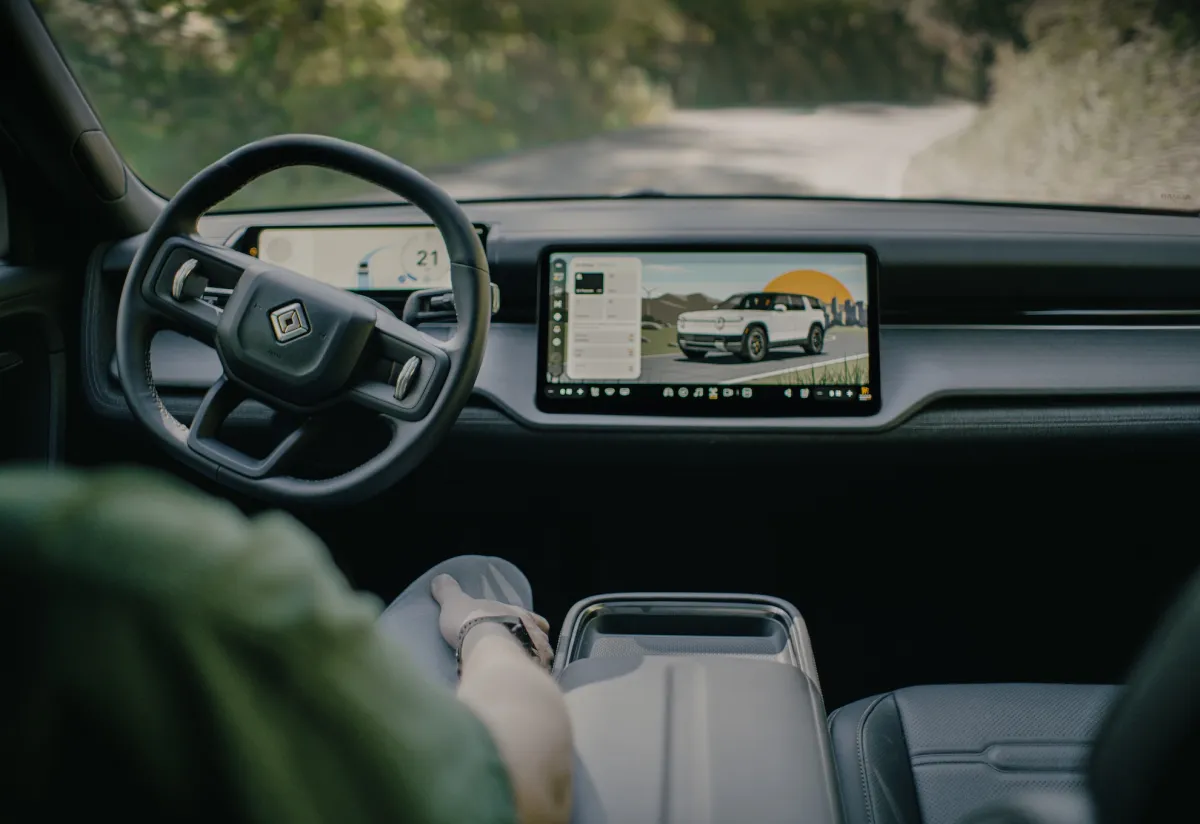
In a move set to redefine urban transportation and accelerate the evolution of mobility, Rivian announced a strategic partnership with Uber to develop a fleet of autonomous robotaxis based on Rivian’s upcoming R2 SUV. The collaboration, which could be worth up to $1.25 billion, underscores the shifting dynamics in the EV and autonomous driving spaces, spotlighting how the convergence of innovative vehicle engineering and ride-hailing platforms is disrupting traditional automotive business models.

Uber’s initial $300 million investment signals a significant gamble on Rivian’s capabilities, with plans to purchase 10,000 fully autonomous R2 robotaxis ahead of a projected 2028 rollout in major markets like San Francisco and Miami. This initiative aims to expand dramatically, with possibilities of acquiring up to 40,000 units by 2030, ultimately deploying fleets across 25 cities in North America and Europe by 2031. The strategic intent is clear: leveraging cutting-edge AI-driven automation to corner the burgeoning robotaxi industry, a sector projected by industry analysts such as Gartner to be a trillion-dollar market as autonomous vehicles disrupt traditional transportation paradigms.

Innovation at the Core of Rivian’s Autonomous Leap

What sets Rivian apart in this high-stakes race is their focus on innovation and continuous learning. The automaker’s Rivian Autonomy Platform, debuted in 2024, serves as the technical backbone, underpinning future capabilities from highway hands-free driving to full point-to-point automated navigation. The company’s ambitious plans include hardware upgrades such as lidar sensors and a powerful autonomy computer capable of processing an extraordinary five billion pixels per second—features that underscore the technological disruptive potential of Rivian’s approach.

  • Leveraging large language models to enhance perception and decision-making
  • Upgrading hardware to enable eyes-off, hands-free capabilities
  • Targeting Level 4 autonomy with zero human intervention

Despite these advancements, significant challenges remain, including the ongoing development and testing before commercial deployment. Rivian’s strategy reflects a disciplined emphasis on innovation, but industry experts caution that the journey from prototype to widespread adoption involves considerable technical and regulatory hurdles. The company’s leadership, including CEO RJ Scaringe, remains bullish, emphasizing rapid progress and the necessity of relentless innovation to stay ahead in a market increasingly crowded by tech giants and startups alike.

Business Implications and Industry Disruption

This partnership exemplifies a broader industry trend where legacy automakers and tech-driven newcomers leverage breakthroughs in AI and electrification to disrupt traditional automotive manufacturing. The integration of AI-first strategies, inspired by insights from institutions like MIT and industry analysis from Gartner, underscores how disruptive innovation is reshaping vehicle design, ownership models, and urban mobility platforms.

Meanwhile, Uber’s extensive network of partnerships—including collaborations with companies like Lucid Motors, Motional, and Baidu—positions Uber as a prime orchestrator of autonomous mobility’s coming wave. This aligns with a broader industry movement where ride-sharing giants leverage autonomous tech to transform profit models, reduce costs, and create new revenue streams.

Future Outlook: A Race Toward Autonomous Dominance

As Rivian aims for a full hands-off driving experience by 2027, industry leaders and analysts warn of the rapid pace of technological evolution—progress that often outstrips current regulatory and technical frameworks. The future of autonomous mobility hinges on continuous innovation and strategic agility, with companies like Rivian and Uber vying to lead the disruption. With major markets poised on the cusp of autonomous vehicle adoption, companies ignoring the urgency of this transformation risk obsolescence. The next few years will be critical as the industry navigates the complex terrain of scale, safety, regulation, and consumer acceptance—factors that will determine whether this revolution is merely on the horizon or already underway.

Uber ramps up women-only features nationwide, empowering young women across the U.S.

In an era where social consciousness and personal safety are becoming paramount, Uber has taken a bold step by expanding its Women Preferences safety feature to a nationwide audience. Initially launched in select cities like Los Angeles, San Francisco, and Detroit, this feature allows users and drivers to select gender preferences for ride matches and schedule rides specifically with women drivers. Its recent rollout across the U.S. signals not only a response to burgeoning safety concerns but also an acknowledgment of the demand from women for more control over their mobility. As Uber emphasizes that “Women Preferences was created because women asked for it,” it underlines a shift towards prioritizing user-driven safety innovations in ride-sharing.

This initiative isn’t just a tech update; it’s a reflection of broader societal shifts. With over 230 million rides completed using this feature, the data points to a growing demand among women for safer, more tailored transportation options. In addition to the U.S., Uber’s Women Preferences has made its mark in countries like Germany, France, Saudi Arabia, Portugal, Brazil, and Spain, along with 40 countries where drivers can participate in the program. Its influence is even echoed by competitors like Lyft, which introduced a similar Women+ Connect feature nearly two years earlier, and expanded it nationwide in 2024. These developments reveal how ride-share giants are attuning their services to societal calls for equality and safety, signaling a more person-centered approach to urban mobility.

The societal relevance of these features extends beyond mere convenience. Critics and analysts argue that despite these technological advancements, the deep-rooted issues of rider safety and accountability remain problematic. Recent lawsuits and reports, such as Uber being found partially liable for sexual assault by one of its drivers and ordered to pay over $8 million in damages, cast a long shadow over the industry’s claims of safety. Nevertheless, the push for gender-specific features highlights an important dynamic: users—especially women—are demanding not just safety icons on an app but tangible, customizable safety measures. As sociologists suggest, this trend represents a consumer-driven shift towards empowerment and control in digital mobility spaces. Companies are listening because, ultimately, safety equates to trust— and in today’s digital age, trust is the new currency.

Yet, as these safety features become increasingly mainstream, a compelling question arises: Are we on the verge of redefining social norms around gender and safety in shared spaces? While the immediate focus seems to be on technological solutions, the underlying societal shifts could lead to a future where personal safety measures become embedded in the fabric of urban life and social interaction. Could an emerging cultural movement favor a future where **personal safety** isn’t just an app setting but a foundational social value? Or are we merely scratching the surface of a more complex dialogue about equality, trust, and accountability in an interconnected world? The next chapter in the evolution of ride-sharing and safety awareness might just redefine how society perceives social norms and, ultimately, how future generations will navigate their digital and physical worlds.

From Uber driver in the U.S. to fearing jihadist threats in Somalia—how local roots meet global dangers

Geopolitical Shifts in the Wake of Somali Deportations: A Warning from the Frontlines

In recent months, a wave of deportations from the United States to Somalia has exposed the fragility of international migration policies amid rising anti-immigrant rhetoric and changing administrations. These deportations, involving Somali nationals who sought refuge in the US, are not merely individual cases but signals of profound geopolitical repercussions that resonate far beyond the borders of the United States. As President Donald Trump publicly disparages Somali migrants, calling for tougher restrictions and even suggesting they should “go back to where they came from,” the international community, analysts, and historians warn that these policies threaten to undermine years of fragile stability in the Horn of Africa while fueling anti-foreigner sentiments domestically.

Most noteworthy is the case of Mahad Mohamud, a Somali man deported from Minneapolis after spending over a decade in various countries, including South Africa, Brazil, and the US. Mahad, known on social media as Garyaqaan, built a significant following defending his clan’s interests in Somalia—an act viewed with suspicion by US authorities amid the broader discourse of national security. His case highlights how independent voices, particularly those amplified through social media, are increasingly perceived as threats to political narratives. Mahad’s detention and eventual deportation—despite his claims of innocence and FBI clearance—mirror broader policies that cast aside nuanced assessments of individual safety in favor of harsh border enforcement. The geopolitical impact is vast, as deported individuals often face an unstable Somalia ravaged by years of anarchy, Islamist insurgencies, and economic collapse. Historians warn that these policies, driven by election-year rhetoric, risk reigniting conflicts and depriving Somali society of diaspora-led development efforts.

Moreover, the deportation crisis is casting a long shadow over the Somali-American community—America’s largest Somali diaspora, numbering approximately 80,000 in Minneapolis alone. Following statements from President Trump vowing the end of temporary protected status, the Somali community faces renewed hostility, with social media videos depicting immigration agents conducting door-to-door searches in neighborhoods like Little Mogadishu. Many residents, fearing deportation, have responded by evacuating their homes discreetly, leaving lives in limbo. This tension unravels the broader how decisions made in Washington directly affect the fabric of local societies, fueling fears, protests, and a sense of abandonment. These developments echo the warnings of international observers who argue that a shift towards aggressive immigration crackdowns without comprehensive security frameworks risks destabilizing immigrant communities in the US while emboldening Islamist militant groups like al-Shabab. The repercussions for stability and security, both in the US and the Horn of Africa, are profound and ongoing.

As history’s ongoing narrative unfolds, the deportation phenomenon underscores a brutal reality: policies driven by populist rhetoric often overlook the intricate human stories behind migration. Mahad Mohamud’s heartfelt reunion with his children and his fears of assassination are emblematic of the human toll inflicted by political agendas that treat these individuals as mere pawns. Analysts and seasoned diplomats warn that the current trajectory risks not only exacerbating Somalia’s humanitarian crisis but also deepening the divide between immigrant communities and their host nations, creating fertile ground for radicalization and conflict. With the shadows of past conflicts and current instability lengthening, the international community is left to ponder whether these policies will serve as a turning point or a catalyst for unforeseen chaos. The weight of history presses heavily upon these unfolding events, reminding the world that in the arena of geopolitics, choices today carve the legacy of tomorrow—a legacy still being written, and nowhere more critically than in the lives of those caught between nations.

Uber and WeRide launch Abu Dhabi’s first truly driverless robotaxis—ready to revolutionize city transit

In a landmark development for autonomous mobility, Chinese autonomous vehicle firm WeRide and Uber have officially transitioned their Abu Dhabi robotaxi service from testing to driverless operations, marking a significant milestone in global AV deployment. After a year of rigorous testing and regulatory approvals—highlighted by WeRide’s recent federal permit from the UAE—the service now operates entirely without human safety operators, opening a new era of disruption for urban transportation. This move not only demonstrates the technological maturity of Chinese AV startups but signals a strategic push by Uber to cement its position in emerging autonomous markets outside North America and China.

The service, launched on Yas Island—home of high-profile events like the Abu Dhabi Grand Prix—represents an extension of Uber’s broader vision to scale driverless transportation across multiple regions. Similar to Uber’s partnership with Waymo in Austin, the Abu Dhabi operation leverages local regulatory advances and robust integration with Uber’s core app infrastructure, allowing users to opt into fully autonomous rides with a simple toggle. This reflects a fundamental shift—marking not just a technological breakthrough but an industry-wide disruption poised to commoditize premium mobility. Uber’s strategy exemplifies a new chapter where autonomous fleets could eventually supplant traditional ride-hailing, creating a more efficient, cost-effective model for urban mobility.

Market analysts like Gartner and MIT’s Transportation Lab highlight that Uber’s recent and anticipated autonomous deployments foreshadow a transformative effect on the transportation industry—particularly in how urban congestion, safety, and operational costs are managed. Uber’s extensive partnerships with over 20 AV companies—including May Mobility, Volkswagen, and leading Chinese firms such as Pony.ai and Baidu—underline its ambition to diversify its portfolio of self-driving applications. The company’s move into major markets like Abu Dhabi and future plans for cities such as Dubai underscore a competitive environment where disruption is accelerating: traditional taxi and ride-hailing revenues are under imminent threat, giving way to a new autonomous paradigm.

The business implications of these advancements extend beyond mobility. Uber’s strategic alliance with AV tech firms has laid a foundation for revenue streams in micro-mobility, logistics, and even freight—areas where autonomy promises exponential cost reductions and operational agility. With Uber CEO Dara Khosrowshahi openly forecasting deployments in at least ten cities by 2026, the competitive landscape is set to intensify. Disruption in urban transit markets is expected to accelerate as these innovations crack the code on safety, scalability, and regulatory hurdles—factors that have traditionally slowed adoption. This aggressive rollout trajectory not only promises economic rewards for early entrants but positions Uber as a pivotal player shaping the future of how societies mobilize.

Looking ahead, the next 12 to 24 months will be critical in determining whether these autonomous innovations can achieve the widespread adoption necessary to redefine urban landscapes. Emerging markets like the Middle East—with their rapid development goals and openness to cutting-edge solutions—are emerging as fertile testing grounds for AV commercialization, signaling a global shift toward disruptive mobility. As industry giants and startups race to perfect driverless technology, the urgency for regulators, investors, and consumers to adapt to this evolving landscape intensifies. The question remains: will the tipping point arrive sooner than expected, ushering in a new era of disruption, or will technical and regulatory challenges delay mass adoption? Given the current pace, it is clear that the future of transportation is not just approaching—it is already here.

Social Media Auto Publish Powered By : XYZScripts.com