
Celebrating Tradition and Personal Impact: Sydney’s Lunar New Year Lion Dance
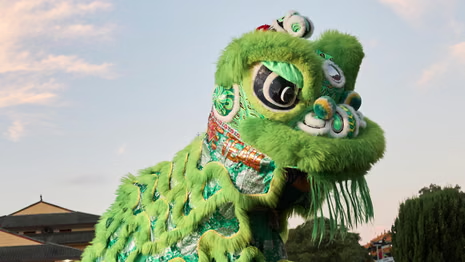
As the sun beats down on Sydney’s west, the sounds of drums and cymbals reverberate through the sun-baked concrete lot of Mingyue Lay temple. Here, amidst lion heads crafted from papier-mâché and kids energetically jumping onto poles and each other, a vibrant display of cultural resilience unfolds. The lunar new year festivities continue beyond the single day, with over 100 performances scheduled over three weeks, showcasing a tradition that holds significance far beyond mere spectacle. The upcoming celebration marks the Year of the Fire Horse, an emblematic pairing that occurs only once every 60 years, heightening the cultural and spiritual importance within the community. For Sydney, with one of the largest lunar celebrations in the southern hemisphere, these performances are a testament to the city’s multicultural vibrancy and the enduring relevance of Chinese heritage.
The dedication of the lion dance troupes, like Qing Fong Dragon and Lion dance team, exemplifies how cultural practices foster community and personal growth. Despite the relentless heat, dancers such as Long Huynh and Kelvin Tran prioritize training, embracing the mindset that “rain, hail or shine, we still train.” Their rigorous regime includes conditioning runs, dynamic stretches, and hours of practice to perfect each move. Tran’s teaching philosophy emphasizes connection, urging students to “be the lion and feel the lion through themselves.” For many young dancers, this is more than a craft; it’s a journey of self-discovery, resilience, and wonder. Training inside air-conditioned halls during the hottest days demonstrates adaptability—showing that dedication can adapt to environment while still pursuing mastery. This immersive experience nurtures confidence, teamwork, and a deep respect for tradition that extends well beyond the dance floor.
From the intricacies of costume work to the harmony between dancers, the lion dance is a masterpiece of collaboration. Each performance involves multiple moving parts: controlling facial expressions, coordinating tail and head movements, and staying synchronized with rhythmic music that encapsulates the heartbeat of Chinese culture. The dancers must trust each other implicitly, as inside the costumes, vision is limited and each movement must be precise. According to instructor Adelene Pham, the real magic of the lion dance is the trust and family that develop among performers, often lasting a lifetime. This bond is reinforced by shared meals, late-night rehearsals, and the collective goal to ward off evil spirits and invite prosperity. It’s an inspiring reminder that tradition isn’t just about preservation but transformation—fostering vital connections that energize communities and individuals alike.
As the lunar new year concludes, the momentum doesn’t pause. The troupe continues to perform at weddings, business openings, and cultural festivals, perpetuating their heritage and inspiring a new generation. The physical and emotional toll of the practice is balanced by the camaraderie and personal achievement in mastering complex routines. For many young dancers, like Nicky Phan, lion dancing represents more than an art form—it’s a personal renaissance. Whether facing the challenge of mastering a new move or simply sharing a meal after hours of practice, they embody the spirit of perseverance and resilience that defines successful lifestyle adaptation. Their journey underscores an essential truth: in embracing culture, we embrace ourselves—and in doing so, illuminate the path toward a meaningful life. The lion dance, much like a well-lived life, is about trusting others, daring to perform from the heart, and always moving forward with courage and community in mind.