
India’s Civil Disobedience Movement: A Turning Point in Women’s Empowerment and Geopolitical Shift
Recent discoveries of historical photographs from the 1930-31 civil disobedience movement in India illuminate a critical chapter often overshadowed by broader narratives. These images, uncovered from a dusty album, highlight how women not only participated but led revolutionary activities that broke the margins of social and political norms. Once relegated to the background, India’s women emerged as central agents of change, confronting colonial oppression with unparalleled vigor. These visual testimonies challenge conventional histories that have long depicted the movement as predominantly male-driven, revealing instead a narrative of gender inversion and female activism that reshaped the very fabric of India’s fight for independence.
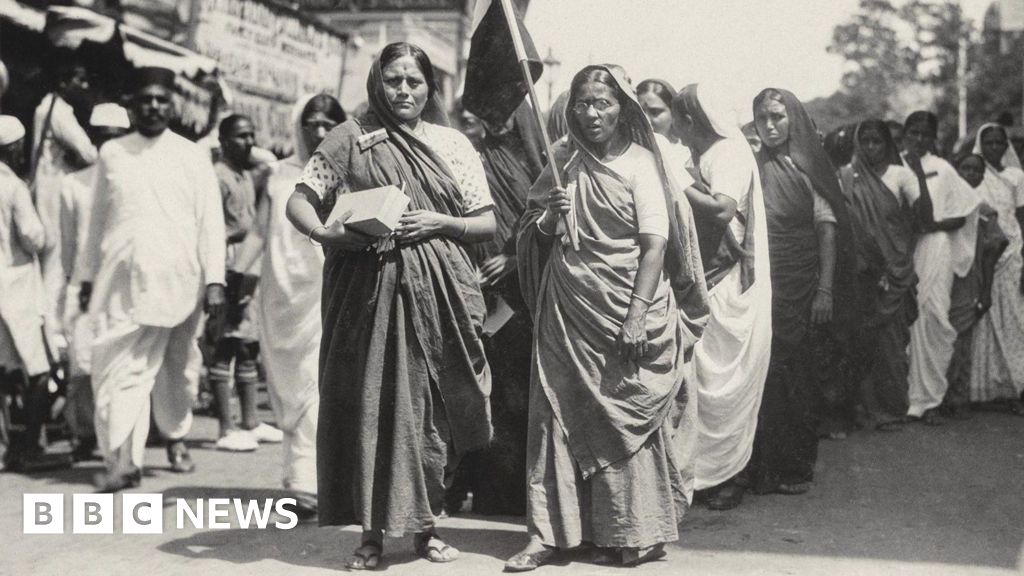
The significance of this movement, marked by Mahatma Gandhi’s iconic salt march, transcended mere protest. Famous photographs show women instructing men in salt-making, engaging police officers, and leading mass processions—impossible scenes in the patriarchal landscape of the early 20th century. Historians like Sumathi Ramaswamy and Avrati Bhatnagar suggest that these images do more than document; they redefine the story of India’s independence struggle. They demonstrate that, although Gandhi’s leadership was pivotal, the urban population of Bombay (now Mumbai) – disproportionately mobilized by women volunteers—shaped the movement’s true momentum. Far from passive spectators, women took executive roles: raiding salt pans, directing protests, and challenging colonial authority on the streets, effectively converting civic spaces into platforms of resistance. Such dynamics foreshadowed a broader geopolitical impact: nations grappling with colonial and gendered power structures began to see the potential of grassroots activism as a force, plausible only through women playing active, commanding roles.
This newfound role of women signified more than mere participation; it gestured toward a broader transformation in global geopolitics. The photographs reveal a collective effort wherein gender roles inverted—women leading marches, seizing landmarks, and proclaiming their independence through acts of defiance. Notably, women marched in procession carrying *khadi* spindles, symbolizing self-reliance, while many carried their daughters along—signifying a deliberate induction of new generations into the nationalist cause. This image of women leading from the front is a vivid illustration of a society on the brink of a significant cultural shift. International organizations and political analysts recognize this as a key inflection point; the British Empire faced not just political resistance but a formidable challenge to its gendered colonial authority, which it attempted to suppress with brutal force. The political awakening of Indian women on city streets echoed far beyond borders, inspiring later anti-colonial and feminist movements worldwide.
As the movement’s narrative is increasingly revisited by scholars and institutions like the CSMVS Museum in Mumbai and Duke University’s Center for Documentary Studies, a crucial question arises: how will this rediscovered history influence contemporary global geopolitics? The photographs no longer depict mere historical curiosity but serve as iconography of rebellion and agency—reminding today’s youth that grassroots activism backed by conviction can forge profound geopolitical shifts. The story of these women, captured in silent but powerful images, underscores how societal change often begins with those who dare to challenge the highest walls of colonial and gender oppression. As history’s pen continues to write, the question remains: will future generations deepen this legacy, weaving in the courage of women like Lilavati Munshi into the very narrative of freedom? The enduring image of India’s struggle for self-determination concludes with a reminder—the resistance that shapes nations is often led from the simplest yet most revolutionary acts of defiance. The weight of history presses heavily, as the next chapter of India’s ascent into independence is still being written in the footsteps of those women who dared to lead.