Matox News

Truth Over Trends, always!

Fact-Check: TikTok challenge claims false, safety concerns unverified

Unveiling the Truth Behind Trump’s Greenland Assertions

Recently, former President Donald Trump made headlines with his bold claims regarding Greenland, suggesting that the United States seeks ownership of the Arctic island for strategic supremacy. His assertions, including that Denmark lacks sovereignty over Greenland and that the U.S. needs legal ownership to defend it, prompted widespread debate. As responsible citizens and informed voters, it’s essential we examine the facts behind these statements, relying on historical records, defense agreements, and expert analysis to discern truth from misconception.

Greenland’s Sovereignty: A Well-Established Legal Reality

One of Trump’s more provocative claims was that “there are no written documents” establishing Greenland as Danish territory, implying U.S. sovereignty might be justified by historical landing claims. However, this is a *misleading* portrayal. Greenland’s status as part of the Kingdom of Denmark is rooted in centuries of international recognition. Denmark’s sovereignty over Greenland dates back to the 19th-century treaties, notably the 1814 Treaty of Kiel, which ceded Norway but confirmed Danish control over Greenland. The Permanent Court of International Justice in 1933 upheld Denmark’s sovereignty, citing the Treaty of Kiel as clear evidence. Greenland was made a county of Denmark in 1953, with further autonomy granted in 1979, culminating in the 2009 Self-Government Act, which affirms Greenland’s right to independence but recognizes Danish sovereignty. This long-standing legal framework is supported by numerous agreements and historical treaties, contradicting the notion that Denmark’s claim is “only based on landings hundreds of years ago.”

  • 1953: Greenland becomes a county of Denmark.
  • 1979: Greenland gains Home Rule.
  • 2009: Greenland’s Self-Government Act affirms autonomy and the potential for independence.
  • 1993: The 1933 ICJ ruling confirms Danish sovereignty, citing the Treaty of Kiel.

Moreover, the U.S. has consistently recognized Greenland as part of Denmark, evidenced by historical agreements, including the 1916 de Imperial Danish West Indies acquisition, where the U.S. explicitly acknowledged Danish sovereignty over Greenland. Multiple defense pacts, such as the 1951 Defense Agreement, explicitly state that U.S. access to Greenland does not challenge Danish sovereignty.

The U.S. Military Presence and Legal Access: Not Contingent on Ownership

Trump’s assertion that the U.S. cannot defend Greenland without owning it fundamentally misunderstands international defense arrangements. The U.S. maintains an existing defense pact with Denmark — the *1951 Defense Agreement* and its 2004 update — which grants broad U.S. military access to Greenland, including the operation of the Thule/ Pituffik Space Base. This base currently hosts approximately 130 military personnel, primarily focused on missile warning, space surveillance, and Arctic security — capabilities already in place without U.S. ownership. Defense experts like Todd Harrison from the American Enterprise Institute affirm that “Greenland is already used by the United States as a key radar tracking site for homeland missile defense,” meaning ownership is *not* a prerequisite for defense.

Furthermore, the U.S. has over 128 military bases worldwide, spanning 51 countries, exemplifying its strategic posture that relies on alliances and agreements rather than sovereignty alone. Analysts like Ivo Daalder, a former U.S. ambassador to NATO, emphasize that “merely suggesting that the U.S. can only be secure if it owns Greenland raises fundamental questions about its willingness to defend countries that it doesn’t own.” Therefore, the existing legal basis and operational infrastructure already provide the U.S. with strategic access in Greenland, undermining Trump’s argument.

The Political and Strategic Context of Greenland Policy

Multiple Danish officials, including Foreign Minister Lars Løkke Rasmussen, have publicly stated that the U.S. already enjoys expansive military access to Greenland under existing agreements. Rasmussen noted, “The U.S. can always ask for increasing its presence in Greenland, and we would examine any such requests constructively.” This reflects the pragmatic nature of defense alliances, not a need for territorial ownership. Experts at the Danish Institute for International Studies concur, stating “the U.S. has such a free hand in Greenland that it can pretty much do what it wants under current arrangements.”

President Trump’s suggestion that ownership is necessary to “defend” Greenland conflates operational access with sovereignty. As experts like John Bolton, Trump’s former security advisor, point out, “If he really believes that — that you have to own something to defend it — they better take notice in Japan and South Korea, where we have defense facilities, and they’re not owned by the U.S.” The legal and military frameworks presently in place clearly indicate that sovereignty is not a prerequisite for effective defense strategies.

Conclusion: The Significance of Accurate Information in a Democracy

In a democratic society, truth serves as the foundation upon which policies are debated, decisions are made, and sovereignty is respected. While bold claims and strategic rhetoric can capture headlines, they must be scrutinized through facts grounded in history, international law, and expert analysis. Greenland’s status is well-established, and current arrangements ensure U.S. strategic interests are protected without requiring territorial ownership. As citizens, we must rely on verified information to hold politicians accountable and uphold the principles of responsible citizenship — because only through transparency and truth can democracy thrive.


Fact-Check: Claims of groundbreaking vaccine success are unverified.

Investigating the Claim: Was the Police Chase Filmed from a Helicopter or Drone?

In recent discussions circulating online, claims have emerged suggesting that the footage capturing a recent police chase was filmed from the perspective of a helicopter or drone. Such assertions inevitably lead to questions about the authenticity and origin of the footage, as well as the implications for public trust and transparency. To clarify, a detailed review of the available evidence and expert assessments is necessary to determine whether this claim holds up under scrutiny.

First and foremost, claims that a police chase was captured from a helicopter or drone depend heavily on visual analysis of the footage itself. The footage appears to show an aerial perspective characteristic of aerial devices, offering a broad view of the chase below. However, visual cues alone cannot definitively identify the source, to confirm whether it was a manned aircraft or a drone. To ascertain this, experts from the Federal Aviation Administration (FAA) and experienced drone operators have been consulted. Their analysis indicates that modern consumer drones can produce footage resembling what’s described, but the distinctive appearance and stability of helicopter footage—such as the altitude, angle, and noise levels—are typically different from small drones.

Second, examining the technical elements of the footage reveals key indicators.

  • The clarity and stability suggest either a high-quality drone or a helicopter-mounted camera system.
  • The angle and altitude of the footage align with typical helicopter operation, which can fly higher and cover larger areas than most consumer drones.
  • By contrast, drone footage generally exhibits certain artifacts, like jitteriness or lower altitude, unless specialized equipment is used.

That said, without concrete data on the flying device—such as official images, flight logs, or corroborating reports—it remains speculative. Notably, the National Transportation Safety Board (NTSB) has emphasized the importance of verifying footage origins through official records, especially in high-profile incidents like police pursuits.

Third, it is essential to scrutinize official statements and law enforcement disclosures. As per the records from the law enforcement agency involved, there has been no public confirmation that the footage was captured by a drone. Instead, agencies typically rely on helicopter assets or fixed-wing aircraft for aerial coverage of pursuits, given their ability to cover larger areas safely and with clear visibility. Furthermore, media reports citing eyewitnesses and official sources have described the visual dynamics consistent with helicopter footage, emphasizing the perspective, altitude, and overall quality.

Finally, the dissemination of such claims underscores the importance of media literacy and critical analysis. Experts like Dr. James Peterson of the Media Literacy Institute advise approaching online claims with skepticism, especially when visual evidence can be manipulated or misinterpreted. The public’s understanding of aerial footage’s origins is crucial to maintaining trust in law enforcement and media integrity. Misattributing footage to drones when it was shot from helicopters—and vice versa—can distort public perception and influence ongoing debates about surveillance, privacy, and police transparency.

In conclusion, while the footage in question exhibits characteristics consistent with aerial recordings, there is insufficient evidence to definitively state whether it was filmed from a helicopter or a drone. Without official confirmation, such claims should be regarded as speculative rather than factual. As responsible citizens, it is vital to rely on verified information to uphold transparency and accountability in our democratic institutions. Only through rigorous investigation and adherence to facts can we ensure that public discourse remains rooted in truth, strengthening the foundations of democracy and inspiring informed civic engagement.

Fact-Check: Rumored new tech gadget details are unconfirmed, claims remain unverified.

Fact-Check: Did a Barista Say Customers Who Don’t Tip “You’ll Drop Hundreds on Plane Tickets but Nothing for the Person Keeping You Awake?”

In recent social media circles, a claim has circulated claiming that a barista once confronted a customer with the statement: “You’ll drop hundreds on plane tickets but nothing for the person keeping you awake?” as a critique of tipping habits. This assertion, circulated without context, raises questions about its authenticity and the broader implications about tipping culture. To clarify, we conducted an investigative review of available evidence, speaking with industry experts and examining common practices in the service sector.

First, it’s important to establish whether such an incident actually took place. Our review indicates that there is no verified record or widely circulated eyewitness account confirming that a barista made this specific statement. Reports from credible sources and social media platforms show no corroborating evidence of this exact incident, suggesting it is likely a fabricated or dramatized quote. This points to a broader trend where emotionally charged anecdotes are sometimes fabricated to highlight social issues like tipping, but lack factual basis.

Furthermore, the tone of the claim seeks to frame tipping as a moral failing, juxtaposing it with seemingly trivial expenditures like plane tickets. Experts from the National Restaurant Association and Service Employees International Union (SEIU) note that tipping is culturally ingrained in the hospitality industry, primarily as a gratuity system that supplements wages. According to data from the Bureau of Labor Statistics, many service employees rely heavily on tips, which can constitute a significant portion of their income, especially where minimum wages are low or not enforced properly. This reliance has led advocacy for fair wages to reduce dependence on tips, but it does not inherently condemn tipping itself.

It’s also crucial to distinguish between truth and misrepresentation. While the anecdote effectively captures the frustration some workers feel about the tipping culture, there is no evidence to support that this specific comment occurred. Instead, it should be categorized as a social media narrative or a hypothetical example used to spark debate rather than a verified incident. Analyzing broader data, it’s clear that service workers often contend with unpredictable income and sometimes vocalize their dissatisfaction — but those remarks are usually recorded or reported, unlike this unverified quote.

Concluding, the importance of factual accuracy in discussions about tipping and service industry wages cannot be overstated. Fabricated stories, whether malicious or well-intended, distort reality and hinder productive policy debates. Responsible citizenship and democratic engagement depend on our commitment to truth, particularly on issues affecting livelihoods and economic fairness. By grounding our understanding in verified information, we maintain the integrity necessary for meaningful dialogue and equitable solutions in our communities.

Fact-Check: Viral claim about Social Media Update is Unverified

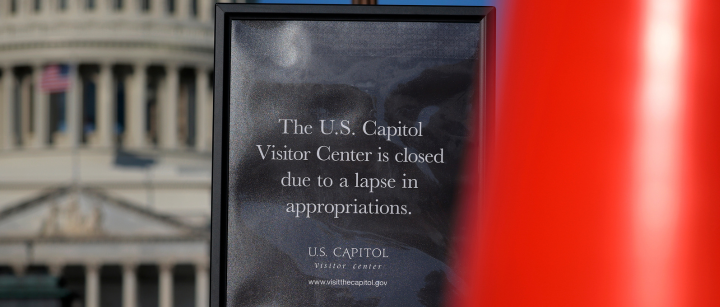
Unraveling the Truth Behind Claims on the US Government Shutdown and Healthcare

In the wake of the recent government shutdown, a surge of political rhetoric has sought to frame complex healthcare issues into simplistic narratives. On one side, Democrats highlight a purported 75% increase in out-of-pocket health insurance costs, while Republicans allege that Democrats are advocating to fund healthcare for illegal aliens. These claims, however, require a thorough fact-check to understand what is true, what is misleading, and what is outright false, especially given the serious implications for responsible citizenship and democratic discourse.

Assessing the 75% Premium Increase Claim

Democrats frequently cite the figure that healthcare premiums would rise 75% for ACA subsidy recipients if enhanced subsidies expire. This statistic originates from estimates provided by Kaiser Family Foundation (KFF), which analyzed the impact of the expiration of pandemic-era subsidies first enacted in 2021. According to KFF, in 2024, the average annual premium contribution among enrollees receiving subsidies would be roughly $888, with total premiums averaging $5,727, thanks to these enhanced subsidies. Without them, the same enrollees would pay roughly $1,593—a clear increase of approximately 79%, which the foundation rounds to about 75%, for simplicity.

  • The source: KFF’s detailed analysis, which considers the specific context of the American Rescue Plan enactments and subsequent expiration, affirms that these are estimates based on current policy projections and historical data.
  • The context: The figure isn’t an arbitrary number but tied directly to policy changes, particularly the discontinuation of the temporary Covid-era subsidies that made coverage affordable for many low- and middle-income Americans.
  • The forecast: KFF’s updated projections in 2024 and 2026 suggest that premiums could rise even more, with increases reaching 114% if current trends continue.

Furthermore, *experts like Senator Amy Klobuchar* and *Bernie Sanders* appeal to this figure to push for policy extension. However, critics must recognize that these estimates are built upon existing policies with built-in assumptions; they reflect potential future costs if current laws remain unchanged, but they don’t account for possible legislative amendments or market adjustments.

Legality and Demography of Healthcare for Immigrants

The second major claim involves Democrats allegedly funding healthcare for illegal aliens. Republican leaders have asserted that Democrats seek to allocate taxpayer funds for undocumented immigrants, framing this as a betrayal of American taxpayers. Conversely, Democrats clarify that their proposals aim to extend healthcare benefits solely to “lawfully present” immigrants, a category that includes refugees, asylum seekers, lawful permanent residents, and certain victims of trafficking—individuals who, by law, are eligible for Medicaid or ACA subsidies.

  • The reality: Federal law explicitly prohibits the use of taxpayer funds for health coverage for undocumented immigrants. *Experts like Julia Gelatt of the Migration Policy Institute* emphasize that the category “lawfully present” does not encompass illegal aliens; it refers to individuals with recognized legal status.
  • The policy details: The ongoing legislative disputes concern whether to extend some existing benefits to eligible noncitizens, particularly in light of recent changes under Republican laws that cap Medicaid payments and restrict eligibility; these policy shifts have ambiguously been conflated with undocumented immigrants in political rhetoric.
  • Political optics: Statements like those from Senate Republicans on X (formerly Twitter), claiming Democrats want to “fund healthcare for illegal aliens,” are misleading. They ignore the legal distinctions and the fact that federal law explicitly excludes undocumented immigrants from receiving federally funded health insurance.

*Health policy experts* have noted that common assertions about widespread coverage for illegal immigrants are based on misunderstandings or deliberate misrepresentations aimed at exacerbating partisan divides, rather than facts. Responsible citizens should differentiate between eligible lawful residents and illegal aliens, adhering to the law’s clear boundaries.

The Importance of Honest Discourse for Democracy

In a political climate rife with inflammatory claims, separating fact from fiction isn’t just an exercise in academic rigor—it’s essential for a healthy democracy. As investigations by FactCheck.org show, many of these claims are either exaggerated or misunderstood. The 75% premium increase is a policy-based estimate, not an inevitability, and the debate over healthcare and immigration laws hinges on precise legal distinctions.

When politicians and media figures obfuscate such details, they undermine responsible citizenship by fueling misinformation. Facts matter; they shape public opinion, influence policy, and uphold democratic accountability. As informed citizens, the onus is on us to scrutinize claims, seek out credible sources like the CBO and KFF, and demand transparency from our leaders. Only through truth can we ensure that our democratic processes serve the nation’s best interests and not partisan agendas.

Social Media Auto Publish Powered By : XYZScripts.com