
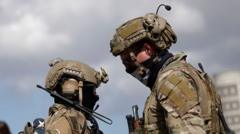

President Donald Trump has announced that the United States will send 5,000 additional troops to Poland. This significant declaration, made on Truth Social, comes at a pivotal moment for transatlantic security and follows a period of re-evaluation of America’s military commitments in Europe.
The announcement from the President, as reported by News Desk, underscores a complex and dynamic foreign policy landscape. It directly contrasts with recent signals from the White House indicating an intent to reduce overall US troop levels across the continent as part of the administration’s ‘America First’ agenda. The decision to reinforce Poland’s defense capabilities appears to be rooted in strong bilateral ties and strategic alignment.
A Shifting European Footprint Amid ‘America First’
For weeks, the White House has publicly articulated its strategy to recalibrate US military presence abroad, prioritizing national interests and burden-sharing among allies. This policy has already led to concrete actions, including the recent withdrawal of 5,000 troops from Germany. That particular withdrawal followed a discernible strain in relations between President Trump and German Chancellor Friedrich Merz, reportedly over disagreements concerning the ongoing conflict with Iran.
The current administration’s approach has often emphasized the importance of allies contributing more substantially to collective defense. This has led to a series of adjustments in US troop deployments:
- Germany: 5,000 troops withdrawn following a dispute over the war with Iran.
- Poland (previous plan): A planned deployment of 4,000 troops was reportedly canceled by the Pentagon just a week prior to this new announcement.
- Poland (current): An additional 5,000 troops now slated for deployment.
These movements highlight a measured, yet firm, re-assessment of where and how American military assets are best utilized to safeguard both US interests and global order.
Bilateral Ties and Strategic Alignment
President Trump explicitly stated that the decision to send additional troops to Poland was based on the robust relationship between the United States and Polish President Karol Nawrocki. President Trump had publicly backed Nawrocki during last year’s presidential elections, signaling a strong personal and political bond between the two leaders.
“This deployment underscores a strategic recalibration, prioritizing strong bilateral relationships while navigating broader commitments to European security.”
This emphasis on the personal rapport between heads of state aligns with the administration’s preference for direct, transactional diplomacy. Poland has consistently been a staunch ally in Central Europe, often advocating for a stronger NATO presence on its eastern flank, particularly in response to regional security concerns. The deployment of additional US troops could be seen as a direct response to these long-standing Polish concerns and a reinforcement of a key alliance.
Unanswered Questions and Regional Stability
While the announcement solidifies a commitment to Poland, President Trump did not provide immediate details on whether these additional troops are part of a re-activated previous plan or an entirely new operation. This ambiguity leaves some questions regarding the precise nature and duration of the deployment, as well as its specific objectives.
Nevertheless, the move sends a clear message of support to an important NATO ally. Strengthening the US military presence in Poland could bolster the alliance’s eastern defenses and contribute to regional stability. It signals that despite broader strategic adjustments, the United States remains committed to its allies who demonstrate a shared vision for security and order.
The dynamic nature of global geopolitics continues to shape US foreign policy. This latest decision regarding US troops in Poland reflects an ongoing re-evaluation of military posture, balancing traditional alliances with a pragmatic approach to international commitments. The world will be watching closely as these strategic shifts unfold, with implications for both European security and the future of transatlantic relations.






