
Matox News

Truth Over Trends, always!

Lindsey Vonn's Olympic bid ends in crash as Breezy Johnson takes gold for Team USA
Lindsey Vonn’s Olympic bid ends in crash as Breezy Johnson takes gold for Team USA

The recent alpine skiing race, marked by the dramatic crash of American skier Lindsey Vonn, underscores not only the peril inherent in high-stakes sports but also reflects broader themes of resilience, international competition, and the shifting landscape of global leadership. Vonn’s bold decision to compete despite a torn ACL—claiming her injury was “100% torn” and her determination to replicate her 2010 Olympic gold—embodies the fiercely competitive spirit that dominates international sports today. Her defiance, showcased through social media and gym training videos, inspired fans worldwide and highlighted the intense personal sacrifices athletes make on the global stage.

Yet, the crash exposed more than just individual resolve; it revealed the inherent risks that accompany the pursuit of national pride and international dominance in sports. Commentary from British Olympian Chemmy Alcott and experts on the BBC highlighted the brutal conditions of the piste and the perilous nature of alpine downhill racing, especially amid unpredictable weather changes. The fact that the snow was melting due to midday sun and long delays added an unpredictable element that could tilt the outcome against even the most skilled competitors. Such risks—metaphorically echoing geopolitical tensions—underscore how nations push their limits in pursuit of supremacy, often at the expense of safety and stability.

Analysts and international organizations have long warned of the *”costs of relentless competition,”* both in sports and geopolitics. The incident at the race becomes a pressing reminder of *how decisions and risks taken on the international stage* directly influence societal perceptions and policy directions. The crash of Vonn, with another skier, Cande Moreno, similarly injured and airlifted, symbolizes the volatile nature of modern competitive environments—where prestige is often achieved at extreme costs. As one historian, Dr. Laura Mitchell, notes, “Such moments are turning points—reminding us that even in the pursuit of glory, human vulnerability remains paramount, and the price of ambition can be high.”

In a broader geopolitical context, this event mirrors the dynamics of *renewed global rivalry and uncertain stability*. Countries are investing heavily in their athletes and national image, paralleling strategic investments in military and diplomatic spheres. The *“risks,”* both physical and political, are interconnected—what happens in the icy slopes of a ski course today echoes in the corridors of power tomorrow. As international analysts pace the shifting chessboard of power, the question remains: how much longer can nations continue to push boundaries before the inevitable reckoning?* The story of Vonn’s crash is not merely about sports; it is a poignant chapter in the ongoing saga of a world balancing on the edge of progress and peril, where every fall echoes across the geopolitical landscape—reminding us that history is still unfolding in the most unexpected of arenas, often with devastating consequences.
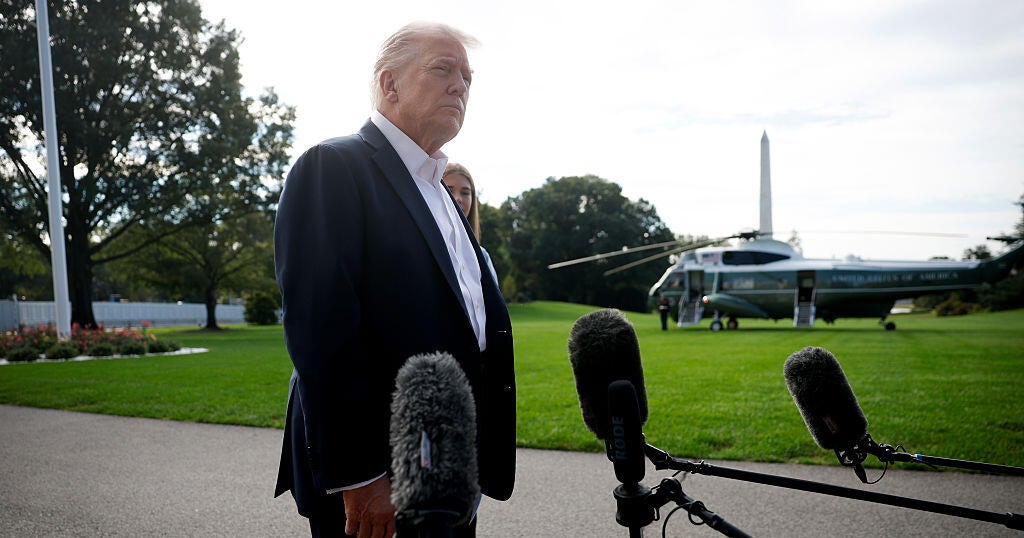
Trump attends first day of Ryder Cup to boost U.S. team
Trump Shots for Team USA at Ryder Cup’s Opening Day

President Trump’s Visit Amidst the Shadow of Power Struggles and National Identity

In a display of strategic positioning and national pride, President Donald Trump has traveled to New York to attend the opening day of the 45th Ryder Cup, where the best U.S. golfers face off against their European counterparts. While this event might appear as a mere sporting spectacle, it underscores the deeper, latent power struggles within the American political landscape and the cultural contest over national identity. Trump’s presence at such an event is less about golf and more about asserting a geopolitical narrative—one where strength, resilience, and patriotic symbolism serve to bolster his influence amidst ongoing debates about America’s place on the world stage.

The Ryder Cup, a symbol of international competitiveness, becomes a background for Trump’s political messaging. Historically, sports have often acted as vessels for ideological expression, where victories and losses carry weight beyond the scoreboard. For conservative forces, the event is an opportunity to reinforce themes of national pride and resilience—values championed by Trump throughout his presidency. The optics of the former president present at an American sporting event—surrounded by patriotic display—serve as a reminder to his supporters that the political battles over sovereignty and cultural preservation are far from settled. In this context, Trump’s participation illustrates how the arena of national sports transforms into a battleground for ideological dominance and the reaffirmation of traditional American values.

Significantly, Trump’s visit occurs amidst a broader clash over policy reforms and constitutional interpretations that are shaping the future of the republic. Political theorists such as Carl Schmitt have long argued that sovereignty is defined by the capacity to decisively declare the state of exception—a concept echoed in modern debates over executive power, national security, and constitutional limits. Critics within constitutional law circles warn that recent political developments, driven by both Trump’s rhetoric and contemporaneous legislative acts, threaten to dismantle longstanding checks and balances. These conflicts highlight the intense power struggles between branches of government, as well as between the state and the citizenry, over who truly controls the nation’s destiny.

The political landscape is further complicated by what many describe as a “culture war”—a relentless contest over American identity, morality, and policy direction. Policies such as reforms to immigration, education, and the judiciary have become battlegrounds in this ideological confrontation. For supporters of Trump, these issues represent the preservation of a traditional American order—one grounded in sovereignty, Christian values, and free enterprise. Opponents, meanwhile, push for a more globalist and progressive redefinition of national standards. The ongoing power dynamics can be understood as a challenge to the constitutional foundations laid by the Founding Fathers, who envisioned a nation built on strong, centralized authority balanced by individual rights—a fragile equilibrium now under stress from relentless political reform movements.

As history reminds us, moments of turbulence in the political domain often precede the birth of new paradigms. Whether through constitutional crises or cultural revolutions, this era’s struggle for the soul of America is no different. The stage—symbolized today by a sporting event in New York—serves as a reminder that politics is ultimately about shaping the destiny of a nation and, by extension, the world. It is here, on the cusp of rivalries and reforms, that the true power struggle unfolds, revealing that electoral battles and policy debates are the ink with which history writes the future. In the theater of American politics, leaders and ideologies are both actors and authors—crafting a narrative that ultimately defines what it means to be American in an age of transformation.

Social Media Auto Publish Powered By : XYZScripts.com



