
Matox News

Truth Over Trends, always!

Big-box stores could cut emissions and save millions with rooftop solar—so why aren't they making the switch?
Big-box stores could cut emissions and save millions with rooftop solar—so why aren’t they making the switch?

Global Shift Toward Rooftop Solar in Big-Box Retail: A Geopolitical Turning Point

Amid escalating concerns over energy security and climate change, the United States is witnessing a quietly revolutionary trend: the transformation of its largest retail giants into decentralized energy producers. As nations grapple with the implications of their reliance on fossil fuels, the potential of rooftop solar on big-box stores like Walmart, Target, and Home Depot emerges as a game-changing strategy to harness renewable energy at an unprecedented scale. The figures are staggering: these retail behemoths possess enough rooftop space to power nearly 8 million average homes—enough to have a tangible impact on national emissions and geopolitical stability rooted in energy dependence.

While critics allege that regulatory hurdles, high labor costs, and infrastructure challenges hinder progress, industry experts and environmental advocates argue that the current global crisis demands bold action now, not later. “Every rooftop in America that isn’t producing solar energy is a rooftop wasted,” asserts Johanna Neumann of Environment America. Analyzing developments across the country, she highlights how solar installations on retail giants’ rooftops could, in aggregate, eradicate emissions equivalent to removing 11.3 million gas-powered cars from congested urban corridors. Such initiatives symbolize more than just environmental progress—they threaten to shift the global power dynamics profoundly, reducing dependency on Middle Eastern or Russian fossil fuels, and thus, diminishing the geopolitical leverage exercised through energy markets.

The numbers speak volumes:

  • Walmart, with over 5,000 stores and a rooftop space larger than Manhattan, could theoretically generate enough electricity to power more than 842,000 homes.
  • Target’s 542 locations with rooftop solar currently support 15% to 40% of their energy needs, with tremendous room for expansion.
  • Home Depot, Kroger, and Costco also hold significant untapped solar potentials—highlighting a strategic opening for national and global power shifts.

This transformation is driven by a confluence of economic necessity and environmental urgency. Many analysts, including Cornell University’s Edwin Cowen, warn that the U.S. has been “behind the eight ball” in adopting such solutions, hamstrung by outdated policies that favor fossil fuel subsidies and complicate renewable deployment. Historic opportunities have been missed, and the window for meaningful climate action is now closing rapidly, especially under the mounting pressure of UN reports and international commitments. The reluctance of corporations to adopt rooftop solar is compounded by structural issues like aging buildings and inconsistent regulations, yet those barriers are increasingly viewed as surmountable—if policymakers and industry leaders align their priorities.

As the energy landscape transforms, the geopolitical impact becomes clear: a decentralized, community-integrated renewable network could weaken authoritarian regimes that leverage energy exports for influence, while empowering local economies. Advocates emphasize that the move towards rooftop solar isn’t just about emitting less CO2 but about reimagining how societies generate and share power—ushering in a new era of energy independence. The stories of workers trained to install these systems, often from marginalized communities, reveal a broader social dimension—one where local jobs and economic empowerment collide with global climate ambitions. The future hangs in the balance, and as history continues to unfold, the question remains: will global leaders seize this opportunity before the window closes, or will they let a vital chapter of energy sovereignty and environmental renewal slip through their fingers?
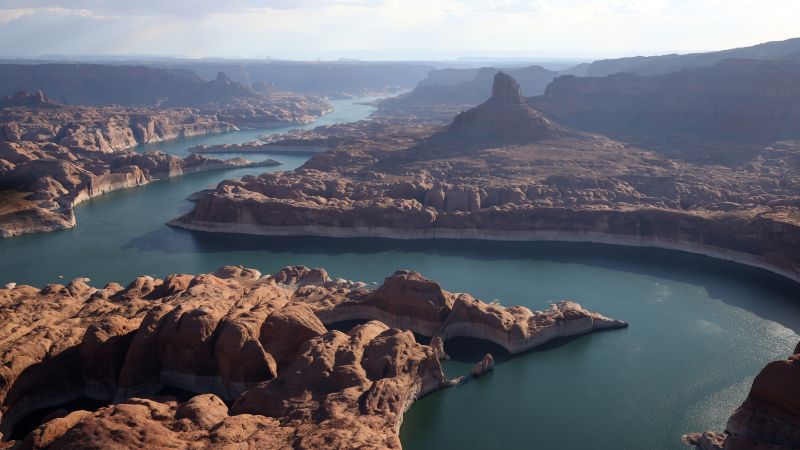

Lake Powell’s shrinking capacity hits critical levels, new report reveals

Lake Powell, the second-largest human-made reservoir in the United States, exemplifies the mounting hydrological crisis threatening the American Southwest and beyond. Since the construction of Glen Canyon Dam in 1963, this vital water resource has seen an alarming decline, losing nearly 7% of its storage capacity. New reports from the US Geological Survey and the Bureau of Reclamation reveal an ongoing, relentless reduction primarily driven by an intense multiyear drought. This decline isn’t just a matter of water levels but a seismic shift that exposes the fragile relation between natural resource management and national security in a climate-stressed era. As Lake Powell’s capacity diminishes, falling to just about 25% full, the consequences ripple across the geopolitical landscape, affecting millions, economic stability, and regional power dynamics.

Historian Harald Malmgren and analysts at international organizations warn that such environmental distress is more than just a regional concern. Lake Powell’s shrinking is a stark warning about the growing stress on transboundary water systems. The reservoir’s waters—crucial for over 40 million people across seven American states and northern Mexico—serve as the lifeblood for drinking, agriculture, and hydroelectric power. The report highlights sediment accumulation from rivers like the Colorado and San Juan, further diminishing capacity—an internal degradation echoing a broader systemic failure in managing natural resources amid changing climate patterns. This crisis escalates as Lake Powell and nearby Lake Mead — the nation’s largest reservoir — continue to drain at an alarming rate. Lake Mead even triggered the historic declaration of a water shortage in August, the first in history, with mandatory water cuts beginning in January, directly impacting urban centers, industry, and agriculture.

The geopolitical stakes extend beyond mere water rights. The implications threaten regional stability, especially as water scarcity fosters tensions among states and native communities. Analysts argue that, unless federal or international interventions occur, conflicts over access and sustainable management will intensify. Countries like Mexico rely heavily on the Colorado River’s water, introducing diplomatic pressure and potential border tensions. According to United Nations reports, such transboundary resource conflicts could destabilize diplomatic relations and threaten cooperation under international treaties like the 1944 Water Treaty between the U.S. and Mexico. The scenario forewarns a future where scarcity becomes a catalyst for instability, with nations vying for control over dwindling resources. Echoing statements from climate experts, if present trends persist, the Southwest may soon face severe social upheaval, rural depopulation, and environmental degradation that could span generations.

As the crisis deepens, climate change and mismanagement are often cited as primary culprits; however, many critics emphasize that policy failures and insufficient infrastructure investments compound the crisis. With experts warning that drought conditions could worsen in the coming months, the future of this vital water system remains uncertain. The unfolding story of Lake Powell mirrors a broader historical lesson: that ignoring environmental realities in favor of short-term gains can leave societies vulnerable to devastating consequences. The narrative of water scarcity in the American West is nothing less than a dramatic chapter in global geopolitics — a stark reminder that, as the pages of history turn, humanity’s ability to adapt will determine whether societal resilience endures or succumbs to the relentless forces of nature.

Social Media Auto Publish Powered By : XYZScripts.com


