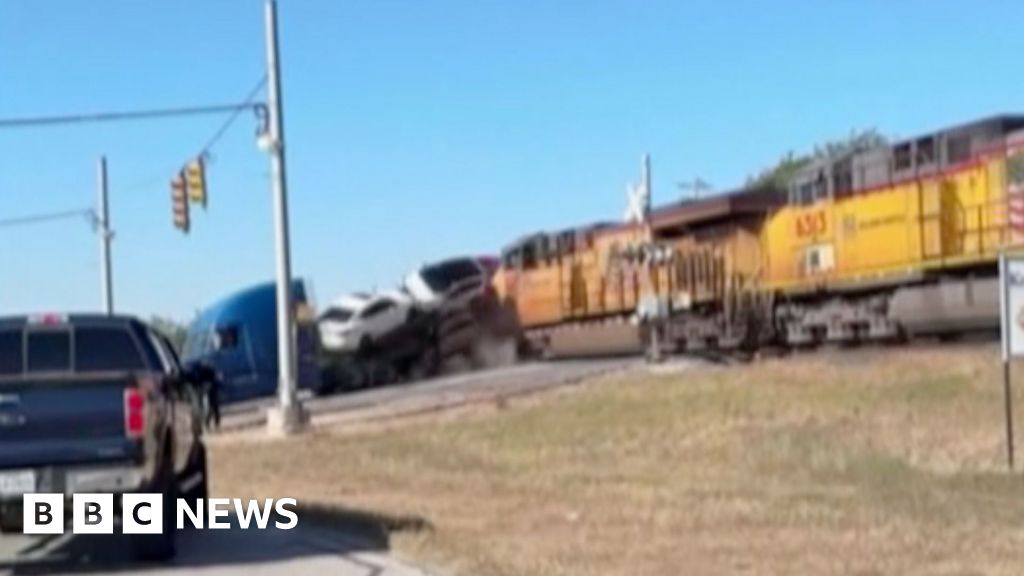

The recent series of rail-related incidents in Shertz, Texas, signals a concerning trend that extends beyond the immediate safety concerns of local authorities. Just this week, an 18-wheeler transporting a full load of vehicles collided with a passing train, an event that underlines the ongoing vulnerabilities within critical infrastructure in the United States. Remarkably, no injuries were reported, and the train avoided derailment, but the incident underpins broader issues that warrant international scrutiny and urgent attention from policy makers worldwide.
The incident is not isolated. Earlier this week, on 28 October, a similar event occurred when an Amtrak passenger train collided with a semi-tractor trailer carrying rocks — a crash that produced only minor damage to the train and no injuries. These two separate but related events reveal a pattern of risk that, according to transportation analysts and critics, could have turned catastrophic. The recurrent nature of such accidents in a single city—an urban microcosm—serves as a potent reminder of the necessity for robust safety measures, increased technology, and international best practices in rail safety regulations.
Broadly, these incidents highlight the significance of infrastructure resilience in a changing global landscape. As the United States grapples with aging railway systems and increasing freight volume, many security experts and transportation historians emphasize the importance of international learning and cooperation. Retired transportation safety expert Dr. Harold Jenkins underscores that such accidents are often the result of a combination of human error, outdated infrastructure, and insufficient technological safeguards. These events serve as warnings—touchpoints where local failures could ignite larger crises, especially as global trade increasingly relies on complex and delicate supply chains.
- The first incident involved an 18-wheeler stopping on the tracks—a tragic misjudgment or an operational failure?—and raises questions about driver awareness and signaling systems.
- The second, with the rocks-laden train, involved a collision of a lighter nature, yet it amplifies concerns over transportation regulations and the integration of automated safety controls.
- Both incidents could tarnish Texas’ image as a gateway for international commerce, impacting trade flows and foreign investment.
The geopolitical impact of these seemingly local events stretches far beyond Shertz. They resonate in the corridors of power in Washington D.C., where discussions about infrastructure investments and modernization schemes are persistent but often underfunded. International organizations like the World Bank and the OECD have issued warnings about the dangers of neglecting critical infrastructure in an era of increasing global economic volatility. These incidents serve as natural experiments—warning signs—highlighting how neglect, if unchecked, can lead to disruptions with ripple effects across borders, affecting supply chains, economic stability, and national security.
As the world watches the idiosyncratic yet interconnected evolution of transportation networks, the relentless march of history presses forward—reminding us that the decisions made today can reverberate through generations. Another collision, another wake-up call. The weight of these events is not merely local; it is a chapter in the ongoing saga of modern civilization’s struggle to balance progress with safety. The question remains: will urgent international cooperation and modernization efforts turn these harbingers of future calamities into catalysts for secures and resilient infrastructure—or are we destined to repeat history’s darker lessons in the shadow of complacency?