Matox News

Truth Over Trends, always!

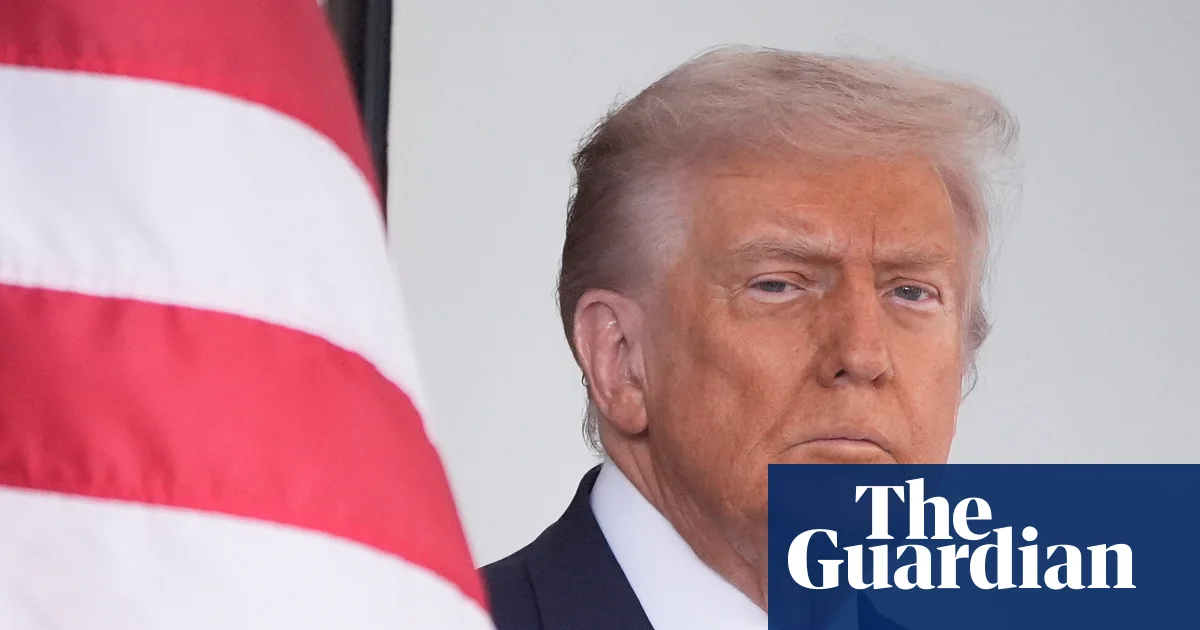
Senate to vote on stopping illegal war against Venezuela — US politics update

As the world watches in increasing concern, the geopolitical landscape in the Western Hemisphere is rapidly transforming into a theater of heightened conflict and strategic maneuvering. At the forefront is the United States, embroiled in a complex web of military posturing, congressional power struggles, and economic warfare, all with profound implications for regional stability and global diplomacy.

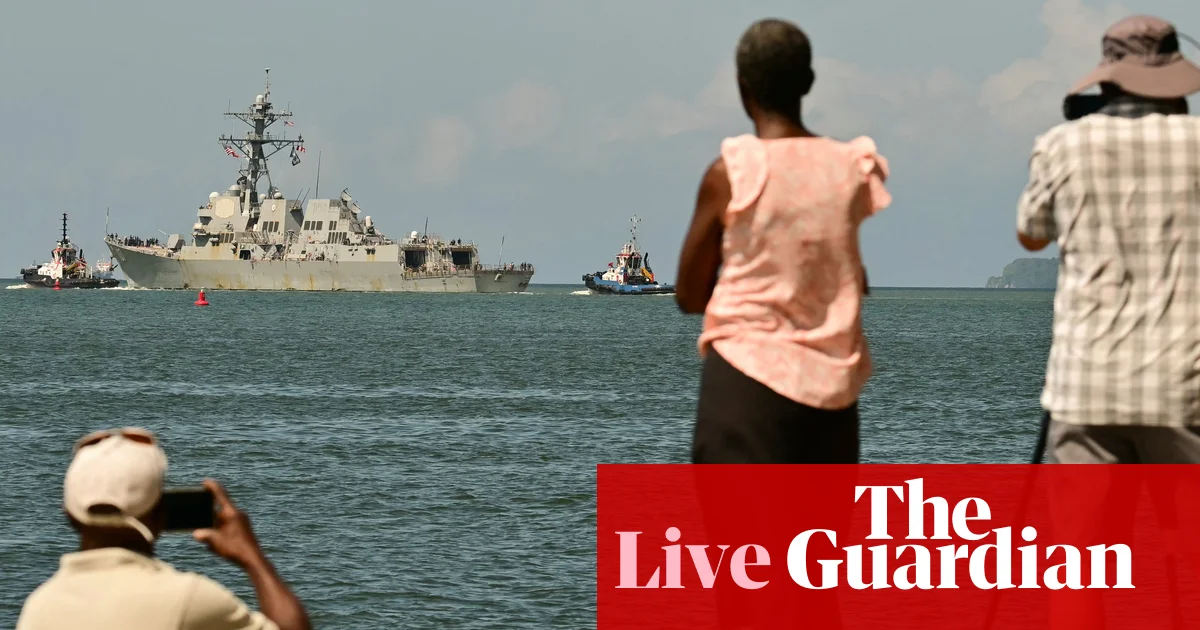
Recent developments reveal a concerted effort by the Trump administration to leverage military force, particularly in Venezuela. Reports indicate that discussions within the US government are gravitating toward authorizing land strikes—a move that would sharply escalate the ongoing covert and overt conflicts in the region. The Senate is now poised to vote on bipartisan legislation aimed at barring President Trump from initiating unauthorized military actions against Venezuela, a clear sign of growing congressional concern over unchecked executive power. Such legislation from Senators like Tim Kaine and Adam Schiff, along with Rand Paul’s support, underscores the deep bipartisan unease about the administration’s push for military intervention. Meanwhile, reports of aggressive US military deployments—including an aircraft carrier heading to South American waters and deadly strikes on alleged drug vessels—point to a hardening US posture that many analysts see as a replay of past interventions like Panama in 1989. The echoes of Operation Just Cause are unmistakable as the US seems determined to destabilize the Maduro regime, a move critics argue is driven more by strategic interests than genuine concern for regional sovereignty.

This militarization coincides with an aggressive economic stance. The US Supreme Court recently questioned the legality of Donald Trump’s tariffs imposed under the International Emergency Economic Powers Act (IEEPA). Even the high court’s conservative supermajority appeared skeptical about the president’s authority to levy duties not explicitly authorized by Congress, raising questions about the legality of economic sanctions that have far-reaching effects. Analysts warn that, regardless of the court’s ultimate ruling, these unilateral measures weaken international economic stability and further erode the balance of powers between branches of government. Simultaneously, the ongoing government shutdown threatens to disrupt vital infrastructure, with potential cuts to flights and public services that directly impact both domestic and international mobility, economic stability, and regional security.

On the diplomatic front, Trump’s engagement with China took a notable turn as he reportedly appealed to Xi Jinping to intervene in the case of jailed Hong Kong media tycoon Jimmy Lai. This move signals a broader strategy to simultaneously project US influence and influence global perceptions of China’s internal governance. Meanwhile, the internal chaos within the US government—marked by protests from furloughed workers and legal challenges over detention conditions—exposes a nation divided against itself, with its institutions strained by persistent partisan battles. Historians and international bodies warn that such internal disarray complicates the US’s ability to project power and uphold international commitments, risking a decline in global influence and credibility.

As the chaos unfolds, so too does history a new chapter—one where America’s future remains uncertain, its choices echoing through the corridors of power and the streets of Venezuela, Panama, and beyond. The decisions made today are not just about policy—they are the shaping of a new geopolitical reality, whose true impact will be measured by the stones we cast into the waters of history. In this unfolding drama, the specter of conflict and the struggle for influence loom large, with each gamble drawing the world closer to a precipice. The weight of history presses heavily upon the present—what legacy will today’s leaders leave in the sands of tomorrow?
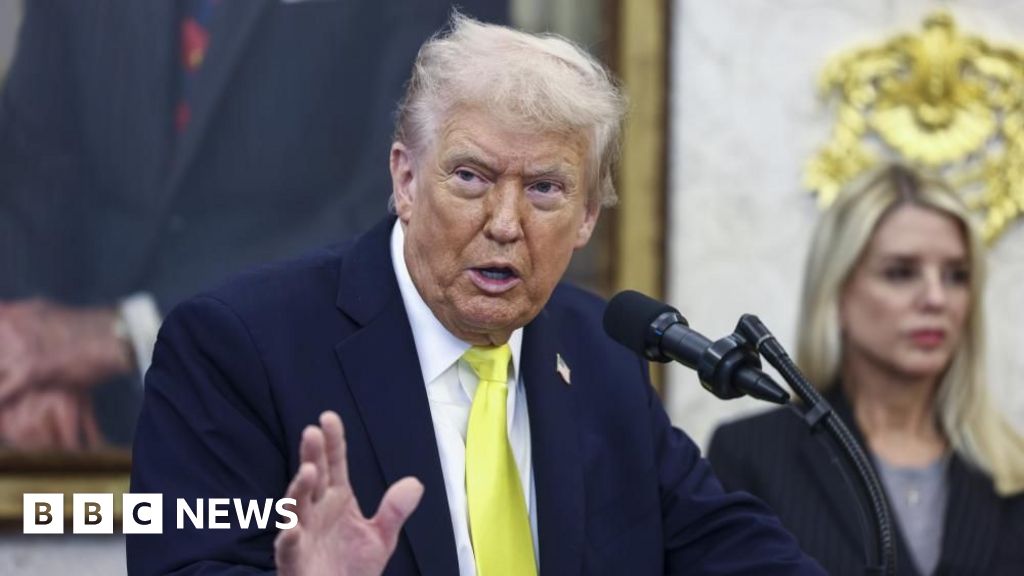
Trump questions chances of U.S. going to war with Venezuela

America’s Geopolitical Push in Latin America: A New Chapter Unfolds

In an era defined by shifting alliances and renewed military posturing, the United States under President Donald Trump reasserts its influence over Latin America with a series of provocative moves centered on Venezuela. From cautious diplomacy to overt military displays, Washington’s actions are stirring a hornet’s nest, with profound geopolitical impact that could reshuffle the regional balance of power and challenge long-standing norms of sovereignty.

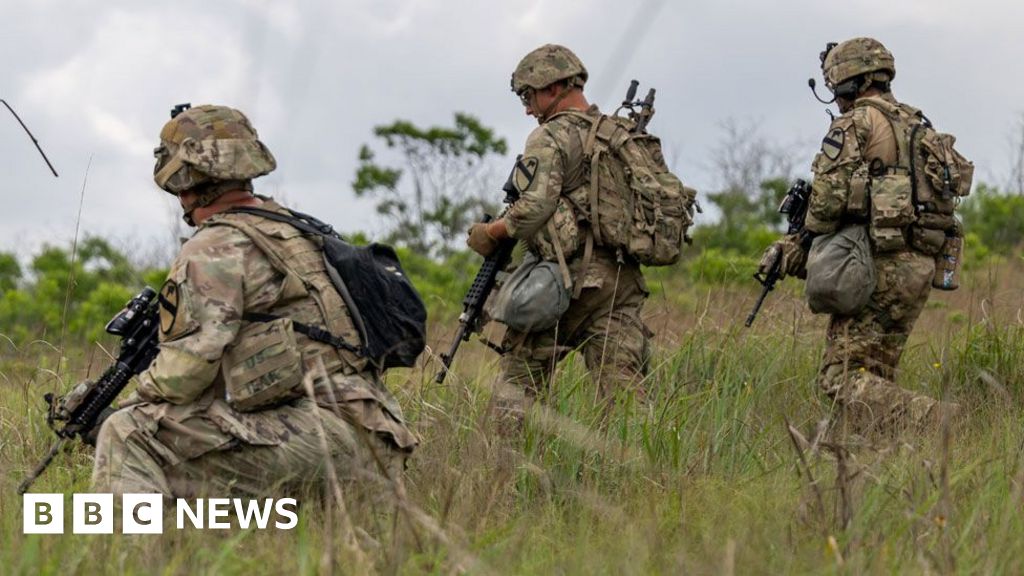
For months, the US has been amassing a formidable military presence in the Caribbean Sea, deploying warships, fighter jets, bombers like the B-52, and even contemplating nuclear testing—an escalation that analysts warn could destabilize the entire hemisphere. While the White House publicly denies plans for an invasion, President Trump’s rhetoric suggests a readiness for wider confrontation, with hints at possible “strikes on land” and the deployment of the world’s largest aircraft carrier. Such signals are loud and clear, with many experts, including international security analysts, warning that these actions are less about narcotics enforcement and more about regime change aimed at ousting Maduro.

This aggressive stance is perceived by many as an attempt to dominate Latin America’s political landscape—an initiative criticized by regional leaders like Colombian Gustavo Petro, who accuses Washington of “fabricating a new war.” Meanwhile, Venezuela’s government, led by Maduro, vehemently opposes what it calls a “US-led conspiracy,” framing recent US military demonstrations as an effort to destabilize and exert dominance over the struggling nation and its resource-rich territory. This scenario echoes the historical interventions that have marked the US’s approach to the Americas—decisions which, according to many historians, have often left scars of division and chaos.

Diplomatic Dilemmas and Rising Tensions

President Trump’s remarks during interviews with CBS revealed an unpredictable calculus—suggesting the US might pursue further aggressive actions yet also emphasizing ambiguity. While he dismissed persistent suggestions of a direct war, the deployment of long-range bombers and the authorization of the CIA presence signal a readiness to escalate. Such moves risk igniting regional conflict and draw international criticism rooted in the principles of sovereignty and peace. Scholars like Dr. Emma Johnson, a geopolitical analyst at the International Crisis Group, warn that this renewed brinkmanship threatens to undermine stability, pushing Latin America into a new “Cold War”-like environment where superpowers compete for influence on a new, dangerous frontier.

However, this escalation occurs against the backdrop of a broader global picture—rising tensions with Russia and China, both of whom are seeking to expand their own spheres of influence and challenge US dominance. For these nations, Latin America has become a strategic chessboard, and the US’s assertive posture may provoke responses that further complicate international relations. The potential for miscalculation increases as regional actors navigate between resisting external pressure and maintaining their sovereignty.

Decisive Moments and the Weight of History

As President Trump hints at resuming nuclear testing—an act that would defy decades of arms control agreements—the international community faces a sobering reminder of how quickly the balance of power can shift, with history often repeating itself in cycles of confrontation and reconciliation. The upcoming weeks may prove pivotal as diplomatic negotiations falter and military assets remain on high alert. The decisions made today will echo through the corridors of history, shaping the fate of nations and societies that have long stood on the edge of a new confrontation.

In this turbulent chapter of geopolitics, the global stage is set for a confrontation whose consequences could redefine the boundaries of international peace and power for generations. As the world watches nervously, the unfolding story leaves one inescapable conclusion: history is once again being written in a language of tension, tests of will, and the enduring quest for dominance. The question remains—will this chapter end in chaos or in a new understanding of power, diplomacy, and regional independence?

US Targets Venezuela Drug Boats: Is It Legitimate Action?

International Legal Debates Erupt as US Upholds Maritime Strikes in Caribbean Against Drug Traffickers

The recent series of military strikes launched by the US in the Caribbean Sea have ignited a fierce debate over the legality and geopolitical implications of unilateral military action in international waters. President Donald Trump announced the operation in September, claiming that multiple vessels linked to the notorious Tren de Aragua cartel were targeted, with reports suggesting that these ships were involved in transporting illicit drugs destined for the United States. While US officials argue that they are acting in self-defense—aiming to disrupt narcotics traffickings—their actions have drawn sharp criticism from neighboring nations, legal experts, and international organizations, raising questions about the limits of sovereignty, legality, and international law.

These strikes, carried out without formal congressional approval, have spurred controversy highlighting the geopolitical impact of American military policy in the region. Critics argue that the United States—notably absent from the United Nations Convention on the Law of the Sea—is overstepping its bounds, especially given the ambiguous legal framework surrounding operations against non-state actors such as drug cartels. Legal scholars, including Professor Luke Moffett of Queen’s University Belfast, emphasize that the use of force in international waters should be constrained by existing law, mainly principles of non-interference and hot pursuit. The absence of conclusive evidence about the legal justification for these strikes has only deepened the international divide, prompting the International Maritime Organization and other legal entities to scrutinize the actions of the US.

The Trump administration justifies the operations through allegations that the targeted vessels were operated by narco-terrorists and pose a threat to the homeland. However, critics like Prof. Michael Becker from Trinity College Dublin warn that lumping drug traffickers into the category of military targets could set a dangerous precedent. Under the UN Charter, nations are permitted to use force in self-defense only when under attack or when responding to an armed attack, a standard that many experts argue is not met here. Moreover, the leaked memo suggesting that the administration considers itself engaged in a “non-international armed conflict” with drug cartels has alarmed legal analysts and human rights advocates, fearing that such narratives could legitimize extrajudicial killings and military overreach, thereby destabilizing international norms.

Strategically, the geopolitical impact is palpable: the Venezuelan government swiftly condemned the strikes, denying any involvement in drug trafficking and accusing the US of attempting to justify military intervention to oust Nicolas Maduro. Meanwhile, the region has witnessed an impressive display of military might, with satellite imagery revealing at least 14 US naval ships—including guided missile destroyers and amphibious assault vessels—coordinating in what appears to be an extensive anti-narcotics network reinforced by drones and covert operations, including the authorization of CIA activities in Venezuela itself. This pattern of action reveals a shift towards a more aggressive stance by Washington in the pursuit of its anti-drug agenda, echoing decades of interventionist policies but with an unprecedented maritime dimension.

Amidst the unfolding drama, constitutional questions persist: can Trump or any US president launch such strikes without explicit Congressional approval? Under the constitution, the president is the Commander-in-Chief, yet the War Powers Resolution mandates consultation with Congress before deploying troops for hostilities. The reliance on the Authorization for Use of Military Force (AUMF), enacted post-9/11, has been cited repeatedly, but whether operations against drug cartels fall under this mandate remains contested. As history awaits its next chapter, the region stands on a precipice: a fragile balance of sovereignty, law, and power, where the actions of today will undoubtedly shape the geopolitical landscape for generations.

As the dust settles over these contested waters, one thing is clear: the unfolding narrative of the Caribbean sea is more than a story of drug busts and naval maneuvers. It is a reflection of a broader global struggle—where the rules shaping peace and conflict are being rewritten, and history remembers those who dared to challenge them. Whether in the corridors of Geneva, the courts of Havana, or the decks of American warships, the question remains—how far will the pursuit of security go before it risks unraveling the very principles that forge international order?

Trump Affirms Authorization of CIA Operations in Venezuela

The United States has taken a dramatic shift in its policy towards Venezuela, confirming that it has authorized the CIA to engage in covert operations within the South American nation. This move, announced by President Donald Trump, signals an escalation in the ongoing struggle for influence and control over Venezuela’s vast natural resources and strategic position. The US’s increased military posture, which includes deploying eight warships, a nuclear submarine, and fighter jets to the Caribbean, underscores a broader aim to counter what Washington perceives as illicit activities, namely drug trafficking and potential regime destabilization.

The US leadership openly admits to considering *further strikes* on suspected drug-carrying vessels, with recent operations killing 27 individuals in what critics have labeled *extrajudicial executions*. These strikes exemplify a hawkish approach in American foreign policy, driven by the desire to disrupt regional black markets linked to the so-called *Cartel of the Suns*—allegedly comprising high-ranking Venezuelan military figures. While the US administration claims that these actions are justified by concerns over drug trafficking and illegal immigration, critics from the United Nations and international human rights organizations argue that such operations undermine international law and threaten regional stability. The ideological divide deepens as Caracas responds with military exercises, mobilizing the country’s military, police, and civilian militias in a show of defiance against what it considers US interference.

Analysts point out that this escalation is emblematic of the larger geopolitical tug-of-war between the US and Russia and China—who have historically backed Venezuela’s government. While the US aims to dislodge Maduro’s regime, perceived by Washington as illegitimate following disputed elections, Caracas maintains that such actions are part of a broader conspiracy to *plunder its rich oil reserves*. The Venezuelan leadership has issued stark warnings, mobilizing its military and civilians to defend the nation and rallying the population by invoking the legacy of liberation hero Simón Bolívar. “Let no aggressor dare” resounds through official channels, underscoring how deeply entrenched the conflict is within the national consciousness.

According to respected international organizations and foreign policy experts, these developments could have profound long-term effects on regional stability and global energy markets. The US perceives Venezuela’s oil wealth as a prize worth fighting for, and its actions risk igniting broader conflicts in Latin America. Historian and geopolitical analyst John Smith warns that this renewed brinkmanship echoes Cold War-era interventions, which often resulted in protracted instability and humanitarian crises. As Maduro and his supporters dig in, the world faces a pivotal moment—one that could redefine the future of the Americas and challenge the rules-based international order itself. As history continues to unfold, the weight of these decisions will echo through generations, with the very fabric of sovereignty and international law hanging in the balance.

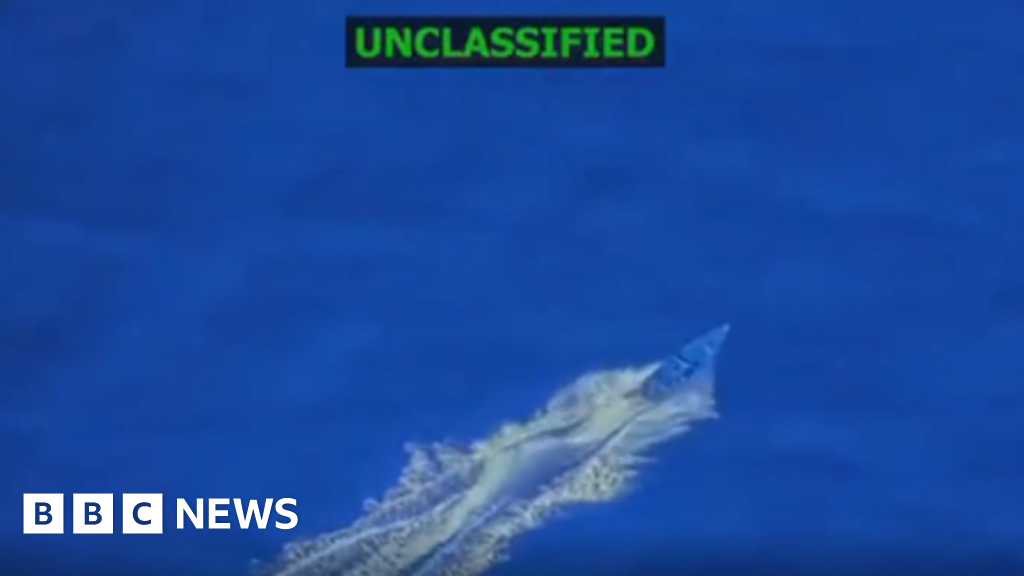
Trump: U.S. Strikes Drug-Linked Boat Near Venezuela, Six Dead

The United States continues to assert its military presence in the Caribbean Sea, with recent actions signaling a shift in its approach to combating drug trafficking and associated drug-terrorist organizations. On Tuesday, President Donald Trump announced that the US military had conducted a targeted strike against a small vessel off the coast of Venezuela, claiming the vessel was involved in drug smuggling and carried six individuals linked to narcoterrorism. This incident marks the fifth deadly US strike in the region over recent months, exemplifying the administration’s increasingly assertive stance in what officials call a non-international armed conflict with major cartels such as Tren de Aragua, a designated foreign terrorist organization. According to a memo obtained by The New York Times, Trump has declared drug cartels as non-state armed groups, legally framing their actions as an armed attack against the US.

  • Such military actions are justified by officials as necessary means to substantially disrupt the flow of narcotics into the US, arguing that these groups have evolved into sophisticated, organized threats comparable to armed insurgencies.
  • Lawmakers and human rights advocates, however, question the legality of these unilateral strikes, claiming they risk violating international law and could lead to extrajudicial killings.
  • The United Nations experts have publicly condemned these strikes as extrajudicial executions, emphasizing that criminal activities must adhere to the principles of justice, investigation, and international cooperation. They warn that circumventing legal processes could undermine global norms and set dangerous precedents.

Adding another layer to this complex geopolitical puzzle, Colombia President Gustavo Petro recently claimed there were “indications” that one of the targeted vessels might have been Colombian, with Colombians onboard. The White House responded swiftly, dismissing Petro’s statement as “baseless and reprehensible,” further escalating tensions between the neighboring countries. This dispute underscores how military actions in sovereign waters ripple through regional alliances and influence domestic politics, with the US positioning itself as a decisive arbiter of security in an area historically plagued by instability.

From the perspective of international analysts, these developments reflect a decisive pivot by the Trump administration, which now regards drug cartels not merely as criminal organizations but as armed threats that warrant military intervention. Dr. Mariana Lopez, a geopolitical expert, warns that such policy shifts could redefine the US’s role in Latin America, blurring lines between law enforcement and military action. Similarly, the Center for Strategic and International Studies highlights that these aggressive tactics could intensify regional tensions, making diplomatic resolutions more elusive. Meanwhile, the failure of the US Senate to pass legislation limiting the President’s authority to conduct future strikes indicates bipartisan support for a more aggressive posture. Almost all Republicans, along with Senator John Fetterman, opposed the measure, signaling a willingness among congressional leaders to prioritize security measures over strict legal oversight.

As history continues to unfold in real-time, the question persists: will these strikes quell the relentless tide of narcoterrorism, or will they provoke broader conflicts with unpredictable consequences? The Caribbean region, a vital nexus for international trade and geopolitical influence, now teeters on the brink of a new era—one in which the line between law and war is increasingly blurred. With every missile fired and each diplomatic statement, the weight of an evolving global order presses down on societies across the Americas. The decisive moments are yet to come, but what remains certain is that history is forging its new chapter—one marked by resilience, controversy, and the enduring struggle for sovereignty amid external interference.

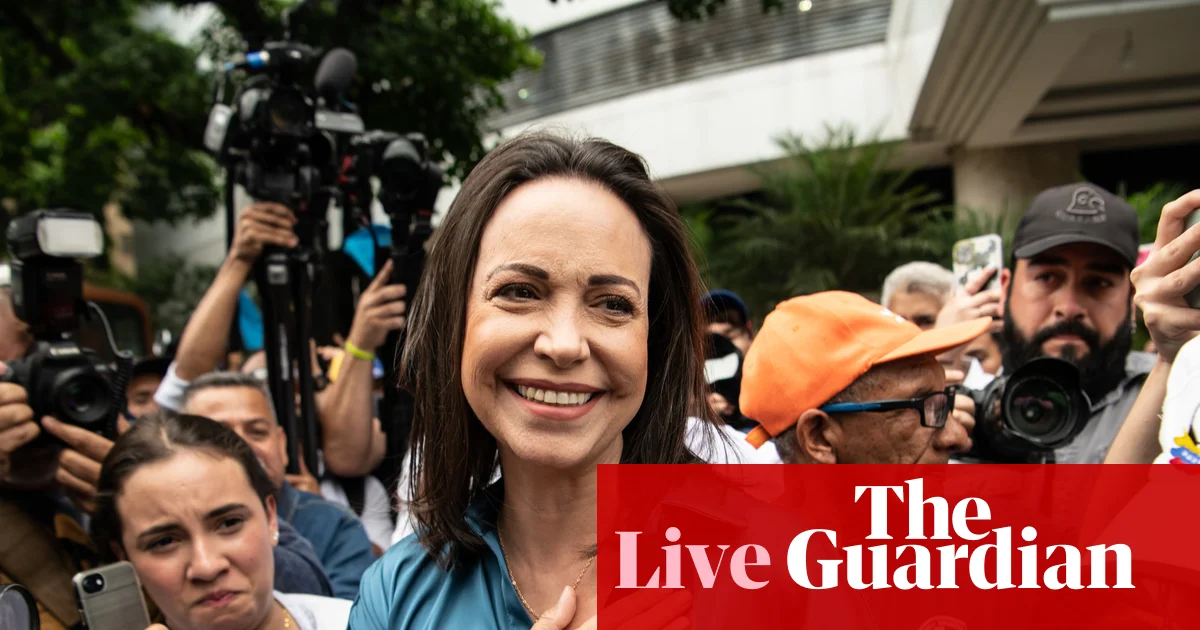
Nobel Peace Prize 2025: María Corina Machado Recognized for Defending Democracy in Venezuela

Global Impact of the 2025 Nobel Peace Prize: A Reflection of Shifting Geopolitical Currents

In a move that has resonated across continents and stirred debate among international observers, María Corina Machado, Venezuela’s most prominent opposition leader, was announced as the recipient of the Nobel Peace Prize 2025. Her recognition is not merely a testament to her personal resilience but signals a broader geopolitical statement, emphasizing the importance of democratic advocacy amid worsening authoritarian regimes. The Norwegian Nobel Committee lauded her efforts for promoting democratic rights, yet critics and analysts argue that this year’s decision also subtly addresses pressing global conflicts and the wake of recent diplomatic fissures.

Historian and geopolitical analyst Dr. Jonathan Steele notes that the choice “strikes a chord in a world teetering on the brink of regional and global crises.” He highlights that current conflicts in Ukraine, the Middle East, and tensions surrounding US-Norway relations serve as the backdrop for this year’s award. The Norwegian committee, infamous for maintaining strict confidentiality about nominations, appeared to have intentionally sent a clear message — one of resilience and defiance in the face of authoritarianism. Meanwhile, the committee’s emphasis on “courage and integrity,” especially in a climate where global order appears fragile, underscores how *the Nobel Peace Prize is often a reflection of international moral resistance* against tyranny and violence, a view supported by international organizations assessing the shift in global realpolitik.

  • The committee’s recognition of Machado, who has been forced into hiding amidst threats for her activism, frames the award as a beacon of support for oppressed populations globally. Her statement that “this is an award for an entire movement” resonates with the international community’s understanding that democracy depends on persistent resistance and that fighting against authoritarianism is a universal cause.
  • In contrast, the decision to sideline controversial figures, notably former US President Donald Trump, who publicly lobbied for the prize, highlights the committee’s emphasis on moral clarity. As Nobel experts explain, this year’s choices are shaped not only by individual merits but also by *the geopolitical symbolism* they convey, especially as nations grapple with internal unrest and external threats.
  • Machado’s recognition is also seen as a quiet rebuke to Nicolás Maduro’s regime, which the committee describes as increasingly authoritarian — a judgment echoed by independent human rights groups. This stance reflects a broader international narrative casting Venezuela as a cautionary tale for autocracies, with the prize serving as a reminder how *authoritarian machinery crushes dissent and human rights*.

International organizations and democracy advocates alike interpret this event as a declaration of moral steadfastness—a call for nations to uphold principles of justice and human dignity during turbulent times. Yet, beneath the public accolades lies a complex diplomacy. The committee’s explicit acknowledgment of Machado’s sacrifices, combined with veiled criticisms of Maduro’s government, exemplifies how awards like these influence **geopolitical alignments** — potentially softening or hardening international responses to crises. As Dr. Stein concludes, *“The Nobel Peace Prize remains a potent tool in shaping the moral contours of international diplomacy, especially when conflicts threaten global stability.”* And in an era where the future remains unpredictable, these decisions are not just awards—they are signals in the ongoing chess game of world politics.

As history continues to unfold, the true significance of this year’s Nobel Peace Prize will be measured in how it sustains or shifts the global balance of power. From the streets of Caracas to the corridors of global power, the choices made today might just echo for generations, reminding us that in the struggle for peace, moral conviction remains a formidable force.

Four Dead in US Navy Strike Against Suspected Drug Run Near Venezuela

US Military Operations in Latin America: A Step Toward {External Enforcement and Conflict Escalation}

The recent U.S. strikes against suspected drug trafficking vessels off the coast of Venezuela mark a significant escalation in regional military engagement, raising questions about the evolving geopolitical landscape in Latin America. According to Defense Secretary Pete Hegseth, these operations are conducted in international waters and target boats allegedly transporting massive quantities of narcotics destined for the United States. The U.S. claims such actions are integral to protecting its citizens from the devastating impact of drug violence—yet they also ignite global legal and diplomatic disputes, which could fundamentally reshape regional stability.

Critics, including international lawyers and regional governments like Venezuela and Colombia, have condemned these strikes as potential breaches of international law. The legitimacy of unilateral military actions in international waters remains fiercely debated among experts such as Harvard international law professor Mollie Roberts, who warns that such operations might undermine existing treaties dedicated to preserving sovereignty and avoiding unlawful escalation. The U.S. government’s recent move to frame drug trafficking as a form of armed attack, especially through a leaked memo announcing a “non-international armed conflict” with drug cartels, signals an alarming shift toward legally dubious grounds for military intervention. This move could grant the U.S. expansive powers beyond traditional law enforcement, possibly setting a precedent for future conflicts worldwide.

Consequences of {Military Overreach} and {Regional Sovereignty}

The geopolitical impact of America’s aggressive tactics in Latin America extends far beyond mere law enforcement. By positioning drug cartels as terrorist organizations, the U.S. has given itself sweeping authority—effectively recategorizing criminal enterprises as threats comparable to conventional warfare, a move that critics argue erodes sovereignty and invites further regional destabilization. The response from Nicolás Maduro and other regional leaders has been one of sharp condemnation, emphasizing their commitment to defend <> from perceived aggression. Such adversarial stances threaten to deepen divisions, potentially leading toward a new Cold War dynamic across the continent.

International bodies like the United Nations have yet to take decisive action amid reports that the U.S. plans further military strikes. Analysts warn that continuous escalation could trigger unforeseen consequences, including the destabilization of fragile democracies and a surge in anti-American sentiment across Latin America. The region, historically buffeted by external powers, now finds itself at a crossroads—struggling with the delicate balance between sovereignty and external influence, with many citizens questioning whether these military operations serve their best interests or merely advance geopolitical ambitions.

Stakes for the Future and the Weight of History

As history unfolds on these treacherous waters, the actions of America and regional nations will likely echo for generations. The categorization of drug trafficking as a warfare threat signals a profound shift in the narrative—one that risks turning a fight against crime into an open-ended conflict that could rewrite international norms. The recent strikes, while framed as self-defense, push the boundaries of legal justification and raise fundamental questions about the limits of military power in pursuit of domestic security. As international organizations and legal experts watch anxiously, the weight of history looms—it may be remembered as the turning point from a century of cooperation to a new era of geopolitical confrontation.

In the end, the ongoing saga in Latin America’s waters serves as a stark reminder of the thin line separating order and chaos. The decisions made today—whether to pursue aggressive unilateral policies or seek multilateral solutions—will undoubtedly shape the destiny of nations and societies. With each strike, the world watches a narrative written in real-time, a stark reminder that history’s pen is never silent—only waiting for the next chapter to be written in the uncertain book of global power.

Social Media Auto Publish Powered By : XYZScripts.com