Matox News

Truth Over Trends, always!

FBI Under Kash Patel’s Watch: Rumors of Fear Stalling Progress, Report Claims

Internal Crisis at the FBI: A Glimpse into U.S. Federal Collapse and Its Global Ramifications

The recent revelations about the Federal Bureau of Investigation (FBI) portray an agency in disarray under the leadership of Kash Patel, painting a troubling picture of internal paralysis, morale plummeting, and a leadership seemingly overwhelmed by the complex demands of modern federal law enforcement. According to a leaked 115-page report compiled by a coalition of retired and active FBI agents, the agency is considered a “rudderless ship,” with staff plagued by fear and a crippling lack of initiative. Such internal strife raises fundamental questions about the state of American federal institutions and their capacity to uphold law & order, especially at a time when global stability hinges on reliable, strong alliances.

This crisis transcends domestic concerns, as international partners grow increasingly wary of U.S. credibility. The report indicates that allied law enforcement and intelligence agencies are worried that the perceived chaos could undermine decades of international cooperation. Analysts emphasize that trust among global allies, especially those involved in counterterrorism and intelligence sharing, is fragile and cannot withstand internal upheaval in American institutions. When a major domestic agency like the FBI falters, it sends ripples across the entire international security architecture—potentially creating a vacuum for adversaries and rogue states to exploit. The report further warns that “long-term damage” to international partnerships may have irreversible consequences, especially if internal divisions stymie Washington’s ability to project stability and leadership on the world stage.

Within the United States, the public trust in federal law enforcement is already strained. The report criticizes Patel’s leadership for lacking experience and for fostering a climate of fear, with managers hesitant to take initiative without explicit directives, effectively turning the bureau into a bureaucratic shell vulnerable to political manipulation. Numerous experts, including prominent historians and security analysts, warn that such internal vulnerabilities are symptomatic of broader erosion in U.S. institutions—a decay that “undermines the very foundations of American sovereignty”. The controversy around Patel’s tenure mirrors a larger trend of political weaponization of federal agencies, which many argue compromises their ability to serve as neutral arbiters of justice. This erosion of institutional integrity risks tarnishing America’s global image as a defender of rule of law and constitutional order.

Cases of misconduct and mismanagement—such as controversial decisions to withhold sensitive information and interpersonal conflicts, including Patel’s allegedly inflammatory outbursts—further fuel concerns about the quality of leadership. Critics point out that such internal discord feeds into the narrative of decline and chaos that adversaries and skeptics are eager to exploit. Yet, amidst these crises, some voices within the political establishment defend Patel, emphasizing efforts to rollback divisive social policies and strengthen immigration enforcement. Nevertheless, the underlying warning remains clear: unless the U.S. can restore confidence and restore order within its premier law enforcement agency, the nation risks becoming a fractured pillar in the global arena—a development that history will remember as a turning point in America’s internal and international decline. The weight of this unfolding story will ultimately depend on whether Washington can stem the tide of internal disorder before it becomes an irreversible chapter in history.


Londoners warned: Watch out for scam messages following council cyberattack

In an era marked by increasing digital dependency, cyber-attacks have become a potent weapon wielded not only by criminal gangs but also reflecting wider geopolitical tensions. Recent events in London, where three councils—including Royal Borough of Kensington and Chelsea (RBKC)—confirmed they had fallen victim to cyber breaches, underscore the vulnerability of local government services in a digital age. These breaches, linked to sophisticated malware, have reportedly compromised “historical data,” igniting fears over the potential exposure of personal and financial information for upwards of 147,500 residents. Governments worldwide are scrambling to counter such threats, recognizing that the repercussions extend beyond local inconveniences and threaten the integrity of national security frameworks.

  • The affected councils have reported significant operational disruptions, with some systems offline for weeks, highlighting a pattern seen across the UK, which has faced a surge in ransomware incidents. Public sector entities, traditionally seen as less targeted, are now prime objectives, with global analysts warning of a shift in cyber warfare strategy.
  • While there is no definitive confirmation that ransomware was involved in the London attacks, the modus operandi mirrors well-documented tactics of gangs based in the Soviet Union. These criminal enterprises often demand cryptocurrency ransoms, effectively making extortion a lucrative international enterprise.
  • Authorities, including the National Crime Agency and Metropolitan Police, are collaborating to identify and neutralize the perpetrators. Yet, experts argue that such incidents are signals of a broader geopolitical crisis, where cyber offensives are becoming tools of statecraft, influencing societal stability and international relations.

Global institutions such as NATO and the European Union watch these developments with growing concern, recognizing that cyberwarfare has evolved into a new front in the contest for global dominance. As analysts like Dr. James Baker point out, “In geopolitical terms, these attacks could be precursors to larger plans involving espionage, disruption, or even kinetic conflict, with digital battlegrounds serving as standoff zones.” The United States and Russia are already engaged in an opaque and escalating cyber rivalry, which has reached the doorstep of small municipalities and major nations alike. It acts as a stark warning: the security architecture that many nations depend upon is more fragile than ever.

In the face of these mounting threats, governments are called to reevaluate their cybersecurity policies, emphasizing resilience and rapid response. Yet the bigger picture remains troubling; as historical and modern analysts warn, these digital conflicts threaten to redefine sovereignty and societal trust. The ripple effect of a local cyber breach can echo into international diplomacy, economic stability, and public confidence in institutions. As history’s grand narrative continues to unfold, one thing is clear: humanity stands at a crossroads, where the decisions made today will shape the balance of power and societal harmony in the decades to come. The digital battleground is no longer a distant frontier—it is now the heart of our collective security, and the weight of history bears heavily upon all who govern in this new era.

Who truly vetted Afghan evacuees during Biden's watch?
Who truly vetted Afghan evacuees during Biden’s watch?

The recent violent incident in Washington DC, where two National Guard members were shot—one of whom tragically succumbed—has ignited a fierce national debate over how the United States handles Afghan refugees and vetting protocols. The suspect, identified as Rahmanullah Lakanwal, entered the country under the Operation Allies Welcome scheme, a Biden-era initiative aimed at resettling vulnerable Afghans following the Taliban’s return to power in August 2021. While the current administration insists that the vetting process was rigorous and multi-layered, critics from the opposition, including prominent Republicans, argue that chaos and insufficient screening have left the nation vulnerable to threats emerging from within. Such events underscore a critical geopolitical impact—shaping public perception, influencing policy, and testing America’s commitments to both its national security and international obligations.

The scheme, launched ostensibly to quickly resettle those most at risk from Taliban reprisals, was heralded as a humanitarian effort by President Biden and his administration. However, the aftermath has been clouded by reports suggesting a less than perfect vetting process. The US Department of Homeland Security claimed that evacuees, including Lakanwal, arrived with “unvetted” backgrounds, raising concern among security analysts and officials. Critics point out that the vetting process, which involved biometric data collection and background checks by agencies such as the FBI and the National Counterterrorism Center, was compromised by systemic issues—such as incomplete data and lax procedures during the chaotic evacuation. A 2022 audit by the Office of Inspector General highlighted that vital information about some evacuees was inaccurate, leading to concerns that potentially dangerous individuals may have slipped through the cracks. According to security expert analysis, these pitfalls in the vetting cascade have contributed to a fragile national security environment, as underscored by recent events.

Internationally, the geopolitical impact of the US’s handling of Afghan refugees extends far beyond America’s borders. Critics, including former President Trump, argue that the Biden administration’s policies created vulnerabilities that enemies could exploit. The disputed claim that Lakanwal was “unvetted” and potentially dangerous feeds into fears of a “Trojan horse” scenario, which opponents equate with a weakening of America’s border integrity. The narrative has been amplified by claims—though lacking transparency—by Republican officials that individuals like Lakanwal were allowed into the country without proper screening. As analysts from international organizations warn, such vulnerabilities could embolden hostile nations and terrorist groups, undermining $ecurity alliances and destabilizing regions across the globe. The debate reflects a broader contest between humanitarian obligations and national sovereignty—a line that international advocates warn is increasingly fragile amid rising threats.

As the story unfolds, the crisis extends into the realm of history and future policy. How nations respond to these challenges will likely define the next decade—shaping whether America’s promise of refuge withstands the weight of threats internal and external. Renowned historians and security experts have warned that the decisions made now will be scrutinized by generations to come. The tragic shooting in Washington serves as a stark reminder that the battle for security versus openness is ongoing, with the weight of that decision bearing heavily on the fate of nations and societies worldwide. The pages of history are still being written, and in the shadows of this incident lie the unresolved questions of trust, vetting, and the true cost of compassion in a perilous age—leaving us to ponder whether the next chapter will see a renewed resolve or a further unraveling of security in the face of complex geopolitics.

This Thanksgiving: Michael Burry vs. Nvidia — The Tech Showdown to Watch

Market Disruption or Inevitable Bubble? Michael Burry’s Fight Against Nvidia Sparks Industry Debate

In the fiercely competitive landscape of AI infrastructure and semiconductor innovation, Michael Burry, the renowned investor famed for predicting the 2008 financial crisis, has shifted his focus to a new battleground: Nvidia. His recent crusade, characterized by public skepticism and aggressive betting against the company, signals a potential disruption of one of the most valuable firms in tech history. Nvidia’s meteoric rise, account­ing for a $4.5 trillion market cap and a twelvefold increase since early 2023, underscores just how deeply entrenched the company has become in the AI revolution. But Burry’s noise, amplified by social media and investor forums, threatens to challenge Nvidia’s dominance by sowing seeds of doubt amid a market increasingly dependent on AI’s disruptive promise.

Many industry observers are paying close attention to Burry’s strategic push, which is more than just a typical skeptic’s rant. His recent move to deregister his investment firm and launch a subscription newsletter, “Cassandra Unchained”, signals a deliberate effort to influence market sentiment amid what he perceives as dangerous overexuberance. His firm belief is that current AI investments, especially in firms like OpenAI and Nvidia, mirror the late 1990s tech bubble—specifically Cisco’s overexpansion, where unnecessary infrastructure led to a 75% stock crash. The implications for Nvidia are clear: if such skepticism gains ground, it could trigger a re-evaluation of AI giants’ valuations, severely disrupting the current tech frenzy.

Despite Nvidia’s recent solid earnings and amplified market position, the company faces a significant challenge from critics like Burry, who argue that the AI boom’s valuation metrics may be fundamentally flawed. Nvidia responded swiftly, publishing a detailed seven-page memo disputing Burry’s claims, including miscalculations related to stock buyback figures and employee compensation norms. Yet, Burry remains undeterred, comparing Nvidia’s overbuilt infrastructure to the collapse of Cisco in the late 1990s—a cautionary tale of overinvestment and subsequent market correction. Such narratives threaten to ignite a shift in investor sentiment, transforming belief in AI’s endless growth potential into a volatile market bubble.

Implications for Industry and Business Strategy

As the AI arms race accelerates, industry leaders and institutional investors are faced with a fundamental question: are current valuations justified, or are we witnessing the makings of a bubble poised to burst? Key players must now assess their strategic positions within this disruptive wave.

  • Innovation is now driven by rapid, capital-intensive infrastructure builds, with Nvidia leading the charge in processing power.
  • Disruption could be imminent if skeptics successfully orchestrate a confidence crisis, reminding markets of past tech overhypes.
  • Generational shifts via public narratives—like Burry’s—could recalibrate investor risk appetite, pushing firms to re-evaluate long-term AI investments.

Institutional analysts such as Gartner and MIT researchers are emphasizing the importance of careful valuation metrics amidst this hype cycle, warning that *”the AI frenzy may be masking underlying overcapacity.”* As the market faces this potential correction, the strategic implications are clear: disruption is inevitable when confidence in fundamental value erodes, creating opportunities for agile competitors and cautionary lessons for incumbents. For Nvidia and the broader AI ecosystem, the immediate future hinges on whether skepticism will turn into a self-fulfilling prophecy, or if the underlying innovation can withstand the mounting doubts.

Looking Ahead: Urgency in the Age of Disruption

The recent developments with Burry highlight an urgent market dynamic: in an era of unprecedented technological transformation, the line between innovation-driven growth and speculative excess is razor-thin. As critics leverage platforms with massive followings, the risk of a confidence crash escalates. If history is any guide, a wave of skepticism can accelerate a collapse, regardless of underlying fundamentals. Companies like Nvidia must now demonstrate tangible, long-term value amidst this turbulent environment. The question remains: Will the AI revolution continue unchecked, or are we at the cusp of a correction that could redefine industry norms forever? The clock is ticking, and market players cannot afford to ignore the simmering tension beneath the surface of this technological gold rush.

China-Japan Tensions Rise Over Taiwan: What Youth Should Watch

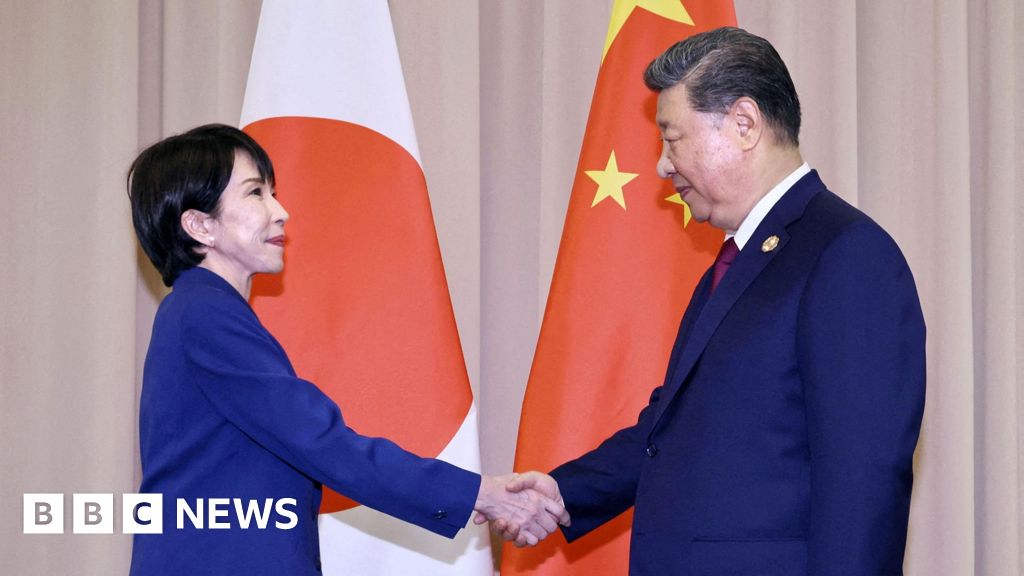
In an era defined by shifting alliances and rising assertiveness among global powers, Japan and China have entered a dangerous phase of diplomatic clash, with significant geopolitical impact that reverberates well beyond their mutual borders. This week, tensions escalated dramatically after Japanese Prime Minister Sanae Takaichi made remarks about Japan’s possible response to a hypothetical Chinese attack on Taiwan, prompting a fierce rebuke from Beijing. China has since urged its citizens not to travel to Japan and has summoned Japan’s ambassador in Beijing, signaling a deliberate escalation designed to intimidate and deter what China perceives as provocations that threaten its core national interests.

The incident reveals a broader struggle rooted in longstanding animosities, dating back to conflicts in the 19th century and the scars of Japan’s brutal wartime aggression in China during World War II. Historians and international analysts warn that such historical grievances continue to fuel suspicion and hostility, complicating efforts toward détente. The specific trigger, however, lies in Prime Minister Takaichi’s assertion that Japan could deploy its self-defense forces if China attacked Taiwan—an explicit departure from Japan’s long-standing policy of “strategic ambiguity.” This policy has kept the region relatively stable by avoiding overt commitments that could provoke China—a strategy that Washington and Tokyo have upheld to prevent triggers of larger conflict. Yet Takaichi’s hawkish stance aligns with Japan’s recent shift toward increased defense spending, a move seen by many as a response to China’s growing military assertiveness and regional ambitions.

What happened? A timeline

  • The current tensions originated during a Japanese parliamentary debate when Takaichi responded to a question about what circumstances regarding Taiwan could threaten Japan’s survival.
  • She stated that “battleships and the use of force” could trigger Japan’s self-defense protocols, a statement that China labeled “egregious” and “highly inappropriate.”
  • Tokyo promptly lodged protests against Beijing, which responded with its own diplomatic protests and warnings, including a warning from China’s foreign ministry that Japan was “playing with fire” and risking severe consequences.
  • Meanwhile, Takaichi refused to retract her remarks, remaining steadfast in her position that Japan’s stance on Taiwan has not changed, despite the diplomatic fallout.
  • In the aftermath, Beijing’s foreign ministry reiterated that Taiwan is “China’s Taiwan,” directly accusing Japan of interfering in what Beijing views as its inner affairs. China’s Vice Foreign Minister Sun Weidong summoned Japan’s ambassador, warning of “extreme consequences” should tensions escalate further.

International organizations and defense analysts warn that these exchanges symbolize a potential escalation toward a broader confrontation that could destabilize the Indo-Pacific region. The United States, meanwhile, maintains a policy of deliberate ambiguity regarding Taiwan’s defense, while strengthening ties with Japan—its closest Asian ally. The U.S. position remains cautious, yet publicly ambiguous, designed to deter China from considering military action. This delicate balance of power underscores the importance of regional security frameworks, yet also reveals their fragility in times of rising nationalism and strategic competitions.

Most worrisome is the influence of historic grievances and the rise of hawkish leaders like Takaichi, who advocates for closer military cooperation with the United States and rejects Japan’s traditional restraint on military engagement. Analysts warn that such bold policies increase the risk of miscalculation, especially as China refocuses its military doctrine on reunification with Taiwan by any means necessary. As tensions simmer, the region approaches a critical juncture, where historical scars are reopening and alliances are being tested in the crucible of modern geopolitics. The prevailing question remains—will diplomacy prevail or will the shadows of history ignite a conflict that could reshape the world order?

In the unfolding pages of history, the ink is still wet, and the future remains unwritten. The world watches as Asia’s giants inch closer to a crisis that could ignite the entire global stage, forcing nations and societies into decisions that may echo for generations. As the echoes of past atrocities and betrayals reverberate across the ocean, humanity stands on the brink of an uncertain tomorrow—hope fighting to survive amidst the specter of renewed war.

This week’s top steals: Google Pixel Watch 3 and Anker’s dual-headed USB-C cable—gear up smart!

Emerging Trends Signal Disruption in Consumer Tech Industry

In an era marked by rapid technological innovation and market disruption, companies are leveraging new hardware and software advancements to secure their footholds in a fiercely competitive landscape. Google’s Pixel Watch 3 exemplifies this shift, showcasing not only the integration of Wear OS 6 with revolutionary AI features but also emphasizing the importance of health-centric wearables in the evolving ecosystem of Android devices. As Victoria Song highlights in her recent review, the watch’s extended battery life, seamless integration with Pixel devices, and multi-functional capabilities—including remote Google TV control and offline navigation—highlight how Google is positioning itself to challenge established players like Samsung and Apple.

Beyond smartwatches, accessory innovators such as Anker and Microsoft are driving disruption in the accessory and gaming markets. Anker’s new 2-in-1 USB-C cable restructures charging logistics, allowing consumers to charge multiple devices simultaneously with peak power throughput when paired with a 140W adapter, such as Apple’s latest offering. This move not only signifies a technological leap but also signals a shift towards more efficient, space-saving… device management—crucial in a market where productivity and convenience are paramount. Meanwhile, Microsoft’s Xbox Wireless Controller, now retailing at record lows, underscores how timeless hardware design—founded on user comfort and durability—continues to influence the gaming industry.

Implications for Business and Industry Leaders

These innovations are emblematic of a broader industry trend that favors disruption over tradition. Tech giants and startups alike recognize that differentiation now hinges on integrated ecosystems. For instance, Google’s push into AI-powered health tracking and software-driven updates reflect an understanding that continuous innovation is essential for maintaining competitive advantage. Analysts from Gartner suggest the wearables and accessories markets could see compound annual growth exceeding 20% over the next five years, driven by consumer desire for smarter, more interconnected devices.

Such market shifts compel established companies to reevaluate their strategies, while new entrants capitalize on niche innovations. The business implications are profound, including heightened patent activity, strategic acquisitions, and a focus on AI-driven feature development. As industry leaders like Elon Musk and Peter Thiel emphasize, disruption in technology not only challenges the status quo but also creates enormous opportunities for those who can harness these innovations swiftly and effectively. Competition will intensify, and companies must prioritize agility and strategic foresight to avoid being rendered obsolete.

Looking Forward: Seizing the Future of Tech Innovation

As we look ahead, one thing remains clear: The technological landscape is undergoing a fundamental transformation, driven by rapid advances in AI, wearable tech, and smart accessories. Industry insiders warn that failing to innovate could leave legacy companies trailing behind more agile disruptors. The convergence of hardware and software, exemplified by products like the Pixel Watch 3 and Anker’s new charging solutions, signals an era where disruptive innovations will redefine consumer expectations and redefine market winners.

For young entrepreneurs and established players alike, the challenge is to anticipate, adapt, and accelerate amidst this dynamic upheaval. In a world where technology is no longer an enabler but a core differentiator, the race for innovation is more urgent than ever, and those who capitalize on emerging trends now will shape the digital economy of tomorrow.

COROS NOMAD Unleashes Next-Level Navigation with Offline Maps — The Ultimate Watch for Trendsetting Adventurers

In a world increasingly obsessed with exploring the outdoors and embracing an active lifestyle, the COROS NOMAD is emerging as a symbol of how technology is reshaping our engagement with nature. This innovative smartwatch isn’t just a device for telling time—it’s a game-changer in outdoor navigation. Its lightweight design, combined with the powerful integration of full offline mapping, has caught the attention of trend-savvy consumers and outdoor enthusiasts alike, signaling a shift in how society perceives adventure and self-sufficiency.

What makes the NOMAD stand out is its ability to provide **detailed navigational information without reliance on cellular networks**. Unlike conventional smartwatches that depend on connected devices or Wi-Fi, this watch operates independently, giving users the confidence to venture into remote wilderness areas. This feature has catapulted it into the cultural lexicon as a symbol of independence and resilience. Influencer explorers, such as renowned outdoor adventurer Jessica Green, have leveraged the device for their expeditions, showcasing the blend of rugged utility with modern tech. Sociologists highlight that this meld of nature and innovation reflects a broader societal desire to reclaim agency over our environment, especially in a digital age which often feels overly connected and over-controlled.

The social relevance of this trend extends beyond outdoor recreation. It taps into a collective longing for authenticity, adventure, and self-reliance—values that resonate strongly among the youth. As urban environments become more saturated, the aspirational pull of raw, unfiltered nature is fueling a cultural shift, with consumers seeking gear that underscores this lifestyle. This isn’t merely about having the latest gadget; it’s about _how_ that gadget symbolizes a larger narrative of independence and self-empowerment. Top trend reports note that brands like Coros are not just selling a product but propagating a cultural movement—one that embraces active, minimalist, yet tech-savvy lifestyles.

  • The integration of detailed offline maps into wearable tech
  • The rise of adventure-driven social media content
  • The growing influence of outdoor lifestyle influencers
  • The redefinition of rugged masculinity and femininity in modern society
  • The shift towards sustainable and self-sufficient outdoor gear

As analysts suggest, this trend mirrors shifts in societal attitudes—moving away from dependency on technological infrastructure and toward fostering personal resilience. The NOMAD, with its sleek design and comprehensive offline capabilities, exemplifies how product innovation can serve as a cultural catalyst. It’s effectively transforming the outdoor experience into a statement of individual grit, appealing especially to a generation that values authenticity and self-determination. This empowerment theme echoes broader societal debates on independence, technology, and the reimagining of adventure in the 21st century.

However, as the popularity of such devices soars, a provocative question emerges: _Could this embrace of individual survival technology mark a larger societal pivot away from centralized systems altogether?_ The next big challenge may involve how these gadgets influence our collective understanding of community, safety, and reliance on infrastructure. If more young explorers begin to trust their own navigation skills over traditional tools, what does this mean for the future of outdoor recreation and our social fabric? As the boundaries between technology and society continue to blur, viewers are left pondering whether this trend is merely a passing fascination or the dawn of a new era of resilient, tech-powered individualism.

Upcoming Stars Shine: Meet the Breakthrough Athletes to Watch This Season!

Tragedy Strikes: Ex-LSU Star Kyren Lacy Allegedly Linked to Fatal Crash

In a harrowing turn of events, Louisiana State Police have released video footage and records related to a fatal crash that took place in December 2024, allegedly involving former LSU football player Kyren Lacy. The incident has shed light on the potentially devastating consequences that can accompany life off the field for young athletes. As a celebrated player for the LSU Tigers, Lacy had garnered much attention during his time with the team, yet this tragic incident casts a shadow on what was once a promising sports career.

The video footage shows critical moments leading up to the accident, allowing investigators to piece together a narrative of events that resulted in the tragic loss of life. Officers stress the importance of understanding the dangerous combination of speed and impaired decision-making, which can prove fatal on the roads. Commentator and former athlete Chris Doleman shared, “It’s a heart-wrenching reminder of the realities young stars face. They must find the right coaching both on and off the field.”

As the legal proceedings unfold, the football community is left to grapple with significant questions about accountability and mentorship for young athletes. Player safety extends beyond the gridiron; it encompasses the values instilled in players regarding responsibility and choices made in their daily lives. Lacy’s journey serves as a poignant reminder that the lessons of discipline and respect taught on the field are just as crucial in life. The narrative that evolves from this situation will undoubtedly resonate with aspiring athletes and fans alike.

In conclusion, while LSU football has brought many joyous moments, this incident highlights that sports carry profound responsibilities. As we reflect on the legacy of young athletes, it is imperative to remember that their journeys are about much more than games won or lost. The fabric of sports is woven with the threads of community, character, and, most importantly, unity. In times of turmoil, sports remind us of our shared humanity and the importance of making choices that honor the values we cherish both on and off the field. It is in our collective resolve that we find strength and inspiration, echoing the spirit of sport as a true unifying force.

Source link

Monday Briefing: Is Kemi Badenoch’s Conservative push risking the party’s survival? | Leadership Watch

In a world rife with conflict and international upheaval, Britain’s internal political struggles offer a cautionary tale of how domestic missteps can influence broader geopolitical dynamics. As Kemi Badenoch publicly commits to leaving the European Convention on Human Rights (ECHR) and hints at revisiting international treaties to bolster the Conservative Party’s waning support, global observers watch with a mix of concern and skepticism. Such policies, driven by populist rhetoric, threaten to destabilize Britain’s standing within Europe and could set a dangerous precedent for nations contemplating similar nationalist shifts. Analysts warn that these decisions, while domestically popular among certain factions, risk isolating the UK from longstanding alliances and diminish its influence on international legal frameworks.

Meanwhile, across the world, the Israel-Gaza conflict continues to shape regional stability. Negotiations in Cairo aim to broker the release of hostages held by Hamas, as Israel’s relentless strikes deepen tensions and casualties in Gaza. This confrontation is not isolated; it reverberates through the Middle East’s geopolitical fabric, challenging the United States’ and Europe’s diplomatic efforts to contain the violence. Never before has a regional conflict held such potential to spill beyond borders, drawing in global powers and testing international institutions’ resolve. The United Nations and other bodies remain hamstrung by geopolitical interests—weakening their ability to enforce peace—highlighting once again how international diplomacy is often a chess game manipulated by larger powers’ strategic interests rather than genuine peacekeeping efforts.

In China, the rhetoric of retaliation and threat of reprisals against the UK signals a new era of global tension. The Chinese government’s warning against targeted actions under foreign influence rules underscores how Beijing perceives Western efforts to limit its influence as provocations worthy of pushback. Such moves threaten to accelerate the uprising of a new Cold War, where economic and military rivalry undermines global stability. International organizations, such as the World Trade Organization (WTO) and G20, find themselves caught in the crossfire, struggling to mediate between the rising powers. The balance of influence is shifting, with China’s resurgence challenging the post-World War II order, affecting countless societies that rely on fragile international cooperation.

Adding to the chaos, the Syria elections amidst a war-torn landscape reflect a fragile attempt at democratic normalization. Yet, critics, including United Nations observers, warn that the elections are heavily biased in favor of interim authorities, deepening divisions rather than fostering reconciliation. This approach exemplifies how fragile state institutions, weakened by prolonged conflict, are exploited by regional and global actors pursuing strategic goals. The future of Syria remains uncertain, with persistent violence and disillusionment causing ripple effects across the Middle East and beyond, undermining prospects for regional stability and peace.

Domestically, the UK faces rising utility bills, economic uncertainty, and political disarray. The financial struggles of the Tory party reflect a wider crisis of confidence in Western democratic institutions, where declining voter engagement and party memberships threaten the very foundations of governance. These internal fractures, when combined with foreign policy uncertainties, underscore how decisions made within national borders ripple outward—shaping the geopolitical landscape and influencing the course of history. As nations grapple with these complex challenges, the world watches—and waits—knowing that each decision today writes the pages of a history still being penned. The fate of small nations and mighty superpowers alike hang in a delicate balance—an unfolding story where the line between stability and chaos is razor-thin, and the echoes of these choices will resonate for generations to come.

Danish Military Bases Spotted Under Drone Watch Amid Rising Air Tensions

Recent sightings of unidentified drones near military and civil infrastructure across Denmark, Germany, Norway, and Lithuania have sent shockwaves through an increasingly tense European security landscape. The series of incursions, notably the drone activity above key military bases like Karup airbase in Denmark, align with a disturbing pattern of aerial disruptions that threaten the stability of the continent. These events come just days after major airports in the region, including Copenhagen and Oslo, experienced temporary closures due to drone activity, highlighting vulnerabilities within civilian and military airspace alike.

Analysts suggest that these incidents are part of a broader hybrid attack, a sophisticated blend of military and non-military tactics designed to destabilize and undermine interconnected security systems. The Danish Defense Ministry has cautiously refrained from accusing any state actor, though some officials hint at the possibility of Russian involvement. This suspicion is fueled by recent heightened tensions between Russia and NATO allies, with Eastern European countries such as Estonia and Poland reporting similar incursions involving Russian drones and fighter jets. The North Atlantic Treaty Organization (NATO) has responded with urgent consultations, as fears grow that Moscow may be engaging in a broader strategy of indirect aggression, leveraging these covert operations to weaken Western unity and sow discord in the heart of Europe.

Government officials and international organizations warn that these drone incursions signal a new phase in hybrid warfare, where the battlefield extends beyond traditional combat zones to include the cloud of technological vulnerabilities that modern societies have come to depend upon. German Interior Minister Alexander Dobrindt has emphasized the high threat level, ordering further investigations and regional discussions on how to counteract this rising threat. Meanwhile, U.S. and European security analysts cite the increasing frequency of such incidents as a warning that the age of aerial proxy conflicts has arrived, demanding a coordinated, strategic response to prevent escalation into overt conflict.

As Russian officials vehemently deny involvement, dismissing allegations as “absurd provocations”, the weight of history and recent events suggest a more complex reality. Past accusations of hybrid assaults, coupled with Russia’s openly strategic posture in Eastern Europe, leave many experts questioning whether these violations are a form of weaponized diplomacy. The unfolding drama in Northern Europe encapsulates a larger narrative of geopolitical rivalry, where control of information, airspace, and influence determines the fate of nations. The world watches as the specter of war, cloaked in the shadows of digital and aerial warfare, lingers just beyond the horizon, leaving humanity at a perilous crossroads where every decision could tip the balance towards peace or chaos. The consequences of these silent battles will echo through history, shaping the legacy of this turbulent era.

Social Media Auto Publish Powered By : XYZScripts.com