Matox News

Truth Over Trends, always!

Group presses forward with legal challenge against South West Water sewage pollution

In a revealing sign of the rising environmental consciousness among grassroots communities, a legal claim against South West Water has extended across the Devon and Cornwall coastlines, reflecting broader societal frustrations over government and corporate accountability in environmental stewardship. Initially confined to Exmouth, the group legal action now spans towns like Dawlish, Sidmouth, Teignmouth, and Cornwall’s renowned beaches, including Newquay and Penzance. This movement underscores a fundamental shift: ordinary citizens are not willing to accept systemic pollution and neglect, especially when it directly harms their health, livelihoods, and natural heritage. Analysts suggest that this grassroots mobilization could serve as a bellwether for similar movements across Europe, where local populations increasingly demand accountability from authorities and corporations over environmental degradation.

The core of the dispute revolves around the ongoing discharge of raw sewage into cherished coastal waters—an issue that has sparked outrage among residents. According to Leigh Day, a prominent law firm specializing in environmental justice, the claim now includes more than 1,400 individuals impacted by South West Water’s alleged failings. Tina Naldrett, a 62-year-old nurse from Dawlish, vividly captured the emotional toll: “The sea is our heritage and sanctuary, yet I see sanitary products, plastic debris, and foam of effluent floating past—more often than not. Water companies do not own the seas; they are stewards of a shared natural resource, and their actions betray a moral and ethical bankruptcy.” When communities witness the continued pollution, especially during the summer months with beach closures and health warnings, it only fuels the perception that corporate interests supersede ecological sustainability and community welfare.

The criminality of these acts is reinforced by official reports from Ofwat, which in 2024 issued a £24 million enforcement penalty against South West Water. An investigation revealed systemic failures dating back to 2017—failings that have resulted in over half of the company’s treatment plants spilling raw sewage into the environment regularly. The length of 544,429 hours of discharge in just that year alone signifies a disturbing trend: the continued prioritization of cost-cutting and convenience over environmental health and public safety. Experts like environmental historians warn that such incidents reflect broader patterns of regulatory negligence and corporate complacency, which threaten to water down the very safeguards meant to protect natural ecosystems and human communities.

  • The legal action highlights the widespread violation of regulations concerning storm overflows, which should only be used during extraordinary weather events but are reportedly deployed excessively—especially during rainfalls when systems are overwhelmed.
  • The impact extends beyond environmental concerns, disrupting local economies reliant on tourism and recreation, and raising questions about the effectiveness of current environmental frameworks in holding corporations accountable.
  • Community voices, represented by campaigners like Oliver Holland, emphasize that these legal actions are crucial in empowering citizens to push for tangible change and to hold polluters responsible for years of neglect.

As international observers peer into this unfolding domestic crisis, many see it as a microcosm of larger trends in governance, corporate ethics, and civil activism. Historians of environmental law warn that ignoring these grassroots demands risks a future where the natural world is irreparably damaged, and societal trust erodes further. The ripple effects could extend beyond Britain, influencing global debates on corporate responsibility and environmental justice. What is at stake is nothing less than the legacy we leave behind—a question of whether communities will stand together to reclaim their shared inheritance or capitulate to a system that values profit over preservation. As the tides of change rise, the outcome remains uncertain, yet the story of a society grappling with its obligations to nature and future generations continues to unfold with relentless urgency, leaving an indelible mark on history’s scrolls.

Six Budget-Friendly Shower Upgrades That Elevate Your Daily Routine—From Luxe Towels to Pure Water Filters | Life & Style

Showering in the Modern Age: Redefining Self-Care for the Next Generation

In today’s fast-paced world, even something as fundamental as showering has evolved into a complex ritual layered with trends, technology, and lifestyle shifts. Gone are the days where shower time was just about hygiene; now, it’s an opportunity for personal wellness and momentary escape. The explosion of social media has inundated us with trends—dark showers, multi-hour routines, even shower oranges—creating a paradox of aspiration versus practicality. While some of these trends seem far removed from everyday life, they reveal a deeper desire: to transform the mundane into an experience that enriches our health, confidence, and mood. As wellness expert Dr. Christopher M. Norris explains, optimizing small personal routines can significantly boost mental clarity and physical vitality, especially in our youth who seek authenticity in self-expression.

But understanding that not everyone has hours to spend or the resources for elaborate setups is crucial. There’s a compelling movement toward mindful and affordable upgrades that serve both health and aesthetic desires. Leading lifestyle outlets and innovators have rigorously tested budget-friendly shower filters, luxurious towels, and scented candles, all under $150, advocating a philosophy: elevate your everyday without breaking the bank. A standout example is the Canopy Handheld Filtered Shower Head, which, according to recent tests by lifestyle writer Stephen Treffinger, results in skin that feels “less dry and smoother,”it’s an affordable health upgrade that directly impacts personal well-being. This shift emphasizes investing in products that enhance the quality of water—removing damaging chemicals—rather than succumbing to expensive, less essential trends that often clutter social feeds.

Complementing this practical approach are lifestyle tokens that elevate the sensory experience: the Parachute Organic Plush Towels and the tropical scent of the Capri Blue Volcano Candle. These simple additions forge a holistic approach—combining wellness, leisure, and personal style—impacting not just the physical, but also the emotional and aesthetic facets of self-care. This is about embracing the journey of self-expression, nurturing both body and mind, and encouraging younger generations to see lifestyle choices as a form of personal activism—asserting control over their health, environment, and emotional clarity.

As the narrative of self-care continues to unfold, it’s clear that the act of showering has transcended the mere act of cleaning. It now embodies a path to wellness, inspiration, and self-empowerment. The journey isn’t just about products or trends; it’s about cultivating a daily ritual that reflects your values and aspirations. In embracing this evolution, the modern youth are carving a new narrative—where lifestyle is an open invitation to explore, to refine, and to redefine oneself. In this pursuit, every small upgrade becomes a brushstroke on the canvas of a confident, resilient, and vibrant life. Ultimately, it’s not about achieving perfection but about embracing the continual evolution of being the best version of oneself—one shower at a time.

Why Is Ice Still a Mystery to Science?

Groundbreaking Research Challenges Long-Standing Theories on Ice Slipperiness

The age-old mystery of why ice remains perpetually slippery has entered a new phase of understanding, with recent scientific advancements threatening to disrupt traditional perspectives in physics and materials science. German researchers have proposed a compelling fourth hypothesis—known as the premelting theory—that suggests an intrinsic, microscopic layer of liquid water exists on ice surfaces prior to contact, fundamentally redefining the phenomenon. This innovative approach tailors to a broader trend in scientific disruption—where classic theories are being replaced by more nuanced, real-world models.

The Evolution of Theories: From Pressure to Premelting

The longstanding debate began in the 1800s with James Thomson, who theorized that additional pressure from a human step could locally lower the melting point, thus creating a slippery layer of water. His idea was supported by Lord Kelvin, but later challenged in the 1930s by scientists like Frank Bowden and T. P. Hughes, who argued that the pressure exerted by even vigorous skaters isn’t sufficient to cause melting. Their calculations indicated that the force generated on a typical skate is orders of magnitude too weak to influence ice’s phase change significantly. This skepticism prompted the scientific community to look elsewhere.

Friction and its Falling Out of Favor

Another dominant hypothesis suggested that heat generated through motion—the idea of frictional heating—caused the ice to melt at the contact point. However, recent experimental studies, including those by Daniel Bonn at the University of Amsterdam, have challenged this assumption. By creating microscopic ice slabs and measuring the forces involved, Bonn’s team discovered that ice slipperiness appears largely independent of the speed of movement, undermining the frictional heating explanation. These findings place the role of surface physics into sharper focus, emphasizing that the phenomenon might arise from more subtle, surface-specific processes rather than bulk heat generation.

The Rise of the Premelting Hypothesis and Industry Implications

Perhaps the most revolutionary shift is the renewed support for the premelting hypothesis—an idea originating from Charles Gurney and others—that ice’s surface is inherently wet at temperatures below 0°C. This microscopic wet layer could be responsible for the persistent slipperiness, and its understanding opens doors for disruptive applications across multiple industries. For instance, manufacturers of anti-icing and de-icing products could leverage this knowledge to develop more effective solutions, reducing reliance on chemical de-icers that harm the environment. Similarly, advances in ice-related transport technologies—like autonomous snow plows or luxury skating rinks—stand to benefit from a profound grasp of the surface physics involved.

  • Emerging technologies in surface coating and material design aiming to manipulate or reinforce the premelted layer.
  • Potential for reduced energy costs and increased safety in winter transportation through advanced understanding of ice’s natural properties.
  • Strategic positioning for companies innovating in climate resilience and infrastructure adaptation.

The Future: Innovation, Disruption, and Competitive Edge

As top industry analysts from Gartner and innovation leaders like Elon Musk and Peter Thiel emphasize, those companies that quickly adapt to the evolving scientific landscape hold the keys to gaining a first-mover advantage. The shift toward understanding surface premelting not only symbolizes a significant paradigm change but also indicates an upcoming wave of technological disruption in fields ranging from transportation to renewable energy. With research like Bonn’s providing a clearer picture of ice’s intrinsic properties, the energy sector and smart infrastructure developers are keenly watching for how to incorporate this knowledge into next-generation solutions.

The decades ahead will determine whether traditional industry giants or agile startups lead the charge—yet one thing remains clear: the race to harness the fundamental science of ice is more urgent than ever. Those who can translate these breakthroughs into practical, scalable applications will set the course for resilience and innovation in a warming world, cementing their position at the forefront of the new technological frontier.

Peterborough School Launches Water Safety Program to Honor Jack Lloyd’s Legacy

In communities like Peterborough, recent tragic events have ignited a vital conversation about the intersection of social issues, education, and family welfare. The drowning death of Jack Lloyd, a bright 16-year-old student, underscores the dangerous realities faced by many youth in areas abundant with natural water bodies. Jack’s untimely death at Crown Lakes Country Park has prompted his local schools and families to forge new initiatives aimed at preventing similar tragedies, highlighting the societal responsibility to prioritize water safety education.

Arguably, the incident sheds light on the demographic shift within the region, where many families nowadays grapple with limited access to formal swimming facilities, often relying on makeshift solutions. Hampton Vale Primary Academy’s response—a plan to install a portable, pop-up pool—serves as a community-driven effort to bridge this gap. Around 400 pupils will benefit from swimming lessons, an initiative championed by PE teacher Scott Collins, who emphasizes that such programs are “vital because of the number of lakes in the area.” This move reflects a broader societal acknowledgment that fundamental water safety skills are essential for youth resilience, particularly in regions where natural water hazards are prevalent.

Yet, societal challenges extend beyond mere infrastructure. The broader question revolves around the allocation of public resources and the role of local and national governments. Despite the Department for Education’s claim that core funding covers swimming lessons, Mr. Collins advocates for increased support, especially considering the costs associated with transportation and staffing. The $26,000 investment in Hampton Vale’s temporary pool exemplifies the financial hurdles faced by schools. Meanwhile, families like Jack’s have initiated campaigns to raise awareness and donate resources—highlighting the human toll behind policy debates. Jack’s family not only campaigns to highlight the risks of open water but is also raising funds for a youth club in his honor, demonstrating the community’s resilience and desire to turn tragedy into transformative action.

Understanding the social fabric woven through these efforts requires acknowledgement of the moral and ethical imperatives that challenge our society’s priorities. Historians and social commentators have long observed that families are the bedrock of societal stability; when they are strained by preventable tragedies, the ripple effects are profound, affecting education, community cohesion, and future generations. Society must address these gaps in safety, education, and resource provision to foster a future where youths can grow and learn with confidence and security. For in the quiet moments of reflection, society recognizes that each young life lost is a stark reminder of what remains undone—and what can still be salvaged through collective effort and renewed commitment.

Ultimately, society stands at a crossroads—bound by its social issues and moral duty to protect its children, yet hopeful that through resilience and shared responsibility, a society that values and prioritizes human life above all can emerge from its challenges. As communities mobilize around projects, campaigns, and policy demands, the enduring question remains: will society listen, learn, and commit to real change? And in this answer lies the hope that, just as a pool can be built on a schoolyard, so too can a society be constructed on foundations of care, awareness, and unwavering resolve to safeguard the future of its youth.

Iran’s Water Crisis Deepens as Tehran Faces Unprecedented Drought

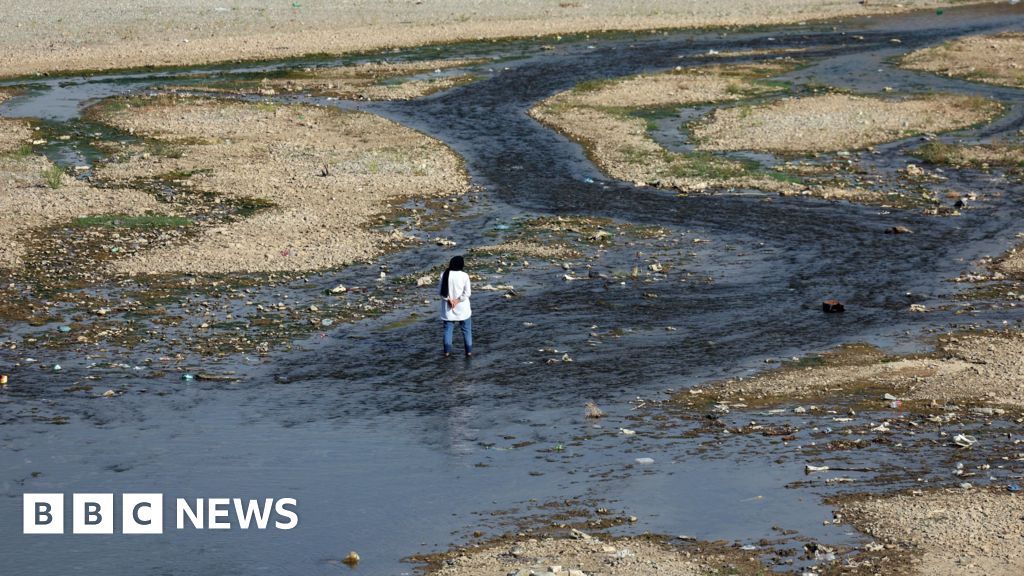
Iran, a country long embroiled in geopolitical tensions and economic sanctions, now faces an unprecedented internal crisis: a devastating water shortage that threatens the very fabric of its society and sovereignty. This month, Tehran’s reservoirs are nearing collapse, with officials warning that if the rains do not return soon, the capital may face the grim necessity of water rationing or even evacuation. Such stark warnings are not merely alarmist rhetoric—they are warnings of the profound geopolitical impact of environmental mismanagement, war, and climate change on a nation’s stability. As analysts like Dr. Samuel Livingston of the International Water Resources Group note, these crises have the potential to upend the regional balance, fueling unrest and destabilizing the already fragile landscape of Middle East geopolitics.

Experts suggest that Iran’s historic decades-long water mismanagement has reached a point of no return, exacerbated by recent conflicts and infrastructural decay. The management of reservoirs such as the Latian and Karaj dams, which are now holding less than 10% of their capacity, illustrates a country pushing toward environmental catastrophe. Mohammad-Ali Moallem, the manager of the Karaj Dam, reports a staggering 92% decrease in rainfall compared to the previous year, with most water deemed “dead” and unusable. The situation is compounded by the country’s aging water infrastructure and widespread leakage, factors identified by Iran’s Minister of Energy, Abbas Ali Abadi, as critical contributors to the ongoing crisis. Historically, Iran’s water woes have been dismissed as cyclical, but today they threaten to trigger a humanitarian crisis that could reshape the nation’s internal and regional dynamics.

Adding to Iran’s turmoil, recent military conflicts and targeted strikes have indirectly strained the country’s resilience. Following a 12-day war with Israel, the northern Tehran neighborhood of Tajrish experienced severe flooding, revealing the fragile state of Iran’s infrastructure amidst ongoing hostilities. The Israeli Defense Forces claimed strikes on military targets, but the aftermath underscores the broader impact of geopolitical conflicts on Iran’s capacity to manage natural disasters and environmental pressures. According to Iran’s National Centre for Climate and Drought Crisis Management, other provinces such as West and East Azerbaijan are also witnessing dangerously low water levels, with some dams dropping below three percent capacity—the sort of emergency that could threaten entire cities like Mashhad. The intersection of war, mismanagement, and climate change has created a perfect storm, with the potential to destabilize Iran further and ripple across the region.

From an international perspective, this crisis exemplifies the complex web of how environmental issues are intertwined with geopolitics. The officials’ reluctance to accept the full scope of the crisis, combined with sanctions-induced economic constraints, hampers Iran’s ability to invest in infrastructure or adopt sustainable water management practices. As seasoned analyst Dr. Emily Carter explains, “Iran’s water crisis is a microcosm of a larger trend—climate change exacerbated by internal missteps and external conflicts that will test the resilience of nations and societies in ways previously unimagined.” The looming threat of water shortages may ignite internal unrest, disrupt regional alliances, and pressurize the global community to address issues of environmental security that transcend borders. With rainfall forecasted to remain scarce over the coming week, the decision-makers face a moral and strategic imperative: adapt swiftly or face the chaos of a nation reaching its tipping point.

As history watches with bated breath, the unfolding tragedy in Iran serves as a stark reminder of the fragile balance between environment, geopolitics, and societal stability. The choice before Iran is clear—continue down this destructive path or confront the imperative of sustainable management and regional cooperation. Yet, with each passing day of drought, the once vibrant metropolis of Tehran and the resilient city of Mashhad edge closer to a future defined by scarcity and despair. The pages of history are being written in real-time — and what happens next may define the fate of Iran and the broader Middle East for generations to come. The questions remain: will this be a moment of awakening or the beginning of a long descent into chaos? Only the unfolding events will tell, but the weight of history urges us to watch closely.

Top 8 Cat Water Fountains for Modern Pet Owners – WIRED’s 2025 Picks

Tech Disruptors Transform Pet Care with Innovative Water Fountains

The pet industry is experiencing a seismic shift as innovation in smart water fountain technology accelerates, driven by startups and industry giants alike. Leading firms such as Petkit and Happy & Polly are redefining pet hydration with connected devices that leverage IoT, automation, and advanced filtration. This disruption not only enhances pet health but also presents massive business implications for the future of pet care and technological convergence.

At the forefront of this revolution are products like the Petkit Eversweet Max and Happy & Polly Gothic Cat Drinking Fountain. These devices meld innovation in design and digitization, offering features such as remote monitoring, filter replacement alerts, and hydration analytics. For example, the Petkit Eversweet Max introduces a cordless, battery-powered fountain that logs every sip, providing pet owners with real-time data on their pets’ drinking patterns via dedicated apps. Such innovations transform traditional pet accessories into data-driven, intelligent systems that optimize pet health while creating new business opportunities in IoT-enabled pet products.

Furthermore, the market is shifting from simple bowls to disruptive, health-centric ecosystems. Products like the Oneisall Stainless Steel Pet Fountain emphasize hygiene and durability, addressing concerns about plastic bacterial buildup while offering substantial water capacity and ease of cleaning. Industry analysts, including Gartner and MIT researchers, point out that these technological integrations are establishing a new industry standard, where hygiene, automation, and user-friendly interfaces drive consumer adoption. This trend signals a decline of traditional pet bowls and a rise in premium, tech-enabled hydration solutions that can collect actionable health data, facilitating a more scientific approach to pet wellness.

However, not all products meet expectations. The Petcube Ceramic Pet Water Fountain exemplifies the risks of overhyped innovation, with reports of malfunction and high price tags that inhibit market penetration. Industry experts caution that not every disruption is sustainable; some will fade without proper quality control and consumer trust. Yet, the overall trajectory is clear: technological integration is poised to fundamentally alter the pet hydration industry, making it a prime battleground for startups, tech giants, and investors seeking to capitalize on the pet economy’s exponential growth.

Looking ahead, the convergence of hardware, AI, and consumer data signals a new era of personalized pet care. As Elon Musk and industry executives emphasize, the future belongs to those who innovate swiftly and adapt to the industry’s fast-paced disruption. This moment calls for entrepreneurs and investors alike to recognize the urgency: the pet care market is evolving into a high-tech frontier, with water fountains serving as just the beginning of a broader ecosystem. The winners will be those who leverage innovation to deliver healthier, smarter, and more engaging products for pets and their owners. Ultimately, the industry is on the cusp of a technological renaissance—if you blink, you risk missing the next big shift in pet care technology.

Social Media Auto Publish Powered By : XYZScripts.com