
Matox News

Truth Over Trends, always!

Dark Web Agent Finds Bedroom Clue, Rescues Girl from Years of Harm

In a harrowing case that underscores the alarming proliferation of online abuse, detectives around the world are racing against time to locate a 12-year-old believed to have been subjected to horrific content circulating across digital platforms. The child’s disappearance has sparked international concern, prompting law enforcement agencies and child protection organizations to collaborate on an unprecedented scale. What initially appeared as a routine investigation has unveiled a surprising lead, revealing how the digital realm continues to serve as a battleground for safeguarding vulnerable populations, especially minors.

The case has garnered attention far beyond local jurisdictions, highlighting the globally interconnected nature of modern crimes. Authorities in multiple nations have intensified efforts, leveraging technological intelligence and international cooperation mechanisms. The emergence of a promising lead came after detectives analyzed a series of digital footprints, which intriguingly pointed to a complex web of online exploitation that transcends borders. Experts from INTERPOL and Europol have emphasized the crucial role of cross-border intelligence-sharing in such cases, underscoring the urgent need for comprehensive digital safeguards. This case also underlines the importance of digital literacy and proactive measures in protecting children from predators lurking behind screens, which has become an increasingly pressing public-policy challenge.

Analysts and historians note that the current wave of online exploitation reflects broader societal and geopolitical shifts. The rise of encrypted communication channels, dark web markets, and anonymous social media platforms have enabled predators to operate with relative impunity. Moreover, the case reveals how regulatory gaps in various jurisdictions allow traffickers to exploit legal loopholes, which international institutions like the United Nations have criticized as an urgent issue requiring coordinated policy intervention. Such incidents emphasize a critical truth identified by security experts: as technology advances, so too must global responses to ensure the safety of future generations.

Elsewhere, political leaders have responded with decisive rhetoric, vowing to strengthen laws and increase surveillance to prevent similar tragedies. Yet, these efforts often clash with civil liberties concerns, raising complex questions about individual privacy versus collective safety. The case serves as a stark reminder to nations worldwide that the battle against online child exploitation isn’t just a local issue but a defining moral and geopolitical challenge of the digital age. With each new lead, the investigation narrows, but the shadows cast by digital predators continue to loom. As history unfolds, the world watches as brave agencies navigate these treacherous waters, knowing that the fight isn’t merely about catching authorities’ targets; it’s about safeguarding the future from the abyss that lies behind the glowing screens.
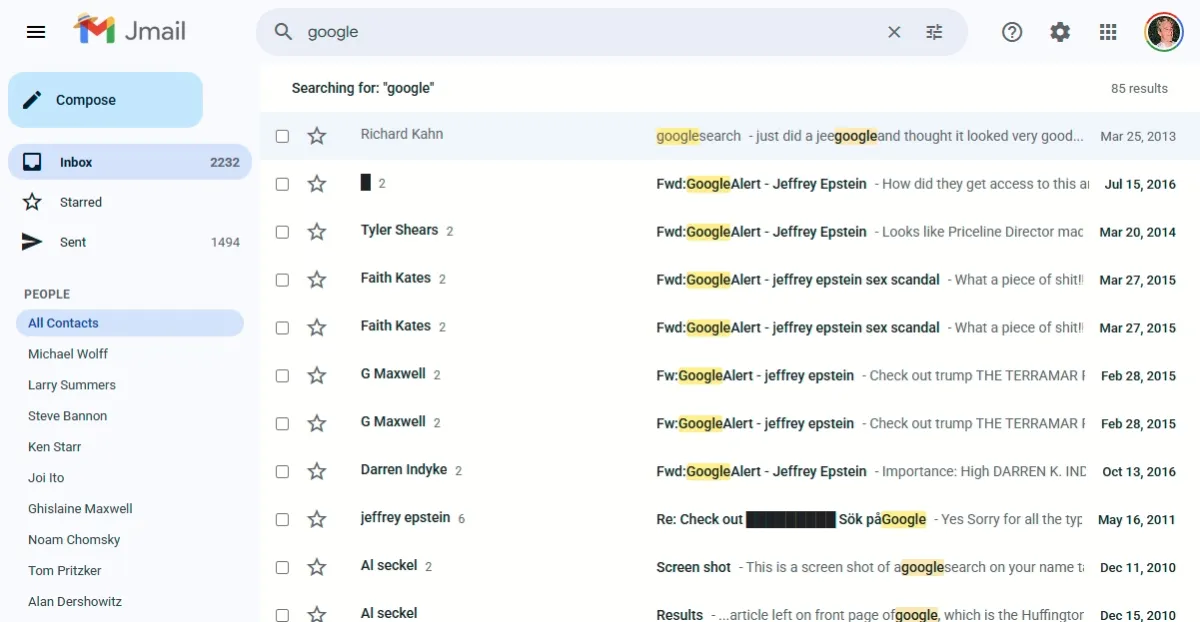
‘Jmail’ dips into Epstein’s inbox — a bold new twist in the tech game for the next-gen.

Tech Innovation Disrupts Transparency with Epstein Files Release

The recent release of over 20,000 pages of Jeffrey Epstein emails, facilitated by the House Oversight Committee, has marked a turning point in digital information accessibility. By utilizing advanced artificial intelligence (AI) and optical character recognition (OCR) technologies—specifically Google’s Gemini AI—tech entrepreneurs and journalists alike are rewriting the rules of data analysis and transparency. This wave of innovation leverages these cutting-edge tools to turn what was once inaccessible or cumbersome into searchable, user-friendly formats, creating significant disruption across the information economy.

Platforms like “Jmail”—a custom interface built by developers Luke Igel and Riley Walz—capitalize on these advancements, transforming complex source documents into searchable emails. Using OCR-powered AI, they’ve not only improved accessibility but also enabled real-time keyword searches, allowing users to pinpoint specific discussions involving high-profile figures like Trump or SEOs. This intelligent search capability exemplifies the potential for automation-driven transparency in government and corporate environments, dramatically reducing the time and effort required for investigative work. As Gartner analysts have noted, this type of AI-fueled data analysis is reshaping how sensitive information can be democratized without sacrificing integrity—marking just the beginning of a larger industry shift.

This technological disruption reveals a broader trend toward open access, driven by legislative action like the Epstein Files Transparency Act. Signed into law recently, it mandates the Department of Justice to make unclassified files publicly available in navigable, downloadable formats within 30 days. While some restrictions remain—to prevent jeopardizing ongoing investigations—the law underscores a strategic move toward greater government accountability. It is a clear signal that future data releases could be heavily processed, indexed, and integrated into AI systems, further accelerating shifts in how classified and unclassified information is managed, analyzed, and utilized in the digital age.

Implications for Business and Future Direction

For forward-thinking companies and organizations, this evolution signifies vast opportunities for innovation. Firms specializing in data processing, AI development, and cybersecurity stand to benefit immensely, positioning themselves as essential providers in this new data-driven landscape. As industry experts like Peter Thiel have forecasted, those who harness such technology early will influence policy, shape transparency standards, and redefine privacy boundaries.

  • Emerging platforms will integrate AI-powered search with secure, user-centric interfaces
  • Governments and corporations will adopt real-time data declassification and dissemination tools
  • Increased transparency may disrupt traditional power structures, pushing for accountability at all levels

As the pace of innovation accelerates, the question isn’t if but when this technological shift will change everything—impacting everything from public trust to the way money flows in political and corporate spheres. The urgency for young entrepreneurs and established players alike to adapt or risk obsolescence has never been greater. The transparency revolution, powered by AI and disruptive business models, is poised to transform the landscape. The onus now lies on visionary leaders to capitalize on this momentum and craft applications that not only inform but radically alter the future of governance and enterprise.

OpenAI Unveils ChatGPT Atlas: A New Web Browser Powered by ChatGPT for Young Tech Enthusiasts

OpenAI Launches AI-Powered Browser, Sparks Geopolitical Ripples

In a move that signals the escalating influence of artificial intelligence on global digital infrastructure, OpenAI unveiled ChatGPT Atlas, an innovative AI-enhanced web browser. This development has sent shockwaves through the tech world and geopolitical spheres alike, with critics and analysts quick to recognize its potential to reshape online navigation and information dissemination. The new platform, integrated with ChatGPT, promises a personalized browsing experience, empowering users to interact with websites via a sidebar that can summarize content, analyze data, and even modify text—features that could redefine user engagement worldwide.

This launch, albeit primarily technological, extends far beyond the realm of software. In the context of rapidly evolving AI capabilities and digital sovereignty debates, it underscores a new chapter in the competition for technological dominance among the world’s superpowers. As OpenAI makes Atlas available globally on Apple’s Mac OS and prepares for launches on Windows, iOS, and Android, glimmers of a digital arms race emerge in the shadows. Tech giants like Google, which recently integrated its Gemini AI into Chrome, are not sitting idly by. Shares of Google fell immediately after the announcement, reflecting investor fears that OpenAI could challenge Chrome’s supremacy, the world’s most used browser. This shifting digital landscape demonstrates how AI innovation is intrinsically linked to economic power and geopolitical influence.

World analysts, including those from Oxford’s Future of Humanity Institute and the United Nations’ digital policy division, warn that the race for AI-driven browsing tools could become a new battleground for international influence and control. Countries like China and Russia are reportedly ramping up investments to develop their own AI-driven web technologies, aiming to neutralize Western dominance in digital infrastructure.

  • For the United States, the emphasis on AI as a competitive edge in global innovation is paramount, with policymakers strategizing to secure digital sovereignty and protect critical infrastructure.
  • Meanwhile, European nations are calling for stricter regulation on AI, fearing the potential erosion of privacy rights and the emergence of a new “digital divide”.

In this context, decisions taken now — such as OpenAI’s push into the browser market — will shape who controls information flow and technological standards in the decades to come.

Historians of technology emphasize that past innovations, from the printing press to the internet, have always been catalysts for profound societal change and geopolitical shifts. Today’s AI-powered browsers mark a similar turning point, weaving digital sovereignty, economic dominance, and societal control into a complex tapestry that will define the future of international relations. As the global community watches unfold this new chapter, the stakes could not be higher: an uncharted landscape where the line between technological innovation and geopolitical power blurs, leaving history to judge those who dared to lead the charge into the unknown.

Social Media Auto Publish Powered By : XYZScripts.com