
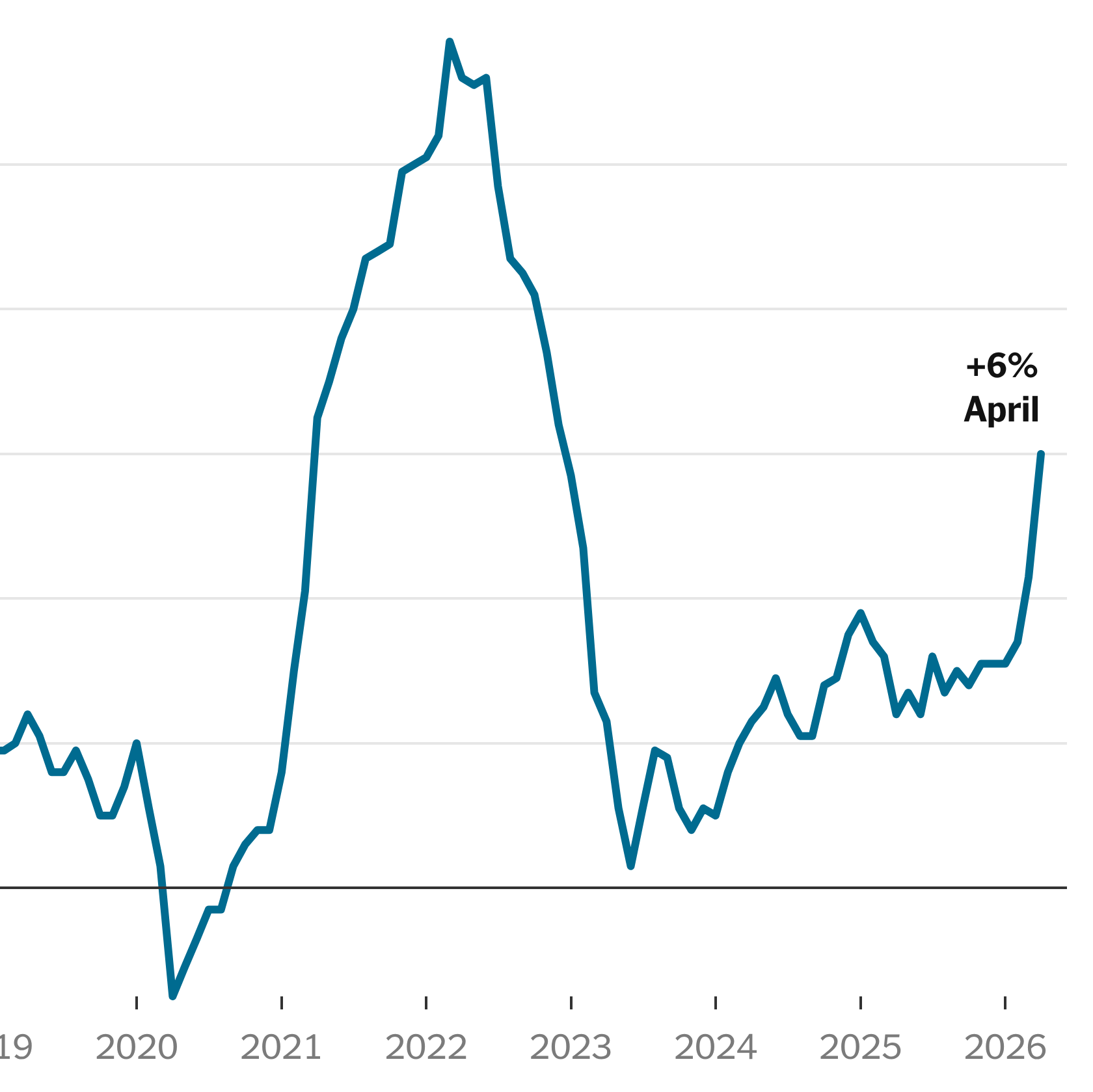

American businesses are grappling with rapidly escalating input costs, as government data released this week confirmed a substantial surge in wholesale prices for April. The Producer Price Index (PPI) recorded its fastest increase in four years, a clear indication of persistent inflationary pressures that threaten to impact both corporate profitability and household budgets across the nation.
This latest report follows closely on the heels of data showing consumer prices also surged, painting a concerning picture of an economy facing uphill battles against rising costs. For Matox News readers, understanding the trajectory of these wholesale costs is crucial, as they often serve as a leading indicator for future retail price adjustments.
Escalating Costs for Businesses
The Producer Price Index, which measures the average change over time in the selling prices received by domestic producers for their output, jumped significantly in April. This marked the most rapid monthly increase observed in four years, according to official figures. Such an acceleration in wholesale costs places considerable strain on businesses, from manufacturers to retailers, as their expenses for materials, components, and services rise sharply.
These higher production costs inevitably squeeze profit margins, forcing companies to make difficult decisions. Businesses may either absorb these costs, impacting their financial health, or pass them on to consumers, contributing to broader inflation. According to reports, including analysis from the News Desk, the breadth of the price increases suggests widespread inflationary forces at play, affecting various sectors of the economy.
The Ripple Effect on Consumers and Households
The upward trend in wholesale prices is particularly concerning because it typically foreshadows higher prices for consumers. When businesses pay more for goods and services upstream, those costs are often reflected in the prices consumers see at the checkout counter. This connection means that April’s PPI surge is likely to intensify the financial burden already felt by American families, who are contending with a general increase in the cost of living.
For households, this translates into reduced purchasing power and greater strain on budgets. The ability to maintain living standards becomes more challenging when essential goods and services become more expensive. This economic reality underscores the importance of sound fiscal and monetary policies aimed at restoring price stability and protecting the economic well-being of families.
Understanding the Drivers and Policy Implications
Several factors appear to be contributing to the ongoing rise in wholesale prices. Geopolitical tensions, particularly the economic ripples from global conflicts, continue to disrupt supply chains and elevate commodity prices. Furthermore, persistent bottlenecks in various supply networks and elevated energy costs are adding to the inflationary mix. These elements combine to create a challenging environment for both businesses and policymakers.
Key drivers include:
- Geopolitical tensions impacting global commodity and energy markets.
- Lingering supply chain disruptions affecting material availability and shipping costs.
- Elevated energy prices, which feed into nearly every sector of the economy.
- Robust, though sometimes uneven, consumer demand for certain goods and services.
Policymakers face a delicate balancing act: addressing inflation without stifling economic growth. The Matox News editorial line emphasizes the need for responsible governance that champions free-market principles and fosters an environment where businesses can thrive without excessive regulatory burdens, ultimately benefiting the consumer through stable prices and robust economic opportunity.
Rising wholesale costs inevitably translate into higher retail prices, squeezing household budgets and challenging the stability of our free market.
As the nation navigates these complex economic currents, a steadfast commitment to fiscal discipline and policies that encourage production and efficiency will be paramount. Restoring price stability is not merely an economic goal; it is a fundamental pillar for maintaining order, supporting families, and ensuring long-term prosperity within a vibrant free-market system.






