
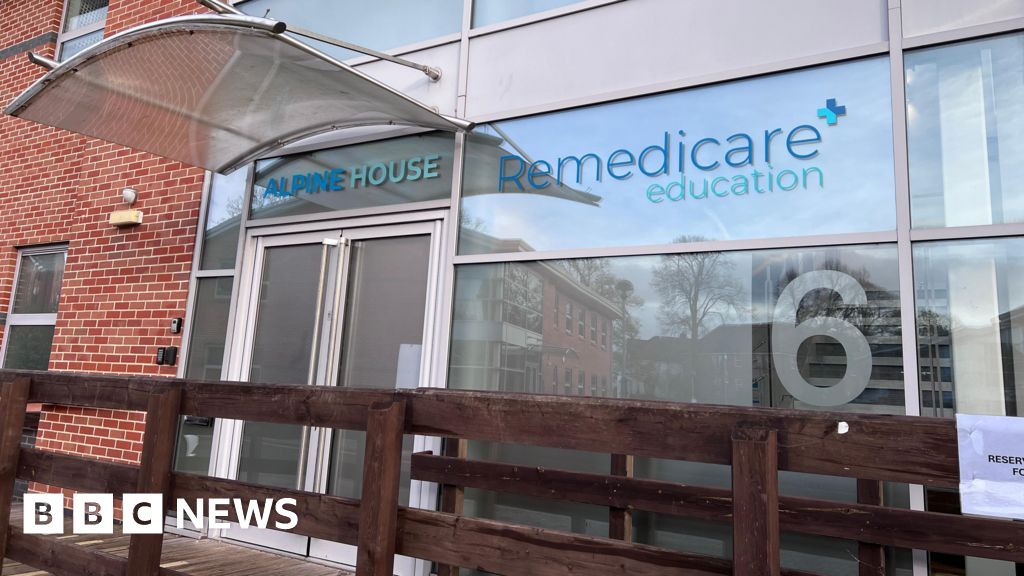

Amidst the unfolding narratives of social accountability and the complexities of how families are impacted by educational and social services, recent revelations about Remedicare Education emerge as a stark reminder of the vulnerabilities within our current systems. The investigation into this organization, which specializes in educating children who have struggled with mainstream schooling, highlights critical issues concerning social trust, regulatory oversight, and community safety. According to reports, the Office for Standards in Education, Children’s Services and Skills (Ofsted) is now conducting a criminal inquiry into the company—an investigation that raises questions about the adequacy of safeguarding measures and the integrity of providers working with society’s most vulnerable.
The controversy stems from an unsettling connection to Laura Horton, a former director of Remedicare, who was jailed for attempting to smuggle synthetic drugs—Spice—into prisons nationwide. Her involvement, which included sending fake legal papers to facilities such as Isle of Wight Prison, underscores troubling gaps in vetting procedures. Despite her resignation from the company following allegations of inappropriate conduct with a patient at Broadmoor Secure Hospital, questions persist about how she was initially appointed. Social commentators and sociologists, including Dr. Karen Gill of the Society for the Societal Well-being, argue that such cases reveal “a troubling failure of regulatory oversight that jeopardizes trust in institutions designed to safeguard our community’s most at-risk children.”
Social issues of trust and systemic failure significantly reverberate through families and communities, especially when children’s safety and education are compromised. Pete Evans, whose autistic son was placed in care by Remedicare, expressed his bewilderment and deep concern when he discovered that the woman who appeared to serve in a ‘headteacher-like’ role was connected to criminal activity. His son’s placement—initially perceived as a protective measure—became a source of familial distress, compounded by the local authority’s subsequent acknowledgment of a need to “further strengthen the process” of child placement. Such incidents expose a dangerous demographic shift where, due to under-regulation, the most vulnerable are exposed to unchecked risks, shaking the trust that families rely on to protect their children’s future.
At the heart of these social debates lies a fundamental question: how can society better safeguard its children and uphold the integrity of community care? Solutions proposed by social institutions focus on
- enhanced registration and oversight of educational providers, especially those operating outside traditional school systems
- rigorous background checks for staff involved in vulnerable children’s education
- transparency in safeguarding procedures and stricter enforcement of compliance protocols
These measures aim not only to restore public confidence but also to reinforce the moral obligation that institutions have to protect and serve society’s most impressionable members. Sociologists warn that failure to address systemic gaps risks further erosion of societal fabric—shrinking community trust and encouraging a climate where social tensions simmer beneath the surface, primed to explode into crises that threaten our shared way of life.
As society faces these profound challenges, our collective hope resides in the resilience and moral rectitude capable of inspiring meaningful reform. Society’s true strength may be reflected not in the absence of its flaws but in the unwavering commitment to rectify them—a pursuit that, at its core, seeks to nurture generations rooted in safety, integrity, and hope. In this moment of reckoning, society must ask itself whether it will muster the resolve to rebuild its trust, or allow the shadows of neglect and dishonesty to deepen, leaving future generations to navigate a landscape marred by betrayal. Only then can we truly begin to envision a society where education and social care serve as pillars of moral renewal, anchoring families in the unwavering promise that society will always stand as a shield, not a sword of harm.





