Matox News

Truth Over Trends, always!

Nearly a million youth remain out of work or school, new stats reveal

The Rising Challenge of Youth Disconnection in Society

Recent statistics from the Office for National Statistics (ONS) reveal that nearly one in eight young people aged 16-24 in the UK—approximately 946,000 individuals—are classified as Neet: not in education, employment, or training. This figure, though marginally lower than previous quarters, remains alarmingly high, especially considering the cyclical trends that have persisted over the past decade. Historically, the Neet population surged to over a million during the aftermath of the 2008 financial crisis, emphasizing how economic downturns exacerbate social divide, impairing the fabric of families, communities, and social mobility.

This persistent demographic fracture disproportionately impacts communities across socio-economic spectra, yet it aligns strongly with moral and societal concerns. The majority—over 580,000—are classified as economically inactive, largely due to rising long-term sickness and mental health conditions. Cultural shifts, such as the increased awareness and diagnoses of mental health issues among youth—evidenced by nearly 20% of Neet individuals experiencing mental health challenges—highlight a pressing need to address the human toll of societal neglect. Social commentators warn that neglecting the root causes of youth disconnection risks perpetuating cycles of poverty, crime, and family instability, thereby threatening social cohesion and the future of generations.

Societal Impact: How Disconnection Disrupts Families and Communities

The ripple effects of youth unemployment and disengagement reach far beyond individual hardship, influencing family stability and community well-being. Families suffer when young members are deprived of meaningful opportunities to build independent lives. As sociologist Dr. Caroline Jackson notes, “Young people without access to stable employment or education often face fractured family dynamics, reduced self-esteem, and increased dependence on social services.” This phenomenon compounds social tensions, especially in communities already vulnerable to deprivation and disenfranchisement. Schools and local institutions are bearing the brunt of an increasing number of youth facing mental health crises, which hampers their ability to engage with learning and development, creating a cycle that becomes progressively difficult to break.

Efforts like the government’s recent “Youth Guarantee” scheme aim to mitigate these issues by providing guaranteed access to education, training, or paid work. However, critics argue that without addressing the underlying social and psychological barriers—such as mental health challenges and long-term social exclusion—such policies may fall short. Education experts warn that neglected youth are at risk of falling into a socio-economic abyss, eroding community strength and societal resilience.While initiatives like the Spear Programme are making strides in coaching young people, gathering empirical evidence suggests that more systemic approaches—including mental health support and targeted community engagement—are essential to reversing this trend.

Pathways to Societal Renewal and Hope

Addressing youth disconnection requires a multipronged strategy that combines economic opportunity with moral and social responsibility. The government’s plans for a “Youth Guarantee” and linked measures—such as mandatory work placements for long-term benefit claimants—represent steps toward fostering accountability and opportunity. Yet, social commentators emphasize that employers must embrace a more inclusive vision that values motivated, less-qualified young people, recognizing that potential often resides beyond academic credentials alone. The insights of sociologist Anthony Giddens remind us that “a society’s strength hinges on its ability to nurture hope and resilience among its youth—those who are destined to be the architects of its future.”

Ultimately, society faces a reflection: will we continue to observe the silent suffering of millions of young people trapped in a cycle of inactivity, or will we rally to forge pathways that empower them? The stories of Nathan and others like him evoke a future where hope is more than a word—it’s a collective mission. As communities, families, and institutions confront the challenges ahead, their resilience may yet seed a transformation—one that rekindles the promise of opportunity and restores the moral fabric of society for generations to come.

Are Youth Still Chasing Careers in Tech?

Next-Generation Innovators Drive Disruption in AI and Healthcare

The emerging wave of youth-driven innovation underscores the transformative potential of artificial intelligence (AI) and healthcare accessible through community-focused initiatives. A recent survey highlighting perspectives from high school seniors across the United States reveals a generation poised to lead disruptive breakthroughs, emphasizing disruption at the core of technological and social paradigms. These aspiring scientists and technologists are not only witnessing rapid AI advancements but are already actively involved in solving attendant challenges, such as data privacy and ethical deployment.

One standout example is Laksh Patel, a 17-year-old from Willowbrook, Illinois, who exemplifies the new tech frontier. Patel’s pioneering work on algorithms that prevent AI models from disclosing private data such as API keys signals a crucial step toward establishing more secure, trustworthy systems. As AI, especially Large Language Models (LLMs), become embedded in everyday life, it’s clear that security features will define the future competitive landscape. Analysts from Gartner emphasize that the industry must prioritize robust privacy measures to sustain user confidence and prevent regulatory crackdowns. Companies like OpenAI and Google are racing to implement such safeguards, knowing that any breach could undermine entire markets and user trust.

This generation’s focus extends beyond just technological innovation; it reflects a broader disruption of traditional career pathways. Laksh Patel and his peers are questioning the necessity of formal degrees, as skills-based hiring gains traction in the tech sector. Non-traditional routes into industry, including direct industry entry and independent research, are now seen as viable alternatives, pressuring educational institutions to adapt swiftly. Such shifts could redefine the business landscape, favoring nimble startups and decentralized development. Institutions like MIT and industry giants like Elon Musk’s Tesla underline that adaptability is essential for future dominance, especially in AI where timing and execution are everything.

The transformation in healthcare access, as described by young advocates, adds another layer of disruption. Innovators emphasize that community-based efforts are vital for democratizing healthcare, ensuring that underserved areas are not left behind amid digital health revolutions. The advent of AI-powered diagnostics and personalized medicine signals enormous potential but also raises questions about equitable deployment. Forward-looking policymakers and startups like IBM Watson Health are prioritizing scalability and affordability in their innovations, recognizing that the true power of AI lies in its capacity to serve the most vulnerable populations. As Peter Thiel and other tech visionaries argue, the real market disruptors will be those who harness technology for social good, turning disparate communities into empowered hubs of innovation.

In sum, this new generation’s engagement in AI and healthcare signifies an epoch-defining shift. Their focus on security, skills-based pathways, and community health illustrates a future in which disruption is no longer a threat but a driver of progress. The industry must act swiftly to harness this energy, investing in innovation and infrastructure that can meet their expectations. With the pace of technological evolution accelerating, the time to lead is now—those who recognize this urgency will shape the blueprint of tomorrow’s digital economy, where agility and purpose become the new currency of success.

Aid groups halt Gaza work amid ceasefire uncertainties

International Tensions Escalate as Gaza Humanitarian Efforts Face New Challenges

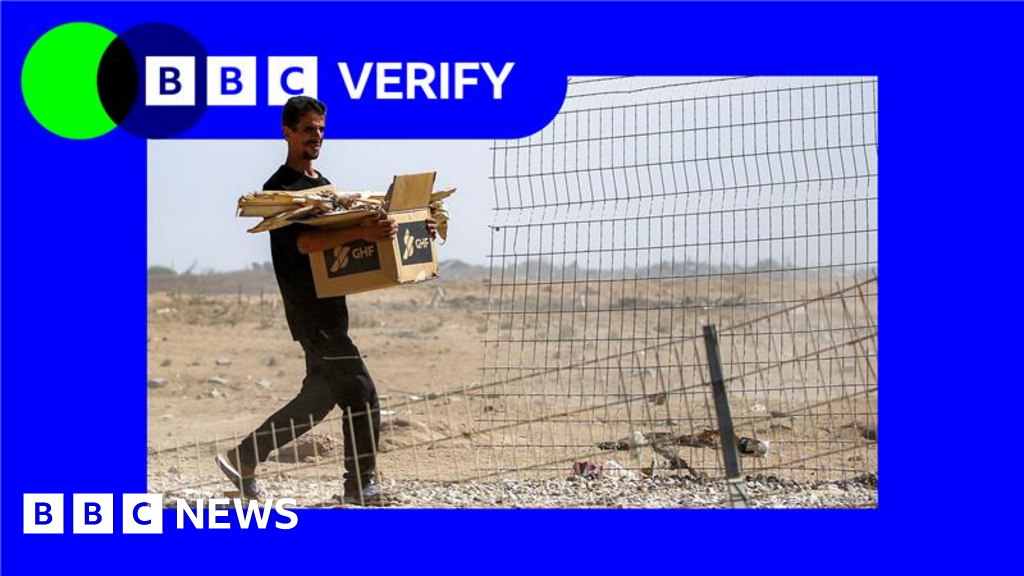
In the wake of the recent ceasefire between Israel and Hamas, the fragile stability of the Gaza Strip remains under intense scrutiny from international watchdogs and geopolitical strategists alike. The Gaza Humanitarian Foundation (GHF), a US and Israeli-backed relief organization, has officially suspended operations after its aid distribution sites, including the critical SDS4 site, were dismantled following the ceasefire’s inauguration on 10 October. Satellite imagery shows the dismantling was swift and deliberate, highlighting how the shift in control and territorial boundaries directly impacts aid efforts and raises deep concerns about the humanitarian crisis unfolding on the ground.

Despite promises of increased aid flows in the midst of this ceasefire, United Nations data reveals a sobering reality: only about 20% of aid crossing into Gaza since May has reached its intended recipients. Since the ceasefire, the daily aid collected has hovered at levels comparable to those of September, with UN analysts warning that the volume and efficiency of aid delivery remain inadequate for the needs of vulnerable Gazan populations. Amidst reports of aid trucks being intercepted—either peacefully by local populations desperate for essentials or forcibly by armed groups—the international community’s ability to influence the situation remains limited. The ongoing looting and lawlessness threaten to undermine the peace process, and many experts warn that without sustained efforts to restore civil order, the humanitarian crisis could deepen further.

How Decisions Shape Societies and Global Power Dynamics

The disassembly of aid sites and the suspension of operations by organizations like the GHF encapsulate the geopolitical tension that underpins this entire conflict. Analysts from institutions such as the Brookings Institution suggest that these actions are telling of the broader struggle for influence in the region, where the United States and Israel seek to consolidate strategic dominance while managing volatile regional alliances. The dilemma facing international policymakers is stark: uphold the ceasefire and allow aid delivery to flourish, or risk further destabilization if aid efforts are perceived as partial or insufficient. Meanwhile, Hamas and other militant factions leverage the chaos to justify their continued resistance, complicating diplomatic efforts and making it difficult for aid to reach those most in need.

Public sentiments across different nations are also shifting. Youths and students, increasingly aware of the long-term consequences of foreign interference and limited aid access, have begun questioning official narratives and demanding more transparent and effective international intervention. Historical analysts underscore that this ongoing crisis isn’t merely about land or resources, but about the contest for influence and narrative control in a region where global powers are vying for supremacy. The UN and various humanitarian agencies warn that failure to establish a sustainable, law-governed environment in Gaza could have repercussions far beyond the Middle East, including migrant flows, regional instability, and a reconfigured global order where chaos becomes the norm.

The Unfolding Story of Power and Humanity

As the dust settles over the dismantled aid sites and broken ceasefire promises, the world stands at a pivotal moment. The fate of Gaza—every crushed hope and every thwarted effort—becomes a symbol of the broader struggle for justice, security, and sovereignty. The UN warns of “looting, lawlessness, and unmet needs,” echoing the warnings of historians who differentiate between fleeting peace and durable stability. The weight of history presses heavily upon international shoulders, yet the pages are still unwritten. Will the global community learn from past failures or become complicit in an unfolding tragedy that threatens to redraw the geopolitical map? Only time will tell, but the continuing narrative reminds us that history is, after all, written by those who dare to shape the future amidst chaos and conflict.

Palestinian Leader Opens Door to Work with U.S. on Two-State Solution

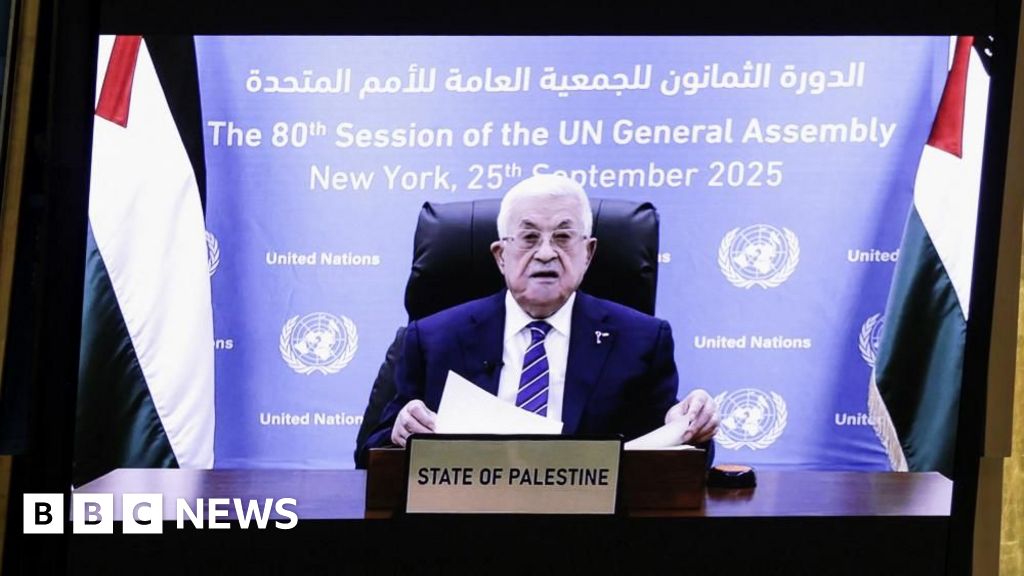
Amid the ongoing turmoil in Gaza, Palestinian President Mahmoud Abbas has asserted his readiness to collaborate with the international community to advance the peace initiatives proposed by France. Speaking via a recorded message at the United Nations General Assembly, Abbas emphasized his unwavering stance against a future governing role for Hamas in Gaza, demanding its disarmament as a prerequisite for any lasting peace. This position underscores the persistent internal divisions within Palestinian politics, which continue to complicate efforts toward national sovereignty and stability in the region. As the recipient of renewed international attention, Palestine’s quest for full recognition and independence remains a pivotal turning point with significant geopolitical impacts.

The recent outbreak of violence in Gaza, triggered by Hamas’s deadly attack on Israel on 7 October 2023, has resulted in tremendous loss and suffering. The attack, which claimed the lives of approximately 1,200 civilians and led to the abduction of 251 hostages, has been widely condemned as a reprehensible act, yet it precipitated a brutal Israeli military response. According to Gaza’s Hamas-led health ministry, over 65,000 Palestinians, many of them women and children, have been killed in the ensuing conflict—highlighting the catastrophic human toll. Analysts warn that this relentless cycle of violence threatens to undermine any hopes for peace, potentially altering the political landscape in the Middle East for decades to come.

The peace plan announced by French President Emmanuel Macron at a recent regional summit signals a possible pathway toward de-escalation. The proposal advocates for the simultaneous release of Hamas-held hostages and an end to Israeli military operations, followed by the establishment of a transitional administration — comprising Palestinian Authority officials and excluding Hamas — to govern Gaza. This plan envisions a sovereign, demilitarized Palestinian state that would incorporate Gaza with the Israeli-occupied West Bank, aiming to usher in a new chapter of stability and sovereignty. However, both the United States and Israel have dismissed the initiative, fearing it legitimizes terrorist groups and rewards militant unrest. This divergence in support highlights the fragile balance of international diplomacy in a conflict still deeply entrenched in historical grievances and power struggles.

Throughout this upheaval, Abbas has called upon the international community to recognize Palestine as a sovereign state and grant it full membership in the UN—an effort to bolster national legitimacy and pressure global powers to reconsider their policies. Countries like Canada, Australia, the UK, and Portugal have already extended recognition, while the U.S. remains opposed, citing fears of encouraging Hamas’s influence. As historians and analysts observe, such recognitions symbolize a pivotal shift, challenging the longstanding international stance that has kept Palestine in diplomatic limbo. Abbas’s call for electoral reform and the promise of a democratic Palestinian state underscore the urgent desire among Palestinians to redefine their future, yet the path remains obstructed by external intervention and internal discord. As the world watches, the fate of Gaza—and the broader Middle East—hangs in the balance, with each decision resonating far beyond the region’s borders, shaping the course of history yet to unfold.

BBC Explores Asylum Hotels: Illicit Work and Taxi Services Uncovered

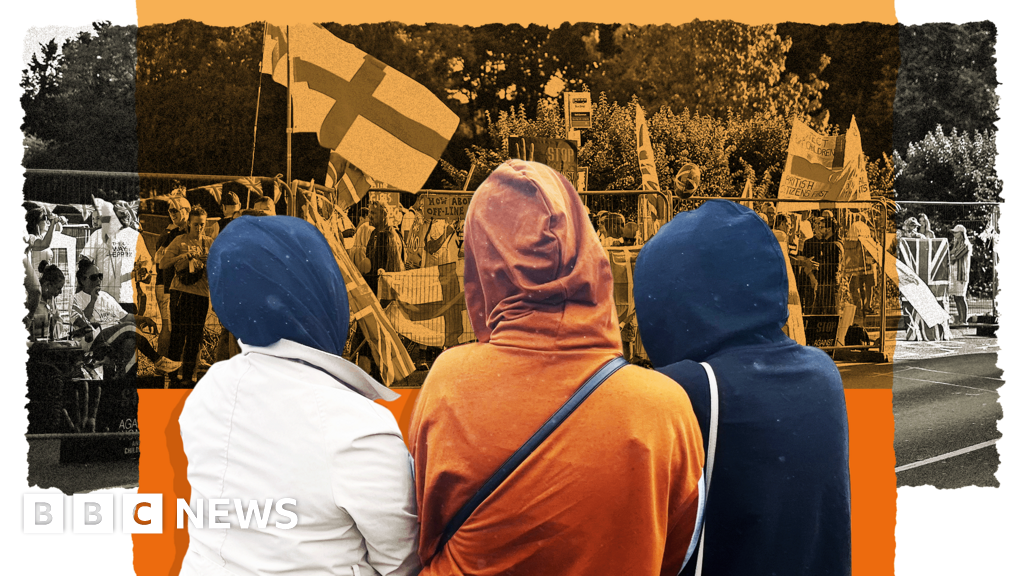
Recent reports have shed light on the day-to-day experiences of asylum seekers and hotel staff across four different hotels. While the refugee crisis continues to prompt significant debate on social and economic grounds, these firsthand accounts provide a unique lens through which we can understand the human side of this complex issue.

At these hotels, life is a mix of challenges and support systems. Asylum seekers describe their journey as one filled with uncertainty, yet they have found a degree of comfort in the temporary shelter provided. Hotel staff, on the other hand, emphasize the complexity of balancing hospitality with the realities of managing diverse needs. From navigating language barriers to catering to special dietary requirements, the interactions between guests and staff illustrate the necessity for both compassion and practicality in these settings.

It’s crucial to recognize that this situation reflects broader national discussions about immigration policy and its implications for local communities. Many young people are concerned about the impact of such policies on job opportunities and public resources. Therefore, these accounts from the ground level serve as a reminder of the urgent need for balanced solutions that prioritize both humanitarian considerations and the well-being of local residents.

As the conversation surrounding asylum seekers evolves, it is essential for the younger generation to engage thoughtfully. Understanding the complexities of the crisis, including both the struggles faced by asylum seekers and the challenges encountered by those providing support, is vital for creating informed and constructive dialogue. By fostering awareness, we empower ourselves to advocate for solutions that respect human dignity while also safeguarding the interests of our communities.

Social Media Auto Publish Powered By : XYZScripts.com