Matox News

Truth Over Trends, always!

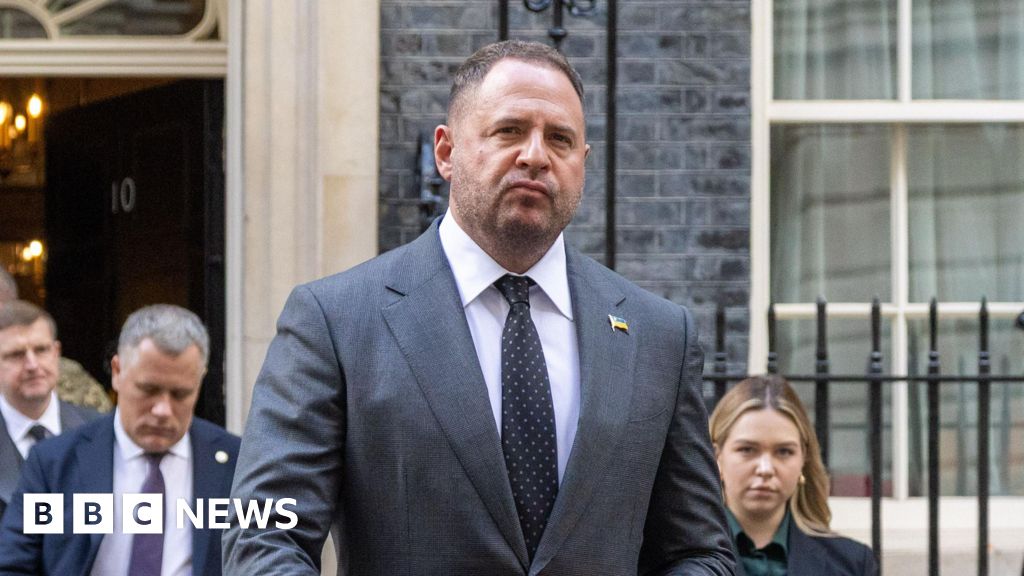
Inside the downfall of Zelensky’s top aide

Shifting Tides in Ukraine’s Power Politics Amid War and Corruption Allegations

In the heart of ongoing global conflicts, Ukraine stands at a pivotal crossroads, as internal political upheavals threaten to destabilize its resilient stance against Russian aggression. The recent dramatic fall of Andriy Yermak, Kiev’s formidable chief of staff and a cornerstone in Ukraine’s wartime leadership, underscores the complex interplay of power, corruption, and international diplomacy. Once viewed as the second most influential figure in President Volodymyr Zelensky‘s administration, Yermak’s sudden departure follows a mounting scandal that has rocked Ukraine’s fragile governance structures. Amid allegations of high-level corruption, the very fabric of Ukrainian political integrity is under intense scrutiny from both domestic citizens and the international community.

The catalyst for Yermak’s downfall was a series of escalating investigations into corruption within Ukraine’s top echelons, reaffirming the persistent challenges faced by a nation fighting to defend its sovereignty while battling internal betrayals. The repression of anti-corruption agencies—initially a bold move by Zelensky to Russian interference—boomeranged, sparking mass protests and international criticism. When the government attempted to tighten control over bodies like the National Anti-Corruption Bureau (NABU) and the Specialized Anti-Corruption Prosecutor’s Office (SAPO), public outrage erupted. Later, the agencies released findings implicating members of Zelensky’s inner circle, including ministers and former allies, in siphoning off up to $100 million from public funds during a period when Ukraine is desperately trying to bolster its energy defenses against relentless Russian missile strikes.

Analysts warn that these revelations deepen the crisis of legitimacy for Zelensky’s government. The internal conflicts within Ukraine’s leadership evoke echoes of historic political scandals in transitional democracies — where the battle against corruption is often a proxy war for real power struggles. Historians and policy experts underscore that the geopolitical impact of this turmoil extends beyond Kyiv’s borders. Alliances with Western nations, especially the United States and the European Union, hinge on Ukraine’s ability to demonstrate genuine reforms and stability. Yet, the chaos suggests that Ukraine’s path remains perilously uncertain — a fragile nation whose destiny influences the entire security architecture of Eastern Europe.

As Kyiv grapples with political upheaval, the international community watches closely. Discussions continue on a proposed US-backed peace plan, which has faced criticism for allegedly favoring Russia’s interests. Yermak’s influence in these negotiations, particularly his recent diplomatic engagements in Geneva with figures like US Secretary of State Marco Rubio, highlighted his role as a key broker in Kyiv’s wartime diplomacy. The loss of such a central figure raises questions about the resilience of Ukraine’s diplomatic front. Many see this moment as a *turning point*, where internal strife could either propel Ukraine toward renewed unity or precipitate further chaos, possibly weakening the country’s negotiating position at a time when the stakes could not be higher.

A Critical juncture: Ukraine’s future in the balance

One thing remains clear: determined forces within Ukraine and among its allies recognize that the fight is as much against corruption as it is against the Kremlin. The story of Yermak’s fall exemplifies the perilous nature of leadership amid war — a reminder that even those who seem invincible are vulnerable when the foundations of trust crumble. With Kyiv’s leadership in flux and ongoing debates over how to best support Ukraine’s sovereignty, history will remember this moment as a test — a moment when the faith of a nation and its quest for genuine independence are either cemented or shattered in the crucible of internal upheaval. The weight of the future bears heavily on the shoulders of Ukraine’s leaders and citizens alike, as the unfolding narrative of resilience, betrayal, and hope continues to be written in the shadows of a war that defines a generation.
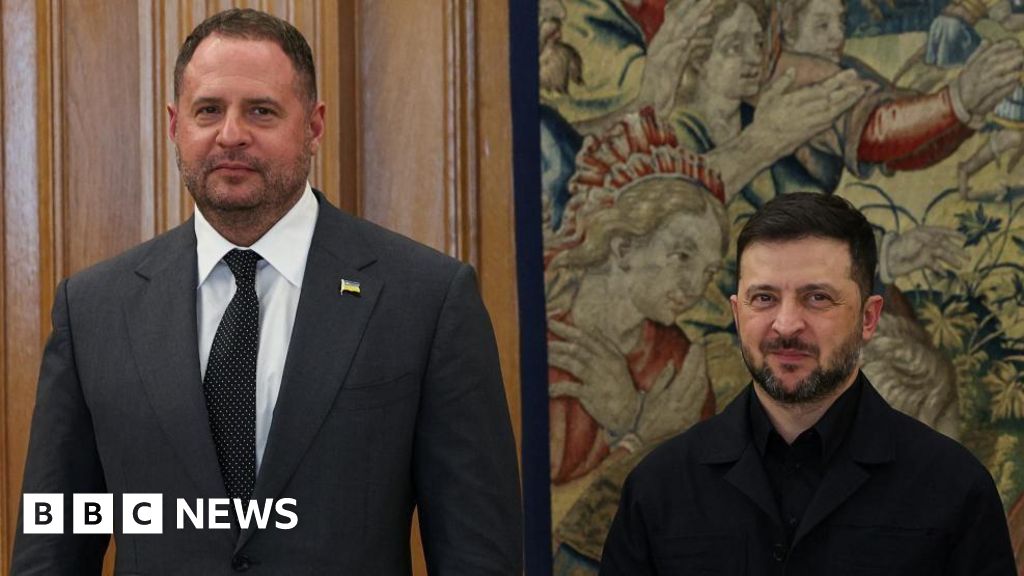
Ukrainian Anti-Corruption Raids Target Zelensky's Adviser Yermak’s Home
Ukrainian Anti-Corruption Raids Target Zelensky’s Adviser Yermak’s Home

In a move that underscores the volatile landscape of Ukraine’s internal politics amidst ongoing conflict, Ukraine’s anti-corruption agencies have initiated searches at the residence of President Volodymyr Zelensky’s chief of staff, Andriy Yermak. This development, confirmed by the anti-corruption bureau Nabu, signals a significant turn in the domestic fight against corruption, a persistent issue that has long hampered reform efforts in Ukraine. Despite these investigations, neither Zelensky nor Yermak have been formally accused of wrongdoing, but the unfolding events highlight internal struggles that threaten to destabilize Zelensky’s fragile political base.

Ukraine’s fight against corruption takes on particular importance amid the broader geopolitical contest involving Russia. Yermak, once praised for orchestrating diplomatic efforts and serving as Kyiv’s primary negotiator in peace talks with Western allies, now faces increasing scrutiny. Critics within Ukraine argue that the scandal reveals deeper issues of transparency and accountability, which could undermine foreign aid and international support crucial for Ukraine’s resistance against Russian aggression. As Ukrainian analysts and historians debate the significance of these events, some warn that internal divisions may be exploited by Moscow to weaken Kyiv from within, further complicating the fight for sovereignty.

International organizations, including the European Union and United States, watch closely. Their support remains conditional on Ukraine’s ability to demonstrate political stability and good governance. Yet, the political shakeup raises the stakes; each move of domestic power struggles resonates beyond national borders, reshaping perceptions of Ukraine’s resilience. As Yermak publicly cooperates, with full access granted to his lawyers, his case symbolizes the broader international dilemma: can Kyiv maintain unity and focus on defeating Moscow or will internal conflicts fracture its fragile front?

  • Yermak’s role as Kyiv’s chief negotiator makes his investigation a potential turning point in Ukraine’s diplomatic standing.
  • Critics suggest the scandals may be a result of internal power struggles more than genuine corruption.
  • Ukraine’s internal stability is essential for securing continued Western military and economic aid.
  • Geopolitical analysts warn that prolonged political infighting could embolden Russia’s ambitions.

The broader geopolitical imprint of these scandals extends beyond Ukraine’s borders, affecting international perceptions of its leadership and governance. As historians continue to analyze the unfolding events, the question remains: will Ukraine emerge from this crisis with strengthened resolve or fracturing alliances? The narrative of a nation fighting both external invaders and internal disloyalty hangs in the balance, carrying with it the weight of history still being written. Each action, each investigation, echoes across the halls of power in Kyiv and beyond, shaping the future of a country at the crossroads of East and West, caught in the relentless tide of history’s unfolding story.

Zelensky’s Push for Tomahawks Stalls in Talks with Trump

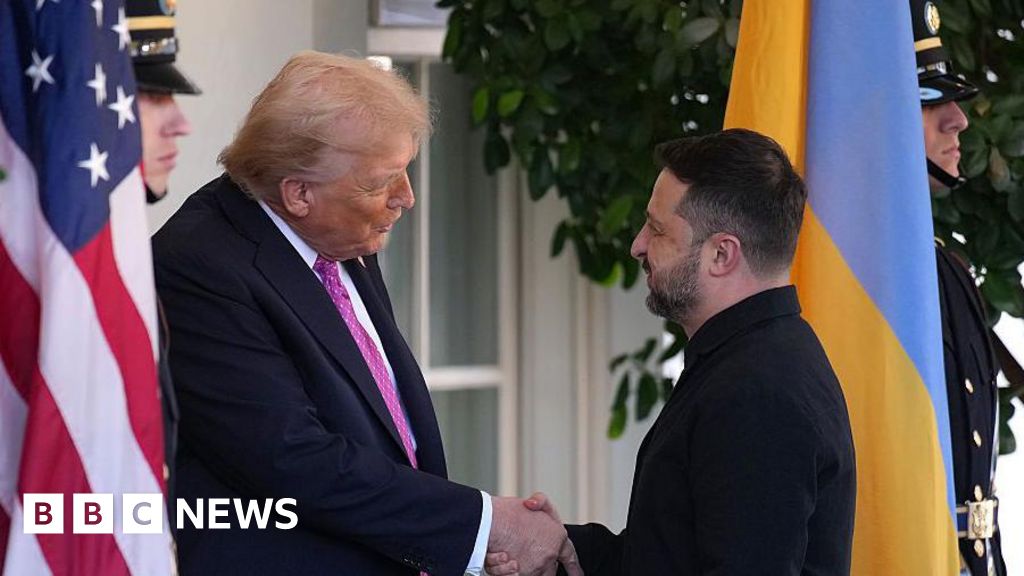
WASHINGTON D.C. has just witnessed a dramatic turn in the ongoing Ukraine crisis, as President Volodymyr Zelensky met with Donald Trump at the White House. The meeting signaled a tentative yet significant shift in US policy amid the persistent conflict between Ukraine and Russia. Despite Zelensky’s hopes for obtaining Tomahawk cruise missiles—a weapon he considers crucial for mounting a decisive blow to Russian energy infrastructure—the American administration under Trump made it clear that the supply of such long-range weapons remains off the table, at least for now. This decision underscores the delicate balance of geopolitical impact and how each move in this war influences not only the involved nations but also the broader international order.

In the wake of the White House meeting, Trump emphasized a cautious approach, citing fears of escalation and the need for diplomacy, even as he acknowledged the weapons’ strategic importance. Meanwhile, Zelensky suggested that using Tomahawks against Russian energy targets could significantly weaken Putin’s war economy, but left the door ajar for future negotiations. Trump, on social media, called for a halt to hostilities along the current frontline, while also engaging in discussions about a potential meeting with Russian President Vladimir Putin. The former US President’s outreach to Putin, coupled with his recent phone call with the Russian leader, exemplifies a shift towards transactional diplomacy, risking accusations of playing into the hands of Moscow’s strategic aims. Analysts warn that this cautious flexibility could either open pathways towards peace or deepen the complex web of mistrust among global powers.

International organizations and geopolitical analysts are closely monitoring the unfolding diplomacy that could redefine the conflict’s trajectory. Historians have pointed out that the history of Ukraine’s war has always been marked by pivotal moments—each decision carrying the potential to shift the balance of power. The joint call for a possible peace summit in Hungary and Trump’s assertion that “he believes Putin wants to make a deal” illustrate the ongoing game of brinkmanship, where overt threats and diplomatic overtures are wielded as tools in the larger strategy of influence and control. While Ukraine remains resilient on the ground, the international community grapples with the ramifications of whether this fragile pause can transform into genuine peace or if it is merely a prelude to further chaos.

In the background, the echoes of history reverberate as Ukrainian citizens, painfully aware of their suffering, cling to the hope that democracy and truth will eventually prevail. As Zelensky’s government watches diplomatic negotiations unfold, the looming question remains: will these decisions lead to a lasting peace or spiral into a broader confrontation? What is at stake is far beyond the battlefield; it is a battle for the soul of sovereign nations, for the principles of freedom and democracy amidst a world teetering on the brink of a new Cold War. The pages of history are turning, and the world holds its breath, knowing that the coming days may forge new alliances—and perhaps, reshape the very fabric of international diplomacy itself—setting the stage for a confrontation that could define this generation’s legacy for centuries to come.

Social Media Auto Publish Powered By : XYZScripts.com



