Matox News

Truth Over Trends, always!

Israeli Bombs Hit Gaza, Dozens Killed as Offensive Grows

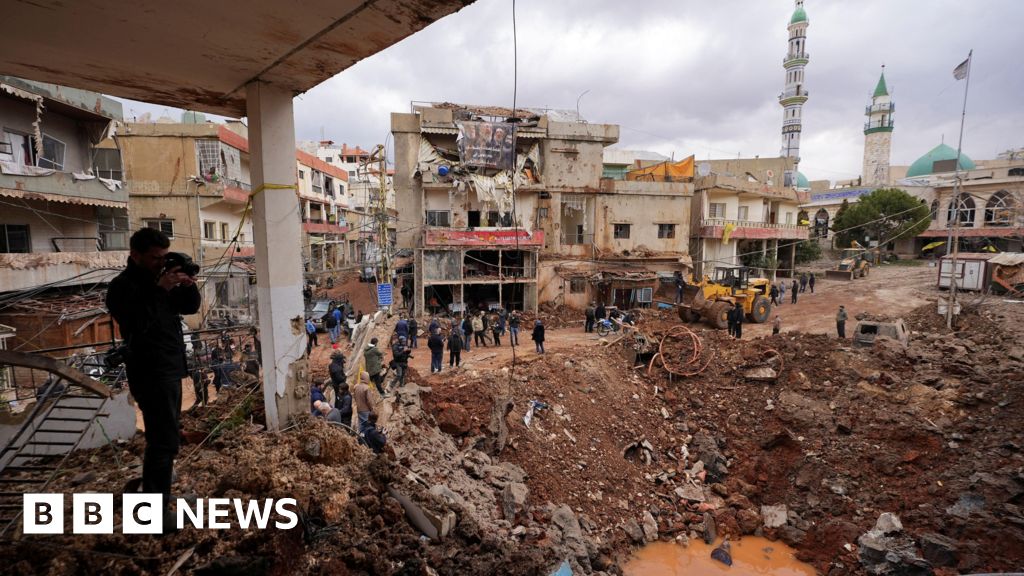
The ongoing conflict in Gaza has entered a brutal new phase, with the Israel Defense Forces (IDF) stepping up their ground offensive against Hamas’s last urban stronghold. Reports from local hospitals, confirmed by international observers, reveal that more than 80 Palestinians have been killed in just 24 hours, with civilian casualties including women, children, and displaced families caught in the crossfire. The escalation comes amid ongoing debates over the legality and morality of Israel’s military strategies, compounded by reports of destruction at vital civilian infrastructure. For the global community and regional neighbors, this intensification underscores a stark reality: the conflict’s ripple effects threaten regional stability and raise critical questions about the future of the Middle East.

Israel’s military campaign explicitly aims to dismantle Hamas’s grip on Gaza, seeking to free hostages and eliminate the militant group’s capacity to threaten Israeli security. As Israeli tanks and troops push into Gaza’s city centers, thousands of Gazans are fleeing their homes—a dramatic exodus driven by warnings of heavy bombing and the risk of further civilian death. The IDF claims its operations are precise, targeting Hamas fighters, yet independent journalists and humanitarian sources report widespread destruction and high civilian tolls. Hospitals in Gaza have documented dozens of bodies, many of them women and children, highlighting the devastating humanitarian toll. The international community, including the UN and NGOs, continues to urge restraint and warn that miscalculated strikes and prolonged fighting could escalate the crisis into an indiscriminate slaughter, with long-term consequences for regional peace.

The geopolitical impact of this renewed escalation is profound. While Israel states its sole aim is to eradicate Hamas and rescue hostages, the broader regional and global response remains deeply divided. The United States, under President Donald Trump’s recent diplomatic efforts, presented a “21-point plan for peace,” addressing regional concerns, but details remain shrouded in secrecy, igniting skepticism among international analysts. Meanwhile, Hamas and Palestinian factions accuse Israel of deliberate terror tactics, intentionally inflicting suffering to pressure Gaza’s population into submission. Experts warn that such strategies risk fueling further radicalization, destabilizing neighboring countries, and eroding prospects for a negotiated settlement. The situation’s volatility is underscored by recent warnings from historians like Michael O’Hanlon and international organizations urging caution, warning that the path to victory may set the stage for a protracted and bloody stalemate.

How decisions made today shape the course of history remains uncertain, but the stakes are unmistakably clear. Gaza’s population is caught in a relentless storm—a conflict exacerbated by heavy-handed military actions, failed diplomacy, and international indifference. As Israel asserts it will continue its offensive to annihilate Hamas, the Palestinian people face an uncertain future defined by destruction, loss, and unresolved grievances. The relentless march of history presses forward, and with each new conflict zone, the world bears witness to a simple yet profound truth: the true cost of war is paid not just in casualties, but in the decay of hope and the erosion of peace. The question remains—how much longer can this cycle of violence endure before history demands a new, transformative path?


Greenland Contraception Scandal: Victims Receive Danish Prime Minister’s Sincere Apology

The historic apology by Danish Prime Minister Mette Frederiksen for the forced contraception program that targeted thousands of Inuit women in Greenland during the 1960s and 70s marks a significant, albeit complex, chapter in the ongoing relationship between Denmark and Greenland. The scandal, involving the involuntary implantation of IUDs—sometimes on girls as young as 12—has reignited discussions about colonial misdeeds, human rights violations, and the legacy of Western interference in indigenous populations. As a nation that transitioned from a Danish colony to an autonomous territory, Greenland’s journey is emblematic of broader geopolitical shifts, especially as global interest in the Arctic intensifies amid climate change and strategic competition.

Historically, Greenland has been pivotal in the geopolitical machinations of the North Atlantic, with Denmark maintaining oversight over healthcare until 1992, well into its push for autonomy. The recent revelations, coupled with Frederiksen’s formal apology, are not merely about acknowledging past injustice but serve as a crucial turning point that underlines the importance of self-determination and sovereignty for Greenlanders. Many analysts, including international organizations like the Arctic Council, emphasize that such admissions of past abuse are essential for healing and for redefining the trust and future governance of this strategic landmass highly coveted for its natural resources and geopolitical significance.

Despite the apology, critics argue that Denmark’s response remains insufficient without concrete reparations or acknowledgment of possible human rights violations. A lawsuit filed by 143 women seeking compensation underscores ongoing grievances and indicates that the wounds inflicted during colonial rule continue to resonate within Greenlandic society. Historians have pointed out that colonial-era policies were driven by economic and strategic interests, often at the expense of indigenous welfare. The unfinished chapter of reparations and acknowledgment highlights a broader international dilemma: how former colonial powers reconcile with past abuses, and whether genuine reconciliation can be achieved without tangible justice. The international community watches closely, mindful that the phase of unspoken colonial trauma is giving way to demands for accountability and dignity.

Furthermore, the implications extend into the Arctic’s geopolitical arena, where the United States, Russia, and China are maneuvering for influence around the melting ice, and President Trump’s earlier demand to acquire Greenland underscored the continent’s rising strategic importance. Denmark’s handling of Greenland affairs now faces increased scrutiny, as the narrative shifts from mere resource exploitation to sovereignty and moral rectitude. The recent controversies surrounding the removal of Inuit children and the reversal of a recent separation case exemplify the fragile trust needed for Greenland’s transition toward full self-governance. The decade ahead could see a profound redefinition of power dynamics, where Greenland’s indigenous voices demand recognition beyond symbolic apologies, challenging long-standing colonial structures and asserting their rightful place in a multipolar Arctic.

As history continues to unfold, the weight of past injustices, geopolitical ambitions, and the aspirations of Greenland’s people converge into a narrative that is both cautionary and hopeful. The apology, while a significant step, marks only the beginning of a deeper reckoning—one that tests the resilience of colonial legacies and the capacity of nations to mend their fractured histories. In the icy silence of the Arctic, the echoes of this moment will reverberate for generations, serving as a reminder that the ongoing struggle for dignity and sovereignty is written not just in history books, but in the very fabric of the future, where old worlds are shifting and new ones are emerging with the weight of history still to be written.

Jimmy Kimmel’s triumphant return shatters YouTube monologue viewership records

In an era where the pulse of culture often seems dictated by controversial headlines and fleeting trends, the fundamental role of culture as both a mirror and a molder of society remains undiminished. This recent flurry of media spectacle surrounding Jimmy Kimmel’s return to television underscores an enduring truth: culture is the custodian of tradition, identity, and societal values. As his monologue garnered record-breaking viewership—over fifteen million in just 16 hours—what emerges is not merely a spectacle of celebrity but a reflection of the collective consciousness grappling with freedom of expression, political pressures, and the visceral desire for authentic voice. It is a clarion call that, even amidst the cacophony of modernity, our cultural artifacts continue to serve as a battleground for the principles that define us.

Kimmel’s return was marked not solely by ratings but by the symbolic significance of a voice unshackled from censorship. His decisive stance against the recent suspension—an act driven by political and corporate interests—pays homage to the classical understanding of cultura: the cultivation of societal morals through art and dialogue. Such moments remind us of thinkers like Ortega y Gasset, who argued that culture is the collective memory which guides us through chaos, and also the prophecy of what we might yet become. In defending free speech, Kimmel echoes the sentiments of Chesterton, who saw humor and critique as the vital arteries of a truly free society, asserting that to silence voices is to stifle the very soul of democracy.

Moreover, the incident unveils the delicate nexus between media, public discourse, and tradition. Disney’s initial suspension, followed by the swift pushback from cultural advocates—Hollywood stars, free speech defenders, even political figures such as Senator Ted Cruz—reflects an underlying tension: the struggle to preserve the role of entertainment and commentary as custodians of societal integrity. Drawing parallels with the revolutions of thought during the Enlightenment, the confrontation underscores an essential truth: culture is not merely entertainment but a moral instrument, shaping the fabric of society and challenging the boundaries of political power. When these boundaries are threatened, it is not just a show that is suspended; it is the moral and intellectual shield that culture provides to a free society.

As the dust settles, the narrative of Kimmel’s resilience emerges as a testament to the enduring importance of cultural memory. His references to icons like Lenny Bruce, George Carlin, and Howard Stern evoke the long lineage of comedians who recognized their role as societal harbingers—challenging the establishment and pushing the frontiers of free thought. In this light, culture becomes both the archive of our collective experiences and the prophecy of our future. It reminds us that the act of creating, questioning, and even mocking is rooted in a profound desire to carve out space for the human spirit—a spirit that refuses to be subdued by censorship or manipulation. The echoes of T.S. Eliot’s call for poetry to carry the ‘distances of history’ and the ‘intimacies of today’ resonate in this ongoing battle for cultural authenticity.

In its essence, culture is the memory of humanity—layered with stories, struggles, triumphs, and follies. Yet it is also prophecy: a luminous beacon guiding us towards a future where truth, vitality, and individual sovereignty remain unyielded. As the great critic and thinker Chesterton observed, you cannot maintain a vibrant society without a lively culture—one that laughs, criticizes, and dares to dream beyond the constraints of superficiality. For in that dance of memories and prophecies, the human soul finds its voice, echoing through time as both witness and herald. And so, culture persists—not merely as the reflection of who we are, but as the silent architect of what we might become, whispering to each new generation that within the creative act lies the very hope of human destiny.

White House swaps Biden portrait for autopen image, signaling new era

The unveiling of a new “Presidential Walk of Fame” at the White House signals an ongoing effort by U.S. leadership to shape national memory and influence public perception of its political legacy. The exhibit, located adjacent to the iconic Oval Office, features portraits of former Presidents, serving as a visual narrative of American history. Yet, the deliberate omission of President Joe Biden and the replacement of his portrait with an image of an autopen signing his name mark a subtle yet profound statement about the current political climate.

Historically, the U.S. has used public commemorations to reinforce the legitimacy of its leaders and the enduring ideals of democracy. However, this recent move reflects deep-rooted tensions and ongoing debates about leadership authenticity and election legitimacy. Prominent conservative analysts and former officials have raised concerns over the administration’s transparency, with some claiming that President Biden’s use of an autopen—a mechanical signing device—undermines the perceived integrity of critical presidential decisions, including pardons. These claims, articulated by figures like Donald Trump, aim to sow skepticism about the administration’s sincerity and fuel narratives that question the authenticity of current leadership.

From an international standpoint, such domestic controversies have far-reaching geopolitical implications. As global institutions analyze shifts within the United States, allies and adversaries alike interpret these visual cues and political signals as indicators of internal instability or strategic ambiguity. Analysts from think tanks such as the Council on Foreign Relations warn that these internal divisions, if left unresolved, could weaken the U.S. position on the international stage, affecting alliances, trade negotiations, and military commitments. The strategic calculus by which nations gauge the reliability of the world’s superpower hinges upon these symbolic acts—acts that now cast shadows over the endurance of American leadership in the 21st century.

Indeed, the actions surrounding the “Presidential Walk of Fame” come at a critical juncture. As the world watches, global institutions monitor whether internal turmoil within America precipitates broader instability. The current landscape underscores a profound truth: decisions made within the corridors of power—whether symbolic like portraits or procedural like signing documents—are inseparable from their consequences on society. It is a reflection of a nation grappling with its identity, legacy, and future under the weight of history still yet to be written.

Anti-ICE rhetoric sparks controversy over ammo after Dallas shooting kills detainee

United States continues to grapple with a troubling surge of politically motivated violence targeting Immigration and Customs Enforcement (ICE) facilities, highlighting the profound, destabilizing effects of rhetoric on societal security. Today’s attack in Dallas, Texas, marks yet another grim chapter in this disturbing pattern. A rooftop sniper, driven by ideological motives, opened fire at an ICE office—an action that underscores rising tensions within the country’s polarized political landscape. The incident resulted in the death of one detainee and critically injured two others, deeply unsettling a nation already divided over immigration policies and immigration enforcement tactics.

The attack was characterized by law enforcement officials as an act of targeted violence. FBI Director Kash Patel revealed that the gunfire was accompanied by anti-ICE messages, with ammunition casings bearing the phrase “ANTI-ICE.” While initial reports mistakenly indicated multiple fatalities, the current official account confirms that the shooter died from a self-inflicted gunshot. This incident is part of a broader escalation in violence against federal agencies, fueled by relentless political rhetoric that equates ICE with oppressive regimes, such as the Nazi Gestapo, as publicly condemned by **Homeland Security Secretary Kristi Noem**. Such narratives, analysts warn, dangerously blur the lines between lawful opposition and violent extremism, threatening the stability of the nation’s law enforcement apparatus.

Experts and international observers are warning that these attacks are not isolated acts but symptoms of a deeper social fracture that politicians and media personalities have exacerbated through inflammatory language. The Department of Homeland Security has indicated that the shooter’s actions were ideologically motivated, reflecting a broader climate of polarization and radicalization. Previous incidents include shootings at ICE offices in Texas—San Antonio and Alvarado—where no injuries occurred, yet the constant barrage of threats and violence continue. How nations respond to this trend will significantly shape their societal cohesion and their capacity to uphold law and order as they navigate the complexities of immigration, security, and political discourse.

Across the political spectrum, voices such as **Texas Senator Ted Cruz** and **Governor Greg Abbott** emphasize that violence and threats against law enforcement threaten to undermine national stability. Cruz urged the public to resist demonizing political opponents, warning that such divisive rhetoric has tangible, deadly consequences. Meanwhile, the incident in Dallas reignites debates over the impact of political rhetoric, with lawmakers warning that pre-election hostility could erupt into further violence, destabilizing already fragile social fabrics. International organizations and security analysts emphasize the importance of addressing these attacks promptly, warning that the erosion of civility and respect is a precursor to a more dangerous descent into societal chaos.

As the weight of this violence accumulates, the country faces a pivotal moment where the choices made today could echo through generations. The ongoing saga of escalating attacks, hateful rhetoric, and ideological extremism threatens to redefine the landscape of domestic stability and international credibility. With each shot fired, history records a stark reminder: the battlefield of ideas has become a battleground of blood. The unfolding story in Dallas— and beyond—serves as both a warning and a call to action. How the United States chooses to confront this modern scourge will determine whether it remains a beacon of liberty or descends further into chaos, a nation haunted by the shadows of its own division, teetering on the edge of a precipice from which there may be no return.

No. 3 Purdue Dominates Maryland in Big Ten Thriller

Silent Hill f: A Stunning Revival That Reasserts the Series’ Horror Legacy

After a hiatus of over a decade, the Silent Hill franchise has risen from the fog with an impressive new installment that has gamers and critics alike talking. Silent Hill f not only proves that the horror series still holds a commanding presence but also elevates the genre with innovative storytelling, immersive gameplay, and masterful atmosphere. Crafted by developer Neobards with input from veteran Japanese horror writer Ryukishi07, this title has set a new benchmark, arguably becoming the best entry in the series to date.

The game’s narrative centers on Hinako Shimizu, a teenage girl in 1960s rural Japan who finds herself trapped in the eerie, fog-enshrouded town of Silent Hill. Her story is imbued with deep psychological themes—domestic abuse, identity, and resilience—that resonate with both horror enthusiasts and those interested in powerful storytelling. When the unnatural fog obscures her world, Hinako’s reality is invaded by grotesque monsters, crafted with a terrifying precision that keeps players on edge. As game director John Martin describes it, “The fear of the unknown is what makes Silent Hill terrifying, and Neobards has truly harnessed that in this installment.”

Gameplay that keeps players on edge

Silent Hill f invites players to explore a sprawling, labyrinthine town blending dense residential streets with open farmland. Its design effectively generates a sense of claustrophobic tension, with fog limiting vision at every turn. The game features a dynamic use of timing and resource management, where players must carefully choose between combat and evasion—a mechanic that heightens the sense of vulnerability. Combat, while functional, serves more as a last resort, as weapons can break or be scarce, forcing players to rely on quick thinking and stealth tactics. As gameplay professor Dr. Sarah Hernandez notes, “This push-and-pull between fight and flight amplifies the psychological horror, making every encounter unpredictable.”

  • Player characters face grotesque monsters that seemingly appear out of nowhere, demanding both nerves of steel and strategic resource use.
  • Environments are filled with cleverly designed puzzles that challenge players’ logic and observation skills, adding a layer of cerebral engagement.
  • Resource scarcity encourages strategic decision-making, emphasizing survival instinct over brute force.

Storytelling and atmosphere redefining horror standards

The game’s narrative, rooted in mature themes of femininity and self-preservation, showcases Ryukishi07’s mastery of horror storytelling. The writer’s dark, introspective script reveals Hinako’s struggle against abusive circumstances and her fight to reclaim her identity amidst overwhelming despair. This emotional depth elevates Silent Hill f beyond mere scares, fostering a connection with players that lingers long after the console is powered down. As critics have pointed out, “The storytelling in Silent Hill f is nothing short of exceptional, capturing the fear, hope, and resilience of its protagonist in every scene.”

From incredible sound design to haunting visuals, the atmospheric tension is relentless. The town’s oppressive fog, combined with disturbing monster designs, amplifies the feeling of helplessness. The detailed environment puzzles and the clever use of sound further immerse players into the nightmare, making it clear why many see this as a return to form for horror fans. The game’s ability to balance genuine scares with complex storytelling marks it as a true milestone for the series.

A new chapter for a legendary franchise

Silent Hill f emerges as a fitting continuation of a revered series that had been silent for far too long. With its haunting narrative, atmospheric gameplay, and innovative mechanics, it not only satisfies longtime fans but also beckons newcomers to experience Silent Hill’s unique brand of horror. As gaming journalist Mark Reynolds emphasizes, “This isn’t just a game; it’s a statement that horror as an art form can evolve without losing its roots.” The success of Silent Hill f promises a promising future, potentially ushering in a new era of horror gaming that unites generations of fans around a shared love for storytelling, suspense, and the pure adrenaline rush that only a true horror experience can deliver.

Ultimately, Silent Hill f exemplifies how games can transcend entertainment, becoming powerful narratives that challenge our perceptions, evoke emotion, and remind us that in the face of darkness, resilience and hope can still shine through. As the fog slowly lifts on a new chapter, one thing remains clear: the spirit of Silent Hill endures, unafraid, haunting, and eternal.

UK Claims Badge of Honor in Airport Ransomware Bust, Disrupts European Travel

Emerging Ransomware Threats Signal New Era of Disruption in Critical Infrastructure

Recent cyberattacks targeting key transportation hubs have underscored a rapidly evolving threat landscape, highlighting the necessity for robust cybersecurity innovation at the enterprise and government levels. While initial reports about a ransomware incident disrupting air traffic across an entire continent remain sparse in detail, cybersecurity experts are analyzing the tools behind the attack, revealing a disturbing trend in low-cost, highly accessible ransomware-as-a-service (RaaS) platforms fueling these disruptive events. Such tools, including Hardbit and Loki, have historically been categorized as smaller-scale threats, yet their deployment in this context suggests a paradigm shift—one where the barriers to orchestrating massive infrastructure outages are steadily falling.

Kevin Beaumont, a well-respected cybersecurity researcher, noted on Mastodon that the attack involved a seemingly basic ransomware tool, Hardbit, which exemplifies the ongoing democratization of cyber weapons. This ease of access, enabled by RaaS models, means that even relatively low-skilled cybercriminal groups can launch disruptive assaults that threaten essential services. Meanwhile, sources cited by BleepingComputer suggest a variant called Loki might have been involved—a malware family known for its versatility and increased sophistication in bypassing security measures.

Disruption and Business Implications

The impact of such ransomware incursions extends beyond immediate chaos, signaling a fundamental shift in the risk profile of critical sectors like aviation, logistics, and utilities. For businesses, the implications are profound:

  • Enhanced need for next-generation security solutions capable of detecting and neutralizing RaaS-based attacks
  • Investment in preventive infrastructure that can withstand supply chain interruptions caused by cyber warfare
  • Development of resilience strategies to minimize downtime and protect customer interests

Experts from institutions like Gartner caution that the proliferation of accessible ransomware tools, combined with their deployment against infrastructure-dependent industries, could herald a new wave of economic and social instability. As Elon Musk and Peter Thiel have emphasized, the race to innovate and defend against such threats is accelerating, urging tech firms and policymakers alike to prioritize disruptive cybersecurity innovations in the coming years. The threat landscape now demands a proactive stance rather than reactive fixes, with a focus on building immunity against increasingly sophisticated cyber threats.

Looking Ahead: A Critical Juncture for Tech and National Security

The current incidents serve as a wake-up call for all stakeholders—governments, corporations, and the tech community—to act urgently. The convergence of innovation, disruption, and geopolitical considerations implies that the coming decade will be pivotal in shaping resilient digital ecosystems. As malicious actors leverage inexpensive, easily accessible tools, the necessity for cutting-edge AI-driven cybersecurity solutions and multi-layered defense architectures becomes undeniable. The question is not if further disruptions will occur, but when—and how swiftly the technology sector can adapt to safeguard the backbone of our modern societies.

This evolving threat landscape underscores that in the race for technological supremacy, those who fail to innovate risk falling behind—and potentially suffering catastrophic consequences. The future hinges on bold, forward-thinking cybersecurity strategies that can counteract the disruptive potential of accessible RaaS malware, ensuring vigilance and resilience in our interconnected world.

Northern Powerhouse Rail Faces New Delay in Growth Push

The UK economy continues to navigate a complex landscape of infrastructure ambitions and fiscal prudence, as recent developments signal a significant shift in long-term regional growth strategies. The much-anticipated Northern Powerhouse Rail (NPR) project, a flagship plan initially championed by former Conservative Chancellor George Osborne in 2014, has faced yet another delay. The envisioned high-speed line connecting Liverpool and Manchester—a key component of the broader effort to decongest London-centric economic activity—will not be announced at the Labour Party conference next week, primarily due to ongoing concerns over long-term financial sustainability and implementation risks.

The policy environment appears cautious, as government insiders signal a strategic review aimed at avoiding the costly mistakes that have plagued the High-Speed 2 (HS2) scheme. Since its inception, HS2 has been marred by escalating costs and missed deadlines, prompting policymakers to scrutinize the value for money of ambitious infrastructure projects. The Treasury, alongside the Department for Transport, has proposed a plan to allocate up to £1.5 billion in preparatory funds, hinting at a future where stage-by-stage development is prioritized over pushing forward with unvetted proposals. This careful approach reflects a broader governmental shift—favoring fiscal discipline and risk mitigation over expansive expansion, but it raises questions about the future economic impact of delayed connectivity enhancements in the North.

Economists and think tanks such as the Centre for Policy Studies have raised concerns about the long-term regional economic divide, emphasizing that connectivity improvements like NPR are critical to boosting productivity outside London. The project’s delay signifies a possible re-evaluation of infrastructure funding priorities, as the government seeks to balance cost-effectiveness with the regional economic growth that has long been stymied by inadequate transport links. Critics argue that postponing the development of such critical infrastructure could hinder the UK’s competitiveness on the global stage, potentially ceding ground to emerging powers that prioritize integrated regional development. With Manchester and Liverpool poised to be economic hubs in their own right, the infrastructure bottleneck risks hampering their ascent, thereby affecting the broader market impact.

In the financial realm, this hesitation has tangible effects on investment sentiment. Major contractors and construction firms are at a crossroads, facing uncertainty about future projects that could unlock billions in economic activity. The shift in policy signals might also influence investor confidence, as companies seek stability amidst the broader economic and political flux. Moreover, the controversy surrounding the cancelled HS2 Phase 2—where £12 billion was reallocated—serves as a stark reminder of the delicate balance between ambition and fiscal responsibility. Notably, critics like Andrew Gilligan, writing for the Policy Exchange think tank, call for outright scrapping of NPR altogether, arguing that the risks outweigh the benefits. Yet, such opposition also highlights the ideological tug-of-war—whether infrastructure expansion is a catalyst for growth or a source of fiscal excess.

Looking forward, the trajectory of Northern Powerhouse Rail and similar mega-projects will serve as a barometer for the UK’s economic resilience and political will. As regional leaders and industry stakeholders await decisive action, the economy’s pulse continues to beat strongly—each delay and policy shift shaping the battlefield of future power. The coming weeks and months will reveal whether Britain’s infrastructure ambitions remain rooted in pragmatic innovation or sink into the quagmire of prolonged indecision. In this epic saga of growth—where nations stake their future—the true power lies in an economy agile enough to transform ambitious visions into tangible realities, fueling a renaissance driven by connectivity, competitiveness, and patriotism.

StrongFamilies: The Foundation of America’s Future

Throughout American history, the strength of the family unit has reliably served as the backbone of societal stability and economic resilience. Critics of modern social policies often emphasize that a robust family structure fosters personal responsibility, emotional stability, and the cultivation of virtuous citizens—elements that are essential for a thriving republic. According to renowned economist Brad DeLong, the family has historically been the primary institution for socializing children and transmitting cultural values, which ultimately sustains social cohesion. When families flourish, communities tend to flourish, and societal progress becomes not just an ideal but a tangible reality. Conversely, fragmented families often correlate with rising poverty rates, decreasing educational attainment, and increased reliance on government programs, which amplifies societal dependence and weakens the nation’s foundation.

Statistics consistently reveal the critical link between strong families and positive economic outcomes. Studies from the Census Bureau and Harvard University highlight that children raised in intact, stable households are more likely to graduate from high school, avoid incarceration, and achieve upward mobility. It is no coincidence that the decline of the traditional family correlates with spikes in social problems—ranging from mental health crises to economic despair. Economists such as James Q. Wilson have argued that family stability is a vital pillar of economic prosperity, since it reduces the burden on social welfare systems and increases the likelihood of productive, independent citizens. As critics increasingly advocate for policies that strengthen the nuclear family, it becomes clear that preserving this foundational unit remains a paramount challenge for policymakers and society alike.

Amidst shifting cultural tides and the relentless march of progressive ideology, the importance of nurturing strong families cannot be overstated. Historically, this has meant fostering policies that support marriage, promote responsible parenting, and uphold moral values rooted in traditional institutions. As historian David Barton and conservative thinkers have pointed out, the fabric of America was woven through family bonds grounded in shared values and divine principles. Yet, in today’s age of individualism and shifting moral norms, the risk emerges that the very concept of the family is under siege, eroding the societal fabric from within. For the youth, this means a struggle to find guidance in a rapidly changing landscape—a landscape where the strength of family remains the only true anchor against the chaos of uncertain futures. Advocates argue that a renewed focus on family values is not merely a cultural preference but a strategic necessity to safeguard America’s promise for generations to come.

There is a timeless grandeur in the notion that the future of a nation rises or falls on the shoulders of its families—each one a microcosm of hope, resilience, and continuity. As the sun sets over a nation still wrestling with its identity, it is the enduring strength of the family—anchored in tradition, fortified through shared purpose, and committed to nurturing the next generation—that holds the **power to forge a future resilient enough to withstand the tempests of history**. For in the quiet resolve of the family lies the seed of America’s enduring greatness, whispering the promise that when foundations are strong, the phoenix of freedom and prosperity shall indeed rise anew, illuminating the path toward a destiny crafted by the very hands that shape its future.”

Cornwall Kids Secure Free School Meals Through Auto-Enrollment Initiative

The local economic landscape in the United Kingdom is experiencing a notable shift as Cornwall Council unveils a pioneering initiative aimed at bolstering social equity and fiscal resilience. The decision to implement automatic enrolment for free school meals from September 2026 signals more than just a social policy; it represents a strategic move to address systemic poverty affecting over 27,000 children and young people in Cornwall and the Isles of Scilly, according to the recent public health report. This policy is poised to inject up to £900,000 annually directly into families’ budgets, while leveraging an additional £2 million in Pupil Premium funding for local schools. Such investments underscore how targeted government actions can serve as catalysts for economic empowerment and social stability, emphasizing the vital role of social safety nets in regional economic strategies.

Beyond social implications, Cornwall’s approach underscores a broader policy shift geared towards reducing administrative overheads and increasing the efficiency of social support programs. By automating enrollment processes, Cornwall Council aims to ensure that no child misses out on entitled benefits, directly addressing an estimated 1,800 children currently missing support. Local policymakers like Council leader Leigh Frost articulate a vision where social programs are seamlessly integrated into the economic fabric, fostering a healthier, more productive workforce in the future. The move aligns with emerging trends identified by economists such as those at the Institute for Fiscal Studies (IFS), who emphasize that streamlining access to benefits can significantly reduce social and economic disparities, thus enhancing long-term growth prospects.

However, this social innovation runs parallel with pressing fiscal challenges faced by local governments nationwide. Cornwall’s plan to develop a comprehensive budget and financial strategy reveals an urgent need to address predicted shortfalls—estimated between £45 million and £70 million for the 2026/27 fiscal year. Deputy leader Councillor Adam Paynter highlights the grim reality that government funding is unlikely to increase proportionally to rising costs, making prioritization of resources more critical than ever. The need for ‘significant savings’ reflects the broader policy and economic tension at the national level, where local authorities are forced into a balancing act—reconciling social commitments with fiscal sustainability within an environment of limited growth and rising expenses.

As Cornwall pioneers these reforms, they symbolize more than regional initiatives. They mark a pivotal moment in the ongoing evolution of public policy driven by economic necessity and social justice. The integration of social safety initiatives with fiscal policy underscores the dynamic interplay between government, economy, and society—each shaping futures and power structures. For the global economy, Cornwall’s model offers a glimpse into a future where social investment becomes a cornerstone of economic resilience, empowering next-generation citizens and fortifying regional economies against systemic vulnerabilities. From the coastal margins of Cornwall to the grand corridors of nation-states, the pulse of economic vitality is ever clearer: it is driven by deliberate, bold policies that aim to lift all boats, shaping a future where economic power is shared more justly and forge a new chapter in the narrative of national prosperity.

Social Media Auto Publish Powered By : XYZScripts.com