Matox News

Truth Over Trends, always!

Noah Kahan’s The Great Divide: How Sticker Season Feels Like an Eternal Autumn for Stadium Folk Fans

In an era where the cultural landscape seems seemingly saturated with transient trends and ephemeral content, it is refreshing—indeed necessary—to recognize the enduring power of authentic cultural expression. As the philosopher Ortega y Gasset observed, culture is not merely a reflection of societal values but the memory and prophecy of a civilization’s soul. Recent developments in popular music serve as prime examples of this phenomenon, revealing how artists like Noah Kahan are revitalizing a tradition of earnest storytelling rooted in the everyday struggles of ordinary life, thereby reinforcing the vital link between culture, identity, and societal continuity.

Kahan’s rise over the past few years exemplifies a resilient countercurrent to the shallow glitz that often characterizes mainstream pop. His work is marked by a deliberate rejection of superficial escapism, emphasizing instead the small-town introspections and emotional realism that resonate with a core demographic that longs for sincerity. His breakout hit, Stick Season, captures this ethos, inviting listeners into a wistful autumnal world that lingers long after the song ends. This is a testament to the enduring relevance of folk-inspired storytelling—a cultural tradition as old as the poetic ballads of the troubadours—and its capacity to adapt to contemporary contexts. As Tocqueville once noted, the strength of a society lies in the shared narratives that anchor it; Kahan’s music reaffirmed that tradition by speaking directly from the heart of small-town America, thus reinforcing the notion that genuine cultural expression is a vital component of societal identity.

However, Kahan’s latest work, The Great Divide, suggests a cautious step into the territory of consolidation rather than innovation. Co-produced by Aaron Dessner, it bears the unmistakable stamp of mature craftsmanship but risks the danger of repetitive sentiment—a musical meditation on stability over daring. The length of the album indicates a certain uncertainty about where to venture next. Yet, this hesitance underscores a broader cultural truth: that the search for authenticity often involves a delicate balancing act between tradition and transition. As Chesterton famously proclaimed, “tradition is the democracy of the dead, a reverent recognition of those who came before us.” In this sense, Kahan’s cautious approach may serve as a reminder that true progress arises not from reckless innovation but from a respectful dialogue with the past—an essential ingredient to preserving a society’s cultural integrity.

Ultimately, Kahan’s journey encapsulates a larger narrative about the importance of culture as both memory and prophecy. His lyrics, filled with the details and nuances of small-town life, draw a lens focused on how our shared stories shape our identity—grounding us amid the chaos of modernity while hinting at the possibilities of what is yet to come. Culture, then, is not merely relic or decoration but the living, breathing fabric of society—an ongoing dialogue that connects our history with our aspirations. As T.S. Eliot captured, “what we call the present is woven out of the past, and the future belongs only to the one who keeps that fabric unbroken.” In this sacred continuum, the memories of yesterday become the prophecies of tomorrow, whispering that the essence of humanity endures through our stories, our songs, and our shared sense of being.”

Redefining the Manosphere: Embracing a More Respectful and Respectable Space for Young Men

In a world increasingly dominated by the relentless surge of digital testosterone—embodied by influencers peddling hyper-masculinity, muscular ideals, and a culture of aggressive dominance—there is a beacon of cultural re-evaluation quietly flickering to life. Two recent art exhibitions in the Netherlands, “Beyond the Manosphere: Masculinities Today” at the Stedelijk Museum in Amsterdam, and “Am I Masculine?” at the Noordbrabants Museum in Den Bosch, serve as poignant reminders that the fabric of what it means to be a man is far richer and more diverse than the superficial tropes broadcasted from a screen or a social media feed. These shows do not simply critique or dismiss the movements that define masculinity through violence, power, and material strength, but instead explore the nuanced spectrum of male identity—highlighting the importance of tradition, emotion, and gentleness in shaping society.

The cultural significance of such endeavors cannot be overstated. As Ortega y Gasset posited, society is a tapestry woven from collective memory and the ongoing evolution of its cultural norms. By challenging the monolithic image of masculinity propagated online—where influencers like Andrew Tate and figures of hyper-strength fill the discourse—these exhibits reaffirm that true masculinity encompasses a capacity for tenderness, vulnerability, and introspection. The curators aim to push this conversation beyond the noise of social media hype, invoking a more profound understanding that civilizes and elevates the spirit of men committed to self-discipline, emotional depth, and cultural continuity. It echoes Chesterton’s assertion that true strength is rooted in humility and that preservation of tradition must include the acknowledgment of our emotional and aesthetic life as much as our physical prowess.

Furthermore, these exhibitions serve as a cultural rebellion against the Great Male Renunciation after the Enlightenment, when European men abandoned ornamentation—the flamboyant wigs, frilly shirts, and expressive dress—that once marked their societal role. Today’s society is still shaped by this legacy of austerity, which venerates sobriety and rationality at the expense of aesthetic and emotional richness. As historian Roberto Luis Martins notes, the show traces this shift from an era when men embraced fashion as an extension of their identity, towards an age of minimalism and functionality. Yet, this “reduction” has obscured the depth and diversity of male experience, denying society the full expression of what culture truly embodies: a reflection of human memory and prophecy. An art critic like T.S. Eliot recognized that culture is fundamentally a matter of tradition—an ongoing dialogue between our inherited past and the creative future we forge. These exhibitions are a space to question if we have truly moved beyond this tradition or merely suppressed it under a guise of modern rationality.

As these art shows unfold, they beckon us to imagine a reimagined masculinity—one that accommodates emotion without shame, strength without cruelty, and style without superficiality. By doing so, they echo the words of G.K. Chesterton, who argued that “the true man is the man who does not wish to be anything except what he is.” Reality, in this context, is a complex interplay of memory and prophecy: history whispering the echoes of days when men adorned themselves with pride and purpose, and a future beckoning a new generation to shape a civilization rooted in authentic values. In this dialogue between tradition and innovation, culture emerges as both protector and prophet—preserving our roots and illuminating the path forward, forging men not in the image of chaos but in the resilient image of human integrity. And so, as we stand at this crossroads, let us remember that the story of masculinity is as much a poetic memory as it is a prophecy, waiting to be written anew in the enduring language of culture.

JavaScript Error: Why The Devil Wears Prada 2’s Starbucks Tie-In Sends a Controversial Message—A Closer Look

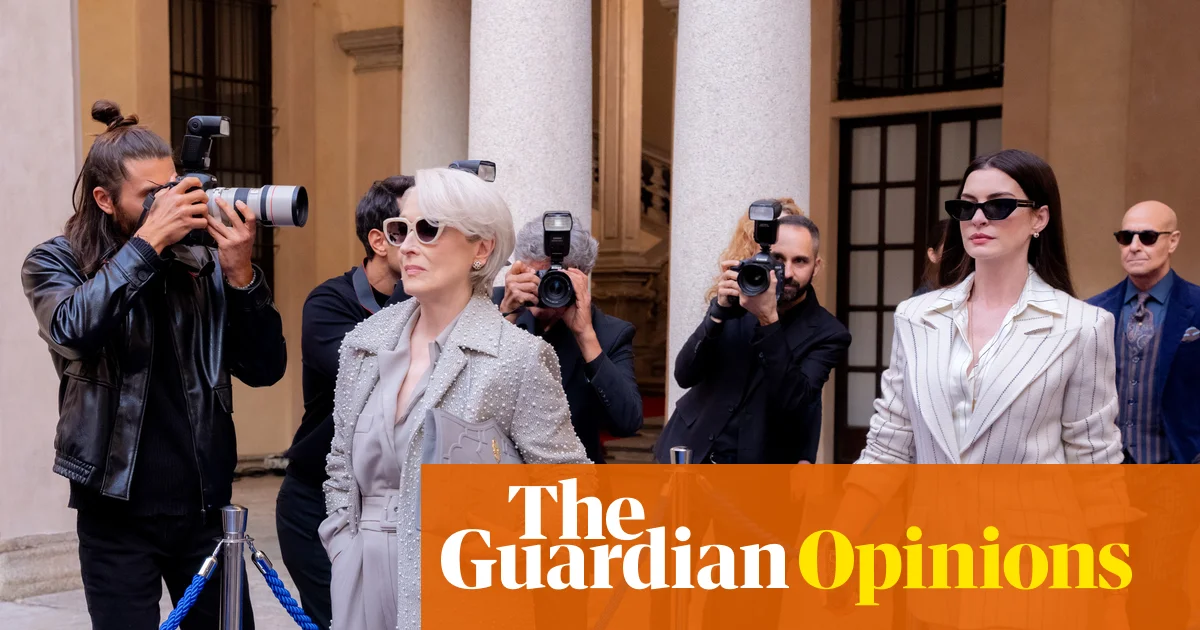
In a world increasingly dominated by fleeting trends and digital immediacy, it is often overlooked how culture anchors our identity, preserves our traditions, and ensures the continuity of society’s moral and aesthetic compass. Yet, amid the ebb and flow of popular entertainment, a peculiar phenomenon emerges: the nostalgic veneer that companies and creators employ to cling to past glories. Consider the recent and somewhat perplexing revival of The Devil Wears Prada franchise, intertwined with a marketing partnership with Starbucks. Such tie-ins serve as cultural time capsules, evoking a bygone era that many refuse to let go of — a time before the chaos of global upheavals like Brexit and the Trump presidency shook the foundations of modern society.

This spectacle exposes a deeper truth: our collective memory functions both as a repository and a prophecy. The glamour of the original film, set against the opulence of the early 2000s, symbolized aspiration and a faith in progress, much like the Cafe Society of the Jazz Age or the Renaissance’s rebirth of humanist ideals. Today’s nostalgic campaigns—pairing an outdated film with a dying product—highlight our desire to recapture that perceived stability and glamour, even if it exists only in media and marketing clichés. As historian Alexis de Tocqueville observed, societies often retreat into nostalgia when faced with uncertain futures, seeking comfort in the familiar stories of their collective pasts. Conversely, the philosopher Ortega y Gasset argued that culture must be dynamic—constantly nourishing our sense of purpose and helping us adapt to change, not freeze it in amber.

From the decline of glossy magazines to the flood of digital entertainment, it becomes clear that culture is a battleground—a space where tradition, memory, and innovation grapple for prominence. The partnership between The Devil Wears Prada 2 and Starbucks symbolizes a cultural paradox: an attempt to sustain relevance through a nostalgic facade while the landscape around it roars into chaos. The cultural critic Chesterton once warned that progress, devoid of rooted tradition, risks becoming mere illusion. Much like the critique of a society that manipulates its backstory to sell a product, our cultural narratives must serve as both moral guides and beacons pointing toward the future. After all, as T.S. Eliot famously proclaimed, “The past should be altered by the present as much as the present is directed by the past.” This interplay ensures that culture remains both a mirror reflecting who we are and a lamp illuminating what we might become.

In the end, the enduring power of culture lies in its dual role as memory and prophecy. It is the song of civilization whispering stories of our ancestors while forecasting the contours of our collective destiny. As we navigate the turbulent waters of modernity, let us remember that the true vitality of our traditions is their capacity to evolve—not to be fossilized in an era long gone but to be a living, breathing dialogue between yesterday and tomorrow. It is in this perpetual dance that humanity finds its meaning, identity, and hope—an ongoing story whose chapters are written by both what we cherish and what we dare to envision.

Stephen Colbert on Trump’s Vatican clash: “Wow, the pope just called you out in style” | Nightly Culture Wrap

In an era increasingly dominated by media spectacle and political theater, the fundamental role of culture as the bedrock of identity and tradition remains a truth too often obscured. When figures like Donald Trump and the Pope Leo XIV become embroiled in public feuds, it signals more than mere personality conflicts; it highlights the ongoing battle over the soul of a society. As Ortega y Gasset once observed, “Culture is the human fabric that holds us together, distilling collective memory while steering us toward future horizons.” In times of geopolitical and moral turbulence, the cultural narratives we uphold—be they religious, historical, or philosophical—are essential to defining who we are and where we are headed.

The clash between Trump and the Vatican over issues like the just war doctrine exemplifies this tension. On the one hand, Catholic tradition emphasizes truth in defense—a principle rooted in centuries of theological reflection. Yet, as Colbert humorously pointed out, attempting to correct the Pope on such matters is akin to “going into the woods and telling a bear where to poop,” revealing the absurdity of dismissing the moral authority of tradition. Historically, the idea of a just war has been a cornerstone of societal self-identity—an anchor in the face of chaos. Chesterton famously argued that true culture is not just a reflection of current power, but a moral compass guiding the community’s conscience. Today, the cultural clashes over religion and morality are more than ideological—they are battles over the shared symbols that hold us together in uncertain times.

Meanwhile, the spectacle of political figures commissioning grand monuments, like the proposed Trump triumphal arch inspired by Paris’s Arc de Triomphe, underscores a visceral desire to embed history and heroism into national memory. Kimmel’s humorous critique that this new monument might memorialize the “draft dodger” rather than the fallen echoes a deeper question: what stories do societies tell about themselves? As T.S. Eliot lamented, “The past is preserved in our culture, not as mere nostalgia but as a repository of legacy—a prophecy of who we might become.” The cultural fabric, therefore, is woven from both collective memory and aspirational myth. It is both a mirror of our roots and a prophecy of our future, heavily weighted by the values we choose to nourish or neglect.

Ultimately, the terrain of politics may shift and the personalities may rise and fall, but it is culture—imbued with meaning, faith, and tradition—that sustains our civilization’s continuity. Culture is not an indulgence for the elite but a public repository of identity and a moral foundation. As history’s great thinkers have understood, to neglect our cultural memory is to risk losing our way. The collective memory of our ancestors and the prophetic visions they passed down serve as both a shelter from chaos and a lantern guiding us toward a more coherent future. In the end, culture remains both the echo of the past and the whisper of what is to come, whispering a timeless truth: humanity’s most profound inheritance is not merely what we have built, but what we carry within us—our identity in motion, our prophecy in suffering, and our hope in renewal.

Screenmaxxing: How Hollywood’s Bold Moves are Redefining the Big Screen Experience for a New Generation | Film Industry

In the age of relentless technological innovation, what does the future hold for the cinematic experience? Disney’s recent announcement of InfinityVision exemplifies a broader trend of “screenmaxxing”—an industry obsession with augmenting picture size, sound quality, and visual fidelity, all aimed at enticing audiences away from the comfort of their homes. As theaters carve out new niches with premium large-format (PLF) screens—be it Dolby, RPX, or the latest HDR by Barco—their strategy hinges on safeguarding cultural space from the encroachment of streaming services and the allure of personalized, at-home entertainment. This underscores a fundamental truth: for many, film remains a vital expression of community, tradition, and shared identity, which cannot be fully replicated by the pixelated glare of a television or the darkened solitude of a screen.

The phenomenon of elevating the viewing experience is not merely about spectacle; it is deeply intertwined with notions of cultural continuity. Historically, cinema has served as a mirror and a molder of collective memory, echoing the insights of thinkers like Ortega y Gasset and Tocqueville who recognized that society’s soul is captured in its institutions and shared stories. In modern cinemas, the expansion of formats—from VistaVision to Imax—embodies a desire to preserve the scale and grandeur that breathes life into myth and legend. Meanwhile, the push by theaters to invest in increasingly advanced projection systems, such as HDR by Barco or the resurrected VistaVision, reflects an understanding that visual grandeur is symbolic of societal aspiration and cultural resilience. These formats evoke not only a sense of wonder but reaffirm our cultural identities—reminding us that the cinema is a temple of shared dreams, an allegorical temple where our collective memory is sacred and our cultural future is imagined.

Yet, with this surge for technological supremacy comes concern: are theaters merely chasing the latest shiny object, risking a dilution of the true cultural mission? As critic G.K. Chesterton argued, the peril of modern innovation lies in turning cultural artifacts into commodities—an assembly line of spectacle that flattens the depth and meaning of our stories. The proliferation of formats, such as the debate over Imax versus alternative PLFs, reveals a market driven by consumer perceptions of superiority—perceptions that are often constructed more by branding than by substance. True cultural significance, after all, resides in story—not in pixels. The challenge for the industry is to transcend mere “screenmaxxing” and focus on fostering an environment where cinema can serve as a vessel for enduring values, stories, and shared national or cultural identity.

As we watch this visual arms race unfold, it becomes evident that **the cinematic experience is a living archive of human memory and a prophetic glimpse into our collective future**. Just as T.S. Eliot reflected that “the past inherits the future,” so too does our cultural participation in cinema serve as a testament to who we are and what we aspire to become. The true power of the big screen lies not in its size or brightness but in its capacity to forge connections—between generations, communities, and ideals. In the flickering glow of projected images, we are reminded that culture is both a remembrance and a prophecy, a shared story that endures across time, guiding us into the unknown with the promise that, somehow, as long as we tell our stories, we remain unbroken.

Roommates Review: Netflix’s Breakup Comedy Delivers a Bold Blend of Heart and Humor

In an era where the relentless surge of streaming platforms has inundated the cultural landscape, the role of genuine storytelling remains paramount. The recent rise of filmmaker Adam Sandler exemplifies a broader, more profound truth: culture is not just entertainment but a vessel of our collective identity, tradition, and moral compass. As Sandler matures from juvenile humor to more textured, meaningful narratives, his evolution underscores a vital cultural truth—that art’s greatest function is to reflect and shape the soul of society. The transition from hollow comedies to films that engage with real human complexities demonstrates that, even amidst the noise, authentic culture persists as a guiding light, reminding us of who we are and who we aspire to become.

Throughout history, critics and philosophers have recognized the formative power of culture in shaping our societal structures and personal identities. Ortega y Gasset, for instance, emphasized how the mass culture of a society channels its values and aspirations. Today, amidst a landscape saturated with superficial content, the importance of cultivating stories that deepen our understanding of human nature becomes an urgent necessity. In this context, films like Sandler’s “You Are So Not Invited to My Bat Mitzvah” serve as vital cultural artifacts that honor the complexity of youthful experience, actively resisting the trivialization that often accompanies teen-oriented media. These narratives, by recognizing the intelligence and dignity of younger generations, reaffirm the enduring importance of tradition and moral responsibility. They remind us that culture is both a memory that anchors us and a prophecy that guides us forward.

Moreover, the current tendency among studios to obscure imperfect works—such as the baffling concealment of Sandler’s “Roommates”—reveals an industry anxiety that echoes historical distortions. As Tocqueville observed, democratic societies tend to prefer sanitized versions of reality, often sacrificing authenticity for conformity. Yet, it is precisely within imperfect, often unruly works that the true pulse of society can be discerned. “Roommates,” despite its flaws, offers a genuine, relatable tableau of friendship’s disintegration, steering clear of cliches and embracing the messy, nuanced reality of human relationships. It challenges the Hollywood tendency to prioritize spectacle over sincerity, insisting instead that our culture thrives when it remains rooted in the authentic, imperfect stories that mirror our true selves. As Chesterton argued, truth and beauty often dwell in the modest and overlooked, serving as the foundation for meaningful cultural discourse.

In contemplating the role of culture, it is as T.S. Eliot suggested that “the purpose of art is to draw our attention to the mystery of life itself.” Today’s filmmakers and creators serve as custodians of that mystery, offering us narratives that both recall our origins and prophecy our future. These stories, woven from the fabric of memory and hope, forge an enduring bridge connecting generations. As we look forward to the stories yet to be told, let us remember that culture is the collective memory of humanity, an ongoing dialogue with what has been and what will be—a melody of remembrance and promise that sustains the soul of society, guiding us through darkness into dawn, where every new story becomes both a reflection of our past and a prophecy of our future.”

Avengers Return and Top Gun Soars Again — Hollywood Studios Unveil Their Exciting New Films

As the world of cinema continues its relentless evolution, the preview of the most anticipated new films at this year’s CinemaCon offers more than just entertainment; it reveals the underlying currents shaping our cultural identity. The projection of upcoming works serves as a mirror—a cultural reflection that embodies our shared values, aspirations, and anxieties. Here, the film industry functions as a modern-day forum where stories are cast as both mirror and prophecy, illustrating the significance of culture in forging societal cohesion and individual identity.

From the perspective of cultural critics and philosophers, cinema remains a vital vessel for the collective memory of a society—an echo of its traditions and a canvas for its future dreams. Ortega y Gasset once observed that “worldly reality is fundamentally built on tradition,” emphasizing how cultural artifacts like films serve as communal anchors. The eagerly anticipated productions highlight themes of heroism, morality, and the enduring conflict between chaos and order. The films previewed at CinemaCon are thus not merely entertainment; they are cultural artifacts that sustain and redefine the narrative of a society rooted in its history while looking forward with purpose.

Such cinematic projections also carry a deeper philosophical significance—they embody our collective striving for meaning amid the turbulence of modern life. As Tocqueville warned about the potential tyranny of individualism, so too must we recognize that our cultural expressions help buffer societal fragmentation and sustain national coherence. The themes emerging from forthcoming films underscore this necessity: they nurture an understanding of tradition, honor, and shared moral purpose. In an era where cultural shifts threaten to dilute collective identity, cinema remains a vital dialogue—an ongoing conversation about who we are and what we aspire to be.

Ultimately, culture acts as both memory and prophecy: it is the accumulated voice of the past and the visionary forecast of what society aspires to become. As T.S. Eliot proclaimed, “the past is never dead; it’s not even past,” an assertion that underscores the perpetual cycle through which culture informs our present and guides our future. The upcoming films previewed at CinemaCon serve as a testament to this enduring truth—they are the symbolic storytellers of our collective evolution, echoing the hopes, fears, and principles that define us. As we gaze into this cinematic horizon, we are reminded that culture is the sacred repository of a civilization, both a memory of what was and a prophecy of what is yet to come—an eternal flame illuminating the path of human history.

French Visionary Claims $1.2 Million Picasso Masterpiece—A Triumph for Art and Heritage

In the grand theater of cultural legacy, few moments capture the essence of enduring human creativity as profoundly as the recent triumph of chance over history’s most transformative artworks. A 58-year-old Parisian man, whose story exemplifies the intersection of luck, philanthropy, and cultural appreciation, secured Pablo Picasso’s Tête de Femme, a hallmark of Cubist innovation from 1941, in a charity raffle that raised nearly $11 million for Alzheimer’s research. The man’s two tickets, purchased for a modest 100 euros each, transformed an ordinary act of participation into a moment of cultural significance, enabling him to walk away with a piece valued at approximately $1.2 million. This event underscores a vital truth: culture remains a living force, shaping identity and society, capable of transforming individual lives and collective destiny.

This extraordinary transaction is more than a mere lottery win—it is a resonant reminder that art continues to serve as the symbolic memory of humanity, as well as its prophetic voice. Picasso’s cubist explorations, with their fractured yet cohesive visions, challenged traditional perceptions of form and perspective. As Ortega y Gasset famously argued, cultural artifacts like Picasso’s work do not merely decorate history; they actively shape the worldview of generations. In an era of rapid technological change and cultural flux, these masterpieces stand as anchors that connect us to our past while inviting an optimistic gaze into the future—reminding us that our cultural endeavors are an ongoing dialogue between memory and possibility.

Furthermore, this event highlights the profound connection between cultural patrimony and societal progress. The funds raised through this innovative form of philanthropy—an imaginative twist on an age-old tradition—will advance vital research on Alzheimer’s disease, a scourge that threatens the collective mind of society. This synergy of art, charity, and scientific pursuit echoes Tocqueville’s insights into the vital role of civic engagement in fostering community resilience. It exemplifies how cultural heritage and societal well-being are inherently intertwined, reinforcing the idea that the preservation and celebration of our cultural landmarks are essential to maintaining the moral fabric of civilization.

In defending our cultural traditions—be it through visual arts, literature, or other creative expressions—we affirm G.K. Chesterton’s notion, that culture is not merely a superficial embellishment but the very core of our identity and a beacon guiding us through times of uncertainty. As society navigates the tumult of modernity, it finds itself in a shared landscape where the transcendent power of art and tradition channels collective hope and resilience. It is this sacred trust in the cultural that fuels our desire for continuity, tradition, and the constant rebirth of meaning.

In the poetic tapestry of human history, culture emerges as both a treasured memory and a prophecy—an echo of the triumphs and struggles that have shaped us, and a vision of what we might yet become. As T.S. Eliot eloquently observed, “Human kind cannot bear very much reality,” yet through the art we cherish and the stories we tell, we forge a resilient fabric where memory and prophecy intertwine. This event, where chance elevates Picasso’s masterpiece into the realm of personal destiny and societal hope, serves as a reminder that culture is both our inheritance and our divine calling. It is, ultimately, the ongoing symphony of human soul—mute witnesses to the past and heralds of the future, whispering that as long as we remember and create, the human spirit will endure.

Jon Stewart confronts Trump’s denial of Jesus photo: “Do you even care about lying to us anymore?” | Late-night TV roundup

In an era where the fabric of society appears increasingly frayed by the spectacle of political theater and celebrity culture, the importance of culture as the foundation of identity remains paramount. It is not merely a matter of aesthetic or tradition but the very soul of a community’s collective memory and future prophecy. Philosopher Ortega y Gasset reminds us that a society’s vitality hinges on its ability to sustain a sense of shared purpose rooted in its cultural expressions. Today, this is under threat from the cacophony of superficial narratives, where even spiritual figures like Pope Leo XIV are dragged into the mud of social media disputes, revealing how the political and cultural elite often forget their roles as custodians of moral and spiritual continuity.

This cultural tumult echoes the historical shifts described by Alexis de Tocqueville, who warned of the perils of individualism unchecked by traditions that bind communities. In the humorous yet pointed commentary of Jon Stewart, the clash between President Donald Trump and the papacy becomes a microcosm of this larger upheaval. Stewart’s satire underscores a society where the sacred and the profane intertwine—a culture that increasingly confuses public spectacle with moral substance. The spectacle culminates in Trump’s bizarre AI-generated image portraying him as a messianic healer, a grotesque distortion of symbolic language that reveals how modern culture can degenerate into parody at the expense of higher ideals. Stewart’s critique is not merely comedic but a lament for a society that loses sight of its spiritual roots, allowing ego and spectacle to supplant genuine leadership grounded in tradition.

Meanwhile, Stephen Colbert and Jimmy Kimmel emphasize the gravity of diplomatic failures and the absurdity of their political actors, highlighting, through satire, the erosion of societal consensus and respect. Colbert’s witty remarks about the collapse of Iran-U.S. talks and Trump’s reckless naval escalation showcase how modern leadership often conflates bravado with strategy, stripping away the philosophical reflection that once informed statecraft. Kimmel’s observation of Trump’s deletion of the Jesus image, claiming it was intended as a healer, exposes a troubling penchant for public deception—a cultural sickness where truth is malleable and the sacred reduced to spectacle. These moments serve as a stark reminder that the culture of honesty, reverence, and moral clarity must be vigilantly preserved if society is to remain resilient against the tide of nihilism and relativism.

As T.S. Eliot famously reflected, “The past is never dead; it’s not even past.” Our cultural memory, imbued with tradition and shared stories, functions as both inheritance and prophecy, guiding future generations. The current battle is as much about safeguarding these spiritual and cultural symbols as it is about politics or diplomacy. We stand at a crossroads where the soul of society can either be reclaimed through a reverence for its moral and spiritual foundations or succumb to the spectacle of superficiality. Ultimately, culture—its memory and prophecy—remains the vital force that sustains humanity’s highest aspirations, reminding us that from the depths of our shared history arises the hope for a nobler future, rooted in the enduring power of tradition, truth, and purpose.

Jorginho dismisses Chappell Roan security incident as a “misunderstanding” — setting the record straight amidst rising concern

In an era where the cultural fabric becomes increasingly fragmented, it remains essential to recognize the enduring significance of identity, tradition, and the societal role of cultural icons. The recent incident involving footballer Jorginho and singer Chappell Roan at a São Paulo hotel underscores how modern misunderstandings can reflect deeper tensions within our collective psyche. Jorginho’s initial reaction, which he later characterized as a “heat of the moment” response, reveals the primal instinct to protect one’s family—a fundamental aspect of personal and cultural identity. In this context, the protection of one’s loved ones echoes through history as a universal motif, resonating with the ancient valorization of family and community that underpins civilizations from the classical Greek polis to the medieval clannish society.

What this incident illustrates is a broader cultural phenomenon: the confrontation between protean individualist impulses and the institutional or societal structures that seek to define and regulate social interactions. Jorginho’s subsequent clarification highlights a crucial point—that misunderstandings are often fueled by a lack of shared cultural context and that truth often emerges from dialogue and clarification. His acknowledgment of new information and the resultant clarification reflect the ongoing importance of truth and transparency in the preservation of social harmony. As Tocqueville observed, modern societies are plagued by the “tyranny of the majority,” which can easily suppress individual narratives. Yet, through open dialogue, individuals can reaffirm their place within society’s moral fabric, emphasizing that culture’s role is to foster understanding amid diversity.

Furthermore, the incident’s resolution attests to the resilience of cultural memory and unity in the face of conflict. Chappell Roan’s own response, denying any aggressive behavior from her team, and Pascal Duvier’s public statement about the misunderstanding, underscore the importance of clarity and accountability in today’s interconnected world. The cultural fight, real or perceived, often hinges on the availability and interpretation of information. As Ortega y Gasset argued, the mass man’s worldview is shaped by the narratives supplied to him— hence, the power of culture in shaping our perceptions. This incident reveals how fragile social cohesion can be, yet also how resilient it is when driven by a shared commitment to truth and justice.

At its core, this episode echoes the enduring truth that culture is both a living memory and a prophecy of humanity’s future. It serves as a reminder that our collective identity—formed over centuries through stories, symbols, and shared values—must be preserved and critically examined to meet the challenges of an ever-changing world. Culture is not merely aesthetic but the quintessence of society’s moral and spiritual essence. As Chesterton once remarked, “Culture is simply informed by the divine in us, echoing eternity through transient forms.” This delicate balance of tradition and progress invites us to see ourselves as custodians of a legacy that is both rooted in the past and a guide to the future, ensuring that our civilization remains alive, truthful, and nobler amidst the storms of misinterpretation.

In the end, these moments of misunderstanding and resolution are but threads in the grand tapestry of human history—each one weaving the narrative of memory and prophecy. Culture, like a lighthouse guiding ships in darkness, illuminates the pathway between the present and eternity. It is in safeguarding our stories, understanding our symbols, and defending our shared values that we find the true meaning of civilization: a testament to the resilient, enduring spirit of humanity, ever reaching toward the divine horizon that beckons us beyond the horizon of yesterday.

Social Media Auto Publish Powered By : XYZScripts.com