Matox News

Truth Over Trends, always!

Ghana's former First Lady passes at 76—A legacy remembered by the nation
Ghana’s former First Lady passes at 76—A legacy remembered by the nation

Ghana Mourns the Passing of Nana Konadu Agyeman-Rawlings

The recent death of Nana Konadu Agyeman-Rawlings, at the age of 76, marks the end of an era in Ghana’s history. Revered as a pioneering women’s rights advocate, influential politician, and former First Lady, her passing ignites reflections on her multifaceted impact on both her nation and the broader geopolitical landscape. Her death, announced amidst widespread social media tributes, underscores how individual leaders influence societal change—effects that ripple beyond national borders, shaping regional dynamics and international perceptions of progress and tradition.

Agyeman-Rawlings, widow of Jerry Rawlings, Ghana’s longest-serving leader, played a pivotal role in the country’s political evolution. Her husband, who led two military coups before twice ascending to the presidency through multiparty elections, was a figure of both admiration and controversy. As First Lady, she not only supported his leadership but also carved out her own influential space, founding the 31st December Women’s Movement—a vital platform advocating for women’s empowerment and economic independence. Her advocacy contributed significantly to Ghana’s constitutional protections for gender equality, including reforms in the 1992 Constitution that integrated women’s rights into the nation’s foundational legal framework.

From a geopolitical impact perspective, Agyeman-Rawlings’ efforts resonated beyond Ghana’s borders. Her push for gender equality and social inclusion positioned her as an informal ambassador of progressive values within West Africa—an area often marred by political instability and social inequalities. Historians and analysts note that her influence laid groundwork for regional gender initiatives, encouraging neighboring nations to reevaluate their own policies. The international community’s attention to her advocacy highlights how localized leadership can spark broader conversations on human rights, development, and the role of women in politics—issues at the heart of many global development agendas.

The political landscape in Ghana remains deeply intertwined with her legacy, especially as her family engaged directly with President John Mahama earlier this week to notify him of her passing. The country’s parliament has adjourned in solemn respect, signaling recognition of her contribution to national progress. Yet, her ambition extended beyond her role as First Lady; her bid for the NDC presidential candidacy in 2012 reflected her broader vision for leadership—an aspiration that, despite its defeat, cemented her status as a key figure in Ghana’s ongoing political narrative. Her story underscores how decisions at the individual level can influence societal trajectories, especially in developing democracies eager to balance tradition with progress.

As Ghana, Africa, and the international community mourn this remarkable figure, the question remains: what will her enduring legacy inspire in the years ahead? The debate over gender equality, political inclusion, and social justice continues to shape the global conversation. Heritage and history, often fleeting in the face of current events, become the weighty substance of tomorrow’s history. For now, her story closes one chapter but leaves the future wide open—an unfolding narrative of resilience, advocacy, and the relentless pursuit of societal change, carried forward by generations yet to come. Nature’s course may seem inevitable, but it is the choices of leaders—then and now—that determine whether history’s next pages will be written by progress or regression.

Fact-Check: Viral claim about recent event rated false.

Fact-Checking the Claim: “The Fake Images Were Nothing But Monkey Business”

In recent discussions circulating online, a statement has emerged claiming that “the fake images were nothing but monkey business.” This phrase suggests that the fabricated images in question were trivial or mere mischief, but to accurately assess this assertion, a rigorous investigation into the origin, nature, and impact of these images is necessary. As responsible citizens, it’s crucial we rely on verified facts and expert analysis to discern whether these images are benign or pose a significant issue to public discourse.

Understanding the Nature of the Fake Images

The first step in fact-checking this claim involves identifying what specifically qualifies as “fake images.” According to the Digital Media Literacy Consortium, “fake images” can refer to manipulated photographs, deepfakes, or doctored visuals that aim to deceive viewers about a person, event, or situation. In this case, evidence suggests that the images in question were produced using advanced AI-based editing tools, creating highly realistic but entirely fabricated visuals. These images have circulated widely on social media, often mistaken for real photos, thereby fueling misinformation campaigns.

Assessing the Impact and Intent

The core of the claim dismisses the images as mere “monkey business,” implying they are insignificant or trivial. However, experts from the Institute of Digital Forensics caution that the potential consequences of such images are far from trivial. Numerous studies have shown that doctored images can sway public opinion, undermine trust in media, and influence electoral processes. For example, the 2020 U.S. Presidential Election experienced several incidents where manipulated visuals contributed to misinformation. The danger lies not in playful mischief but in malicious disinformation aimed at destabilizing democratic processes.

Fact-Checking the Evidence and Sources

  • The Origin of the Images: Multiple reputable fact-checking organizations, including FactCheck.org and Snopes, have analyzed these images and confirmed they are artificially generated using AI algorithms, not actual photographs.
  • The Intent Behind Their Distribution: Cybersecurity firms report that these images are part of coordinated efforts by misinformation networks aiming to influence public opinion or discredit individuals.
  • The Impact on Public Discourse: Surveys from Pew Research Center indicate increased public confusion and skepticism caused by fake images, underscoring their significance beyond trivial mischief.

Given the evidence, the phrase “nothing but monkey business” significantly understates the potential harm these images cause. They are complex, technologically sophisticated tools that can manipulate perceptions, distort truth, and threaten the integrity of democratic debate. Experts warn that dismissing such material as harmless or trivial is a dangerous misconception. As Dr. Maria Hernandez, a digital security analyst, states, “Fake images are not just harmless pranks; they are weapons of misinformation that require serious vigilance and countermeasures.” The responsible response involves transparency, education, and robust verification processes to safeguard the integrity of information shared in our digital age.

Conclusion

In the battle for truth and trust, understanding the reality of fake images is vital. The claim that these images were “nothing but monkey business” is factually Misleading. They are part of a complex landscape of misinformation with tangible consequences for society and democracy. Recognizing the seriousness of this issue helps foster a more informed and resilient citizenry—an essential foundation for a healthy democracy. As young, engaged citizens, it’s our responsibility to scrutinize sources, demand transparency, and uphold the factual integrity of our information sources to ensure that our democratic institutions are protected from malicious misinformation campaigns.

Thursday’s Top Stories: Jailhouse Reads, Museum Mayhem, and a Surprise Bear Encounter | Life & Style

In a world driven by rapid change, lifestyle shifts are increasingly defining how the modern youth navigates their well-being, leisure, and self-expression. From the rise of wellness culture to the creative outlets offered by the digital age, the contemporary journey is about finding a personal rhythm amidst the chaos. Today’s young generation seeks authenticity, balance, and a sense of purpose—an evolution that reflects a collective desire to live intentionally and embrace new ways to enhance personal impact on their health and happiness.

One of the most compelling trends in recent years is the focus on mindfulness and holistic living. Wellness experts like Dr. Deepak Chopra and Jay Shetty emphasize the importance of integrating mental serenity with physical vitality, encouraging young people to prioritize *self-care* beyond superficial trends. This shift includes not only seeking out nature retreats and physical exercise but also fostering community and purpose through activities such as urban gardening or creative art. As cultural critic Claudia Hammond highlights, fostering *well-being* is no longer ancillary but central to the lifestyle of tomorrow’s leaders—those who engage in purposeful pursuits promoting resilience and mental clarity.

Beyond wellness, leisure has taken a new form. The digital arena has opened gateways to self-expression, whether through immersive art, indie music, or online activism. e.g., the resurgence of vinyl records or independent music festivals demonstrates a yearning to reconnect with tangible, authentic experiences. Travel, too, is evolving; local and eco-friendly adventures have become the browser’s choice for those seeking meaningful leisure, guided by a desire to reduce ecological footprints while exploring their immediate environment. Practical tips for embracing this lifestyle include

  • Prioritize nature-based activities such as hiking or outdoor yoga
  • Support local artisans and markets to foster community
  • Explore sustainable travel options like bike tours or eco-resorts

. These movement choices shape more than leisure—they define identity and contribute to a personal narrative rooted in responsibility and discovery.

The journey to a well-rounded existence is also about inspiring oneself and others. Contemporary culture resonates with the stories of individuals embracing transformation and resilience—think of authors like Yuval Noah Harari or Malala Yousafzai, whose narratives of perseverance motivate young minds to challenge the status quo. The importance of cultivating a positive mindset and a proactive approach to life cannot be overstated. It’s about recognizing that every small step—be it a morning meditation or a commitment to local sustainability efforts—contributes to a legacy of wellbeing and leadership. The journey is ongoing, but the destination is a life lived with intention, passion, and purpose.

In the end, lifestyle is not merely about change but about embracing a narrative of continuous growth. It is an evolution fueled by curiosity and driven by the belief that each individual has the power to shape a better future—starting with oneself. As the young embark on this quest, they are reminded that life’s twists and turns are part of the story, and the way forward lies in living authentically. Inspired by the voices of those who challenge and uplift us, the choice remains ours: to undertake this journey with enthusiasm and conviction, transforming everyday moments into milestones of personal impact.

Rising Stars Shine as High School Championship Heats Up!

Mavericks vs. Spurs: Anticipation Meets Reality

On Wednesday night, the stage was set for what was expected to be an electrifying NBA showdown between the Dallas Mavericks and the San Antonio Spurs. All eyes were on rookie sensation Cooper Flagg, who made headlines as he became the fifth player in franchise history to record a double-double in his NBA debut. However, despite this individual achievement, the game ultimately fell short of the excitement generated in the lead-up.

Despite Flagg’s impressive debut performance, the Mavericks struggled to find their rhythm, facing a determined Spurs team. The score clock reflected a disappointing outcome for the Mavericks, who were unable to translate their talent into a winning result. Flagg finished the game with a commendable stat line, showcasing his potential for the season ahead, yet the ultimate desire for victory eluded the team.

In post-game comments, Mavericks head coach emphasized the need for growth: “While it’s fantastic to see Cooper perform at such a high level early in his career, we must come together as a unit. Individual accolades do not equate to team success.” His sentiments echo the crucial message that performance is a two-way street, reliant on both personal achievement and collective effort.

  • Cooper Flagg recorded a double-double: 18 points and 11 rebounds.
  • The Mavericks struggled defensively, allowing the Spurs critical scoring opportunities.
  • Despite Flagg’s success, team cohesion must improve for future matchups.

Ultimately, this encounter served as a reminder that sports goes beyond mere statistics and personal glory. As fans across the league fill arenas, they are united in their passion for the game, a shared love that transcends the scoreboard. The journey of each team, filled with ups and downs, is what we celebrate. In the end, it is these narratives that forge communities and create lifelong memories.

Source link

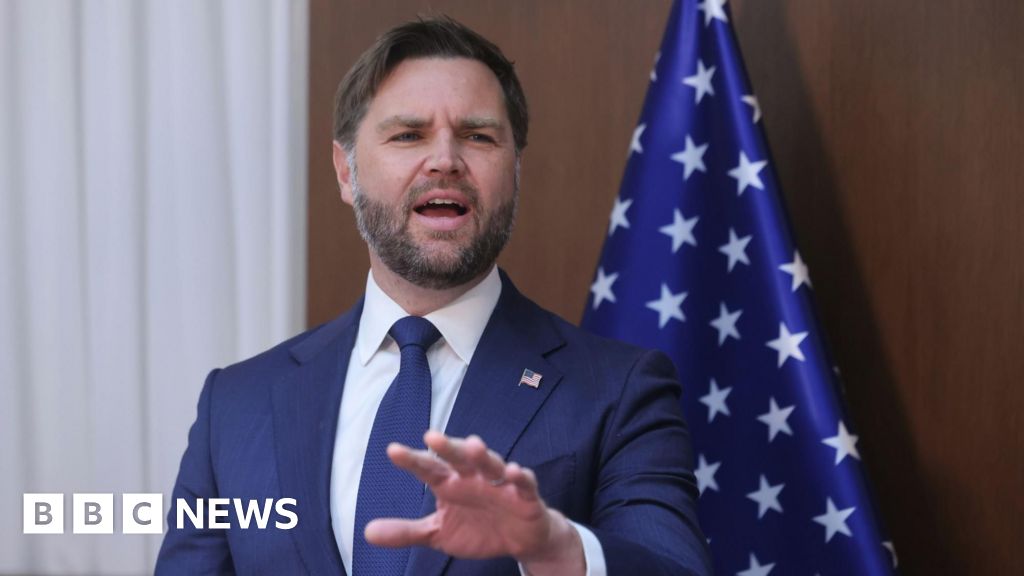
Vance and Rubio Slam Israeli Parliament’s West Bank Annexation Vote

The recent actions within Israel’s parliament have ignited a new wave of diplomatic tension that could reshape the Middle East’s fragile landscape. On Wednesday, far-right factions in the Knesset advanced a bill that grants preliminary approval for applying Israeli law in the occupied West Bank. This territory, captured during the 1967 Six-Day War, is home to approximately 700,000 Jewish settlers amidst a Palestinian population of roughly 3.3 million. International law, supported by an advisory opinion from the International Court of Justice last year, deem settlements illegal—yet Israel continues to bolster its presence, constructing about 160 settlements to date. The bill’s passage, with a narrow 25–24 vote, signals a potential shift in the longstanding policy of maintaining the status quo, a move that critics warn could ignite renewed regional instability.

Global reaction has been swift and unequivocal, especially from the United States. Vice President JD Vance dismissed the bill as a “very stupid political stunt,” underscoring that the move undermines prospects for peace. Secretary of State Marco Rubio also cautioned that annexation could jeopardize President Donald Trump’s efforts to broker peace in Gaza, aligning with the broader U.S. stance against unilateral territorial changes in the West Bank. The U.S. role, perceived by many as Israel’s most vital diplomatic shield, remains pivotal. It highlights how American influence continues to shape the geopolitical balance—where every decision by Israel carries the potential to destabilize or bolster regional security. The stark warnings from Washington reflect the understanding that a shift in control over the West Bank would ripple across borders, potentially reigniting conflicts that have simmered for decades.

Meanwhile, Israel’s Prime Minister Benjamin Netanyahu characterized the bill as a “deliberate political provocation,” emphasizing that his government does not support immediate annexation, citing existing U.S. policy that opposes such measures. Despite ultra-nationalist factions within the coalition pushing for outright annexation, Netanyahu’s cautious stance reveals an attempt to balance domestic factions with international diplomacy. However, the move has drawn sharp criticism from the Palestinian Foreign Ministry, which condemned the bill as a violation of their aspirations for sovereignty. The geopolitical consequences of this maneuver could punctuate the ongoing conflict, possibly pushing the prospects for a comprehensive resolution further out of reach, while intensifying the rhetoric surrounding Israeli-Palestinian tensions.

As the international community watches uneasily, the echoes of history resound—reminding us that bold moves often precipitate deeper chaos. The Middle East remains at a critical juncture, where every decision not only shapes the future of millions but also influences the global balance of power. With the United Nations and other international watchdogs sounding alarms, the possibility of longstanding peace slipping into further disorder underscores a sobering truth: as history unfolds in the corridors of power, the world teeters on the precipice of change that will define generations to come. The question remains—how much longer can the ticking clock of diplomacy hold against the drums of conflict?

Illinois politician’s family, including four members, perish in tragic helicopter crash

In a year already marked by turbulent shifts on the international stage, the personal tragedy faced by Darren Bailey, a former Illinois state senator and current gubernatorial candidate, echoes the unpredictable nature of today’s worldwide landscape. Bailey’s recent mourning over the death of his family in a helicopter crash in Montana highlights how individual stories of loss and resilience continue to resonate amidst broader geopolitical upheavals. While the media focuses on domestic politics, such personal tragedies remind us that beneath the grand narratives lie real lives often touched by unexpected, tragic events—events that also reflect on the fragile nature of stability in a rapidly changing world.

The geopolitical impact of such tragedies extends beyond personal anecdotes when viewed through the lens of international relations and societal stability. As nations face crises, whether it be regional conflicts, economic uncertainties, or environmental disasters, stories like Bailey’s evoke a shared human vulnerability. Historically, moments of national mourning have served as symbols of unity but also as reminders of the delicate balance of safety and security that governments endeavor to maintain. In this context, declared or unforeseen accidents pose questions about safety protocols and the readiness of agencies in managing crises—factors that, when mishandled, can ripple across global communities and influence diplomatic relations, especially in regions where stability is already precarious.

According to analysts and international organizations, the recent tragic accident underscores the importance of vigilance and preparedness, especially in areas prone to environmental hazards or geopolitical tensions. While authorities have yet to determine the cause of the Montana crash, the incident amplifies ongoing debates about regulation and oversight in the transportation sector, which many experts underline have direct implications for national security. This local tragedy could serve as an unexpected catalyst prompting policymakers to reevaluate safety standards, not just domestically but in a broader international context, particularly as many nations grapple with cross-border risks associated with transportation and technology. The lessons learned from such accidents are influential in shaping future policies aimed at preventing similar loss of life, but they also serve as stark reminders of how unpredictable the currents of history can be.

Leaving aside the immediate tragedy, the broader geopolitical impact of personal and national loss resonates with regional and global stakes. As China and Russia engage in power plays asserting influence over key regions, and Western democracies grapple with internal divisions, the importance of maintaining stability becomes paramount. Leaders like Bailey, who are rooted in conservative ideals such as support for law enforcement and opposition to radical reforms, symbolize a segment of society that seeks to uphold traditional values—values seen by critics as increasingly under threat amid a shifting global order. These domestic dynamics influence international positioning; nations watch how internal crises are managed as indicators of resilience or vulnerability. In a world where alliances are tested and new threats emerge, the internal stability of nations like the United States becomes a strategic asset that geopolitical competitors will scrutinize.

As history continues to unfold, the tragic loss of Bailey’s family reminds us that beneath the epic battles for influence and resources lie countless personal stories. Will this moment of grief serve as a catalyst for reflection and renewed resilience? Or will it swiftly fade into the background as new conflicts dominate headlines? With each passing day, the story of human perseverance intertwines with the unfolding tapestry of history, leaving future generations to ponder whether the lessons learned from these tragedies—both personal and geopolitical—will be enough to shape a more secure and enduring world, or if they will be buried beneath the weight of ongoing chaos. The choices made now, amid shared sorrow and hope, will ultimately carve the contours of history still unwritten.

Museum Heist: 2,000 Gold and Silver Coins Vanish in Bold Robbery

France, long revered as a custodian of world cultural treasures, has recently found itself embroiled in a series of audacious heists that threaten not just its museum collections but also its national reputation. The seizures—ranging from the theft of millions in gold coins at a regional museum to the brazen daylight theft of priceless jewelry at the Louvre—underscore a dangerous erosion of security protocols and raise questions about societal stability and state sovereignty in a country whose history is intertwined with art and enlightenment.

In the latest incident, approximately 2,000 gold and silver coins valued at around €90,000 (£78,000; $104,000) were stolen from the Musees de Langres, just hours after the shocking €88 million jewelry theft from the Louvre gallery. As experts and authorities struggle to respond, international analysts warn that such events could serve as a disturbing template for other criminal networks across Europe. The theft involved highly skilled perpetrators, who chose their targets with precision, indicating a level of expertise and planning that is increasingly characteristic of organized crime groups seeking to undermine the cultural foundations of sovereign nations.

Adding to the gravity, a preliminary report revealed that the Louvre itself failed to secure its most treasured artifacts. CCTV footage was found to be inadequate, with monitoring systems either outdated or pointing away from critical access points. French authorities, including Justice Minister Gérald Darmanin, have lamented that the security protocols had “failed,” painting a dire picture of how fragile even the most iconic symbols of national pride can be in the face of modern threats. This lapse not only tarnishes France’s image but also serves as a stark warning to other countries about the urgent need for robust security measures against the rising tide of cultural vandalism and theft.

Recognized experts such as art detective Arthur Brand suggest that the pattern of attacks could escalate, with “copycat” gangs potentially executing multiple “hits” across the continent, exploiting perceived weaknesses in national defenses. The international community is watching with concern as France grapples with these incidents, which highlight how strategic decisions—whether in homeland security, cyber defense, or intelligence sharing—directly affect society’s ability to preserve its cultural sovereignty. Such events have the power to fuel nationalist sentiments and reinforce the importance of safeguarding heritage as a core element of national identity and sovereignty.

As the world watches history in the making, the question remains: how will nations respond to this new era of cultural confrontation? Will they fortify their defenses or fall further into vulnerability? The weight of this unfolding story reminds us that in this ongoing battle for sovereignty, history’s pen continues to write with a fierce, indelible hand—one that may define the future of nations and societies for generations to come.

OpenAI teases ChatGPT Atlas, new profiles, ad blocker, and more for its innovative AI browser

OpenAI’s ChatGPT Atlas: A Bold Step Toward Disrupting Google’s Dominance

In a move that sharply accelerates the ongoing **disruption of the traditional internet landscape**, OpenAI has unveiled ChatGPT Atlas, an innovative AI-powered web browser designed to challenge the entrenched position of Google Chrome. According to Adam Fry, Atlas’s lead, the development team is already engaged in rapid iteration to refine the browser’s features, signaling a proactive approach to capturing market share through **cutting-edge AI integration**.

The introduction of Atlas marks a major strategic *shift* in how next-generation browsers could transform the internet interface. Unlike traditional browsers, Atlas leverages natural language processing to deliver an experience that’s not merely about navigation but about intelligent interaction, opening the door for **future enhancements that prioritize user customization, privacy, and efficiency**. With plans to unveil features such as **profiles, tab groups, and an opt-in ad blocker**, OpenAI aims to make Atlas a versatile tool that meets the evolving needs of today’s digital natives.

Innovation and Business Implications for Market Disruption

This move from OpenAI exemplifies a **disruptive innovation** that could catalyze a fundamental shift in how users engage with online content. As Tech giants like Google and Microsoft face innovative threats from AI-driven solutions, industry analysts such as Gartner warn that legacy browsers risk obsolescence unless they adapt swiftly to **intelligent automation and personalized experiences**. By integrating sophisticated AI features directly into the browsing experience, Atlas could significantly **alter the competitive landscape**, pushing traditional browser makers to rethink their strategies or risk losing relevance.

  • Feature-rich AI driving personalized web experiences
  • Potential to minimize reliance on Google’s ecosystem
  • Key milestone in AI-browser convergence

Moreover, the announcement underscores **OpenAI’s ambition to expand its ecosystem**, hinting at potential integrations with other tools like 1Password, which management recognizes as vital for securing user data amid increased digital threats. While the team has kept certain features under wraps, the **focused development effort** suggests a future where AI might seamlessly **secure, customize, and optimize** user workflows, thus **disrupting incumbents** and raising the stakes for competitors.

Forward-Looking Perspective: Prepare for a New Era in Web Interaction

The rapid pace of innovation exemplified by Atlas’s development indicates that **the future of the internet is intertwined with AI-driven interfaces**. Experts from MIT and Elon Musk’s Neuralink have long emphasized the **potential for AI to redefine human-computer interactions**, and Atlas appears poised to lead this revolution. As **AI-powered browsers** become more sophisticated, *early adopters* could enjoy **significant productivity gains** and tighter security, while laggards risk falling behind in a landscape that favors agility and innovation.

In conclusion, the release of ChatGPT Atlas underscores an urgent call for established players to accelerate their **innovation cycles**. The era of passive browsing is ending; the future belongs to those who leverage **disruptive AI solutions** to craft **more intuitive, secure, and personalized online experiences**. As market shifts accelerate and new players like OpenAI position themselves as **industry disruptors**, the question remains: who will lead the next wave of transformation—and who will be left behind?

EU poised to back plan turning frozen Russian assets into Ukraine aid—strengthening our stance and protecting our future.

In a move that could reshape the geopolitical landscape of Eastern Europe and the broader West, European leaders are convening in Brussels this Thursday to endorse a highly contentious plan. The proposal involves leveraging frozen Russian assets—estimated at over €210bn—held by Euroclear, a Belgium-based financial institution, to fund Ukraine’s ongoing struggle against Russian aggression. Dubbed a “reparations loan” by EU officials, this initiative represents an audacious attempt to redirect Moscow’s own money to bolster Kyiv’s defense and reconstruction efforts amid the war’s grim fifth year.

  • The EU’s plan seeks to transfer €140bn worth of Russian State assets frozen since February 2022, which were originally held in sovereign bonds—a form of government loan that Russia cannot currently access due to sanctions.
  • EU officials argue that redirecting these assets is necessary to support Ukraine, which faces an estimated reconstruction bill exceeding $486bn, according to UN and World Bank assessments.
  • However, legal complexities abound—international law explicitly prohibits outright confiscation of sovereign assets, posing a significant obstacle to such a bold move.

Despite these hurdles, proponents like Poland, Scandanavian countries, and the Baltic states see this as a historic opportunity to exact what many consider rightful reparations. They argue that Russia’s economic ties to Western institutions have been exploited, and now those frozen assets should be used for Ukraine’s moral and strategic justice. Conversely, nations like Germany have expressed reservations, emphasizing the need for broad consensus and cautioning against unilateral action that could ignite retaliatory measures from Moscow. Critics warn that the move risks significant destabilization of global financial stability and could set a dangerous precedent—potentially undermining the reliability of safe-haven assets held in Europe.

How Would the Plan Work?

The EU’s strategy involves a legal loophole: since sovereign assets are not technically seized but merely frozen, the bloc seeks to “borrow” these funds by issuing an IOU backed collectively by EU member states—an approach designed to sidestep international law’s restrictions. This move aims to provide immediate liquidity to Ukraine, which demands ongoing financial support as the war grinds into its fifth year. Though the EU is currently using the interest from the frozen assets—up to €3bn annually—supporting Kyiv directly with the principal amount represents a significant escalation. The plan hinges on Kyiv securing a definitive victory and Moscow accepting reparations, a scenario that remains uncertain and controversial among legal experts and international analysts.

The potential for this plan to reshape international financial norms has sparked fierce debate. Reckoning with the legal and diplomatic fallout, critics emphasize the importance of respecting international law’s core principles, warning that any appearance of asset confiscation could undermine the trustworthiness of Europe’s financial institutions. Should Moscow challenge the move legally, the risk of retaliatory measures—including economic retaliation against European companies—looms large. Russia’s ambassador to Italy, Alexey Paramonov, dismisses the idea as “theft of the century,” warning it could precipitate a cycle of hostility and destabilize Western financial stability.

Implications for the Future

The decision’s ultimate success or failure will depend heavily on Russia’s response and Kyiv’s ability to harness such aid efficiently. While supporters see this as a moral imperative—a way to hold Moscow accountable—it raises profound questions about the future of sovereign assets and international justice. With the support of key nations, yet opposition from others, the EU faces a dilemma of historic proportions: to act decisively and perhaps risk tearing the fabric of international law or to hold back and face the grim reality of Ukraine’s an ever-increasing reconstruction bill and a war that seems to threaten Europe’s very stability. The outcome remains shrouded in uncertainty, but one thing is clear: history’s pen is poised, and a new chapter in global geopolitics is being written—one that may define the course of nations for generations to come.

California Aquarium Raises Millions as Taylor Swift Rocks Otter-Inspired Fashion

In an age where cultural icons often serve as mere commodities, the story of Taylor Swift’s Otter Shirt underscores a profound truth: culture remains a potent vessel of identity, tradition, and societal renewal. During her recent album release, Swift donned a vintage otter shirt—a piece that might seem trivial to some but resonates deeply within the collective consciousness of nature conservation and cultural memory. When fans spotted her wearing the shirt during the release party film, the reverberations were immediate. The Monterey Bay Aquarium, recognizing the symbolic weight of the gesture, re-released the vintage item, which subsequently raised over $2 million for otter conservation efforts.

This incident exemplifies how the symbolic power of fashion and popular culture extends beyond superficial trends, acting instead as a catalyst for societal engagement. Artistic expression, as philosopher G.K. Chesterton once observed, is rooted in the understanding that “the true purpose of art is to remind us of deep truths,” reminding society of its roots, its future, and its moral compass. Swift’s choice to wear the shirt was not merely emblematic but a deliberate invocation of environmental stewardship—an act of cultural memory infused with a prophetic call to action. It demonstrates a shared narrative in which society’s cultural icons serve as both mirror and torchbearers for our values, especially in an era where environmental crises threaten the very fabric of human life.

Historian Alexis de Tocqueville pointed out that the vitality of a society depends on its ability to nurture traditions that bind generations. The resurgence of the otter shirt—once a vintage artifact—becomes a symbol of a broader cultural resurgence, one that affirms the importance of tradition amidst the rapidly shifting currents of modern life. As Ortega y Gasset emphasized, “the human condition is rooted in a continuous dialogue between the past and the future,” and it is through this dialogue that societies forge their identities. Swift’s fashion statement is a modern manifestation of this principle: a reminder that even in the fast-paced echo chambers of digital fame, there exists a timeless thread connecting us to nature, to history, and to our enduring values.

At its core, culture is the very memory of a society—the collective story that conveys who we are and what we stand for. Yet, it also serves as the prophetic voice of what we might become. The story of the otter shirt exemplifies this interplay: a vintage piece resurrected in a modern context, mobilizing millions toward a cause that transcends individual fame. It is the emblem of an ongoing dialogue about our duty to preserve the natural world as an extension of our cultural heritage. As T.S. Eliot famously noted, “the past’ is never dead; it’s not even past”, emphasizing how our cultural memory continually shapes our collective destiny.

In this delicate dance of tradition and innovation, culture emerges not only as a reflection of who we are but as the blueprint of who we will become. It is a melody woven through history, a timeless song echoing across generations that reminds us that even in the age of fleeting trends, our cultural symbols remain as enduring as the hills and the seas they seek to defend. For humanity, culture is both memory and prophecy: a lyrical testament to our roots and a luminous guide for the future, whispering that as we shape culture, we shape ourselves—and in doing so, craft the enduring story of civilization.

Social Media Auto Publish Powered By : XYZScripts.com