Matox News

Truth Over Trends, always!

Death Toll Climbing as Aid Faces Blockades in Jamaica's Hardest-Hit Areas
Death Toll Climbing as Aid Faces Blockades in Jamaica’s Hardest-Hit Areas

Hurricane Melissa’s Devastation: A Stark Reminder of Nature’s Fury and Geopolitical Shifts

Hurricane Melissa, one of the most formidable storms to ever strike the Caribbean, has left a trail of destruction across multiple nations, reaffirming the continent’s vulnerability to increasingly powerful weather phenomena. Making landfall in Jamaica as a category five storm, with winds reaching 185 mph (295 km/h), the hurricane has demonstrated the intensifying severity of natural disasters linked to climate change, according to climatologists. Countries such as Haiti, Cuba, and even territories like Bermuda have experienced its wrath, exposing systemic weaknesses and the urgent need for international cooperation and robust disaster preparedness.

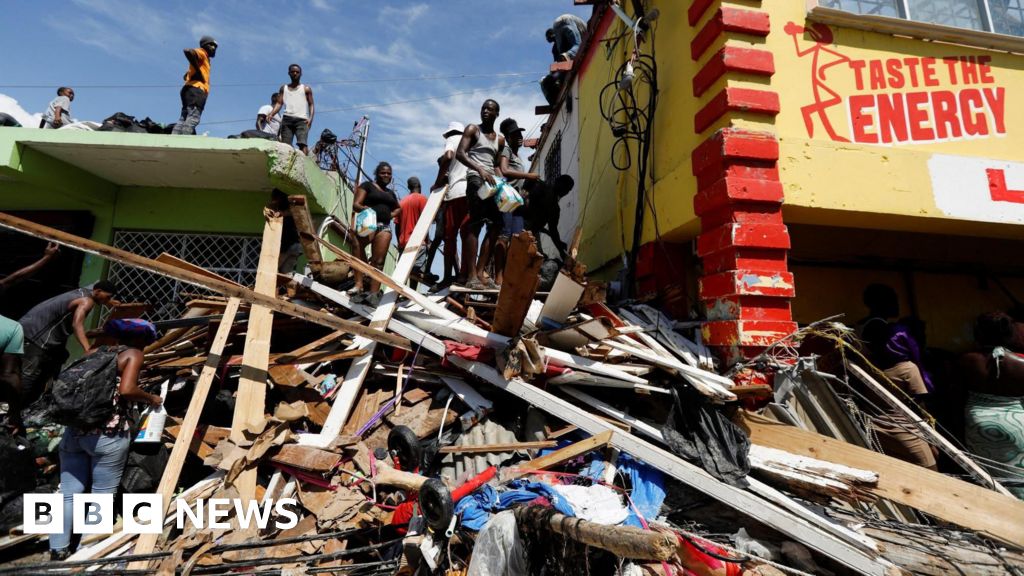
In **Jamaica**, the destruction has been severe, with entire communities cut off, homes flattened, and infrastructure left in ruins. Search and rescue efforts reveal scenes of devastation, especially in western regions where satellite imagery shows complete obliteration of some villages. Local residents articulately describe scenes of chaos, with roads blocked by fallen trees and widespread power outages—highlighting the challenge of providing aid in a country already strained by economic and social issues. Analysts warn that such natural calamities threaten to exacerbate existing inequalities, potentially destabilizing nations and fueling regional insecurity. It is a sobering reminder that the Caribbean’s geostrategic position has placed it on the frontline of climate change’s geopolitical impact, forcing neighboring nations and global institutions to confront a grim reality: the need for resilience in the face of unpredictable and increasingly destructive storms.

Meanwhile, in **Haiti**, the devastation intensified. According to UN reports, over 30 lives have been claimed, primarily due to flooding when a river overflowed in Petit-Goave. Around 15,000 civilians are sheltering across more than 120 relief centers, yet comprehensive assessments remain elusive due to inaccessible regions. Haiti’s fragile infrastructure—hindered by political instability and poverty—struggles to cope with such crises. International organizations like the UN warn that ongoing instability complicates disaster response efforts, threatening to turn localized tragedies into broader humanitarian crises. The storm’s impact underscores how conflicts and weaknesses in governance undermine a nation’s ability to survive such natural adversities, amplifying the impacts while exposing geopolitical vulnerabilities.

Turning to **Cuba** and its resilience, the island’s government reports that more than 3 million citizens faced life-threatening conditions. Nearly 240 communities have been cut off by landslides and flooding, with no fatalities yet, thanks to extensive evacuation campaigns. UN officials commend Cuba’s preparedness but emphasize that the island’s capacity to withstand such chaos is limited, especially with persistent economic constraints. The storm’s aftermath has increased calls within the global community—specifically from Western nations—to evaluate how aid and diplomatic support can bolster regional resilience. As international institutions analyze the repercussions, some argue that the response to Melissa reveals the urgent need for a restructuring of geopolitical alliances, prioritizing swift aid delivery and long-term climate adaptation strategies.

Beyond immediate relief, the storm intensifies ongoing debates over the geopolitical consequences of climate-induced disasters. Decisions by major powers to bolster humanitarian aid, or lack thereof, will significantly influence regional stability. The UK’s pledge of an additional £5 million, along with the United States deploying disaster response teams, exemplify how global actors maneuver in a landscape increasingly shaped by climate crises. As history demonstrates, failure to adapt and invest in resilient infrastructure amidst a changing climate could sow the seeds for future chaos, displacing millions and destabilizing entire regions. With the World Food Programme coordinating logistics across several nations, it becomes clear that the battle is as much about geopolitics as it is about saving lives.

As the world watches the Caribbean’s suffering unfold, the legacy of Hurricane Melissa underscores a profound truth—that our planetary fate is now intertwined with geopolitical choices, human resilience, and international cooperation. The storm’s wrath serves as a harrowing chapter in an ongoing story of climate change, conflict, and survival—reminding us that history is still being written, with every decision echoing through the corridors of power and the lives of countless innocents. Will this be a turning point leading to global unity, or merely another chapter in humanity’s struggle against the forces of nature? The answer remains uncertain, but the weight of history presses heavily upon our collective conscience.

Rising Stars Shine: High School Athletes Break Records at State Championships!

NBA’s Betting Discussions: Navigating Integrity and Engagement

The NBA is taking significant steps to safeguard the integrity of its games amidst the booming sports betting industry. Recent reports from ESPN indicate that the league and its partnered sportsbook have engaged in extensive discussions regarding the types of bets that are most vulnerable to manipulation. This proactive approach reflects the NBA’s commitment to maintaining a fair playing environment while adapting to the evolving landscape of sports gambling.

In these discussions, critical topics have emerged, particularly the appropriate betting limits for various wagers. As highlighted by sources within the league, the aim is to implement rigorous measures that not only protect teams and players but also the fans who invest their time and passion in the sport. This initiative comes as more states approve sports betting, making it imperative for the NBA to establish trust and credibility in its gambling practices.

  • Focus on Game Integrity: The NBA is actively assessing vulnerabilities in betting and determining suitable limits.
  • Collaborative Efforts: Partnerships with sportsbooks are designed to ensure compliance with emerging regulations.
  • Fan Engagement: These measures aim to enhance the experience for fans who engage in betting.

Coaches and commentators alike are watching this development closely. As Doc Rivers, head coach of the Philadelphia 76ers, stated, “The league must protect its players and maintain a level playing field, not only for the teams but for the fans who cherish this game.” This sentiment is echoed by several players who acknowledge the increasing presence of betting in the sport and the responsibility that comes with it.

Ultimately, the heart of sports lies not just in the final score, but in the stories, rivalries, and community that it fosters. The NBA‘s commitment to address these betting challenges illustrates its deeper intent to connect with fans on multiple levels. It highlights a vision where sporting events bring diverse groups together, surpassing mere statistics to forge unbreakable bonds. As the NBA forges ahead, it is clear that the love for the game transcends any scoreboard, proving that basketball remains a powerful uniting force across generations and backgrounds.

Source link

Are Russia’s new nuclear weapons real or just Putin’s bluster?

The recent series of military tests conducted by Russia signals a renewed push by Moscow to project strength amid mounting international tensions. President Vladimir Putin publicly announced the testing of advanced weaponry—namely the Poseidon underwater drone and the Burevestnik nuclear-powered cruise missile—just days apart, a move that analysts interpret as both showcasing technological prowess and strategic signaling. While Russia’s officials tout these weapons as “unmatched in the world,” experts like Mark Galeotti warn that the true military value remains uncertain. Historically, these claims dovetail with Russia’s broader doctrine of deterrence, emphasizing second-strike capabilities designed to uphold Moscow’s strategic ambiguity while testing Western resolve.

From a geopolitical impact perspective, these weapon tests come at a critical juncture. The timing—soon after tentative efforts by U.S. President Donald Trump to de-escalate the Ukraine conflict—appears deliberate. International organizations and security analysts suggest that Moscow’s gambit is meant to remind the West of Russia’s emerging military might, particularly in an era where conventional forces are under strain in Ukraine.

  • Since 2018, Russia has emphasized these weapons as “invincible,” yet their actual operational viability has been questioned, especially after catastrophic failures like the 2019 rocket engine explosion that claimed lives of nuclear engineers.

Despite claims of technological superiority, experts caution that the real capacity of these weapons remains uncertain, mirroring the ambiguity in Moscow’s broader military posture.

Meanwhile, the United States’s response has been notably restrained, with recent developments marking a strategic recalibration. The cancellation of a planned summit between President Trump and President Putin, combined with new sanctions on Russian oil giants, signals Washington’s frustration and wariness. U.S. officials have begun to, explicitly or covertly, prepare for a renewed nuclear arms race, with Trump justified resuming nuclear weapons testing as a means to maintain parity—an alarming sign of escalating tensions. On the international stage, NATO and global security think tanks warn that such displays deepen the risk of miscalculation, as Russia’s provocative tests seem designed not just for technological display but also to bluff against what it perceives as Western hesitation.

This escalation is further compounded by Russia’s strategic stance amidst a muddled battlefield in Ukraine. As David Heathcote of McKenzie Intelligence Services notes, the lackluster performance of Russian conventional forces has prompted Moscow to resort to “overexaggerated sabre rattling,” a bid to inflate its strategic importance while masking vulnerabilities. The announcements about these advanced weapons thus seem to serve a dual purpose: bolstering domestic morale and enticing international allies or adversaries into underestimating Moscow’s true military readiness. As history charts the course of nuclear proliferation, the world now stands at a critical crossroads—where each test, each declaration, shapes the fragile fabric of global security, leaving the future unsettled and the shadows of war looming larger than ever.

Woman who skipped Italy trip loses child benefits, sparking debate on social spending

The recent episodes within Britain’s welfare and social security framework underscore a profound shift in how social issues are approached, driven by data inaccuracies and strict policy enforcement. In a society where family stability depends on reliably accessible benefits, the stories of families like Sally’s reveal the harsh repercussions of a system increasingly reliant on incomplete or flawed data. Despite the apparent intent to curb welfare fraud, the implementation has inadvertently targeted law-abiding citizens, exposing a societal tension that demands urgent reform.

During a routine holiday to Italy, Sally’s family encountered a bureaucratic nightmare when HMRC wrongly inferred her family had emigrated, leading to the abrupt stopping of child benefits for her three children. This was not a case of fraud but rather a consequence of disconnected and incomplete official records—a pattern that has affected over 23,500 families in recent weeks, as documented by reports. Sociologists such as Patrick Nolan highlight that these policies, which rely on data from the Home Office and airline booking systems, fail to account for the complex realities of modern families. The reality is that many families, like Sally’s, are victims of a ‘digital dragnet’ where administrative errors create devastating human impacts, especially for children directly affected by the loss of vital support.

This situation spotlights significant social fabric concerns—families, already strained by economic pressures, are now battling a system that treats their circumstances as mere data points. Children’s welfare hinges on benefits that, when unjustly cut, threaten their education, health, and stability. Ethical questions surround the moral responsibility of government institutions that must balance the need for fraud prevention with the humane treatment of their citizens. The stories of families like Alex’s, who had voluntarily opted out of benefits but faced threats otherwise, exemplify how misuse or misinterpretation of data can generate overreach and erode trust in social services. Experts like sociologist Alice Smith warn that such policies risk alienating communities, fostering a sense of mistrust that undermines social cohesion.

Critics argue that the current effort to save millions annually might come at an unsustainable moral cost. The psychological toll on families subjected to intrusive data demands—such as bank statements, insurance claims, and travel evidence—raises fundamental questions about privacy and individual rights. HMRC’s recent reevaluation and apology indicate a recognition of errors, yet the damage inflicted on families remains. As historian Dr. John Carter observes, history shows that overly bureaucratic systems tend to alienate citizens when they forget the human element. Going forward, a balanced approach that uses comprehensive data verification while safeguarding personal dignity is essential if society is to foster trust and resilience in its social safety net.

In the tangled web of policies and technological reliance, society faces a vital challenge: transforming a system that, in its current form, risks alienating the very people it aims to serve. Ensuring that families are protected, communities restored, and social justice upheld requires more than just algorithms and data—what is needed is a moral commitment rooted in understanding and respect for human dignity. As society strives to adapt to these evolving social issues, the hope remains that genuine reform—based on integrity, transparency, and compassion—can eventually illuminate a path toward a more equitable future where the safety net is not woven from flawed data but from unwavering human trust.

NASA Debunks Reality Star’s Moon Landing Hoax

NASA Firmly Denies Moon Landing Skepticism Amid Cultural Clash

In a notable episode reflecting the ongoing tension between scientific consensus and popular skepticism, NASA responded decisively to recent remarks by Kim Kardashian, a global celebrity whose comments questioning the authenticity of the 1969 Moon landing have ignited international debate. Kardashian, known primarily for her entertainment empire, expressed doubts about the historic Apollo 11 mission during her reality TV series, asserting that the Moon landing was faked. Her claims, though widely discredited, exemplify the persistent influence of conspiracy theories in an age increasingly dominated by social media and misinformation.

Contrary to Kardashian’s assertions, NASA acting administrator Sean Duffy made an unequivocal rebuttal on social platforms, emphasizing the agency’s extensive history of lunar exploration: “Yes, we’ve been to the Moon before… 6 times!” The agency’s response underscores a broader truth backed by decades of scientific evidence and expert analysis. The discrediting of claims that the Apollo missions were hoaxes highlights the resilience of factual history against the tides of misinformation. Such denials bear significant geopolitical weight, especially as nations like Russia and China intensify their own space programs, signaling a new era of international competition in outer space.

The incident has sparked a wider dialogue about the geopolitical impact of space exploration decisions. Critics argue that the United States’ continued leadership in lunar missions, exemplified now by the renewed Artemis program under the leadership of former Donald Trump, underscores a strategic effort to reassert dominance in the final frontier. As NASA promotes returning humans to the Moon, global analysts emphasize that such endeavors are not merely technological achievements but symbols of national prestige. The International Space Station has long been a platform for geopolitical rivalry—fueling debates over space militarization and the risks of resource contention far beyond Earth’s atmosphere.

Furthermore, the controversy surrounding Kardashian’s remarks underscores a shifting cultural landscape—one where personalities wield influence that can challenge established facts, potentially impacting societal attitudes towards history, science, and international diplomacy. International organizations, including the United Nations Office for Outer Space Affairs, have consistently emphasized international cooperation, warning that misinformation and misinformation-driven skepticism could undermine collaborative efforts. As the United States recommits to lunar exploration, the lessons of history serve as a stark reminder: these are more than symbolic battles; they are moments that shape the future of human progress and global peace.

As the weight of history presses on the shoulders of space-faring nations, the decision to pursue lunar ambitions carries an inevitably profound geopolitical impact. With each new moon mission, nations are not merely exploring celestial bodies—they are staking claims in a new geopolitical landscape where sovereignty, influence, and technological supremacy will determine the future. In this unfolding saga, the controversy over a celebrity’s dubious claims becomes a symbol of the broader struggle between truth and misinformation. As history continues to write itself in the stars, one thing remains clear: the quest for greatness and the battle for narratives are intertwined, and the outcome will influence human society for generations to come.

Please provide the feed content you’d like me to base the headline on.

Fact-Checking the Debate Over Affordable Care Act Subsidies and Premium Hikes

As the U.S. government teeters on the edge of a shutdown, a heated debate rages over the future of Affordable Care Act (ACA) subsidies and what they mean for the American people. Politicians and media outlets alike are throwing around claims about who benefits from these subsidies and who is most at risk should they expire. While some statements are rooted in fact, others paint an incomplete or misleading picture. The core question remains: who truly benefits from the ACA subsidies, and how will their expiration affect average Americans?

Assessing the Claims on Subsidy Beneficiaries

Democrats argue that the majority of ACA subsidy recipients are middle-class Americans earning less than 400% of the federal poverty level (FPL). Data from the Centers for Medicare & Medicaid Services (CMS) indicates that roughly 95% of those receiving subsidies in 2024 earn below this threshold, equating to an income of around $62,600 for an individual or $150,600 for a family of five. This aligns with the original intent of the ACA, which aimed to assist those with modest incomes in affording healthcare. However, critics from the right claim that some higher-income earners and even millionaires are benefiting from subsidies, exploiting loopholes created by the program’s broad eligibility criteria.

  • Data shows that although most subsidies go to lower- and middle-income Americans, a small percentage—about 5%—may include households earning above 400% of the poverty level, potentially reaching into higher income brackets.
  • According to KFF, the average subsidy for those earning above 400% of FPL is approximately $354 per month, illustrating that taxpayer dollars are supporting some relatively well-off individuals.
  • Experts such as Jessica Banthin of the Urban Institute suggest that “it’s extremely unlikely” that families earning above $400,000 qualify for subsidies, pointing out that income thresholds are generally enforced based on annual earnings.

In contrast, Republican claims that millionaires are routinely receiving subsidies tend to rely on the fact that, prior to recent reforms, some early retirees with high net worth did qualify for subsidies based on income reports. However, current eligibility hinges on declared income, not net worth, which restricts benefits significantly for the wealthy. Nonetheless, the enhanced subsidies introduced by the American Rescue Plan—aiming to increase affordability—broadly eliminated income caps temporarily, making subsidies more accessible to a wider income range, including some higher earners depending on their circumstances.

The Impact of Expiring Premium Credits

The core concern fueling this debate is what happens if the expanded subsidies expire at the end of 2025. Estimates from the Congressional Budget Office (CBO) and the Urban Institute suggest that up to 4.2 million more Americans could lose health insurance coverage by 2034 without the enhancements. For those still enrolled, premiums are projected to increase dramatically, often by thousands of dollars annually. For example, a 60-year-old earning just over 400% of FPL could see premium costs rise by over $22,600 annually after premium increases and the removal of subsidies.

Furthermore, for families earning between 100% and 150% of the poverty line ($15,650 for individuals and $32,150 for a family of four), the financial strain could be severe, with monthly premiums rising from near zero to hundreds of dollars. These figures underscore how the expiration disproportionately affects middle- and lower-middle-class Americans, contradicting claims that only the so-called “well-off” would be impacted.

  • In Kentucky, a family of four earning 140% of FPL currently pays no premiums, but without subsidies, their costs could jump to over $1,600 annually.
  • Similarly, in Wisconsin, premium increases for families earning around $130,000 could surpass $12,000 per year, making healthcare unaffordable for many.

Policy Implications and the Broader Context

Both parties are citing these statistics to advance their agendas. Democrats emphasize the potential hardship for middle- and working-class Americans, blaming partisan gridlock for delaying a much-needed extension of generous subsidies. Meanwhile, Republicans argue that the broad eligibility—allowing higher-income individuals to receive subsidies—misuses taxpayer funds. The reality is nuanced: the expansion aimed to increase coverage and affordability, but does so in a way that encompasses some higher-income households, especially when considering geography and age, where premiums can be prohibitively high.

As Justin Lo of KFF underscores, “There isn’t a single income that premiums tax credits are phased out at,” and the actual subsidy amount depends on multiple factors, including location, age, and family size. While most enrollees indeed earn below 400% of FPL, a non-negligible minority—estimated at about 5%—earn above that threshold yet still qualify for support because of their specific circumstances.

In the end, honest debate requires transparency and full context. The facts suggest that while the ACA’s subsidies primarily benefit those in lower and middle income brackets, some higher earners do receive assistance under the current rules. Expiration of these enhanced credits would not only raise premiums for many Americans, but would also threaten to reverse a health coverage expansion that, since 2020, has seen enrollment more than double. Preserving access and affordability is essential—not only for individual health but for the integrity of our democracy, where informed and responsible citizens make choices based on truthful information.

As always, understanding the nuances behind political claims and data helps us uphold the core principle that an informed electorate is vital to the health of our democracy. Facts matter—especially when they form the foundation for policies that impact millions of lives.

Ofgem Reveals Two Million Customers Could Claim £240 Million from Unclaimed Accounts

Recent data from Ofgem, the UK’s energy regulator, exposes a troubling trend amid the ongoing economic turbulence: over 1.9 million energy accounts have been closed within just five years, leaving behind an astonishing £240 million in unclaimed credit balances. While many individuals might overlook small refunds, the cumulative figure underscores a deeper systemic issue—families and consumers are increasingly unable to recover funds left in limbo after switching providers or moving residences. This phenomenon reflects the broader consequences of deregulation and market instability, leaving the average British household vulnerable as the nation faces an uncertain winter.

The core concern is not solely financial negligence but an urgent warning about the fragile state of the UK’s energy industry amid rising costs and geopolitical strategic realignments. Despite wholesale energy prices falling by 2% over the summer, the regulator has opted to raise the price cap by £35, pushing the typical dual-fuel bill to around £1,755 annually for households paying by direct debit. This decision, though justified under current economic pressures, sparks debate among analysts who argue that such measures disproportionately burden ordinary citizens, especially as energy debt piles—reaching a record £4.4 billion as of June—continue to deepen, exposing the nation’s vulnerable social fabric.

To mitigate this crisis, Ofgem announced plans to alleviate debt for nearly 200,000 low-income households, offering debt relief potentially exceeding £1,200 per account—an effort heavily financed by modestly increasing the average household bill in the coming years. Critics, however, warn that such measures are merely a temporary salve, unable to reverse the underlying issues of energy insecurity and economic disparity. According to international organizations and global analysts, these conditions exemplify how energy policies are increasingly intertwined with geopolitical struggles. As energy markets fluctuate amid ongoing conflicts and strategic realignments—particularly in regions like Russia and the Middle East—the UK’s situation reflects a broader pattern: nations are caught in a struggle for resource dominance, which directly impacts societal stability and international influence.

Historians and geopolitical analysts highlight that the UK’s current crisis isn’t isolated but part of a larger narrative of energy politics dictating global power. As supply chains are disrupted and nations jostle for control over critical resources, the decisions made in London will resonate not just domestically but across the international stage. In this age of strategic competition, energy debt and affordability become symbols of national resilience—or weakness. Today, Britain faces a crossroads where economic hardship is woven into the fabric of global power dynamics—an unfolding chapter that will be studied by future generations, perhaps as a pivotal moment in the shifting balance of international influence.

The weight of history presses heavily upon this moment, reminding us that the choices governments make now—how they balance economic stability, energy security, and social welfare—will shape the geopolitical landscape for decades to come. As the debate over the UK’s energy policies intensifies and the shadow of geopolitical conflicts lengthens, one truth remains clear: the ongoing struggle for resources is rewriting the rules of global power, leaving ordinary citizens caught amid a storm where the lines between national interests and societal well-being blur in the unfolding narrative of history.

Microsoft’s new agent platform signals a rightward tech shift | The Verge

In an epochal shift within the technology landscape, Microsoft is positioning itself at the forefront of the AI revolution through groundbreaking developments unveiled at its recent GitHub Universe developer conference in San Francisco. As AI accelerates its encroachment into core facets of software development, disruption is becoming inevitable, signaling both opportunity and strategic recalibration for industry leaders.

The conference spotlight was on GitHub’s ambitious initiative to transform into an AI-powered coding hub with the introduction of Agent HQ. This new interface aims to serve as an ecosystem where outside coding assistants—including OpenAI’s Codex, Anthropic’s Claude Code, and emerging AI agents from Google, Cognition, and xAI—can seamlessly integrate with GitHub’s platform. These advances are designed to reinforce GitHub’s role as the connective tissue for AI-driven software development, effectively making it the central node where AI agents interact directly with vast codebases used by over 180 million developers globally.

  • Enhanced ecosystem openness, allowing multiple AI providers to plug into GitHub
  • Strategic move to maintain Microsoft’s centrality in the developer universe
  • Potential to embed AI as the default collaborator in coding workflows

Such strategic positioning underscores a clear mandate: to remain indispensable in an industry on the cusp of profound transformation. Jared Palmer, GitHub’s new senior vice president, emphasized the goal of fostering an “arms-wide-open ecosystem” where developers retain control, regardless of which AI tools they adopt. As Microsoft’s Jay Parikh, overseeing CoreAI, articulates, the focus is on “building better tools and fostering choice,” as the company accelerates efforts to integrate AI into every layer of software infrastructure. This approach aligns with industry analysis from Gartner, which asserts that the next decade will see AI become embedded in nearly all development tools—disrupting traditional workflows and redefining efficiency thresholds.

The implications extend beyond mere productivity gains. With Microsoft’s deep-rooted partnership with OpenAI—cited explicitly by CEO Satya Nadella as the catalyst behind the surge of AI coding innovations—the company aims to dominate the emerging “AI code economy.” Nadella’s reference to “the billion to ten-billion happened at GitHub” highlights a pivotal trend: AI-generated code is not just augmenting human effort but fundamentally altering the creative and specification phases of software engineering. This evolution is increasingly pushing humans towards design, strategy, and oversight, while delegating routine coding tasks to powerful GPUs and AI agents. Harvard’s MIT AI Lab and industry insiders warn that such disruption could render traditional development paradigms obsolete unless companies adapt swiftly.

Looking ahead, Microsoft’s strategic focus on disruptive AI integration signals an urgent call to industry players: those who fail to adapt risk obsolescence in a fiercely competitive AI arms race. The converging force of innovation, strategic alliances, and ecosystem decentralization suggests a future where agility and openness are paramount. The industry must accelerate investment in AI infrastructure, talent, and alliances, recognizing that the next wave of technological dominance hinges on early, bold action. As Elon Musk and Peter Thiel have long warned, this is the era where the first movers will captivate the market—those who recognize the industry’s tectonic shifts now will shape the digital future or be swept aside.

Sagrada Familia in Barcelona Tops Global Charts as World’s Tallest Church

In a stunning showcase of architectural perseverance and cultural pride, the Sagrada Família in Barcelona has officially become the tallest church in the world. Rising to an unprecedented height of 162.91 metres after the placement of the first component of its central cross, this historic basilica has surpassed the Ulm Minster in Germany, which held the record since 1890. Designed by renowned architect Antoni Gaudí, the iconic structure has been under construction for over a century, symbolizing Spain’s resilience and relentless pursuit of grandeur amid geopolitical upheavals and internal challenges.

What makes this achievement especially noteworthy is the long, tumultuous history of the basilica’s creation. Gaudí, whose visionary designs transformed the initial plans into an ambitious masterpiece, tragically died in 1926 with only one of the planned 18 towers completed. Since then, the project has faced myriad obstacles, including the destructive Spanish Civil War, during which anarchists set fire to the crypt, destroying crucial plans and models. Despite these setbacks, the construction persisted, funded primarily through donations from visitors and enthusiasts from around the world, which exemplifies its symbolic importance far beyond mere architecture. International historians and analysts view the Sagrada Família as a testament to human dedication, with many considering it a cultural microcosm of Spain’s resilient national identity.

The recent milestone is viewed by many as a geopolitical emblem of Spain’s cultural revival and national sovereignty, especially amidst ongoing debates over regional independence and identity. The tower’s completion, projected for 2026 to mark the centenary of Gaudí’s death, is accompanied by a series of commemorative events that underscore the importance of preserving Spain’s rich architectural heritage. Yet, the construction’s slow progress, punctuated by the COVID-19 pandemic, highlights the fragility of such long-term national projects in times of crisis. Economic analysts warn that the temporary halt in tourism and funding reflects broader vulnerabilities facing Spain’s economy and cultural institutions, which are often caught in the crossfire of global geopolitical shifts.

As work continues on finishing the building’s decorative sculptures and the stairway leading to its entrance, leaders, historians, and international observers watch with cautious optimism. The Sagrada Família stands not only as an architectural marvel but as an enduring symbol of human aspiration in a world where political boundaries and societal values are constantly shifting. As the tower reaches skyward, so too does the recognition that history’s greatest changes are often born from patience, resilience, and unwavering faith—qualities embodied in this masterpiece, destined to watch over the city of Barcelona for generations to come, as the weight of history itself remains in perpetual motion, forever shaping the destiny of nations and societies worldwide.

Five suspects face charges in Robert De Niro's grandson's overdose death
Five suspects face charges in Robert De Niro’s grandson’s overdose death

The recent crackdown on a fentanyl distribution network in New York has garnered international attention, representing a broader struggle faced by numerous nations grappling with the devastating opioid crisis. Five individuals—Bruce Epperson, Eddie Barreto, Grant McIver, John Nicolas, and Roy Nicolas—have been formally charged with conspiracy to distribute and possess with intent to distribute fentanyl-laced counterfeit prescription pills. This case underscores the lethal potency of illicit synthetic opioids, which have become a dangerous commodity in the global narco-economy and pose significant public health and security challenges to countries worldwide.

  • The suspects allegedly used social media platforms and encrypted messaging services to sell thousands of pills, resulting in at least three teenage deaths over the summer of 2023—highlighting how technological platforms are exploited for criminal enterprises.
  • The victims included Robert De Niro’s grandson, Leandro De Niro-Rodriguez, and others, revealing how the opioid epidemic is impacting prominent families and raising awareness among international audiences.
  • Authorities link these deaths to a broader network that traffics counterfeit pills containing fentanyl—a synthetic opioid many international organizations warn is up to 100 times more potent than heroin, significantly increasing overdose risks.

Analysts and international institutions, such as the United Nations Office on Drugs and Crime (UNODC), recognize this case as emblematic of a global epidemic. They warn that the proliferation of synthetic opioids—especially fentanyl and its analogs—has transformed the drug trade into a transnational battlefield. This escalation not only threatens national security but also destabilizes communities, especially among youth, whose vulnerabilities are exploited by organized crime syndicates. Turning points in law enforcement efforts—such as this recent case—highlight the importance of international cooperation in tracking illicit networks and dismantling supply chains that span borders.

The geopolitical impact of these domestic investigations reaches far beyond New York. Countries involved in or affected by the fentanyl trade face mounting pressure to strengthen border control, law enforcement capabilities, and international diplomatic efforts to curb drug flows. As historian and geopolitical analyst Dr. Maria Reynolds notes, “The drug trade has become a tool of asymmetric warfare—destabilizing governments and societies from within, while heightened enforcement can serve as a catalyst for greater international collaboration.” This case emphasizes that decisions made at the municipal level ripple through diplomatic channels, affecting relations between nations and shaping global drug policies.

Furthermore, the tragic death of Robert De Niro’s grandson serves as a stark reminder of societal vulnerabilities and the profound human toll of these clandestine networks. The narrative continues to unfold as authorities push for harsher penalties, with each conviction emphasizing the urgency of a global strategy against the synthetic opioid scourge. The charges, which carry mandatory minimum sentences of 20 years and up to life imprisonment if proven, represent a firm stance against organized crime but also raise questions regarding the social and economic factors that facilitate the surge of counterfeit pharmaceuticals. Society must recognize that battling this crisis involves not only law enforcement but also comprehensive public health initiatives and international cooperation.

As the world watches, history remains in the making. The story of this case intertwines with the broader arc of a dangerous era—one where synthetic drugs threaten to undermine social order and challenge national sovereignty. The sobering truth is that beneath these headlines lie potential flashpoints that could ignite larger conflicts—be they diplomatic, social, or economic. In this shadowy domain of modern drug wars, every arrest, court ruling, and international agreement shapes a future that remains unknowable, yet undeniably urgent—a stark reminder that, in the ongoing battle for global stability, history’s pen is still writing.

Social Media Auto Publish Powered By : XYZScripts.com