Matox News

Truth Over Trends, always!

Young Welsh activists rally to preserve linguistic heritage through placename submissions

Welsh Initiative to Preserve Historic Place Names: A Cultural and Political Victory

In a striking move to safeguard the rich tapestry of its heritage, Wales has launched a public-led project aimed at cataloging and preserving its ancient geographical names. This initiative, driven by the Welsh government, seeks to recover and immortalize local names—ranging from the whimsical Dôl y Tylwyth Teg (Fairy Folk Meadow) in Aberfan to the historic Ffynnon Glog near Rhyd—many of which are absent from mainstream online maps. Such efforts reflect a broader desire among the Welsh to assert cultural identity amid ongoing geopolitical shifts that threaten regional autonomy and linguistic heritage. As local communities rally behind these submissions, experts argue that how nations choose to preserve their history today will influence geopolitical stability and cultural resilience for generations to come.

This movement transcends regional pride; it is part of a larger pattern of nations revitalizing indigenous languages and identities in an era dominated by globalization and centralization. The Welsh government’s appeal for submissions has garnered nearly 200 entries within a mere two weeks, showcasing a potent grassroots response. Notably, the project builds upon prior mapping efforts like Mapio Cymru and partnerships with organizations such as Eryri and Bannau Brycheiniog national parks. These initiatives are not mere nostalgia but strategic measures—asserting sovereign cultural spaces in a world where borders are increasingly digital and fluid. The preservation of such placenames serves as a symbolic assertion of Wales’ distinct identity, reinforcing its geopolitical stance within the United Kingdom and on the European stage.

Analysts suggest that this effort is emblematic of a broader regional push across the UK and beyond, where minority nations and language groups seek to keep local histories alive against the tides of homogenization. Historians like Dr. Rhys Jones emphasize that “language and place are intertwined; they are the fabric of cultural memory.” Moreover, international institutions such as the Council of Europe advocate for protecting regional languages and place names as essential components of national sovereignty. As Wales actively documents and promotes its landscape’s historical names, it underlines a message of resistance: the preservation of language and history is a form of geopolitical defiance in a world where cultural dominance often erodes local identities.

As the project unfolds, it highlights the crucial role of grassroots activism combined with governmental support—an increasingly common model in regions seeking greater autonomy or cultural revitalization. In an age where global powers exert influence through economic and digital means, such localized efforts remind the world that history is not static but a living, breathing part of political discourse. By safeguarding these placenames, Wales reminds us that the sands of history continue to shift—and the true measure of a nation’s resilience lies in how fiercely it defends its cultural foundations. The story of Wales, with its ancient hills and folkloric fields, remains a testament to the enduring power of identity in shaping history’s ongoing narrative—an epic still being written at this very moment.


Struggling but craving Tteokbokki: Young voices on mental health and resilience

Global Reflection on Mental Health and Cultural Impact Following Baek Se-hee’s Death

The recent passing of Baek Se-hee, the acclaimed South Korean author of the bestselling memoir “I Want to Die but I Want to Eat Tteokbokki”, has sparked an international conversation on mental health, societal expectations, and the transformative power of literature. Her work, lauded for its raw honesty and empathetic tone, resonated deeply across borders, emphasizing that issues like dysthymia and anxiety are universal and deserving of open dialogue. As her death at the age of 35 remains shrouded in mystery, the geopolitical impact of her story extends beyond her personal tragedy to highlight broader mental health stigmas in East Asia and influence global perspectives on wellbeing.

Throughout her career, Baek Se-hee became a voice for a generation grappling with relentless societal pressures, especially within South Korea — a society still influenced by Confucian values of righteousness and obedience. Her candid discussions about overthinking, self-doubt, and emotional vulnerability challenged cultural norms that often dismiss or stigmatize mental health struggles. International organizations, mental health advocates, and educators have cited her work as a catalyst in destigmatizing mental illness and fostering acceptance. Historians specializing in East Asian social movements argue that her influence helped cue a shift in how mental health issues are addressed publicly, especially among youth who face crushing academic and societal expectations.

Analysts point out that her memoir epitomizes a **turning point**—a moment in which literature becomes a mirror for societal acknowledgment and change. The book’s widespread sales, surpassing a million copies globally and translated into 25 languages, reflect a collective yearning for honesty and understanding. For many young readers in Korea and abroad, her words offered validation that “it’s okay not to be perfect,” serving as a quiet revolution against the perfectionism ingrained in their societies. Critics from the international community recognize that the emotional honesty in her writing punctures through cultural taboos, paving the way for new conversations about mental health and human vulnerability on the world stage.

  • Her death emerged as a stark reminder of the urgency of mental health support, particularly in high-pressure environments where social success is often seen as the benchmark of worth.
  • The memoir’s messages resonate with youth facing the struggles of modern life amidst global competition, social media influence, and societal expectations.
  • International educators and mental health advocates increasingly cite her work in curriculum reforms, aiming to foster empathy and open mental health dialogues among younger populations worldwide.

Yet, amidst the widespread mourning and tribute, her story underscores how decisions at the international and national levels—such as mental health policy reform and cultural shifts—have profound societal consequences. South Korea’s unique mental health crisis, marked by high suicide rates and societal stigma, demonstrates how much still needs to be done. Her demise, shrouded in ambiguity, leaves an indelible mark on the global consciousness, pressing societies to confront their own mental health crises with renewed vigor. As historians debate her legacy—whether as a marker of societal change or a tragic reminder of unseen pain—the narrative continues to evolve, echoing the silent stories of countless others who quietly endure yet also seek hope.

In this unfolding chapter of history, the question lingers: will her voice inspire lasting change, or will society remain deaf to the unspoken struggles? Her story may be a personal tragedy, but it confronts us with a collective challenge—an urgent call to listen, to understand, and ultimately, to give voice to the quiet but persistent human desire to simply live and find joy amid despair. As the world watches, history writes itself anew, with each decision shaping a future that holds both promise and profound responsibility.

Google’s Gemini in Home Keeps Calling My Dog a Cat—Time for Better AI?

Google’s Gemini Revolutionizes Smart Home Ecosystem, Signaling Major Industry Disruption

In a bold stride toward hyper-intelligent home automation, Google has integrated its latest large language model, Gemini, into the Android-based smart home ecosystem, marking a pivotal shift in how consumers interact with connected devices. Announced in early October, this technological leap is not merely an incremental upgrade; it indicates a significant disruption in the smart device industry, with far-reaching implications for entrenched players and emerging startups alike. As business analysts and industry experts scrutinize, the integration of Gemini suggests an unstoppable momentum toward AI-driven environmental awareness and autonomous decision-making, setting a new standard for the convergence of AI and IoT.

By replacing Google Assistant with Gemini across a decade-old range of Google Nest devices, the company signals its focus on innovation and disintermediation. The new AI-powered assistant offers profound improvements, such as multi-command understanding, automated routines, and richer contextual alerts — capabilities once reserved for high-end enterprise systems. Notably, disruption extends beyond user experience: this technological shift challenges legacy industry models, compelling traditional security camera firms and smart device manufacturers to accelerate their AI integration plans or face obsolescence. As Gartner recently noted, the advent of large language models in consumer devices will catalyze an ecosystem where data, automation, and user engagement are more tightly intertwined than ever before.

Innovation in Action: Smarter Security and Home Automation

  • Enhanced contextual alerts — such as distinguishing delivery personnel from pedestrians or neighborhood animals
  • Advanced automation — enabling users to set complex routines through conversational commands
  • Improved response accuracy — reducing false positives like misidentifying indoor dogs as cats or hallucinating events

However, these improvements come with a note of caution. Industry veteran Elon Musk warns that heavy reliance on AI, particularly in safety-critical applications like home security, warrants rigorous testing and oversight. Currently, Gemini’s indoor camera alerts still experience hallucination issues, such as mislabeling a dog as a cat, illustrating that AI models require more refined training before deployment at scale. Still, the trajectory leads toward an autonomous, AI-driven smart environment that is less about manual control and more about seamless, anticipatory, and context-aware assistance.

Business Implications: Disruption, Competition, and Market Shifts

The strategic move by Google exemplifies disruption theory in action. Traditional players like Arlo and Sony are now under pressure to embed comparable AI capabilities or risk losing ground to Google’s integrated ecosystem. The move also raises the bar for startups aiming to carve niches in AI-powered smart homes, as consolidation appears imminent. Equally, business implications extend to data privacy debates, with AI models requiring vast data sets for refinement, thus prompting new regulatory and ethical considerations. According to MIT’s Digital Economy Lab, the integration of large language models into everyday devices accelerates a paradigm shift from device-centric to data-centric business models, where control over AI and consumer data becomes the new competitive battleground.

Looking to the future, the question remains: are we witnessing the dawn of a new era in AI-powered living spaces or the early signs of overhyped disruption? Given the rapid pace of innovation, companies that prioritize disruption through technological breakthroughs and adopt a forward-thinking, agility-first approach will shape the next frontier of smart technology. With industry giants like Google pushing the envelope, the time for startups and incumbents alike to adapt is unmistakably now — because the smart home of tomorrow is being engineered today, and those who fail to innovate risk being left behind in a dust cloud of legacy systems and missed opportunities.

Louvre in Paris Closes After Heist – French Culture Minister Confirms

The recent robbery at the Louvre Museum in Paris marks a disturbing escalation in the ongoing challenge of safeguarding cultural heritage amidst increasing global unrest. The world’s most visited museum, renowned for housing priceless artworks and invaluable artifacts, was targeted early Sunday morning as it prepared to open its doors. Reports indicate that jewelry was stolen during this breach, a loss that transcends mere material value, threatening to erode a pillar of global cultural identity. France’s culture minister, Rachida Dati, confirmed the incident, and police are now engaged in a detailed investigation, reflecting the gravity with which the country is treating this unprecedented event.

The geopolitical impact of such thefts, particularly at iconic sites like the Louvre, resonates globally. Museums, monuments, and cultural institutions serve as symbols of national pride and history. Their vulnerabilities expose deeper fissures in international security protocols and cultural diplomacy. Experts warn that the theft could facilitate the illicit trade of priceless antiquities and artworks, fueling a transnational black market that weakens the cultural fabric of nations. Analysts from organizations like INTERPOL emphasize that this event signals a complex interplay of organized crime and geopolitical instability, as art thefts are increasingly linked to geopolitical conflicts and militant groups seeking to destabilize societies by targeting their cultural symbols.

Historically, such breaches serve as strategic provocations or indicators of chaos, with some specialists comparing recent trends to the looting of Iraq’s museums during the early years of the Gulf War. How nations respond to these acts will define their cultural resilience and sovereignty in the digital age. The Louvre incident underscores the urgent need for international cooperation on security measures, intelligence sharing, and the recovery of stolen assets. Various voices, including international organizations and cultural watchdogs, warn that failure to adapt and strengthen protections could lead to a wave of similar threats, ultimately dismantling the collective memory and identity of societies.

In the broader scope, the incident at the Louvre echoes a warning for the international community: the preservation of history is a battlefield where progress and chaos collide. As nations grapple with geopolitical shifts, economic upheavals, and technological forces, the security of our shared heritage remains fragile. The relentless pursuit of power and profit ensures that, one day, the history-makers and art custodians of today may become prey in a relentless underworld of theft and smuggling. With the weight of history pressing down, the world must ask itself: how long can we protect the treasures that define our identity before they are lost to the shadows?

The Met’s Top 20 Most Provocative Artworks: Test Your Eye and Discover the Unseen

As the shadows lengthen and October’s chill sets in, the Metropolitan Museum of Art reveals a different face—a spectral gallery of the human psyche’s darkest corners. Traditionally regarded as a temple of aesthetic marvels—shimmering Impressionist landscapes, delicate kimonos, and marble gods—the museum during Halloween transforms into a haunted hall of echoes, where art acts as a mirror to mankind’s deepest anxieties. Here, with centuries of artworks ranging from ancient relics to modern horrors, we witness how culture is far more than mere decoration; it is the vessel carrying the profound stories of saints and sinners, myths and monsters, that define our identity and societal fabric.

Human history, as noted by thinkers like Tocqueville, is woven with the threads of shared symbols and collective memories—elements that affirm cohesion and continuity in the face of chaos. The artworks uncovered during this dark season serve as symbols of a universal truth: that culture, at its core, is both memoria and prophecy. The haunting images of medieval saints battling demonic forces or classical sculptures depicting menacing mythical beasts become more than relics—they become reflections of our own inner struggles and societal fears. As Chesterton argued, the true function of art is to reveal the moral order amidst disorder. These macabre masterpieces, in their spectral silence, uphold an unyielding vigilance, testifying to a civilization’s resilience against modern nihilism.

Philosophers like Ortega y Gasset have long emphasized that a society’s vitality depends on its cultural foundations. When the shift from tradition to chaos threatens our collective stability, it is art—especially the “haunted” works of the past—that anchors us. These artworks, echoing through the corridors of time, tell stories of moral daring, of the perennial struggle between good and evil, and remind us that our cultural inheritance is a sacred trust—an ongoing dialogue between memory and aspiration. The museum’s spectral turn during October becomes a reminder: that culture is neither static nor dead but a living, breathing entity infused with our collective hopes and fears, illuminating the path of human destiny.

So, as we wander through this labyrinth of shadows, let us remember that culture is both the memory of our ancestors and the prophecy of our future. In the ghostly silence of these haunted halls, art whispers that humanity’s greatest legacy is not merely what we create, but what we preserve—our moral compass, our shared stories, and our hope for coming dawn. Indeed, in contemplating these spectral artworks, we are invited to see ourselves anew—an eternal dialogue of the soul, where the echoes of the past forge the promise of tomorrow, and the memory of humanity’s darkness reveals the luminous potential of its light.

Ex-GTA Boss's Bold Vision Falls Flat in £200m Failure
Ex-GTA Boss’s Bold Vision Falls Flat in £200m Failure

Global Industry Crisis Highlights Geopolitical Shifts and Societal Impacts

In a striking display of how the cutthroat world of technology and video game development intersect with international power dynamics, recent events in Scotland underscore a broader narrative of industry instability and societal upheaval. The downfall of Build a Rocket Boy (Barb), a rising star in the gaming universe led by renowned ex-Rockstar Games figure Leslie Benzies, exemplifies the precarious balance between innovation and chaos in an increasingly competitive global landscape.

Critics initially heralded Barb’s ambitious project, MindsEye, as a potential flagship of Europe’s burgeoning gaming hub. Yet, the game’s disastrous launch—littered with bugs, performance issues, and broken promises—has triggered a wave of industry introspection. According to analysts, this failure is more than a singular setback; it signals a broader shift in the international gaming industry and tech investments. International organizations warned that such collapses threaten to undermine regional economic prospects and regional influences in the digital economy, especially as foreign investors and governments take note of internal mismanagement and lackluster results.

Decisions and Discord: The Tech Realm’s Reflection of Global Power Struggles

Amid the turmoil, former employees and industry commentators highlight a pattern of poor leadership, mismanagement, and internal conflicts that have profound geopolitical implications. The studio’s internal struggles, especially around the alleged “knee-jerk” decision-making and micromanagement by Leslie Benzies—whose reputation as a gaming pioneer was eclipsed by reports of toxic work culture—mirror the broader decline in trust towards leading Western tech corporations. The allegations of “internal and external” sabotage, alongside the heavy layoffs and union disputes, echo concerns raised by international watchdogs about corporate governance and transparency in digital industries.

The staff’s candid revelations about their frustration with top-down decisions and their accusations of dismissing worker feedback resonate with wider concerns about the decline of autonomous innovation and worker rights. Historians note that such internal chaos within major firms can precipitate a shift in global influence, as emerging markets and non-Western tech hubs seek to capitalize on Western industry’s leadership vacuum. Meanwhile, the European Union and other international bodies are stepping up efforts to regulate and influence the digital space, with some analysts warning that instability in key players like Barb could accelerate a decentralization of technological power.

The Future of Innovation and the Weight of History

As Losses mount—more than £200 million over four years and hundreds of jobs evaporate, the shadow of lost potential looms large over Scotland’s tech sector and beyond. Industry veterans warn that such failures threaten to erode the credibility of regions aspiring to lead in the next wave of technological transformation. The story of Barb, a company once celebrated for its visionary ambitions, is now a stark reminder that vision without discipline and accountability often leads to collapse. The external forces and internal turmoil continue to shape a future where innovation cannot be divorced from governance and societal responsibility.

In the echoes of this story, the weight of history persists—reminding us that nations and societies stand at a crossroads. The choices made in boardrooms and government chambers today will echo through generations. As the industry grapples with its failures, the lesson remains crystal clear: the true power of technology is rooted in its ability to uplift societies or plunge them into chaos. The unfolding narrative, still written in the digital sands of Redrock City and beyond, holds a warning: the future belongs to those who can learn from the past, lest the tide of history sweep us into uncharted depths.

Rising Stars Shine as Team X Claims Victory in Thrilling Championship Match!

Harry Kane’s Milestone Leads Bayern Munich to Victory Over Borussia Dortmund

In a thrilling match on Saturday, Bayern Munich showcased their dominance by defeating Borussia Dortmund 3-1 in front of an electrifying crowd at the Allianz Arena. The story of the night was undoubtedly the remarkable achievement of striker Harry Kane, who netted his 400th club goal, making it a memorable evening for both the player and the fans. The victory marks Dortmund’s first loss of the Bundesliga season, setting the tone for what promises to be a competitive title chase.

The game started off with high intensity, and it became palpable when Kane found the back of the net. This monumental moment not only solidified his status among football’s elite but also served as a turning point in the match. As he slotted home a pass from Thomas Müller, the stadium erupted, marking a new chapter in Kane’s illustrious career. “Achieving 400 goals is surreal. It’s been a team effort, and I’m proud to contribute,” Malone said post-match.

In addition to Kane’s historic goal, several other players emerged as key contributors. Leroy Sané scored a brilliant goal just minutes before halftime, demonstrating Bayern’s attacking prowess with pinpoint accuracy. With standout performances from players like Joshua Kimmich and a commanding display from coach Thomas Tuchel, Bayern Munich demonstrated why they remain at the pinnacle of German football.

Key takeaways from the match include:

  • Harry Kane: 400 club goals and a goal in this match
  • Leroy Sané: Crucial goal before halftime
  • Bayern’s defense held strong, limiting Dortmund’s chances

In a post-match statement, commentator Uli Hoeneß reflected on the significance of this victory as more than just three points; it symbolizes the relentless spirit of football. “Every match is more than just a scoreboard. It’s about passion, unity, and the relentless pursuit of excellence,” he remarked. As the Bundesliga season progresses, one can feel the unity that sports bring—beyond mere rivalries, it’s a celebration of talent, teamwork, and dedication. In the grand tapestry of athletics, stories like that of Harry Kane serve to unite fans and players alike, reminding us why we love this beautiful game.

Source link

Catalonia town bans Black Cat adoptions this Halloween, citing safety concerns

Shadows of Tradition and Modern Morality: The Black Cat Ban in Terrassa

In a world increasingly attuned to the nuances of culture, animal welfare, and security, Terrassa, a historic town in Catalonia, has taken a controversial step that underscores the global tension between tradition and modern-day safety concerns. The town’s decision to temporarily ban the adoption of black cats during Halloween—set to last from October 6 to November 10—has sparked debates that reach far beyond its provincial borders. This measure, justified by local authorities as a safeguard against potential ritualistic abuse, embodies a broader societal shift where concerns for animal welfare increasingly influence policy-making amid fears of exploitation.

While Terrassa’s city council reports no local record of cruelty toward black cats, the decision aligns with a rising wave of precautionary policies motivated by incidents elsewhere—an approach reinforced by warnings from international animal rights organizations. European and Western communities have long associated black cats with superstitions rooted in witchcraft and misfortune, yet in many other cultures, such as in Japan and Egypt, these animals symbolize prosperity and good luck. The contrasting symbolism underscores how cultural perceptions can influence policy decisions that, ostensibly, aim to protect animals but also reflect societal fears and prejudices. Prominent historians and analysts suggest that such actions are frequently reactions to heightened societal anxieties, especially amid cultural shifts emphasizing safety and morality over centuries-old traditions.

Geopolitical Impact and Society’s Response to Cultural Shifts

The black cat ban in Terrassa could be viewed as emblematic of a larger global trend in which local authorities adapt policies based on perceived threats—whether they stem from cultural misunderstandings or real incidents—meanwhile influencing international standards. Such measures might appear minor, but they carry significant geopolitical implications. When a European town adopts an anti-\u201crituals\u201d stance without evidence of actual abuse, it adds to the narrative of a continent increasingly cautious—or perhaps afraid—of its own cultural rituals and symbols. Analysts warn that this could set a precedent, encouraging other jurisdictions to implement similar restrictive policies rooted in moral panic rather than factual crime rates.

Organizations like the World Animal Protection have expressed concerns about such bans, emphasizing that they often obscure deeper societal issues of superstition and misinformation. Yet, the decision’s impact on society reaches beyond animal welfare, touching on broader matters of cultural identity, immigration, and the ongoing clash between tradition and modern modernization. This is a reflection of how international communities are increasingly caught in debates where security and morality are prioritized over cultural diversity and historical significance. Political commentators argue that such measures, while temporary on the surface, could deepen divisions within Europe, particularly amid the continent’s ongoing struggle with multicultural integration and societal cohesion.

Yesterday’s Traditions, Today’s Fear: The Unfolding Tale of Cultural Evolution

As Terrassa‘s measures take hold, history will record whether this is a fleeting precaution or a sign of deeper societal transformation. The city’s decision to restrict animal adoptions during Halloween, though presented as an “extra precaution,” hints at a broader narrative echoed across borders: the ongoing effort to reconcile age-old cultural symbols with modern moral standards in an interconnected world. International organizations monitor these shifts, warning that too often, fear-driven policies obscure genuine cultural exchange and risk marginalizing traditions that have defined societies for centuries.

Indeed, as history continues to unfold, the world stands at a crossroads—where decisions on seemingly minor issues like the fate of black cats embody the profound tensions shaping the future of cultural identity, security, and morality. This is not just about animals or superstition; it is about how societies choose to navigate the complex dance between honoring the past and protecting the present, with the specter of history hovering in the background as an unyielding witness to all that is lost and gained in the march forward.

West Yorkshire Parents of Neurodivergent Kids Call for Stronger Support System

Society’s Silent Crisis: Neurodivergent Families and the Glaring Gaps in Support

In recent months, families across the UK have sounded a chorus of concern, revealing a systemic failure in supporting neurodivergent children and their families. Underdiagnosis, inadequate post-diagnostic support, and overwhelming waiting times are not just bureaucratic stumbling blocks—they are societal failures that ripple through families, schools, and entire communities. The stories emerging from West Yorkshire and beyond underscore a disconcerting truth: neurodivergent children are often left isolated, and their parents are pushed to their limits without meaningful assistance.

Parents like Louise Moller from Leeds, whose son Noah was diagnosed at age five, describe a distressing pattern. “They gave us a few sessions and some leaflets, then dropped us,” she laments, highlighting an overarching issue where diagnostic processes are quick, and support networks are scarce or non-existent. This abandonment leaves families in a state of helplessness, often forcing them into roles of advocates and caregivers without the necessary resources. Such challenges are exemplified by the case of Kerri-Anne Ball, who began the autism assessment process for her son at age two but received her official diagnosis only at age four. Even then, her query about ongoing support was met with a stark silence—their case file was closed, and support ended at diagnosis. This pattern of minimal engagement fuels feelings of uncertainty and despair that leave many feeling forgotten by the very institutions meant to serve their needs.

More troubling are the prolonged wait times—according to NHS statistics, as of June 2024, over 236,000 individuals in England—including children—wait for autism assessments, while up to 549,000 others are awaiting evaluations for ADHD. These delays are not mere statistics but a representation of families forced to navigate their journey alone, often in silence. As social commentators and sociologists like Dr. Andrew Wills have observed, the waiting game exacerbates social exclusion, especially for vulnerable children whose educational development may be hindered. Furthermore, the social tensions generated by these gaps threaten to deepen divisions, as communities wrestle with the stigma and misunderstanding surrounding neurodiversity. The moral imperative is clear: early diagnosis is crucial, but it must be accompanied by sustained support—something that currently remains elusive for many.

Fortunately, amid the darkness, local charities like Northorpe Hall Child & Family Trust are pioneering efforts to reconceptualize support. Rosa Forrest, the organization’s lead for neurodevelopmental issues, emphasizes the importance of community-based interventions, noting that many parents feel unheard and isolated. Her initiative, Me + My Normal, brings parents into the fold alongside their children, fostering a shared space for understanding and resilience. These efforts, though vital, are only a palliative in a landscape that desperately needs systemic reform. Social commentators, including Dr. Lisa Grant, argue that society must recognize the human toll—*not just in academic or bureaucratic terms but in how families weather a storm of neglect*—and respond with urgent, dedicated funding for both diagnostics and ongoing support services.

In the final analysis, society stands at a crossroads. The stories of Louise, Kerri-Anne, Miriam, and Rosa are not isolated incidents but voices of a larger, systemic crisis—the neglect of our most vulnerable. As society grapples with these social fissures, perhaps hope lies in a collective awakening of empathy and action. The challenge remains: will society recognize that the true measure of our progress is how we support those most in need? In the quiet resilience of families enduring these hardships flickers a light—a hope that society’s conscience can be awakened, transforming neglect into nurture, indifference into advocacy. After all, the real society we build tomorrow depends on how fiercely we fight for the children and families today.

U.S. to Bring Back Survivors of Strike on Drug-Running Submarine, Trump Confirms

A New Chapter in the Geopolitical Conflict Over Drug Trafficking and Sovereignty

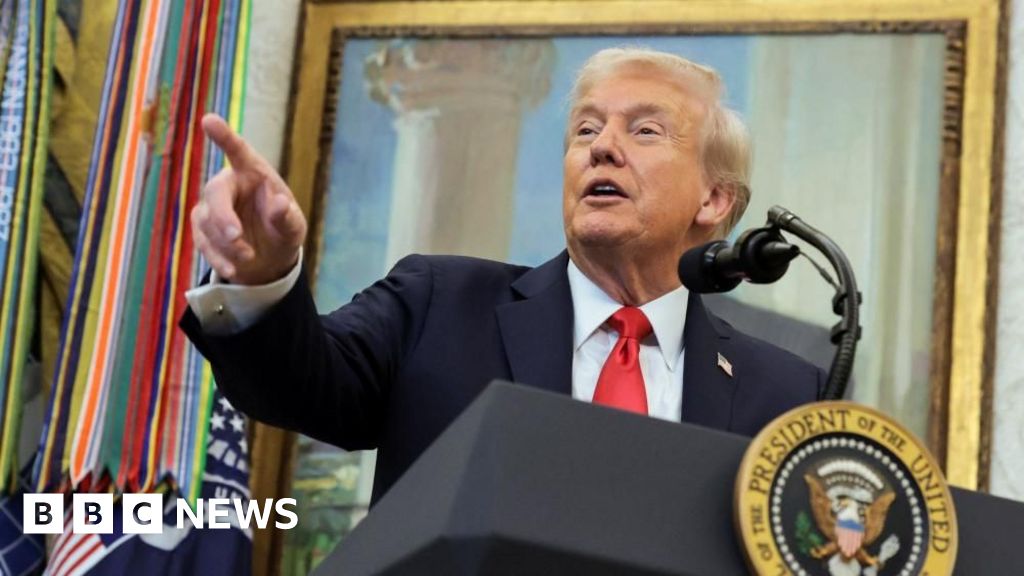
In a series of aggressive military actions taking place in the Caribbean Sea, the United States has reportedly targeted what President Donald Trump describes as a drug-carrying submarine. The strike, which resulted in at least two survivors being rescued and returned to Colombia and Ecuador, marks a significant escalation in Washington’s clandestine campaign against narcotrafficking routes. Over recent weeks, at least six such strikes have been recorded, with the latest incident raising serious diplomatic concerns, especially from Colombia, whose President Gustavo Petro condemned the attack as a violation of sovereignty and, he claimed, an act of murder.

This latest intervention underscores a complex and contentious effort by the US to combat a thriving network of illicit narcotics flowing from Latin America into North America. ^This approach reflects a broader shift toward unilateral military actions against suspected drug trafficking vessels, often classified as narco-subs—homemade, fibreglass vessels capable of avoiding detection and sinking after delivering their deadly cargo. Such operations, while justified publicly as anti-drug efforts, have attracted harsh criticism from human rights monitors and international law specialists. The UN-appointed human rights experts have described the strikes as “extrajudicial executions,” pointing to the profound legal and moral questions surrounding targeted killings without due process.

The Geopolitical Impact of US Naval Interventions

Historians and international analysts warn that these actions could deepen regional instability and foster distrust between the United States and Latin American nations. How decisions made in Washington ripple across the region is critical for understanding future security dynamics. Venezuela, under the leadership of President Nicolás Maduro, has vehemently accused the US of trying to make the nation a colony through covert operations, including the targeting of alleged drug traffickers. Maduro’s accusations echo a long-standing US suspicion that Latin American governments are either complicit in or vulnerable to US influence campaigns.

Moreover, the implications extend beyond immediate military actions. The US‘ stance—emphasizing that these vessels are primarily used for drug smuggling—aligns with a tough-on-crime posture that many analysts see as part of a broader geopolitical strategy to exert power in the hemisphere. Critics argue that this approach risks stoking anti-American sentiment and encourages closer ties among countries like Venezuela and Colombia to evade US efforts or resist its influence. The sanctions and covert military efforts risk transforming local conflicts into proxy struggles, further destabilizing already fragile states.

How International Communities Are Responding

International organizations and scholars are scrutinizing the legality and morality of these targeted operations. UN human rights experts have condemned the strikes, asserting that they violate international law by bypassing judicial processes. Meanwhile, some policy analysts argue that such unilateral actions set dangerous precedents, potentially opening the door to more extrajudicial killings under the guise of the war on drugs. The tension between sovereignty and security remains unresolved, and the global community watches anxiously as the US continues its campaign, which appears to be aimed at curbing the flow of narcotics but at the cost of international norms and trust.

As history unfolds in the turbulent waters of Latin America, the weight of these choices hangs heavy. The narrative of intervention—justified or not—serves as a stark reminder of how fragile peace and sovereignty are in a region where the echoes of history’s conflicts continue to shape the present. Today’s actions reverberate into tomorrow, setting the stage for a new chapter of conflict—one that the world must confront with clarity, caution, and unwavering commitment to justice.

Social Media Auto Publish Powered By : XYZScripts.com