Matox News

Truth Over Trends, always!

Fact-Check: Viral claim about climate change impacts rated false.

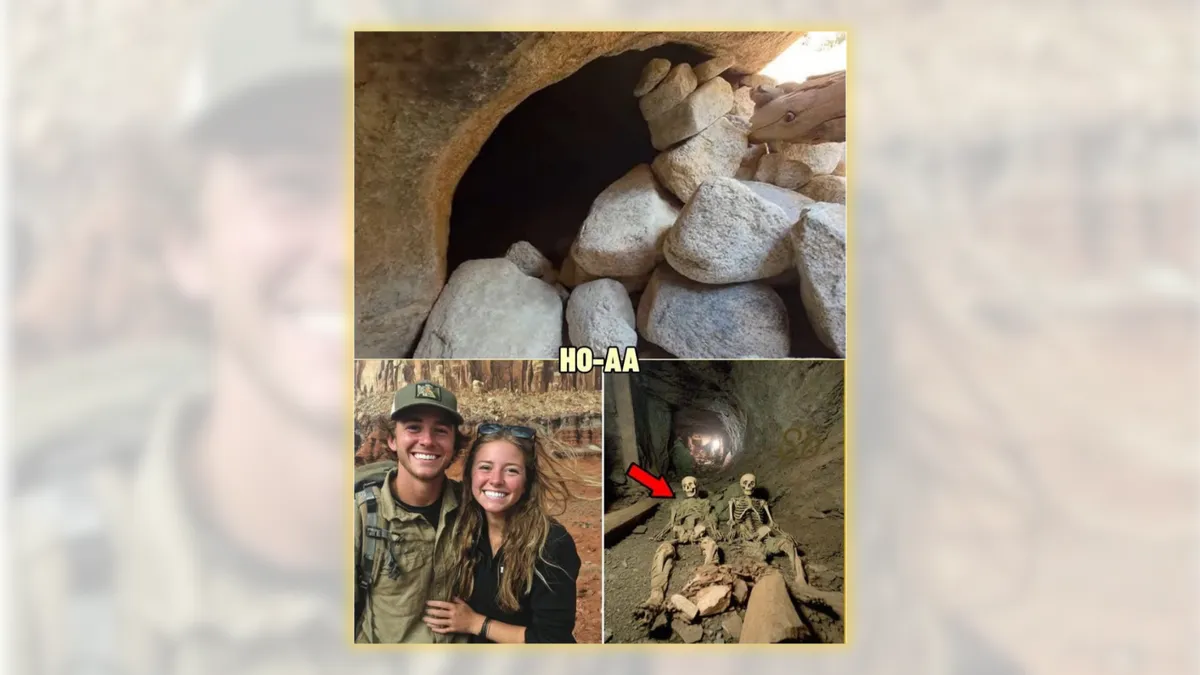
Fact-Check: Are Stories About Missing People Being Fabricated?

Recently, circulating claims have alleged that stories of missing persons being found under strange or suspicious circumstances are merely *”made-up stories.”* Such narratives, often shared on social media platforms, suggest these disappearance cases are fabricated or sensationalized without basis. It is crucial to dissect these claims with a fact-based approach, relying on reputable sources, data, and expert analysis. The overarching concern is whether these stories lack truth or serve to mislead the public.

Examining the Evidence Behind Missing Persons Cases

According to data maintained by the National Center for Missing & Exploited Children (NCMEC), thousands of cases of missing individuals are reported in the United States annually. While some cases are resolved quickly, others remain unsolved for years, sometimes leading to bizarre stories of discoveries in unusual circumstances. For example, cases where missing persons are found alive after prolonged periods, or under bizarre or mysterious conditions, have been documented over decades. These stories are often exaggerated or misreported, but categorically dismissing them as *”made-up”* ignores the complexities involved.

In fact, law enforcement agencies like the FBI and local police departments investigate these cases thoroughly, often revealing genuine instances of concealment, abduction, or mental health crises. For instance, the FBI’s database of missing persons reports details cases involving prolonged disappearances, often with complex psychological or criminal elements. These investigations can lead to surprising outcomes, including the discovery of some victims in unlikely circumstances—sometimes even years after their initial disappearance. Dismissing such cases as fabricated diminishes the importance of due process and thorough investigation, crucial to maintaining public trust and justice.

Are Disappearance Stories Fabricated or Distorted?

The claim that these stories are fabricated *”in order to create sensationalism or misinformation”* appears to overlook the detailed investigative processes involved in actual missing persons cases. Dr. Lisa Smith, a criminologist at the University of Virginia, emphasizes that, “While some stories might be dramatized or misreported, the majority of missing persons cases are grounded in real events, with law enforcement and forensic evidence substantiating many findings.”

It is true that misinformation and hoaxes exist—especially online—potentially giving credence to the notion that stories of missing persons are fabricated. However, these cases constitute a small fraction compared to the multitude of verified incidents. Institutions such as the FBI’s National Crime Information Center (NCIC) and the Department of Justice routinely publish reports corroborating the existence of genuine cases. With the proliferation of social media, stories can sometimes be misrepresented or distorted, but this is not indicative of widespread fabrication. Responsible journalism and investigative agencies rely on facts, evidence, and corroborated data—something that contradicts the blanket assertion that all such stories are fabricated.

The Importance of Truth and Responsible Citizenship

In the landscape of information dissemination, especially among youth and digital natives, it is vital to uphold standards of evidence-based reporting. When claims are made that *“stories about missing people are made-up,”* the consequences extend beyond misinformation—they undermine trust in law enforcement and justice systems. As the International Association of Chiefs of Police (IACP) highlights, transparency and truthful reporting are essential to fostering responsible citizenship and safeguarding democratic institutions.

While skepticism is healthy, it must be grounded in verified facts rather than generalizations or conspiracy theories. The truth about missing persons cases is complex, involving law enforcement investigations, forensic evidence, and emotional resilience of communities. Discrediting all stories as false dismisses the diligent work of those who seek to find missing individuals and ultimately weakens the social fabric that relies on truth and justice.

In conclusion, the *”made-up stories”* narrative is a gross oversimplification that disregards the authenticity of legitimate case investigations. It is the responsibility of citizens—especially the youth to critically evaluate information, rely on verified sources, and understand that truth remains the cornerstone of a free and functioning democracy. Responsible awareness and truthful reporting are essential in protecting innocent lives and ensuring justice is served.

Cappadocia: Turkey’s Ultimate Trailblazing Spot for Youthful Adventurers

Embracing the Spirit of Adventure: Discovering Cappadocia

In the heart of central Turkey, lies a landscape more surreal than any daytime dream—Cappadocia. Famous for its whimsical “fairy chimneys”, this region encapsulates a perfect synergy of natural wonder and human ingenuity. Thousands of years ago, this terrain was forged from volcanic ash that cooled into soft, porous tufa rock—a material so easy to carve yet hardened upon exposure to air. Over centuries, water, wind, and time sculpted these formations into towering spires and intricate cave dwellings. Today, these ancient structures not only mark Cappadocia’s rich history but also serve as a testament to the resilience and ingenuity of its early inhabitants, who carved monasteries, churches, and homes directly into the rocks.

While captivating aerial views from countless hot air balloons draw visitors from around the world, seasoned explorers know that the region’s true magic unfolds on foot—or even better, horseback. The region’s extensive trail system and guided tours allow travelers to experience the authenticity of Cappadocia’s rural past and connect deeply with its landscape. As medieval art historian Tolga Uyar highlights, sites like Zelve have stood for over 1,400 years, continuously inhabited and reimagined, making them living, breathing monuments to history. Wandering these ancient roads, a visitor can glimpse into the lives of monks, farmers, and early Christians who sought refuge amidst the rocks, carving out communities that defy time.

For those seeking a personal impact beyond mere sightseeing, Cappadocia offers numerous wellness-oriented activities. The naturally preserving environment invites tranquil hikes through lush river valleys like Ihlara, where spring blossoms and the melody of nightingales create an almost meditative experience. Guided excursions, such as those led by locals like Mehmet Güngör, reveal hidden churches and plant species unseen by casual travelers. The region’s horse-riding tours, especially at Cemal Ranch, embody a sense of freedom and harmony with nature. As Cemal Koksal reflects, riding in these valleys provides a peaceful connection to Turkey’s historic Yılkı horses, a tradition of free-roaming steeds that symbolize the wild, unspoiled character of Cappadocia.

  • Travel Tips: Embrace guided walks to unlock secret pathways and learn about the region’s history from locals with generations of experience.
  • Lifestyle Hacks: Carry lightweight hiking gear, water, and a camera to capture the breathtaking contrasts—from pinkish dawns in Red Valley to the lush greenery of Ihlara in spring.
  • Leisure Inspiration: Participate in full moon hikes or sunset horseback rides to view the valleys in their most dazzling light, fostering a sense of wonder and personal renewal.

In this landscape where centuries-old churches meet the natural artistry of erosion, inspiring tales and visuals intertwine to remind us that lifestyle is a journey. Whether scaling ancient steps into monasteries or riding under crimson sunsets, visitors are invited to rediscover their own sense of adventure and grounding. Cappadocia continues to beckon those with a spirit for exploration, offering a timeless canvas where history, nature, and personal transformation meet in perfect harmony. Ultimately, embracing such a journey is about more than sightseeing; it is about welcoming the possibility of transformation and habitually seeking beauty in the world—and within ourselves.

High School Stars Shine Bright: Championship Weekend Delivers Thrills and Upsets

Anticipated Superstar Returns Shape the 2025-26 Sports Season

As the 2025-26 sports season approaches, fans and analysts alike are eager to see the impact of several injured superstars returning to the field. These athletes are not just key players for their teams but also icons capable of changing the trajectory of the league. The spotlight shines brightest on names that have been sidelined, making their comeback a major storyline as the season unfolds.

Players to Watch: Among the most eagerly awaited returns is David Johnson of the Redhawks. Johnson, known for his explosive speed and agility, suffered a severe ankle injury last season. Coach Peter Thompson remarked, “David’s determination during rehabilitation has been incredible. We are optimistic he will return to his previous form and play a crucial role in our lineup.” The dynamic forward’s comeback is expected to be a game-changer, especially after accounting for his impressive average of 22 points and 8 rebounds per game before the injury.

Another top star anticipated to make a splash is Butch Malone from the Titans. He endured a shoulder injury that kept him away from the court. His return in the opening match is set to elevate the team’s performance, given his prior stats of a 37% three-point shooting rate. Commentators are keen to observe how Malone adjusts back into the Titans’ fast-paced play style under Coach Lisa Harper.

  • David Johnson, Redhawks – Ankle injury, expected return enhances scoring potential.
  • Butch Malone, Titans – Shoulder injury, three-point shooting pivotal for team strategy.
  • Crystal Lee, Sharks – Recovering from knee surgery, anticipated to boost defensive and offensive strategies.

As the season looms, the returns of these athletes bring hope and excitement, reminding fans of the resilience that characterizes sports. _The cumulative effect of their competitive spirit transcends individual performances and brings communities together, united by their shared passion for the game_. The thrill of witnessing a player’s journey from injury to comeback is not just a victory for the athlete; it is a victory for every fan who has ever dreamed of greatness in the arena.

Source link

French PM Supports Suspending Macron's Pension Reform to Save Government
French PM Supports Suspending Macron’s Pension Reform to Save Government

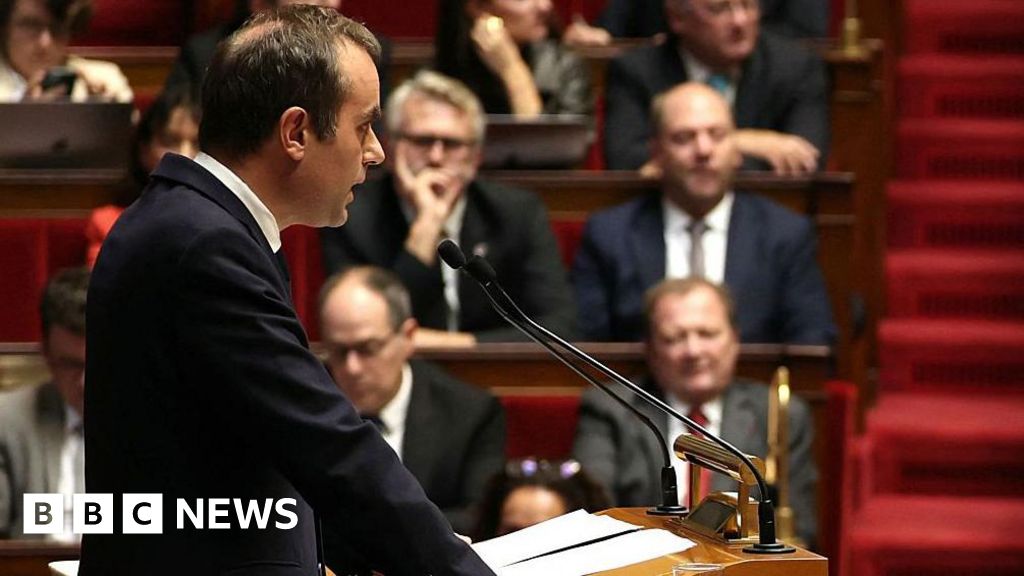
In a dramatic turn of events, France finds itself at a crossroads as Prime Minister Sébastien Lecornu signals a potential halt to the contentious 2023 pension reforms. These reforms, which sought to increase the retirement age from 62 to 64, were heralded as a cornerstone of President Emmanuel Macron’s second term, symbolizing his push for economic modernization amid staunch opposition. However, recent political instability threatens to unravel Macron’s agenda, raising questions about the future trajectory of French domestic policy and its ripple effects across Europe and beyond.

The move to suspend the reforms, announced by Lecornu amidst looming votes of no-confidence, underscores the fragile consensus within France’s political landscape. With the government’s survival hanging in the balance, opposition parties—particularly the far-left and far-right—are pressing for parliamentary elections, demanding a fundamental reset to the nation’s leadership. The Socialists, signaling a willingness to cooperate, insist that any support hinges on a *full and immediate suspension* of the pension changes—a stance that puts Macron’s reforms in direct jeopardy. As analysts highlight, this standoff is more than mere policy disagreement; it reflects a broader crisis of legitimacy and public trust, with some framing it as a symbolic ‘wound on democracy.’

This domestic turmoil occurs amidst the broader context of Europe’s economic challenges. France’s looming €3.4 trillion debt—representing roughly 114% of its GDP—positions it dangerously close to the edge of fiscal stability, with debts rivaling those of Greece and Italy. The austerity measures necessary to fund such debt are politically sensitive, especially when paired with social discontent. According to prominent European financial analysts, the potential suspension of pension reforms and the ensuing economic concessions could further strain the nation’s budget, with Lecornu estimating a €400 million deficit cost in 2026 and a staggering €1.8 billion loss in 2027. These figures underscore the delicate balancing act faced by the government and highlight the geopolitical impact of fiscal policy decisions—decisions that will define France’s stability in a multipolar world.

Beyond France’s borders, the repercussions of this political upheaval reverberate across Europe and the transatlantic alliance. European institutions, watching a key member state teeter, are concerned about the erosion of policy continuity and stability. The scenario echoes historic moments of crisis during Europe’s debt struggles, where internal political fragility threatened the cohesion of the eurozone. Meanwhile, international organizations such as the IMF and the European Central Bank have issued warnings that prolonged instability in France could hinder economic recovery and strategic cooperation. As vaunted historians and geopolitical strategists reflect, these events are a vivid illustration of how fragile the fabric of democracy can be—even in nations that see themselves as pillars of stability. With France’s future hanging in the balance, the unfolding crisis is no less than a testament to the fierce contest between tradition and reform, sovereignty and supranational influence.

Ultimately, the coming days may well be remembered as a pivotal chapter in the history of Europe, a moment when the continent’s enduring power was challenged by internal discord and external pressures. Will France emerge from this crisis with renewed resolve or succumb to the weight of its accumulated fears? As the nation grapples with its destiny, it leaves the world watching, uncertain if this is the dawn of a new era or the death knell of a proud republic in flux—an unfolding drama etched into the annals of history.

Culture’s Role in Shaping Our National Identity

At the core of a nation’s identity lies its culture — an intricate tapestry woven from history, traditions, language, and shared values. Critics often argue that in an increasingly globalized world, the preservation of cultural distinctiveness becomes a challenge, yet it remains the most powerful force shaping national character. Alexis de Tocqueville famously observed that culture provides the moral fabric that binds individuals to their collective destinies. Today, as nations face pressures from economic and cultural homogenization, it becomes essential to recognize how deeply rooted cultural narratives foster a sense of belonging and reinforce the social cohesion needed for a resilient nation.

Many contemporary analysts suggest that the identity crises faced by modern nations can be traced back to the erosion or neglect of cultural foundations. When policies prioritize economic growth over cultural preservation, societies risk losing their distinctiveness, leading to a dilution of their shared values. This concern has been passionately articulated by thinkers like Samuel P. Huntington, who argued that cultural identities are vital in shaping political stability and social harmony. A nation’s cultural narratives serve as a bridge connecting past, present, and future — fostering a collective memory that guides societal norms and expectations. When these narratives are deliberately marginalized, communities may experience fragmentation, weakening the social fabric that has historically held them together.

Furthermore, educational systems and media serve as battlegrounds for cultural transmission, playing a pivotal role in either strengthening or undermining national identity. Critics note that in many democracies, there is a tendency to soft-pedal the importance of shared cultural values to appease a globalized mindset that champions diversity at the expense of unity. However, as Roger Scruton emphasized, a vibrant national culture is essential for fostering patriotism and civic pride — qualities that underpin societal resilience in times of crisis. It is through the celebration of heritage, language, and traditions that young generations cultivate a deep-seated respect and understanding for their roots, ensuring that the spirit of the nation endures amid tides of change.

Ultimately, the weight of culture in shaping our national future resonates as an almost poetic truth: that in the silent depths of shared stories and customs lies the blueprint for survival and renewal. As history’s currents threaten to drown distinct identities in a sea of sameness, it falls upon each generation to carry the torch of cultural memory. For only then can a nation remain more than just a geopolitical entity — it becomes a living, breathing vessel of collective hope, resilience, and destiny. The future waits patiently in the shadows of history, whispering that a nation’s true strength is not merely in borders or armies, but in the enduring legacy of its cultural soul, beckoning us towards a horizon where identity is not lost but reborn anew in the flames of tradition and innovation alike.

Meet the Hostages Freed: What You Need to Know

Gaza Conflict Escalates as Hamas Releases Hostages Amid Devastation

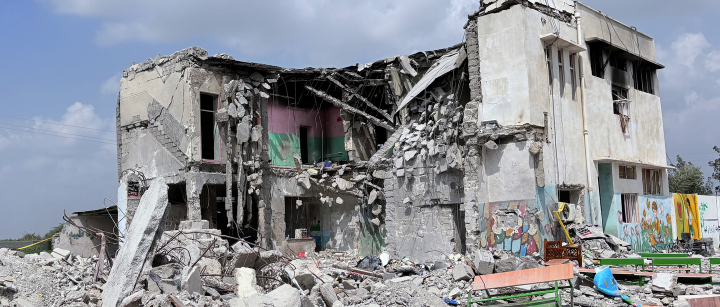
The ongoing conflict between Israel and Hamas has reached a critical juncture, with recent developments revealing both tragic human tolls and shifting geopolitical strategies. According to the Israeli military, 20 hostages have been released by Hamas and returned to Israel, yet the grim reality remains stark, as 48 hostages continue to be held in Gaza. This stark divide underscores the brutal human cost of the conflict, where families across the region face uncertainty and despair. The situation is further compounded by the death toll, with Gaza’s Hamas-run health ministry reporting more than 67,000 killed—a figure that international analysts believe may even understate the true scale of devastation.

Within this fraught landscape, the stories of individual hostages reveal a haunting tapestry of suffering. The twin brothers Gali and Ziv Berman were abducted from Kibbutz Kfar Aza, Ziv held for over 40 days, enduring separation and uncertainty before their eventual release amid a fragile ceasefire. Similarly, Ariel Cunio was forced to confront what he described as “a horror movie” in captivity, only to be freed months later. Others, like Yosef-Chaim Ohana, still face an uncertain future, with Hamas claiming his body was returned after being found dead in Gaza. These individual tales are emblematic of the broader implications of the conflict—how international decisions and military actions directly impact lives, shaping the social fabric of both nations.

International Reactions and Geopolitical Ramifications

The United Nations and various Western allies have condemned the violence, yet their calls for restraint are overshadowed by a fundamental shift—how international pressure is recalibrating, with some nations seizing opportunities amid chaos. Countries like Tanzania and Thailand mourn their fallen citizens, whose deaths in Gaza have ignited debates about international involvement and the limits of diplomatic intervention. Meanwhile, Israel faces mounting pressure to justify its military actions, which have already resulted in a humanitarian crisis that many attribute to a defensive stance against a ruthless enemy. The real turning point is in how diplomatic strategies evolve amidst this violence, with some analysts warning that a failure to pursue a decisive resolution risks a prolonged regional conflict with far-reaching consequences beyond Gaza.

Historians such as Benny Morris and Finkelstein, along with international organizations like Amnesty International, suggest that each decision—whether to escalate or negotiate—will ripple through history, shaping the future of Middle Eastern stability. The shift towards military escalation appears to be the prevailing option for many nations, as they grapple with defending their interests in a volatile geopolitical chessboard. The high human cost and the emotional toll on families continue to underscore that the repercussions, both immediate and long-term, threaten to redefine notions of security, sovereignty, and humanity itself.

The Weight of History Still Unfolding

As dozens of families mourn their lost and mourn the hope of reunion, and as the world observes with bated breath, the regional landscape stands at a dangerous crossroads. Hamas’ release of hostages and the human stories intertwined with the violence serve as a sobering reminder: the decisions made today will echo through the corridors of history, long after the guns fall silent and the dust settles. The relentless cycle of violence and diplomacy continues, leaving behind a legacy of resilience, tragedy, and the uncertain promise of peace. As nations debate and confront their own responsibilities, the unfolding chapters of this conflict serve as a stark testament to the enduring, often tragic, resilience of the human spirit in the face of relentless upheaval.

India’s Airbound scores $8.65M to launch rocket-inspired drones for ultra-cheap deliveries

Airbound’s Disruptive Drone Innovation Promises to Revolutionize Last-Mile Delivery

In a move that could redefine last-mile logistics, Indian startup Airbound has secured $8.65 million in seed funding, led by Lachy Groom, co-founder of Physical Intelligence. The fresh capital infusion signals a growing industry interest in groundbreaking drone technologies capable of achieving one-cent delivery costs, threatening traditional logistics and delivery models globally. As the company embarks on pilot programs with Bengaluru’s Narayana Health and eyes expansion into the U.S., its innovations are poised to challenge entrenched delivery paradigms, emphasizing efficiency, lightweight design, and autonomous operation.

Key to Airbound’s disruptive edge is its ultra-light, blended-wing-body aircraft, the TRT drone, engineered explicitly for small payload deliveries. Pushp, the startup’s founder and CEO, emphasizes that current drone efficiency benchmarks are fundamentally broken, citing that “drone-to-payload weight ratios” are far from optimal. “You need four kilograms of drone to lift one kilogram of payload,” Pushp explains, highlighting the critical need for innovation in aerodynamic efficiency. By focusing on reducing drone weight — the initial prototype weighs around 3.3 pounds — and improving energy usage, Airbound intends to slash energy costs by 20 times, making one-cent delivery not just aspirational but practically achievable.

This strategic focus on technological innovation and cost reduction has broader business implications. Airbound plans to vastly expand manufacturing capacity, aiming to produce over 100 drones daily by 2027 and scaling deliveries to a million daily within two years. Such ambitious growth demands a paradigm shift from traditional delivery fleets towards autonomous, highly efficient drone networks. Industry experts from institutions like MIT and analysts at Gartner recognize this trajectory as part of a broader wave of disruption, which could eventually render legacy last-mile logistics providers obsolete or force them into strategic pivots. As Pushp underscores, “logistics is intrinsically a physics problem”—emphasizing that success hinges on minimizing weight and maximizing efficiency.

The implications are profound: if startups like Airbound harness this disruptive innovation, they could accelerate a global transformation in sectors beyond medical logistics—spanning quick commerce, food delivery, and other last-mile services. This rapid evolution demands regulatory agility; Airbound is already engaging with authorities such as India’s Directorate General of Civil Aviation (DGCA) and planning to expand into the U.S., a market highly receptive but heavily regulated. Such efforts align with broader trends where regulatory technology and industry standards evolve alongside breakthrough innovations, fueling accelerated deployment. As Elon Musk and Peter Thiel have noted, the future belongs to those who innovate faster and challenge traditional industries, and Airbound’s trajectory exemplifies this ethos.

Looking forward, the race for drone supremacy is intensifying, with startups and established giants alike vying for dominance. Airbound’s strategic focus on lightweight design, energy efficiency, and cost effectiveness positions it as a frontrunner in this high-stakes arena. In the coming years, the deployment of thousands of autonomous, low-cost drones could reshape entire logistics ecosystems, forcing incumbents to adapt or risk obsolescence. As the industry approaches the cusp of mainstream adoption, it’s clear that innovation-driven disruption is here—and acceleration is imperative for those seeking to lead in the future of connected, autonomous delivery networks. The clock is ticking; the future of commerce belongs to those bold enough to harness the power of the skies.

Author Chris Kraus on Conquering Fame, Navigating Drugs, and the Cultural Power of I Love Dick — An Honest Reflection

In an era saturated with distraction and cynicism, the writings of Chris Kraus serve as a compelling reminder of culture’s vital role in shaping identity, tradition, and society. Her works—particularly I Love Dick—are more than autofiction; they are acts of radical disclosure that anchor us in the complex tapestry of human experience. Kraus’s candor exposes the raw underbelly of personal and collective life, transforming personal struggle into a form of cultural reportage. Just as Ortega y Gasset emphasized that “I am myself and my circumstances,” Kraus’s honest narrative frames her life within the broader societal currents that infiltrate every human endeavor. Her storytelling demonstrates that personal memory is a vital thread in the fabric of societal identity, and that through it, we glimpse both our history and our potential future.

Much like the cultural upheavals of the past that have reset societal norms, Kraus’s work recognizes that contemporary culture is a battleground of memory and prophecy. Her recent publication, The Four Spent the Day Together, delves into her own harrowing experiences—marriage, addiction, loss, and the brutal violence that pervades American working-class communities—reflecting a society plagued by nihilism and despair. Here, Kraus uses her journalistic rigor not merely to tell her story but to spectrally comment on the underlying currents shaping our collective destiny. As T.S. Eliot observed, “The past’ness confronts us uncomfortably, since it makes us realize that our present is layered upon the ruins of what was.” Kraus’s narrative practice distills this truth, reminding us that society’s foundation rests upon the memories we choose to confront and express, shaping the future we dare to imagine.

  • Culture as memory: Kraus’s meticulous use of diaries, photographs, and court transcripts anchors her stories in tangible reality, embodying a tradition of experiential truth that echoes Chesterton’s view that “the test of a good culture is whether it endures through the ages.”
  • Culture as prophecy: Her fearless engagement with the darkest aspects—addiction, violence, societal depravity—provides a prophetic warning about the illusions of progress and the importance of confronting uncomfortable truths.
  • Historical parallels: Kraus’s illumination of the American cultural landscape echoes Tocqueville’s insights into the democratic spirit—an ongoing struggle between individual authenticity and collective self-deception, where the language of culture becomes a tool for resistance or capitulation.

In her reflections, Kraus reminds us that culture is neither static nor inert. It is the memory of what was, and the prophecy of what might be, woven into the very fibers of society’s narrative. Her work challenges us to recognize our stories as essential acts of cultural resistance—an affirmation that human life, even in its most fractured and painful moments, is meaningful. As G.K. Chesterton famously urged, “A dead thing can go with the stream, but only a living thing can go against it.” And it is through this act of cultural defiance—by bearing witness, by telling the unvarnished truth—that we forge the continuity of tradition and light the way toward future horizons. For in the end, culture remains both a memory of humanity’s profound past and a prophecy of the enduring spirit yet to come—an eternal echo and an unending call to remember and create anew.

Starmer Confronted by MPs Over China Spy Trial Collapse—UK Politics Live

UK’s Domestic Agenda: Infrastructure and Security in the Shifting Global Landscape

In a move that underscores the pragmatic yet assertive posture of Britain on the global stage, the government has recently announced significant reforms to its domestic planning regulations, aiming to accelerate infrastructure development. This initiative, encapsulated within the planning and infrastructure bill, is now bolstered by a series of amendments designed to streamline approval processes, reflecting a broader national strategy driven by economic imperatives and geopolitical considerations alike. As Steve Reed, the housing secretary, emphasizes, the government prioritizes national security while seeking to foster rapid development—decisive steps that signal a move towards more sovereign control over critical infrastructure, including foreign-backed projects skewed by geopolitical interests.

This domestic push for infrastructural independence comes amid heightened tensions over China and its expanding global influence. The UK’s approach is now more cautious and defensive, especially concerning recent controversies involving Chinese diplomatic missions. The contentious application for a “super-embassy” in London exemplifies this balancing act. Delays in approval stem from China withholding unredacted plans, and the UK’s decision-making process, as outlined by Reed, hinges on comprehensive security evaluations—highlighting a shift to prioritize security concerns over economic or diplomatic advantages. This stance has broader geopolitical impact, signaling to allies and rivals alike that the UK is willing to assert its sovereignty against external threats, particularly those perceived from Beijing’s growing global footprint.

International Ramifications: Escalating Tensions and Evolving Alliances

At the international level, the UK’s stance echoes the sentiments of other conservative-leaning democracies recently emphasizing cybersecurity and sovereignty, amidst a shifting geopolitical landscape. Historians and analysts underscore how this recalibration aligns with an era marked by cyber warfare, espionage, and the strategic contest for influence in the Indo-Pacific and beyond. The recent fiasco surrounding allegations of Chinese espionage involving British nationals continues to fuel debates on how to effectively counterbalance economic dependence with security risks. The UK’s decision to impose stricter controls on foreign diplomatic and infrastructural projects mirrors similar policies adopted by the United States and Australia, signifying a regional trend toward assertive sovereignty in the face of Beijing’s encroachments.

Furthermore, UK policymakers and international observers recognize that these domestic security measures carry ripple effects, influencing alliances and rivalries. The emphasis on increasing security expenditure—by £600 million, according to Reed—aligns with a broader global shift towards bolstering defense capabilities, cyber resilience, and intelligence cooperation. How these decisions shape alliances, particularly with NATO, and influence global diplomatic norms, remains a pivotal question for this decade’s geopolitical chessboard. It could redefine the parameters of diplomatic engagement, where security concerns eclipse previous economic or diplomatic mandates. Analysts warn that such a shift signifies more than domestic policy—it signals a new era of confrontation and prudence in international relations.

The Unfolding Future: A Pivotal Chapter in History

As British leaders weigh security against economic gains, the global community watches with bated breath. What began as mere infrastructure reform reveals itself as a test of sovereignty and resilience in a turbulent world. Today’s decisions by the UK serve as a harbinger of what’s to come: a fragile yet resolute effort to safeguard national interests amid global upheaval. The weight of history is still unfolding, and each decision carves a new chapter—one that may determine the balance of power for generations to come. The lines of diplomacy and defense are being redrawn, and the world stands at a crossroads that will shape the future of sovereignty, security, and influence in the twenty-first century.

Rising Stars Shine: Youth League Players Make Waves in National Championship!

Baseball Mourns the Loss of Sandy Alomar Sr., an Iconic Player and Coach

The world of baseball is grieving the loss of Sandy Alomar Sr., an All-Star infielder whose contributions to the sport spanned both his impressive playing career and his impactful coaching days. Alomar, who passed away at the age of 81, made his mark on Major League Baseball during the 1960s and ’70s before transitioning to a respected coaching and managerial role in Puerto Rico. His legacy continues to inspire young athletes and coaches alike.

Alomar’s playing days highlighted his exceptional talent and resilience. With a keen ability to read pitchers and immaculate defensive skills, he earned an All-Star selection, showcasing his prowess on the diamond. After retiring as a player, he dedicated himself to nurturing the next generation of talent, coaching various teams both in the MLB and his home country. His coaching philosophy emphasized discipline and teamwork, reminding his players that success is gleaned not only from individual excellence but also from collective effort.

  • Career Highlights: All-Star infielder in the ’60s and ’70s.
  • Coaching Career: Managed teams in Puerto Rico, influencing numerous players.
  • Legacy: Celebrated for fostering young talent and promoting unity in the sport.

Commentators and former players have expressed deep respect and admiration for Alomar’s influence. “He was more than just a great player; he was a symbol of what it means to unite talent and dedication,” remarked renowned sports analyst Mike Greenberg. His impact is evident in the successes of many players who benefitted from his mentorship, including his own sons, who have made names for themselves in baseball.

As the baseball community reflects on the life and legacy of Sandy Alomar Sr., it is essential to recognize that his contributions go beyond statistics and accolades. They embody a spirit of unity, camaraderie, and the relentless pursuit of excellence. Sports often bring people together, fostering connections that transcend generations and cultures. Alomar’s journey in baseball serves as a powerful reminder that the love of the game can bridge divides, uniting us all in a celebration of talent, hard work, and shared passion.

Source link

Social Media Auto Publish Powered By : XYZScripts.com