Matox News

Truth Over Trends, always!

Taliban Claim Pakistani Troops Killed in Retaliatory Border Clash

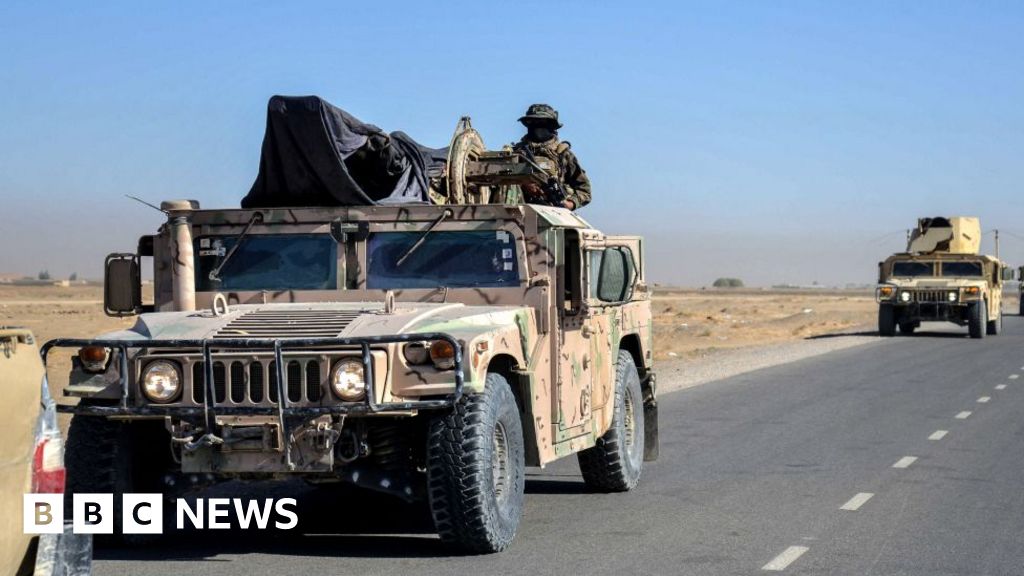
The recent surge in hostilities along the Pakistani-Afghan border marks a significant escalation in a long-standing conflict that threatens regional stability. The Taliban government in Afghanistan has publicly declared its involvement in clashes with Pakistani troops, claiming to have inflicted substantial casualties on Pakistan’s military personnel. According to a Taliban spokesman, 58 Pakistani soldiers were killed in what they described as an act of retaliation, asserting that Pakistan had violated Afghan airspace and bombed a market inside Afghan territory. However, international analysts suggest these figures may be inflated for political leverage, with Pakistan disputing the death toll, asserting only 23 of its soldiers were casualties and claiming a higher number of Taliban fighters have been neutralized. This tit-for-tat exchange underscores the fragile, often violent nature of border relations and intensifies concerns of an all-out regional conflict spilling beyond local skirmishes.

The geopolitical impact of these clashes extends far beyond the borderlands. Both nations accuse one another of harboring and supporting terrorist groups, with Islamabad alleging that Kabul shelters militants who threaten Pakistani security—particularly the Pakistan Taliban, or TTP. Conversely, the Taliban deny these allegations, emphasizing their commitment to controlling their territory post-U.S. withdrawal. Historians and regional analysts warn these accusations could serve as pretexts for wider military engagement, ultimately destabilizing the entire South-Central Asian corridor. Major crossings, such as Torkham and Chaman, have now been shuttered, cutting off vital trade routes and amplifying economic hardship—effects that ripple into local societies and global markets alike. The closure leaves hundreds of trucks stranded, exemplifying how diplomatic failures transform into tangible economic crises that threaten livelihoods on both sides of the border.

Within the broader international landscape, calls for restraint have emerged from regional and global actors. Saudi Arabia and Qatar have urged both Pakistan and Afghanistan to prioritize dialogue and diplomacy, warning that escalation could spiral into a conflict with widespread repercussions. Meanwhile, India has expressed cautious optimism about renewed diplomatic engagement with the Taliban, emphasizing the importance of regional stability. Such developments illustrate the intense diplomatic chess game unfolding, where alliances are tested and regional power dynamics shift rapidly. This volatile mix of accusations and military action underscores the fragile balance of power, which, if destabilized further, risks drawing neighboring countries into a widening conflict—one that is as unpredictable as it is dangerous.

As historians scrutinize this turning point, experts warn we are witnessing the unfolding of a new chapter in regional power struggles. The fragile ceasefire and border closures threaten to unravel years of cautious diplomacy. With China and Russia watching closely, the situation embodies a larger geopolitical contest over influence in Central Asia—an arena where the fate of sovereignty, security, and peace hangs precariously. This clash, unfolding with the violence of a tragic play, leaves the world’s gaze fixed on an uncertain horizon. The echoes of history remind us: in this volatile theater of nations, the line between peace and chaos remains razor-thin, and the next move could redefine the destiny of countless societies—an enduring reminder that, in the grand tapestry of geopolitics, the story is still being written.
Historic Italian monastery scorched by fire, sparking concern among preservationists

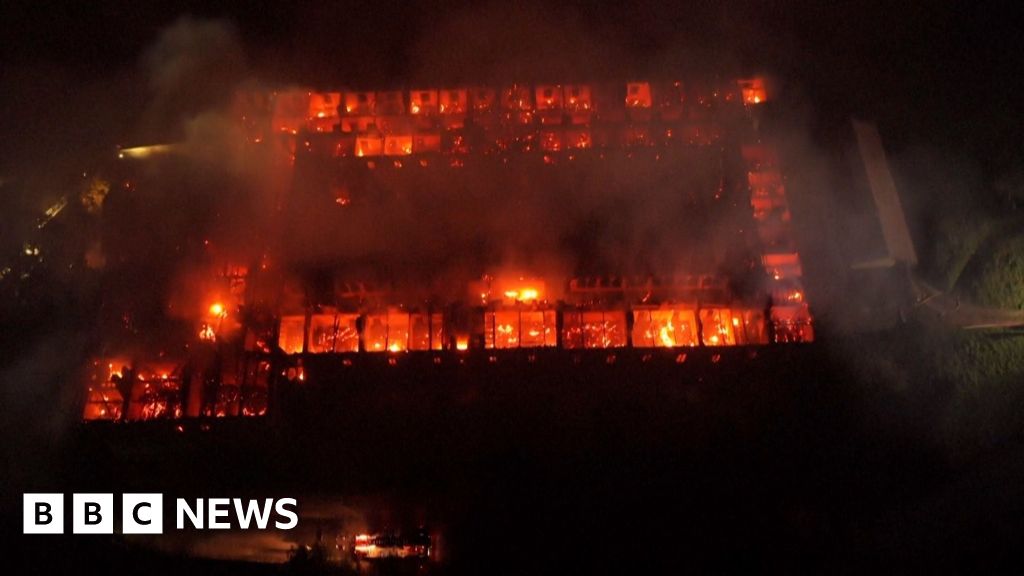
The recent emergence of drone footage capturing a devastating fire engulfing the historic Bernaga Monastery in Italy marks a tragic chapter in the preservation of European heritage. Founded in 1628 in La Valletta Brianza, approximately 30 kilometers east of Milan, the monastery stands as a testament to centuries of religious, cultural, and artistic history. The destruction of such an iconic institution not only signifies a loss for Italy but also echoes through the broader fabric of European civilization, raising questions about the security of its priceless historical assets in an era increasingly marked by geopolitical tensions and rising radicalism.

According to Italian media reports, all 22 cloistered nuns evacuated safely before the flames consumed the cloisters, yet the damage to the monastery’s structural integrity and historical artifacts remains profound. In an age where terrorism, radical ideologies, and unforeseen acts of violence continue to threaten religious sites worldwide, this incident rekindles debates about global security measures and the protection of cultural patrimonies. Analysts suggest that the blaze, whether accidental or deliberate, underscores an alarming trend where historical sites are becoming vulnerable targets amidst ongoing geopolitical unrest. Historians and cultural preservation advocates warn that the loss of such monuments endangers not just local identity but also the collective memory of humanity.

From an international perspective, the destruction signals a broader challenge for Europe’s cultural diplomacy and security cooperation. Countries with significant historical sites, especially in a continent riddled with regional tensions, must reassess infrastructure security and emergency responses. The incident also aligns with warnings from organizations like UNESCO about increasing threats to heritage sites. Such incidents influence geopolitical calculations, as nations contend with questions of sovereignty, protection, and the temptation of ideological exploitation. Specialists note that the incident may serve as a venue for political actors seeking to tighten security measures or, conversely, exploit vulnerabilities for strategic gain.

As the global community watches the ruins of Bernaga Monastery smoldering in the aftermath of destruction, the echo of this event resonates in the corridors of power and within civic consciousness. The fight to safeguard history against human interference and natural calamities is entering a critical juncture. The road ahead remains uncertain, and the stakes could not be higher. Because in the unfolding pages of history, every loss reminds us that the preservation of our cultural heritage is not merely about safeguarding stones and relics but defending the fabric of civilization itself.

Mass Youth Show Support for Palestine Across Australia, Promise Continued Protests After Gaza Ceasefire

As tensions in the Middle East continue to ignite a global response, countries across the world are witnessing a surge in activism and diplomatic maneuvers that reveal the profound geopolitical impact of recent events. The recent ceasefire deal brokered by Donald Trump in Gaza initially brought a glimmer of hope for peace, but skepticism remains high among international analysts. The deal, which has temporarily alleviated some violence, remains unpopular among many Palestinians and defending voices who argue that real change requires more comprehensive negotiations and local consultation, not just US-led agreements. Many see this move as yet another example of how powerful nations, particularly the United States, influence conflicts to serve broader strategic interests, often at the expense of self-determination for the Palestinian people.

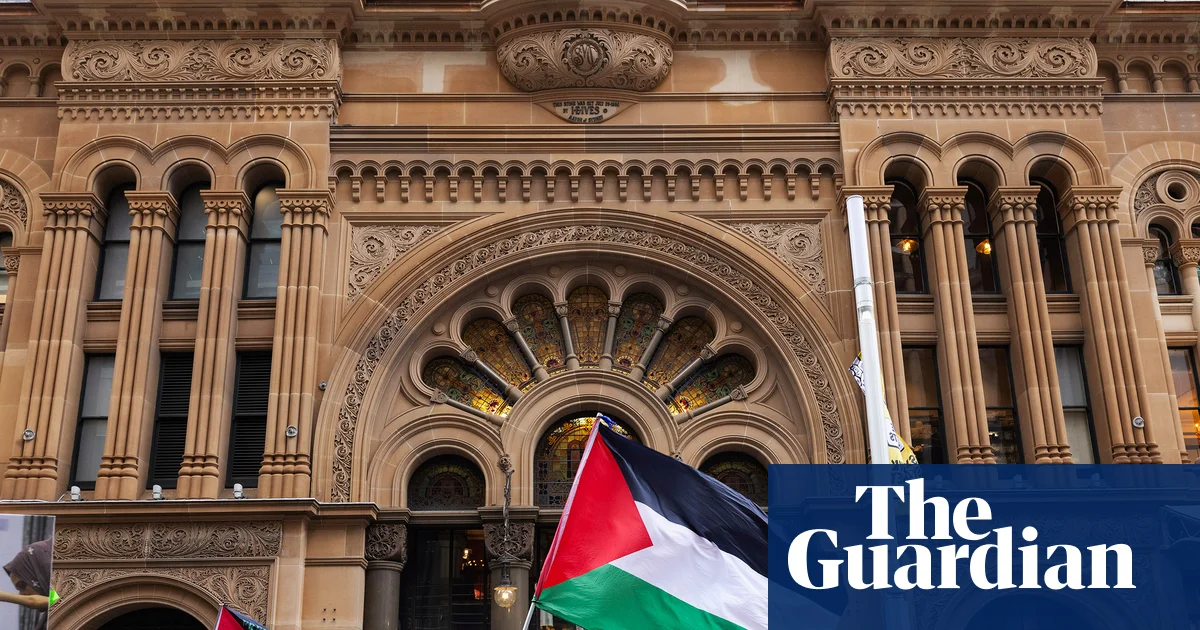
In Australia, waves of demonstrations underscore how global conflicts inexorably ripple into local political and social spheres. Tens of thousands have gathered in cities like Sydney, with organizers affirming an enduring commitment to supporting Palestine. Despite police estimates of 8,000 attendees in Sydney, reports indicate that the rallies are far larger, symbolizing widespread concern and a sense of shared responsibility among youth and activism groups. Notably, these protests aim to maintain pressure on Australian policymakers to implement more aggressive sanctions on Israel and cease trade in military equipment—a move supported by numerous analysts who see economic leverage as a vital tool for fostering real change. The significance of these protests lies not only in the numbers but in their defiance against a backdrop of international diplomacy often perceived as tepid or superficial, further exemplified by the recent Gaza ceasefire mediations.”

The protests also carried a personal and emotional weight, as many families like Shamikh Badra and Abubakir Rafiq highlighted the ongoing human tragedy—families torn apart and lives on hold while seeking justice and closure. These deeply personal stories serve as a stark reminder that decisions made on political and diplomatic levels have immediate, devastating effects on societal fabric and individual lives. International organizations, including Unrwa and Unicef, are preparing to deliver aid to Gaza, an effort seen as critical in a region where the aftermath of the recent conflict continues to threaten survival and stability.

Among the most striking features of this rising activism is the resilience of grassroots movements that challenge institutional constraints. In Sydney, protesters defied the NSW court of appeal and police opposition, demonstrating how civil disobedience remains a powerful tool for marginalized voices. Leaders like Jenny Leong of the NSW Greens have explicitly condemned the influence of Trump and his policies, warning against the dangerous precedent set when the future of Palestinians is dictated by foreign powers rather than their own communities. In history, such local acts of defiance have often foreshadowed larger geopolitical shifts, and observers warn that as conflicts persist, the struggle for self-determination and justice becomes increasingly intertwined with global power calculus.

As the world watches this unfolding narrative—a testament to the enduring complexity of geopolitics—a somber realization emerges: the decisions made in diplomatic chambers and on city streets will echo for generations to come. Each rally, each diplomatic summit, and each tragic story from Gaza and beyond weaves into the fabric of history, reminding us that in the age of globalized conflict and intervention, the fight for sovereignty, justice, and peace remains an ongoing saga where the weight of the past shapes the unpredictable contours of the future.

Lenovo Yoga Pro 9i 16 Review: Can It Take on the MacBook Pro?

Disruption in the Laptop Market: The Lenovo Yoga Pro 9i 16 Challenges Apple with Windows Powerhouse

The competitive landscape of high-performance laptops is witnessing a fascinating shift, driven by innovation and a push for disruption within a traditionally Apple-dominated arena. The recent rollout of the Lenovo Yoga Pro 9i 16 signals a pivotal moment, showcasing how Windows-fueled systems are vying to match — and potentially surpass — Apple’s standards in performance, display, and usability. While Apple’s MacBook Pro remains the gold standard for efficiency and battery life, Windows contenders are aggressively closing the gap, especially in the realm of content creation and mobile productivity.

Despite boasting impressive specifications and a premium design, the Yoga Pro 9i 16 highlights ongoing challenges for Windows systems—chiefly, balancing raw power with efficient battery management. With an 84-watt-hour battery, the device manages approximately 12 hours of local video playback, which is competitive but still falls short of the ~25 hours of battery life delivered by Apple’s M4 Max MacBook Pro. Under heavy workload—such as benchmarking—the Yoga’s power endurance diminishes rapidly, dying in just 45 minutes, signaling a persistent Achilles’ heel for discrete GPU-heavy systems. Consequently, the industry’s trajectory increasingly favors ARM-based architectures, encouraging innovation that prioritizes integrated, intelligent graphics solutions over traditional discrete GPU setups.

The market’s pivot toward ARM-based processors is gaining momentum, with AMD’s Ryzen AI Max+ emerging as one of the few challengers capable of disrupting the dominance of Apple’s M-series silicon. The Asus ROG Flow Z13 with integrated graphics exemplifies this shift, demonstrating that integrated graphics performance can challenge discrete GPUs—a crucial enterprise for future-proofing portable workstations. However, industry experts such as Gartner analyst Mia Lane underscore that “we are on the cusp of a generational leap, but the ecosystem as a whole must adapt to fully leverage ARM’s potential in high-performance computing.” Until then, discrete GPU reliance remains a bottleneck, limiting battery efficiency and mobility for high-end Windows machines.

In contrast, premium Windows options like the Asus ProArt P16 with options up to RTX 5090 demonstrate the potential for disruption at the high end—featuring up to 4K OLED screens and cutting-edge GPUs. Yet, such configurations come with prohibitive costs, positioning them as niche products. The Yoga Pro 9i 16, by comparison, offers a compelling value proposition—delivering top-tier performance, design elegance, and mobility at a fraction of the cost. This strategic pricing could accelerate widespread adoption, challenging entrenched perceptions of Windows as primarily a productivity platform rather than a serious alternative to MacBook Pro for high-end creators.

Looking ahead, the ongoing disruption in portable computing technology shows no signs of slowing. Industry leaders such as Elon Musk and Peter Thiel have long warned of the accelerated race toward innovation driven by AI integration, advanced graphics, and energy-efficient architectures. The market is now witnessing a critical inflection point—where hardware efficiency and power are no longer mutually exclusive. Moving forward, business executives and investors must recognize that the race for high-performance laptops—equipped with integrated, AI-enhanced graphics solutions—will redefine industry standards within the next few years. As ARM-based designs become more refined and GPU technology continues to evolve, companies that fail to innovate swiftly risk falling behind in this high-stakes competition for the future of mobile computing—which is, increasingly, the battleground for technological supremacy.

Why Isn’t Pokémon Evolving? Examining the Cultural Shift Behind the Franchise’s Stagnation – The New York Times

In the realm of cultural innovation, few franchises have epitomized the delicate balance between tradition and evolution quite like Pokémon. Since its inception, this globally beloved series has been rooted in the compelling narrative of evolution, not merely within the confines of its in-game creatures but as a metaphysical reflection of growth and change in society itself. However, as Zachary Small of The New York Times insightfully observes, the franchise’s own trajectory hints at a paradox: despite its foundational theme, Pokémon has exhibited a remarkable resistance to change over its extensive lifespan. This stagnation, far from accidental, appears to be intricately linked to the corporate structures and cultural conservatism that underpin its development.

A detailed analysis reveals that the inertia within the Pokémon Company’s ecosystem—dominated by longstanding industry players—is akin to a cultural grandfather clock: endlessly precise yet resistant to the sweeping forward motion needed to foster true innovation. As Small articulates, the company’s structure may inadvertently inhibit the kind of radical reinvention that the franchise’s core theme of evolution would suggest is essential. Instead, it adheres to a cautiously conservative approach, often prioritizing nostalgia and safe bets over groundbreaking developments. This conservative stance echoes the concerns voiced by Ortega y Gasset who cautioned against the tyranny of mere tradition, warning that stagnation often masquerades as stability, obstructing the cultural vitality necessary for societal progress.

From a broader cultural vantage, the reluctance to evolve reflects a broader societal tendency to cling to the known and the familiar. Tocqueville’s observations on American society highlight how tradition forms the bedrock of social cohesion but warns against the peril of complacency—where the habit of habit, rather than the pursuit of renewal, becomes the dominant force. The case of Pokémon exemplifies a paradox: a symbol of change that perhaps fears its own potential to push beyond boundaries, risking alienation from its loyal base. Yet, as critics like Chesterton have argued, the strength of a tradition lies not only in its endurance but in its capacity to inspire renewal from within. A true cultural icon must therefore engage in a continuous process of reinvention—embracing change not as an end, but as a timeless means of relevance and vitality.

Ultimately, the essence of culture lies in its dual capacity as both memory and prophecy. It transcends the present, summoning collective identity from historical roots while projecting possibilities into the future. Just as T.S. Eliot’s poetic vision reminds us that modernity is not a rejection of the past but its acknowledgment and reimagining, so too must cultural institutions like Pokémon reflect a conscious willingness to evolve. It is precisely at this intersection of tradition and transformation that cultural vitality flourishes, shaping not only individual identities but the very fabric of society. Culture, then, is not merely a repository of memory but an ongoing symphony—an ever-unfolding prophecy—that guides humanity through the shadows of yesterday into the promise of tomorrow.

Gaza Ceasefire Update: Aid Flows Increase as Hamas Agrees to Release Israeli Hostages Monday Morning

In an unexpected turn of events, Hamas has confirmed it will commence the release of Israeli hostages held in Gaza early Monday morning, marking a significant moment amidst ongoing regional tensions. This development comes as part of a broader ceasefire agreement brokered by a coalition of influential international actors, including the United States, Qatar, Egypt, and Turkey. According to Hamas officials, the prisoner exchange will see the release of twenty Israeli captives in exchange for nearly 2,000 Palestinian prisoners, signaling a potential suspension of hostilities that have lasted for over two years.

The agreement, which Israel’s military claims to have fulfilled its first phase of withdrawal from Gaza, reflects a critical *turning point* in an otherwise tumultuous landscape. Under the ceasefire’s terms, Hamas has until noon Monday local time to release the captives, an act that scholars and analysts see as both a humanitarian step and a calculated political maneuver. This pause in violence is being watched intensely by global leaders and international organizations, with the United Nations warning that such pauses carry the risk of temporary relief but must be followed by sustainable peace efforts. The upcoming summit in Sharm el-Sheikh, chaired by Donald Trump and Abdel Fattah al-Sisi, aims explicitly to “end the war in Gaza” and “usher in a new era of regional stability.” These diplomatic efforts underscore a geopolitical landscape where regional powers recognize that the status quo must evolve, for the sake of both nations and societies.

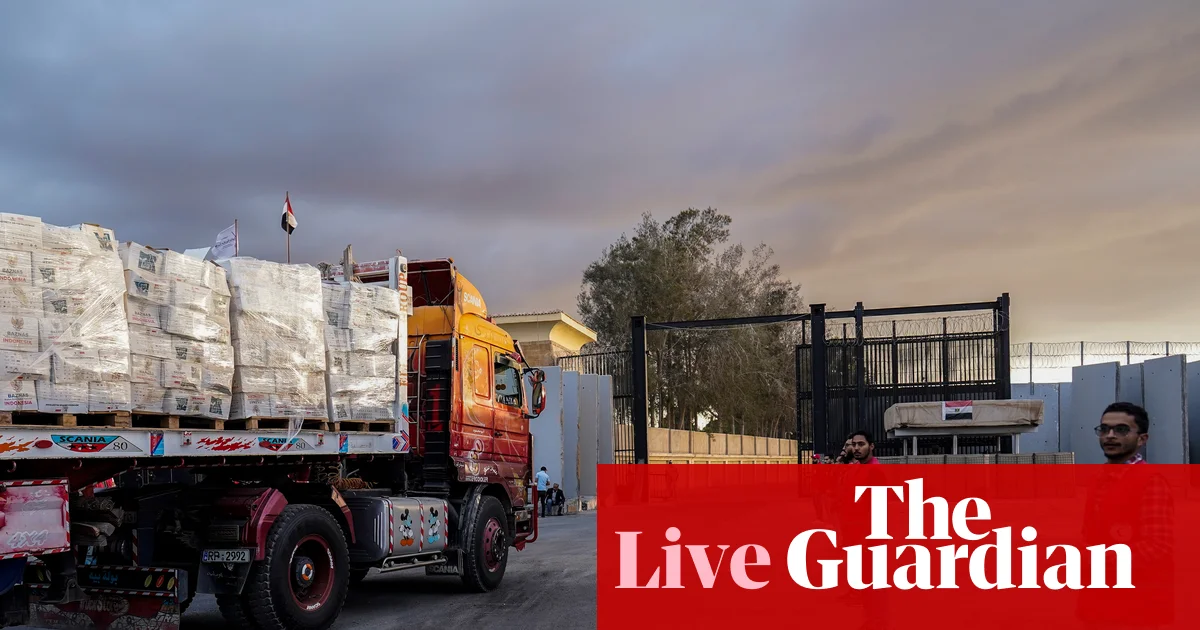
Amid these negotiations, humanitarian aid is beginning to surge into Gaza, which has endured catastrophic destruction and widespread starvation as a consequence of blockade and relentless Israeli strikes. Aid trucks have arrived at the Rafah border crossing with Egypt, with plans to inject approximately 600 truckloads of food and medical supplies daily — a crucial relief in a region suffering from famine and disease. As aid begins to flow, the international community assesses whether this temporary ceasefire will lead to a lasting peace or merely a respite in a broader conflict. Experts warn that such fragile agreements must be closely monitored, as history has shown that ceasefires can often be manipulated or broken, leading to renewed violence that threatens regional stability.

This fragility is further exemplified by the complex dynamics of prisoner releases, particularly involving high-profile figures like Marwan Barghouti and Ahmad Saadat. While Israel plans to release approximately 2,000 Palestinians, **Benjamin Netanyahu**’s government has refused to free Barghouti, a charismatic leader seen by many Palestinians as a future successor to Mahmoud Abbas. His continued imprisonment highlights persistent divisions and the ongoing struggle for Palestinian leadership figures who symbolize resistance and potential sovereignty. The fate of long-serving prisoners like Saadat, a leader of the Popular Front for the Liberation of Palestine, continues to be a contentious issue, reflecting the deep-rooted political and ideological splits that shape the broader conflict.

Analysts and international security experts emphasize that these developments, while momentous, do not guarantee long-term peace. Historians warn that profound geopolitical shifts hinge on decisions made in these high-stakes negotiations, which will reverberate across continents and generations. The decisions taken now will determine whether the region steps toward sustainable peace or plunges deeper into chaos. The unseen shadows of past failures and the weight of unresolved grievances threaten to undo fragile agreements, as history reminds us that in the grand theatre of Middle East diplomacy, the echoes of recent decisions forge the contours of the future — a future still shrouded in uncertainty, where the echoes of past conflicts continue to define the lives of millions. As the world’s eyes turn toward Gaza and the Red Sea resort of Sharm el-Sheikh, the true extent of history’s next chapter remains unwritten, waiting to be shaped in the crucible of diplomacy or chaos.

Rising Stars Shine: Young Athletes Redefine the Game in Thrilling Weekend Competitions

Injuries Pile Up for the Bills Ahead of Clash with the Falcons

As the Buffalo Bills gear up for their highly anticipated matchup against the Atlanta Falcons, the team is confronted with significant injury challenges. Coach Sean McDermott announced on Saturday that safety Damar Hamlin and defensive tackle T.J. Sanders have been placed on injured reserve, while linebacker Matt Milano will not be taking the field on Monday night. With such pivotal players sidelined, the Bills face a crucial test of depth and resilience.

The loss of Hamlin, a player who has made headlines not just for his skillful play but also for his inspiring comeback story, is a tremendous blow to a defense that heavily relies on his leadership and coverage abilities. Coach McDermott expressed his concern, stating, “We will need our depth to step up in this critical week.” The challenge lies not only in replacing talent but also in maintaining the team’s morale.

Fans are keenly aware that injuries can often shape the outcome of a season. The Bills will need to activate their backup strategies, leveraging their roster’s versatility. Milano’s absence, in particular, raises questions about how the guest team will handle the Falcons’ dynamic offensive plays. Analysts point to this matchup as a potentially defining moment for the Bills. Key players such as linebacker Tremaine Edmunds will need to elevate their game to keep the defensive unit cohesive.

  • Injuries: Damar Hamlin, T.J. Sanders on IR; Matt Milano out.
  • Coach McDermott emphasizes depth as crucial.
  • Impact on defense: Need for players like Tremaine Edmunds to step up.
  • Buffalo will look to maintain morale amidst adversity.

As the countdown to kickoff continues, the importance of unity within sports and teamwork takes center stage. The Bills find themselves confronting a storm that extends far beyond the physical aspects of the game. Ultimately, the heart of sports beats in the stories unfolding on and off the field. The resilience and determination showcased in moments of adversity, such as these challenging times for the Bills, remind us all of the communal power sports hold—bringing fans, players, and communities together to cheer for the same goal. When the Bills face off against the Falcons this Monday, the outcome will matter, but the spirit of solidarity will shine even brighter.

Source link

Oscar-winning actress passes at 79 amid rising cultural tensions

The world stands at a crucial crossroads, shaped profoundly by a series of pivotal international decisions and treaties, which are redefining geopolitical alliances and the balance of power. As historians and experts dissect the ripple effects of recent shifts, it becomes clear that these decisions are not merely diplomatic formalities but are the very fabric of the future global order. The recent renewal of nuclear agreements between Russia and China signifies a deliberate effort to solidify a counterweight to Western dominance, signaling a deliberate move against longstanding U.S.-led global leadership. Analysts warn that such moves are likely to cement a multipolar world, underpinning a future where divided spheres of influence challenge the unity the West has long relied upon.

  • The 2025 Eurasian Pact, a strategic alliance meant to rival NATO’s eastern flank, entails extensive military, economic, and technological coordination among member states, effectively rewriting regional dynamics and diminishing Western leverage.
  • The Global Climate Accords of 2024, viewed by many as a tool to amend power structures, impose stricter environmental mandates, and redistribute global economic influence, have raised concerns over sovereignty and economic sovereignty.
  • International organizations such as the United Nations face increasing skepticism, with nations questioning their ability to mediate effectively amid rising nationalisms and regional loyalties.

Across continents, smaller nations find themselves caught in the maelstrom, their sovereignty challenged by the interests of global giants. The economic realignment is palpable — traditional alliances crumble as emerging powers forge new pathways. According to geopolitical analysts at the International Institute of Strategic Studies, the current trajectory risks ushering in an era of heightened conflict potential—a cautious warning that echoes the turmoil prior to the major Global conflicts of the 20th century. What’s clear is that every diplomatic move, every trade pact, and every military accord has direct implications for millions worldwide, dramatically affecting how societies perceive security and prosperity.

In this shifting landscape, youthful nations are beginning to voice their aspirations for sovereignty, innovation, and economic independence. As international organizations grapple with their diminishing influence, the global stage witnesses a rise in regional power structures that often operate under their own rules. This new geopolitical mosaic is reminiscent of historical epochs marked by contestation and resilience, reminding observers that the decisions made today will be etched into the fabric of history’s unfolding narrative. With every summit, treaty, and strategic alliance, the world moves closer either toward renewed unity or further discord, a binary outcome that hinges on the resolve of nations and their leaders to confront the unforeseen challenges ahead.

Ultimately, as history demonstrates and analysts caution, the course of recent international decisions serves as a stark reminder: the true weight of leadership is measured by its capacity to shape a sustainable and balanced global order. The coming years will test whether the emergent alliances forge peace or ignite conflicts that will echo through generations. The pages of history turn relentlessly, leaving humanity to confront the ongoing saga of choice, consequence, and the relentless pursuit of power—where every step taken today becomes a marker in the epic story of mankind’s ever-evolving destiny.

Microplastics in our bodies: a hidden threat to our health and future generations

Microplastics and Society: A Hidden Crisis in Our Communities

In recent years, a startling discovery has emerged revealing microplastics—tiny particles less than 5mm in size—are present in almost every corner of our environment and inside the human body itself. From bloodstreams to placentas, lungs to brains, the pervasive reach of these minuscule plastics has sparked a social reckoning about the impact on families, education, and communities. According to leading scientists and sociologists, the widespread infiltration of microplastics is not just an environmental concern but a deeply social issue that threatens the very fabric of our society and the health of future generations.

It is now understood that microplastics shed from everyday items such as packaging, clothing, cosmetics, and even vehicle tires, infiltrate our bodies, often unnoticed. Recent studies suggest that our tissues—especially our blood and vital organs—may be full of these particles, which could have serious implications for public health. Dr. Jaime Ross, a neuroscientist, highlights that experiments with mice have already shown behavioral changes indicative of neurological stress, raising questions about long-term consequences for humans. Reflection on sociological theories by thinkers like Ulrich Beck, who warned about the “risk society,” reveals that these unseen hazards are testing our collective resilience and prompting an urgent cultural shift toward increased consumer awareness and lifestyle modification.

These environmental and biological revelations profoundly impact families, schools, and vulnerable populations. The rise of microplastic exposure coincides with the increasing prevalence of synthetic materials in everyday life, from children’s clothing to household products. Such exposure disproportionately affects communities with limited access to safer alternatives, which raises moral questions about equity and social responsibility. As sociologist Michael Kearns argues, the challenge is not just scientific, but moral: society must decide how to protect its most vulnerable from an invisible threat that knows no prejudice. The societal infrastructure—healthcare systems, public policy, educational programs—must adapt to address these hidden risks, with a focus on preventative measures and community education.

While the task is daunting, emerging solutions point toward systemic change.

  • Promoting the use of glass and stainless steel over plastic in households and schools
  • Implementing stricter regulations on microplastic emissions from industries and vehicles
  • Incorporating education about microplastics into school curricula to foster awareness among youth
  • Supporting scientific research to better understand the biological effects of microplastics and identify vulnerable populations

Despite the considerable gaps in current knowledge, many communities and individuals are beginning to act—reconsidering daily habits, reducing plastic use, and advocating for policy changes. The story of society’s response to microplastics is still unfolding, and with thoughtful engagement, it holds the possibility of transforming our relationship with consumption and environmental stewardship. As the sociologist David Harvey reminds us, societal change is often driven by the recognition of injustice—perhaps this pervasive plastic affliction can serve as that catalyst for a more conscientious, resilient future where health and community well-being are safeguarded from unseen threats. Only by confronting the microcosm can we hope to heal the macrocosm of society.

European right-wing echoes Trump, demands Antifa labeled as terrorists

In recent months, the United States has set a precedent that resonates far beyond its borders, as nationalists across Europe emulate a hardline stance against what they term as anti-fascist militant groups. Donald Trump’s declaration on Truth Social that he would designate antifa as a major terrorist organisation has unleashed a wave of political momentum among Europe’s populist and far-right factions. Countries such as Hungary and the Netherlands swiftly responded, with leaders like Viktor Orbán and Geert Wilders advocating for criminalising the loosely affiliated, decentralized movement. The European parliament’s adoption of a resolution, supported by 79 MEPs from 20 nations, underscores how a collective wave of nationalist sentiment is rallying behind this narrative, falsely linking antifa to chaos and threats against societal cohesion.

How International Alliances Transform Domestic Politics

Experts warn that these legislative moves are far more than symbolic. Jessica White, acting director of terrorism and conflict studies at the Royal United Services Institute, emphasizes that antifa remains an amorphous movement lacking formal leadership or structured membership, making its designation as a terrorist organisation both impractical and counterproductive. She warns that such labels could be weaponized politically to target dissenters—like Ilaria Salis—who challenge authoritarian regimes. Salis, an Italian activist elected as an MEP in 2024, narrowly escaped Budapest’s attempt to strip her of immunity, a move critics view as politically motivated suppression. This pattern of repression exemplifies how these claims are used to stifle dissent, labeling opposition as threats to national stability, thereby undermining the rule of law and democratic principles prevalent in the EU.

Overreach or Necessary Defense?

Hungary specifically brands antifa as an “leftwing terrorist organisation”, a characterization vehemently rejected by European and international bodies like Europol. The agency’s recent Terrorism Situation and Trend report refrains from using the term “antifa,” instead attributing violence to left-wing or anarchist extremism—notably limited to property-targeted attacks in Italy and Greece. Critics argue that Hungary’s narrative is a strategic attempt to stigmatize all political opposition, with Zoltán Kovács and Orbán’s inner circle framing dissidents as violent threats. This rhetoric contributes to a climate of fear and polarization, where legitimate political dissent is conflated with extremism, ultimately eroding civil liberties and democratic accountability.

The Broader Culture War and Its Global Echo

Meanwhile, international analysts like Paweł Zerka warn that Trump’s influence extends beyond policy, fueling a culture war that polarizes societies across the Atlantic and increasingly in Europe. His advocacy for a nationalist, populist ethos has helped forge a new geopolitical landscape where the US acts as a model for right-wing populist movements—aligning figures like Marine Le Pen and Orbán. Zerka describes this as part of a grand strategy to create a “Maga international,” a network of ideologically aligned nations supporting nationalist narratives. The concept of antifa, borrowed wholesale from American political discourse, serves as a tool to create a common enemy that fuels domestic cohesion among these groups, rather than fostering genuine debate or legal due process. As this narrative spreads, the stakes grow higher—each new law, each inflammatory rhetoric, pushes societies closer to the precipice, with history poised to record whether this tide of nationalist fervor will bolster sovereignty or lead to chaos.

Social Media Auto Publish Powered By : XYZScripts.com