Matox News

Truth Over Trends, always!

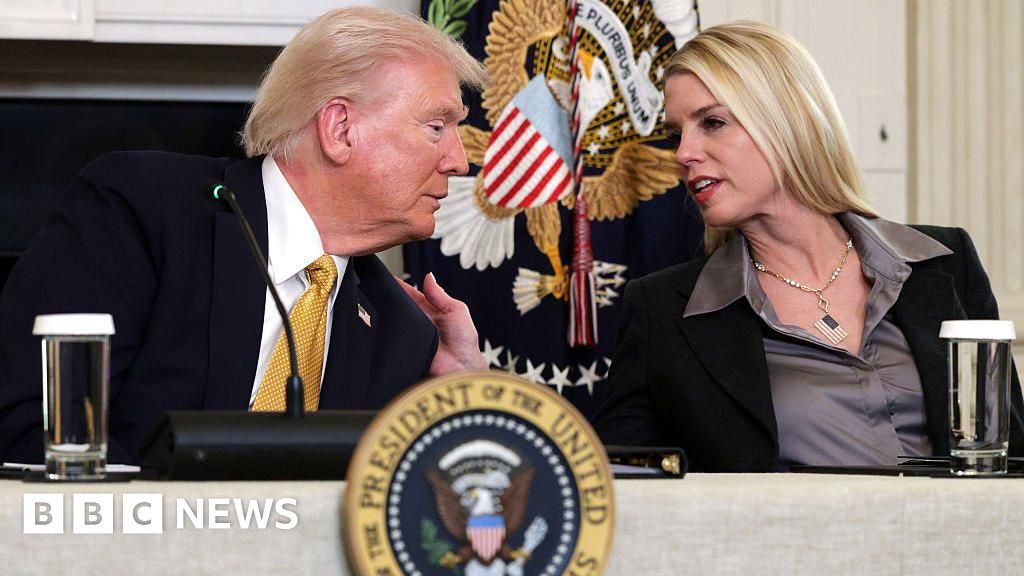
Trump to launch investigation into Epstein’s links with Clinton and financial institutions

As U.S. politics continues to grapple with unresolved questions surrounding Jeffrey Epstein and his network, President Donald Trump has directed the Department of Justice (DoJ) and FBI to investigate alleged links between Epstein, major financial institutions, and prominent Democrats, including former President Bill Clinton. This move coincides with the recent release of over 20,000 pages of documents from Epstein’s estate, revealing connections that threaten to ignite a new wave of political turmoil. Critics and analysts warn that this investigation could significantly alter the geopolitical landscape, exposing the deep-rooted corruption embedded within America’s elite institutions.

The renewed scrutiny comes at a pivotal moment when the House of Representatives is poised to vote on whether to declassify and release official files related to Epstein’s death in prison in 2019. This decision, driven by Democrat Adelita Grijalva and a coalition of bipartisan support, threatens to unearth scandalous disclosures involving high-profile figures and financial giants like JPMorgan Chase and Reid Hoffman, a prominent Democratic donor and tech mogul. These revelations suggest a web of clandestine ties that, if confirmed, could redefine public trust and the perception of moral decay at the heart of global power structures.

Historically, the geopolitics of corruption has shaped international alliances and destabilized governments. Experts warn that America’s internal crisis echoes through the fabric of the global order, especially as international organizations like the United Nations and EU scrutinize Washington’s integrity. Political analysts cite the emails and correspondence from Epstein’s associates—such as former Harvard president Larry Summers—to demonstrate how elite networks operate behind closed doors, manipulating both policy and society. The revelation of Epstein’s associations with powerful voices raises alarms about the potential influence exerted over international finance and diplomatic negotiations.

Beyond the immediate political fallout, the attempts by House Republicans and conservative voices to push forward the release of Epstein-related files mark a significant shift in the ongoing struggle for transparency and accountability. Figures like Marjorie Taylor Greene emphasize the importance of pursuing justice for Epstein’s victims, framing this issue as a moral imperative to expose the hidden structures of power. As history watches with cautious optimism, the unfolding narrative underscores that the fight against corruption is not solely national but a pivotal chapter that will influence the global order for generations to come. The fate of these documents—whether they remain sealed or become a catalyst for revolutionary change—will be a defining moment etched into the chronicles of modern history, reminding us that the weight of scandal and redemption continues to shape the course of nations.

Anna Wintour’s Vogue Covers: A Bold Message at the Forefront of Fashion and Culture

As Anna Wintour prepares to step away from her nearly four-decade reign as the editor-in-chief of Vogue, the question on everyone’s lips is: what will the next chapter in high fashion’s cultural influence look like? During her tenure, Wintour redefined what a fashion magazine could be—shaking up industry standards, pushing social boundaries, and cementing Vogue’s place as a cultural icon. Her final December 2025 cover, featuring Timothée Chalamet photographed by Annie Leibovitz, symbolized her love for the avant-garde—yet, it also sparked controversy, highlighting an undercurrent of societal leverage that her departure could shift.

This cover, set against a cosmic backdrop provided by NASA, exemplifies Wintour’s penchant for making her magazine a platform for spectacle and conversation. Critics online dismissed it as “offensive” and questioned whether it represented anything more than art for art’s sake. However, industry insiders like Jeremy Leslie of magCulture argue that even the most perplexing covers serve a strategic purpose: keeping Vogue, and by extension fashion media, in the global consciousness. Her history of provocative choices—ranging from Madonna in 1989 to Beyoncé in 2018—underscores an enduring truth: fashion media acts as both mirror and molder of societal values, often pushing boundaries that society itself is hesitant to confront.

Wintour’s legacy is also marked by moments of controversy and cultural critique. Covers featuring figures like Beyoncé as the first Black photographer, as well as missteps like the 2008 Gisele Bündchen and LeBron James cover, reveal an industry still grappling with questions of representation and social responsibility. As Chloe Malle, now leading Vogue’s editorial content, prepares to reframe the magazine’s upcoming visual language, many wonder if her era will mirror Wintour’s knack for boldness or shift toward a more subdued, less provocative model. This transition isn’t just about style—it’s about social impact, and how fashion wields influence in shaping societal norms.

Meanwhile, Wintour’s recent focus on Vogue World, a series of fashion shows blending entertainment, philanthropy, and high style, signals another layer to her influence—one that moves beyond pages and into immersive cultural experiences. These events, held in iconic cities like Los Angeles and Milan, bring together stars like Kendall Jenner, Nicole Kidman, and others in a spectacle that marries fashion with societal outreach. As fashion’s landscape shifts to more experiential and socially conscious domains, the question remains: will future creative leaders harness this platform to redefine social relevance or will fashion become increasingly insular, serving just the wealthiest and most powerful?

As the evolution of Vogue’s influence unfolds, all eyes are on the next frontier. Will the digital age and social media democratization allow for more authentic representation and societal engagement from fashion’s power brokers? Or will the industry’s penchant for spectacle and controversy continue to serve as a distraction from deeper social issues? The next big question is: as traditional gatekeepers like Anna Wintour make way for a new era, what values will take center stage—artistry, activism, or pure spectacle—and how will they shape society’s expectations of culture in the decades to come?

Why’s Trump warning the BBC with a legal fight? The shocking details behind the showdown

In today’s rapidly shifting cultural landscape, even the most venerable institutions like the BBC are not immune to upheaval. Recently, the corporation has found itself embroiled in a controversy that extends beyond journalism and into the realm of public trust and personal impact. The fallout from the controversial documentary about Donald Trump, titled Trump: A Second Chance?, exemplifies how media narrative editing and perceived bias can cause ripple effects at the highest levels. The resignations of the BBC’s director general, Tim Davie, and the head of news, Deborah Turness, underscore a broader realignment—one where accountability and safeguarding journalistic integrity stand at the crossroads with political and cultural pressures.

This turmoil also highlights the power of lifestyle shifts—not just for individuals, but for organizations navigating the turbulent waters of free speech, trust, and public influence. The leaked internal memo suggested that the documentary had been edited to seemingly distort Trump’s speech, creating a narrative that some critics argue skewed public perception. The backlash, intensified by aggressive legal threats from Trump himself, presses us to consider how the personal impacts of media—shaped by agendas, biases, and artistic choices—can influence mental well-being, governance, and cultural discourse. For young audiences committed to defending the values of truth and integrity, this situation provides a stark reminder that lifestyle extends far beyond health and leisure—it also encompasses the choices we make about where we consume information and whom we trust.

Amidst this crisis, it’s vital to recognize the importance of cultivating a well-rounded, critically aware mindset. Influential wellness experts like Dr. Jordan Peterson advocate for embracing personal responsibility in shaping how we interpret media stories. Developments at the BBC serve as a call to action: actively engaging with diverse narratives and cultivating resilience against manipulative narratives is a key component of lifestyle transformation that empowers young people today. Furthermore, the repercussions extend to how institutions address public accountability; the resignation of top executives signals a recognition that maintaining trust demands renewed dedication to transparency, accuracy, and ethical standards—principles that resonate deeply with those seeking purpose through informed choices.

  • Engage with reputable news outlets to develop a nuanced understanding of the world.
  • Prioritize media literacy—question, analyze, and verify before accepting narratives as truth.
  • Foster resilience against sensationalism—champion honesty over sensationalism in your personal and community circles.
  • Support organizations committed to journalistic integrity and societal well-being.

As the story unfolds at the heart of British media, it prompts us to reflect on our own journey. Our lives are a continual process of choosing what to believe, how to respond, and which values to uphold. The turbulence faced by the BBC is a microcosm of a broader challenge: embracing a lifestyle characterized by discernment, moral clarity, and resilience. Like navigating a complex landscape, our journey begins with the conscious decision to seek truth, foster well-being, and inspire the next generation of thinkers—those who will stand resilient in the face of misinformation and upheaval. In this way, the true power lies not just in institutions, but in the collective pursuit of a life dedicated to integrity and purpose—an ongoing voyage that defines who we are and shapes the world we wish to see.

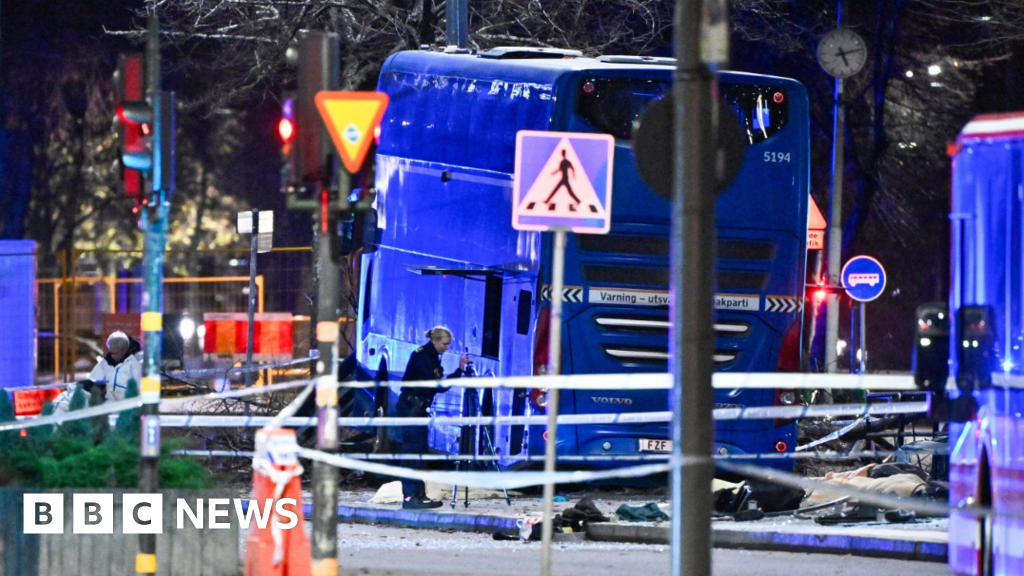
Multiple Dead as Bus Slammed into Stockholm Stop—Tragedy Strikes Again

The recent bus crash in central Stockholm marks a stark reminder of how fragile safety can be amid urban modernity, even in nations often seen as paragons of stability. At approximately 15:23 local time, a double-decker bus violently collided with a bus stop on Valhallavägen, near the esteemed Royal Institute of Technology. Initial reports indicate multiple casualties, with several individuals injured or killed; the full toll remains uncertain as authorities continue their investigations. Swedish police have confirmed the arrest of the bus driver and have launched a manslaughter investigation, emphasizing the gravity of the incident and the need for thorough accountability. While authorities seek clarity, the images emerging from the scene—rescues helping trapped victims—highlight the immediate human tragedy beneath the unfolding crisis.

This incident underscores the yet-unresolved challenges faced by European nations in maintaining robustness and safety within densely populated urban centers. Analysts point out that while Sweden has traditionally boasted high standards of living and effective governance, recent episodes—be they accidents or geopolitical shifts—expose vulnerabilities that cannot be overlooked. Some experts argue this tragedy might amplify calls for stricter safety protocols and infrastructure reviews, particularly on high-traffic routes. The location near a prominent university also raises questions about urban mobility, sidewalk safety, and emergency preparedness—areas where many European cities are trying to modernize amid mounting pressure to sustain societal resilience. Meanwhile, the international community observes closely, wary of potential repercussions for public safety policies across Europe, especially in the face of broader security concerns.

Looking beyond Stockholm, this event resonates with the global significance of how decisions shape societal safety. As noted by international infrastructural watchdogs and historians, the aftermath of such crises often prompts a reassessment of transportation safety, emergency response readiness, and government accountability. Institutions like the European Union are called upon to evaluate potential vulnerabilities in member states’ urban environments, advocating for preventive measures that could avert future tragedies. Moreover, the incident sparks reflection on how societal pressures—rising immigration, urban congestion, and political stability—interact with everyday safety issues. In this context, the tragedy becomes more than a localized accident; it symbolizes broader societal tensions and the imperative for prudence in policymaking.

As the world watches projections of geopolitical shifts and national stability, the Swedish tragedy leaves an indelible mark—a stark reminder that history remains in the making, written in moments of chaos and crisis. With each unfolding detail, the shadow of uncertainty lingers, calling into question whether societies are prepared to confront these vulnerabilities or if future calamities will continue to unfold just like this: suddenly, violently, and painfully. In the end, the lessons drawn here will echo through time, emphasizing that the true strength of nations is measured not in their peaks of prosperity but in their resilience against unforeseen upheavals. The weight of history, heavy and unyielding, continues to press down on Stockholm—waiting for a response, waiting for a new chapter to begin.

Coach from Last Chance U shot in Oakland campus attack—serious injury

US Campus Violence Escalates: A Wake-Up Call for Global Security

The recent shooting at Oakland’s Laney College, which critically injured its athletics director, John Beam, underscores a dangerous trend spiraling across America. This incident, occurring amidst a surge of campus gun violence, highlights a nation seemingly unable to stem the tide of firearm-related tragedies affecting students, educators, and communities alike. The incident unfolded as authorities responded swiftly, with Oakland police launching a campus-wide lockdown in pursuit of an armed suspect. Yet, it is emblematic of broader societal issues rooted in lax gun control policies, a crisis well-documented by groups like Everytown for Gun Safety.

Historians and analysts warn that these violent episodes—whether initiated by unmanageable social issues or systemic failures—threaten the fabric of American society. The United States has witnessed over 460 gunfire incidents on educational campuses in 2025 alone—numbers curated by the EveryShot tracker. This alarming statistic reveals that 33 of these tragedies occurred within California, a state often lauded for progressive policies, yet overwhelmed by an epidemic of gun violence. The death toll, with at least 73 fatalities nationwide, signals an urgent need for policy reassessment. Experts argue that the proliferation of firearms and the absence of stricter regulations continue to fuel these heartbreaking tragedies, placing the very institutions meant to nurture youth at risk.

The broader geopolitical impact of this domestic crisis resonates internationally. As global powers watch the United States grapple with internal security, questions are arising about the narrative of American exceptionalism in the realm of personal safety and civil liberties. International organizations, such as the United Nations, have called for reforms, yet the deep-rooted political divide hampers substantive progress. Many nations see the ongoing violence as emblematic of a country struggling to reconcile individual freedoms with collective security—an unresolved debate that impacts America’s standing on the global stage. Critical analysts suggest that unresolved internal conflicts over gun rights and societal values threaten to undermine America’s influence and the stability of its social fabric.

In the face of tragedy, the voices of leaders and communities grow more urgent. Oakland’s mayor, Barbara Lee, has condemned the violence, emphasizing that schools should be safe havens, not battlegrounds. Meanwhile, the incident echoes a series of recent recently heightened tensions around domestic violence, societal division, and law enforcement effectiveness. As the nation mourns yet another loss, some analysts warn that this cycle of violence may not be contained without decisive structural reform, both in policy and in societal attitudes. The unfolding narrative remains one of a society at a crossroads, where the decisions made today will, in a profound way, shape the course of history. The question lingers—will the United States confront the underlying causes of its crisis, or will it continue to grapple with the devastating consequences of complacency?

Second brother of French anti-drugs activist shot dead in Marseille—another tragic blow to the fight against crime

Marseille Violence: The Tragedy of Gang Warfare and Its Global Implications

The recent brutal murders in Marseille, France, underscore a critical escalation in urban violence, with profound geopolitical repercussions that extend beyond local boundaries. The killing of two brothers from the same family—Brahim in 2020 and now Mehdi in 2023—illuminates the destructive power of organized crime and its enduring grip over the city’s most vulnerable communities. The tragic pattern, with youth as young as 15 pulled into violent vendettas, serves as a stark reminder of the erosion of social stability within Western nations, challenging political leaders and law enforcement agencies alike. The fact that a young anti-drugs activist, Amine Kessaci, whose work aimed to mitigate this chaos, receives death threats underscores an unsettling turning point—a confrontation with the fracture lines in French society and the wider Western world.

Marseille’s endemic violence is emblematic of a broader uprising of urban insurgencies affecting many Western city-states. As gangs continue to carve out turf within high-immigration neighborhoods, their warfare spills into street-level shootings, often occurring in broad daylight, as seen with Mehdi’s murder by motorcycle gunfire. Local authorities acknowledge that these crimes are not isolated; they are part of a harrowing cycle of revenge and territorial disputes, often fueled by drug trafficking networks that have entrenched themselves in the city’s fabric. The European and international community, including analysts and historians, highlight that such violence threatens the very fabric of civil society, prompting urgent calls for comprehensive reforms. Yet, the persistence of these conflicts raises uncomfortable questions about how nations can reform immigration, law enforcement, and social policy to prevent a slide into lawless chaos.

The Shadow of Organized Crime and Political Reckoning

  • The murder of Brahim, linked to drug gang vendettas, encapsulates the threat posed by criminal organizations that often operate with impunity and difficulty for authorities to dismantle.
  • Mehdi’s murder, seemingly unrelated to gangs, is feared to be a warning aimed squarely at Amine, whose outspoken activism and political ambitions made him a target—symbolizing how criminal violence intersects with political activism.
  • Amine’s establishment of Conscience, an NGO dedicated to aiding families affected by drugs violence, underscores a new wave of civic activism aimed at combating these structures from within.

Such developments signal a warning of a wider societal breakdown, with international watchdogs cautioning that, without decisive action, these localized conflicts could spiral into a broader crisis of governance and security. The French government’s response, characterized by police protection for activists like Amine, reflects a recognition of the seriousness of these threats. Still, critics argue that current policies lack the strategic depth needed to truly unravel the roots of criminal networks. The European Union and other international bodies continue to monitor the situation, with some alarmed by the increasing youth involvement in gangs—an issue that threatens to undermine future generations’ prospects and social cohesion.

Consequences for Europe and Beyond

The violence in Marseille epitomizes a continuing challenge for EU nations attempting to balance multicultural integration with national security. As analysts point out, the situation could serve as a harbinger for similar strains across other European borders, especially in cities with large immigrant populations. The ongoing crisis also raises questions about international cooperation—whether global institutions will rise to the occasion or become overwhelmed by the complexity of such urban war zones. The historical perspective warns that neglecting these issues risks turning once-thriving urban centers into lawless enclaves, where de facto warlord rule replaces civil authority, echoing patterns seen in failed states worldwide.

As history unfolds, the death of Mehdi and Brahim Kessaci will be remembered not only as isolated tragedies but as symbols of a war within cities that threaten to rewrite the social contract. The weight of this moment challenges leaders and societies to confront uncomfortable truths about governance, integration, and the true cost of neglecting the roots of urban decay. The future remains uncertain—balancing on the precipice of change, where each decision could either mend a fractured society or plunge it further into the shadows of chaos. History, it seems, is still writing its darkest chapters, and the fate of Marseille may well serve as a cautionary tale for cities worldwide struggling beneath the weight of their own internal conflicts.

Harvey’s Rise: How a Young Legal Clerk Disrupted Silicon Valley with a Top Startup

San Francisco’s Harvey: The Rising Tide of Legal AI Disruption

In an industry long seen as resistant to rapid transformation, Harvey, a legal technology startup based in San Francisco, is making waves with its revolutionary AI-driven legal solutions. The company’s valuation has experienced unparalleled growth, surging from $3 billion in February 2025 to an astonishing $8 billion by late October—reflecting not only investor confidence but also the profound industry impact of its innovation. As Harvey continues to attract major legal firms globally, its story highlights a new era where disruption and technological prowess are redefining legal workflows.

Founded by former lawyer Winston Weinberg, Harvey leverages advanced AI models to automate and enhance legal research, transactional work, and litigation support. The company’s secret sauce is its sophisticated platform, which combines innovations like multiplayer collaboration tools and complex data permissioning systems—an essential feature given the industry’s strict confidentiality and data residency laws. With more than 235 clients in 63 countries and over $100 million in annual recurring revenue, the startup is poised to reshape how legal services are delivered, a trend acknowledged by prominent analysts like Gartner, which predicts AI-driven solutions will soon handle a significant portion of routine legal tasks.

What sets Harvey apart from generic AI chat models like ChatGPT is its focus on building a dedicated, industry-specific platform that integrates deeply into the legal ecosystem. Weinberg emphasizes that their moat lies in their ability to evaluate law firm workflows continuously, collect extensive operational data, and develop multiplayer, outcome-oriented models. This approach not only offers a competitive advantage in accuracy and workflow integration but also establishes a disruptive force capable of challenging entrenched legal industry norms. The company’s move toward outcome-based pricing, and its focus on expanding services for large corporate clients and law firms, signals a strategic targeting of high-margin, complex legal work—an area ripe for innovation.

Industry insiders warn of the challenges ahead—particularly in navigating the delicate balance between technological adoption and legal ethics. As Weinberg notes, security and permissioning remain key hurdles in scaling these solutions globally, especially amidst diverse regulatory environments in regions like Germany and Australia. However, the future of legal AI is undeniable: with the industry still in its early innings, the integration of these technologies promises to accelerate legal training, streamline litigation processes, and potentially democratize access to justice. Equipping junior lawyers with AI-enhanced training tools could profoundly reshape legal education, but also raises questions about traditional apprenticeship models.

As Harvey plans to extend its capabilities further—aiming for broader adoption and higher degrees of automation—the broader legal landscape is set for a seismic shift. With major firms and corporate clients embracing AI solutions, the window is closing quickly for slower adopters. Industry leaders like Elon Musk and Peter Thiel have long emphasized the importance of innovation-led disruption, and Harvey’s trajectory embodies that ethos, transforming legal practice from a slow, document-heavy, and error-prone process into a high-speed, AI-powered domain. In the coming years, those who fail to adapt risk being left behind as the legal industry becomes a battleground for AI supremacy.

Australian Schools Close Over Kids’ Sand Safeguard Risk

In a startling development that underscores the ongoing challenges of global trade and public safety, Australia and New Zealand have mobilized substantial measures in response to the discovery of asbestos-contaminated sand products circulating within their educational sectors. The contamination, linked to imports from China, has triggered urgent school closures and recalls, raising serious questions about border security, regulatory oversight, and the health safety of young generations.

The Australian Competition & Consumer Commission (ACCC) announced a recall after lab tests identified traces of tremolite asbestos in children’s colored sand. These products, such as Kadink Sand, Educational Colours – Rainbow Sand, and Creatistics – Coloured Sand, had been distributed nationwide through major retail outlets like Officeworks. The health risk stems from the inhalation of asbestos fibers, which can cause severe lung diseases, including cancers; a warning that has led to the full or partial closure of at least 15 schools and seven preschools in the Australian Capital Territory. Similarly, in New Zealand, five early learning services and two schools have suspended operations as authorities conduct further testing. The Ministry of Business, Innovation and Employment (MBIE) swiftly issued advisories urging parents and institutions to cease using the contaminated products and seek professional disposal, highlighting the precautionary nature of this response.

This crisis underscores a broader geopolitical impact that points to the fragility of international supply chains and the importance of strict regulatory controls. Historically, asbestos has long been recognized by global health authorities—including the World Health Organization—as a carcinogen, yet trade restrictions have often been circumvented through imports. The incident reveals vulnerabilities within Australia’s and New Zealand’s border and commercial oversight, prompting analysts to question how widespread this contamination might be and whether other imported goods could pose similar risks. As historians warn, failures in supply chain transparency can unleash public health crises, especially within vulnerable communities such as children in educational environments. The recall and school closures serve as a stark warning of what can happen when economic interests overshadow safety protocols.

International institutions and regulators are now under pressure to tighten import controls and alert systems. The Australian government has reaffirmed that asbestos importation remains prohibited, yet the incident exposes potential gaps in enforcement. Meanwhile, New Zealand’s ongoing testing and voluntary recalls reflect a cautious approach but also highlight the need for more decisive policy action. As the global community watches, the incident could spur stricter international standards for importing hazardous materials, reshaping trade policies that often prioritize cost over safety. Yet, this unfolding story remains a chapter in a broader narrative about the collision of globalization, health security, and the protection of future generations—one where the delicate balance of power, policy, and public trust hangs in the balance.

In a world increasingly interconnected, the repercussions of this asbestos scare transcend borders, shaping the very fabric of societal trust and governmental accountability. The upcoming weeks will determine whether the lessons learned will lead to stronger safeguards or allow complacency to persist. As history continues to be written in moments of crisis, the weight of these decisions resonates: a reminder that in the unfolding mosaic of international relations, every detail—down to colored sand—can carry the profound burden of history yet to be made.

Rising Stars Shine in Thrilling Championship Showdown!

England’s Rocky Road to Victory: A Tactical Shift in the Match Against Serbia

In an exhilarating clash that featured fierce competition, England faced off against Serbia in a friendly match that showcased both strategic brilliance and dramatic moments. Although the performance of the English squad was described as less than stellar, a pivotal moment emerged when manager Gareth Southgate made the bold decision to substitute star striker Harry Kane. This strategic shift turned the tide of the game and ultimately propelled the Three Lions to a more dynamic performance.

Throughout the first half, England struggled to find their rhythm, with their offense stalling on multiple occasions. Kane, while a seasoned player, seemed to be stuck in a loop of missed opportunities. The true turning point came in the 62nd minute when Southgate decided to replace Kane. The coach emphasized the importance of adaptability, stating, “Sometimes, a change is needed to spark the team’s fire.” Following this substitution, the pace picked up, and the younger players seized the moment, demonstrating agility and creativity that had previously been lacking.

  • Final Score: England 2 – 1 Serbia
  • Harry Kane’s Stats: 0 goals, 2 shots, 1 assist (before substitution)
  • Key Players Post-Substitution: Marcus Rashford and Phil Foden, each contributing to the strong second-half showing.

As England rallied together, a newfound energy surged through the squad. The tactical shift not only affected the gameplay but also underscored an important aspect of modern sports: the dynamic interplay between experience and youth. Commentators noted that this match may serve as a crucial lesson in Southgate’s coaching repertoire, one that emphasizes that the right substitution can be a catalyst for change. “Football is about the collective effort,” remarked former player and analyst Gary Lineker, highlighting the teamwork essential to achieving success.

The result may have been a win for England, but the true victory lies in recognizing the spirit of the game. Football unites players and fans alike, transcending mere statistics and creating a collective culture. Games like these remind us that sports are not just about the scores—they are about the stories, the connections, and the shared dreams that turn moments into legends. In the end, it’s not just a game; it’s a testament to resilience and unity on the grand stage.

Source link

Bad Bunny Dominates with Five Latin Grammys Ahead of the Super Bowl Showcase

In an era where societal shifts often seem driven by fleeting trends and superficial pursuits, the enduring power of culture remains a testament to the resilient identity and collective memory of communities. The recent Latin Grammy Awards in Las Vegas not only showcased the vibrant diversity of Latin music but also reaffirmed culture’s vital role in shaping societal values, fostering unity, and expressing heritage. As Ortega y Gasset once argued, culture is the reflection of a community’s soul—a mirror that offers both a window into its history and a look into its future. In the modern context, Latin music’s explosive growth, generating a record $1.4 billion in 2024 and comprising over 8% of U.S. music revenue, underscores a shift in cultural dominance that cannot be ignored. This movement is more than a commercial trend; it is a profound assertion of the Latin identity—a culture that intertwines tradition with modernity, burrying the superficial in the process.

Getty Images Bad Bunny accepts his Latin Grammy award
Getty Images: Bad Bunny, the unapologetic voice of a generation, accepting his Latin Grammy for Album of the Year, “Débi Tirar Más Fotos.”

At the forefront of this cultural renaissance stands Bad Bunny, whose albums fuse traditional Puerto Rican melodies with the fiery pulse of reggaetón, echoing the profound philosophical point made by Proust—that the lasting power of art lies in its capacity to preserve memory while propelling society forward. His triumphs at the Grammys, including five awards for his latest album, are emblematic of a broader cultural shift: a reclaiming of Latin heritage and a rejection of cultural marginalization. Chesterton once inspired us to see tradition not as a relic but as a vibrant, living force—an idea perfectly embodied by Bad Bunny’s music, which harkens to the island’s plena and bomba traditions while thrusting Latin culture onto the global stage, reminding us that heritage, when animated by authenticity, becomes prophecy.

Reuters Ca7riel and Paco Amoroso celebrate with Latin Grammy trophies
Reuters: Ca7riel and Paco Amoroso, two Argentine icons, embody a new wave of artistic expression—raw, eccentric, and rooted in genuine friendship—signaling a shift in cultural paradigms towards authentic community bonds.

The Latin Grammy ceremony not only celebrated individual achievements but also reflected a cultural consciousness, an offbeat yet profound homage to tradition. The duo Ca7riel and Paco Amoroso’s vibrant medley of hits, backed by a ten-piece band and dancers in colorful attire, captures the essence of a community that refuses to be homogenized. Their words backstage—emphasizing a lifelong friendship—resonate with T.S. Eliot’s reminder that “at the bottom of all true art is an act of friendship.” Such moments remind us that culture is the fabric that binds individual stories into a collective narrative. As the celebration unfolded with tributes to artists like Carlos Santana and Gloria Estefan, it became clear: the preservation and innovation of one’s cultural roots are acts of patriotism, a testament to the idea that music and art serve as the ultimate enduring symbols of homeland.

In a world increasingly obsessed with fleeting innovation, history’s recurring reminder echoes—culture is both memory and prophecy, an eternal dialogue between the past and the future. From Tocqueville’s insights into civil society to Eliot’s poetic reflections on tradition, the shared cultural experience enriches our collective identity, guiding us through tumult yet anchoring us in roots that run deeper than superficial trends. Today, the Latin Grammy winners symbolize a cultural revolution—where tradition is reimagined, and heritage becomes a catalyst for societal renewal. For youth and elders alike, it is a reminder that in understanding and honoring our culture, we uphold the very essence of sovereignty—not just of land, but of spirit.

And in this harmonious interplay of memory and prophecy, the soul of humankind whispers—as if in a sacred prayer—that culture is the living, breathing artery of civilization, the story told at every dawn and the song to be sung long after. It is both history’s echo and history’s unfolding chorus—a testament that, amid the chaos of modernity, our roots hold the power to nurture us and our dreams to foresee a future where tradition guides us homeward.

Social Media Auto Publish Powered By : XYZScripts.com