Matox News

Truth Over Trends, always!

Michelle Obama Opens Up About Media Obsession with Her Arms and How It’s Used to Divide Us

In recent years, the cultural significance of fashion, especially among influential women in politics, has become impossible to ignore. The first lady of the United States has long served as a symbol of national identity and societal shifts. Michelle Obama’s iconic style, from her first official portrait to her daring sleeveless silhouettes, exemplifies this phenomenon. Her choice of fashion was not merely about aesthetics but a deliberate form of social messaging and visibility. In her recently released photo book, Michelle Obama Style, she delves into the social repercussions and cultural shifts her wardrobe choices generated, revealing how her style became an empowering tool for representation.

Obama’s bold fashion statements, including her prominent use of sleeveless dresses, sparked intense media scrutiny and public debate. Critics labeled her choices as “too informal” or “out of season,” but the underlying social tension was more profound. For many, her style was not just a reflection of personal taste—it challenged longstanding norms and questioned what it means to represent a diverse America. Sociologist Farah Jasmine Griffin emphasizes how her support for emerging Black, Asian, and Latina designers and her accessible aesthetic “lent style to her substance.” In a cultural landscape often defined by exclusivity among former first ladies—such as Jacqueline Kennedy’s haute couture—Obama’s high-low mix highlighted her commitment to inclusive representation and “inviting” the nation into a shared space of identity and change.

However, this shift did not come without controversy. The episode dubbed “Sleevegate,” where critics ridiculed her exposed biceps during a speech to Congress, underscored a deeper societal discomfort with a Black woman asserting her authority in a traditional political space. Obama reflects on how this public backlash was intertwined with broader racial and gender stereotypes. Influential analysts like Robin Givhan argue that Obama’s style and demeanor challenged the “rules” of political decorum and societal expectations—consequently sparking a cultural debate on Black womanhood and the politics of appearance. Despite the attacks, Michelle Obama’s authentic expression of style reinforced the idea that fashion can be a powerful act of assertion and visibility in a conservative society.

As influential as her style choices have been, Obama also used her platform to elevate lesser-known designers and foster inclusivity. Her decision to wear a gown from the emerging Taiwanese-born designer Jason Wu for her inaugural ball was a calculated stand against tradition, symbolizing her readiness to challenge the status quo. Her “high-low” approach—favoring markets like H&M, Target, and J.Crew—resonates with a younger generation yearning for authenticity and relatability in political figures. Today, fashion is increasingly recognized as a form of cultural activism, shaping perceptions and empowering marginalized voices. The real question now is whether this evolution signifies a permanent transformation in how public figures use style as a form of social engagement. As society continues to grapple with issues of representation and identity, the next big question may be: Will future leaders prioritize authentic expression over traditional decorum, and how will that redefine the cultural landscape for generations to come?

Fact-Check: Viral healthcare claim labeled Mostly False

Fact-Check: Trump’s Claims About His “BIG Wins” in Alaska in 2016, 2020, and 2024

Recently, former President Donald Trump claimed in a Truth Social post that he “won BIG in 2016, 2020, and 2024” within the state of Alaska, specifically in relation to his political influence and support. Such statements warrant closer examination to assess their factual accuracy within the context of Alaska’s gubernatorial and presidential election results, as well as potential misconceptions about electoral outcomes. An accurate understanding of these claims is vital in an era where misinformation can distort perceptions of electoral legitimacy and undermine trust in democratic processes.

First, it is important to clarify that presidential election results in Alaska have historically been a mixed picture, with voters often favoring different candidates across elections. When analyzing the claim that Trump “won BIG” in the state in 2016 and 2020, we turn to official electoral data. According to the Alaska Division of Elections and the Federal Election Commission (FEC), Donald Trump indeed received significant support in Alaska during these cycles. In 2016, Trump secured approximately 51.3% of the popular vote, compared to Democrat Hillary Clinton’s 36.6%. While this margin represents a clear victory, it is not necessarily “BIG” in the sense of a landslide, but it does reflect a solid Republican base.

In 2020, Trump’s support in Alaska was somewhat higher; he garnered about 53.1% of the vote against Democrat Joe Biden’s 42.8%. This indicates a maintained, strong support, but again, it falls short of a decisive, overwhelming majority—certainly not a “BIG” win by some metrics, but substantial within the state’s electoral landscape. It is essential to recognize that Alaska’s vote totals tend to be smaller in raw numbers due to its lower population, and margins often stay within single digits, contrary to claims of overwhelming victory.

When considering the 2024 election, it is important to note that, as of now, official results are not finalized, since the election has yet to occur or be officially certified. Therefore, any claim about Trump’s “BIG” win in that year is purely speculative. Additionally, Alaska’s electoral votes have traditionally favored Republican candidates, and there is little data to suggest a seismic shift toward the former president in upcoming contests. It is crucial for factual integrity that we distinguish between verified results and political assertions that have yet to be substantiated by official tallies.

Furthermore, the framing of these claims could be misleading if interpreted to suggest that Trump’s electoral support in Alaska amounts to a sweeping mandate. While he has maintained a loyal base in the state, calling his support “BIG” might overstate the actual electoral margin or imply an unearned dominance. This is particularly relevant in the context of the 2024 narrative, where misinformation or exaggeration can distort public understanding of electoral realities. Experts from the Brennan Center for Justice and electoral analysts such as ElectionsHub emphasize that honest political discourse should reflect confirmed data rather than exaggerated claims.

Ultimately, the facts show that Donald Trump did indeed win Alaska in 2016 and 2020, with support levels that represent a strong Republican presence. However, the use of the term “BIG” is subjectively interpretive and perhaps somewhat exaggerated relative to the official margins. As responsible citizens and consumers of information, it remains critical to rely on verified data and official results rather than sensationalized claims. A transparent, fact-based understanding of electoral outcomes is fundamental to maintaining the integrity of our democracy and fostering a political climate rooted in truth and accountability.

Storm Devastates Philippines, 26 Dead as Chaos Unfolds

Natural Disasters and Geopolitical Implications in Southeast Asia

The recent onslaught of Typhoon Kalmaegi (locally named Typhoon Tino) has delivered a harrowing reminder of nature’s relentless power, devastating the central Philippines with widespread flooding, numerous fatalities, and displaced communities. With at least 26 confirmed deaths and hundreds of thousands fleeing their homes, this storm underscores the vulnerability of nations in the Pacific basin, especially amid a rising climate crisis. While the immediate tragedy is palpable, the event also spotlights the broader geopolitical and societal repercussions for a country already strained by repeated natural calamities.

Analysts and environmental historians warn that the frequency and intensity of such storms are likely to increase due to climate change, which disproportionately affects developing nations like the Philippines. The storm’s impact on Cebu—an economic and cultural hub—has been catastrophic, with entire towns submerged and infrastructure shredded by floodwaters. Rescue efforts reveal a strained system, with boats navigating muddy waters and aid temporarily halted as a military helicopter crashed, tragically killing all six crew members onboard. The incident emphasizes the *urgency* of enhancing disaster preparedness and resilience in Southeast Asian nations facing the dual challenges of climate change and geopolitical instability.

Human Cost and Political Response

  • Most fatalities resulted from drowning, as floodwaters surged through towns, washing away buildings and normalcy.
  • Relief operations faced setbacks, with helicopter crashes and communication failures revealing gaps in emergency management.
  • Local leaders, such as Cebu’s governor, described the situation as *unprecedented*, highlighting the water’s devastating role — not merely the wind.

In this context, international organizations like the United Nations and Asian Development Bank have called for increased aid and comprehensive climate adaptation strategies. However, critics argue that *corruption and inadequate infrastructure* hamper effective response and recovery. The months leading to this disaster saw protests over substandard flood control measures, exemplifying how *poor governance* exacerbates human suffering. As the Philippines remains besieged by a relentless succession of typhoons—Super Typhoon Ragasa (Nando) and Typhoon Bualoi (Opong)—it exemplifies what many global analysts call a *”climate-vulnerable society at the mercy of nature’s fury.”*”

Global Geopolitical Ramifications and Future Outlook

This relentless string of natural disasters has broader geopolitical implications. Southeast Asia, an increasingly strategic region, faces the challenge of balancing sovereignty with external aid and influence. Some nations, including the United States and China, have stepped up humanitarian assistance, yet critics contend that dependence on foreign aid can undermine national sovereignty and threaten regional stability. Former geopolitical analyst Matthew Thompson warns that prolonged disasters could distract \ the Philippines from asserting a stronger regional role, while also questioning whether local governments are prepared for the *next* inevitable crisis.

As the Philippines mourns and rebuilds, the world must recognize the *deeper significance* of these ongoing natural tragedies. They are not merely acts of weather but a profound *test of resilience* and governance. The unfolding saga of Typhoon Kalmaegi, amid mounting climate concerns and geopolitical shifts, leaves humanity confronting an uncertain future where the line between natural cataclysm and human failure grows ever thinner. This chapter in history, still unwritten, charges the international community to rethink its priorities before the next wave hits—with consequences that could shape the very fabric of societies for generations to come.

NYC Mayoral Race & Top US Election Highlights: What the Youth Should Keep an Eye On

In a year often overshadowed by global crises, local elections continue to serve as critical barometers of America’s political mood and societal shifts. Across the nation, standout races— from the vibrant streets of New York City to the swing voters of Virginia and New Jersey— reflect an energized populace eager to shape the future direction of their states. While these elections may seem like mere regional exercises, their consequences ripple outward, influencing national discourse and the cultural landscape. For the young, ambitious individual, these elections underscore the importance of staying engaged and understanding how leadership on the local level can have lasting personal impacts—be it in healthcare, safety, or community wellbeing.

Perhaps the most anticipated race currently unfolding is the New York City mayoral election, where Mamdani’s democratic socialist platform resonates with a youthful demographic hungry for change. This 34-year-old assemblyman’s bid to become the city’s youngest mayor in over a century signifies more than a political upset; it symbolizes a generational shift in values. Mamdani’s campaign, after beating a political heavyweight like Andrew Cuomo in the primaries, embodies what many young citizens are seeking: a break from traditional politics and a bold focus on issues like **affordable housing, sustainable development, and community wellness**. Meanwhile, Cuomo’s attack on Mamdani’s experience highlights the ongoing debate over what it truly means to lead—particularly in a city that faces complex challenges such as public safety and economic inequality.

Beyond the Big Apple, states like California are engaged in a quieter yet equally significant political game — the **mid-decade redistricting referendum**. Californians face a rare opportunity to temporarily redraw congressional maps through Proposition 50, a move driven by Democrats seeking to maintain control amid a historically close political landscape. This strategic shift underscores how every vote counts in shaping the very borders of influence. For the young, politically conscious voter, understanding these shifts isn’t just about partisanship; it’s about recognizing how the reallocation of political power can alter the policies that directly impact young families, entrepreneurs, and community well-being. With millions of dollars pouring in from various campaigns, it’s clear that the battle for fair representation is fierce, and its outcomes will determine how issues like **education reform and economic opportunity** are prioritized in the years to come.

Meanwhile, in the political battleground of Virginia and New Jersey, the gubernatorial contests offer a mirror to the national pulse. With Virginia on the cusp of electing its first female governor—be it Democrat Abigail Spanberger or Republican Winsome Earle-Sears—these races highlight the importance of diverse leadership and the potential for transformative change. For young voters, the significance goes beyond gender or party lines; it’s about star constructing a society that values **inclusive progress, personal empowerment, and a shared sense of community**. The tight races reflect a nation balancing between tradition and innovation, conservative values and progressive aspirations—a reflection of a society still searching for its true identity.

At the heart of these elections, even the shadow of former President Trump looms large, influencing the tone and rhetoric of campaigns. From his comments on New York’s political landscape to endorsements in local races, the Trump factor reminds young voters that leadership is more than policies; it’s about ideology, resilience, and the desire for a vision that echoes their hopes for personal safety, economic opportunity, and national pride. The race for New York City’s mayor, in particular, underscores this dynamic—where the city’s future could hinge on whether it embraces a bold new wave of leadership or conserves the tried-and-true. For the emerging generation, the message is clear: participation in these elections is an act of empowerment—a step toward shaping a society rooted in values of independence, resilience, and transformative growth.

As the dust settles on these critical races, what remains is a profound reminder: lifestyle is a reflection of leadership. The city streets, state borders, and political offices are all stages where lives are reshaped by decisions made today. For the youth eager to carve a niche within this evolving landscape, these elections are more than just ballots; they are a call to embody *active citizenship*—a commitment to forging a community that values wellness, opportunity, and pride in shared progress. After all, it’s in these collective choices that the journey of lifestyle, characterized by health, leisure, and purpose, is truly defined. Embrace it—because your voice in shaping tomorrow begins with the decisions made today.

Dar es Salaam curfew lifted as unrest subsides—peace returns for the youth

Post-Election Turmoil in Tanzania: A Nation at a Crossroads

In a dramatic turn of events, Tanzania finds itself teetering on the edge of political chaos following its recent presidential election, which has been marred by allegations of violence, suppression, and international concern. President Samia Suluhu Hassan was sworn in amidst widespread unrest after securing an overwhelming 98% of the vote—an outcome questioned by regional observers and opposition leaders alike. The election, initially heralded as a step in Tanzania’s political evolution, has instead exposed underlying tensions that threaten to undermine the country’s hard-won stability.

As violence erupted in Dar es Salaam and other urban centers, the government responded with force, deploying lethal measures that international organizations—such as The United Nations and Human Rights Watch—have condemned as excessive. Reports from hospitals and diplomatic sources indicate that at least hundreds of individuals have been killed in days of clashes, with credible evidence suggesting the disappearance of bodies, arbitrary detentions, and the use of unidentified vehicles to remove casualties. This brutal response has cast a dark shadow over what was once considered one of Africa’s bastions of stability, raising questions about how far Tanzania is willing to go to safeguard its political power.

International reactions have been swift, with the Southern African Development Community (Sadc) issuing a preliminary report criticizing the election process for falling short of democratic standards. The exclusion of leading opposition figures—Tundu Lissu, detained on treason charges, and Luhaga Mpina, rejected on technical grounds—has further delegitimized the poll, fueling fears of authoritarian overreach. Historians like Professor Alex Mbeki warn that such developments could have broader geopolitical impacts, destabilizing the entire East African region and emboldening similar authoritarian tendencies elsewhere.

Meanwhile, ordinary Tanzanians bear the scars of this violence, with families devastated by loss and uncertainty. Stories of missing relatives and alleged police brutality have become common, as survivors recount harrowing accounts of chaos and repression. The government’s efforts to downplay the scale of unrest—blaming foreign nationals and dismissing reports of casualties—fail to conceal the depth of societal fracture now plaguing the nation. Historian and political analyst Dr. James Irie cautions that such suppression could sow seeds of long-term societal disillusionment, jeopardizing Tanzania’s trajectory towards democratic resilience. As the international community watches with concern, the weight of history hangs heavily, hinting that these tragic events may either become a dark chapter or a catalyst for deeper national reform.

With Tanzania facing an uncertain future, the choices made in the coming weeks will determine whether this country of 60 million will succumb to authoritarian decay or forge a path toward reconciliation and justice. As the echoes of gunfire fade into the night, the spirits of the fallen and the hopes of a nation’s youth remain a stark reminder that history is perpetually in the making—its course uncertain, yet undeniably consequential.

Youth voices demand change for ‘embarrassing’ Prince Andrew road names in Maidenhead

In a world increasingly scrutinizing traditional symbols of power and history, local disputes such as those unfolding in Maidenhead over streets named after Prince Andrew exemplify the palpable tension between legacy and societal values. Once regarded as innocuous commemorations, street names have become focal points of controversy, reflecting broader trends of re-evaluating historical figures and their associations. These small but poignant disputes are emblematic of a wider, global wave of social accountability that challenges entrenched establishments worldwide.

As King Charles moves to officially strip Prince Andrew of his titles following allegations linked to Jeffrey Epstein, the repercussions underline a crucial shift in the British monarchy’s public image and legitimacy. The decision to initiate a formal process to revoke the disgraced prince’s honors and to abandon his residence signal more than mere internal royal restructuring; they showcase a nation grappling with accountability and the need to redefine its moral compass amidst rising call-outs of historic misconduct. Internationally, the ripple effects resonate as other nations observe Britain’s handling of its colonial—and in this case, familial—legacy, examining their own historical narratives for potential reassessment.

  • According to international legal experts, such as Harvard Law Professor Alan Dershowitz, this type of public accountability framework in Britain reflects a broader trend where societal pressure influences legal and political recalibrations. Likewise, historians note that the monarchy’s shift mirrors a parallel phenomenon where societies are confronting difficult pasts, questioning earlier symbols of authority, and pushing for significant institutional reforms.
  • Meanwhile, international organizations like Amnesty International and other human rights groups continue to press governments worldwide to face uncomfortable truths about their histories, often using street renamings and symbolic acts as catalysts for deeper societal change.

In this context, the controversy over street names in Maidenhead underscores how local decisions become microcosms of larger geopolitical debates. The residents’ concerns about the association of their addresses with controversial figures reveal a collective desire to distance society from outdated symbols that no longer reflect contemporary values. It is a vivid example of society’s ongoing struggle—highlighted by political analysts like Dr. Elizabeth Holmes—between preserving history and forging a new moral narrative. Such debates, embedded in communities, often foreshadow shifts in national discourse and policy that can ripple outward.

As history continues to be written, the struggle to confront and reinterpret the past remains fraught with challenges. The decisions made today—whether it involves renaming streets or re-evaluating venerable institutions—carry profound geopolitical significance. They shape the moral fabric of societies and influence the global balance of power, testing whether nations can reconcile their histories with evolving standards of justice and accountability. The ongoing saga of Prince Andrew and streets in Maidenhead may seem localized, but they are woven into the broader narrative of a world where history’s weight remains in flux, urging humanity to consider whether the course set by past leaders is truly aligned with the future they aspire to build. The pages of history turn relentlessly, never forgiving, always compelling, as every decision tomorrow’s leaders make will echo through the corridors of eternity, shaping the course of nations in a turbulent, ever-changing world.

Hackers Break Free the Kinect: A Win for Gamers and Innovation

Revolution in Tech: How Open Source and Innovation Disrupt Legacy Systems

Over the past decade, the trajectory of innovative technologies has demonstrated a recurring pattern: initial failure often leads to profound disruption. The Microsoft Kinect, launched in 2010 as a flagship motion-sensing gaming device, exemplifies this trend. While its consumer application—evoking immersive gameplay—failed to meet expectations, its underlying technological foundation became a blueprint for a broad spectrum of disruptive innovations that transcended entertainment.

Today, the Kinect’s infrared depth sensing and gesture recognition capabilities are being leveraged in robotics, medical imaging, and AI-driven applications. The open-source community—notably spearheaded by hackers and developers like Kyle Machulis and Memo Akten—reclaimed this technology from corporate lock-in, transforming it into a versatile tool for democratized experimentation. Their clandestine work with open source drivers revealed that cost-effective access to sophisticated hardware could catalyze accelerated R&D and democratize innovation on a global scale.

Open Source: The Catalyst for Disruption and Business Transformation

The community-driven effort to reverse engineer Kinect was driven less by profit and more by a desire to break barriers. In 2010, the OpenKinect project emerged, igniting a wave of experimentation that showcased how accessible hardware could revolutionize various sectors. Beyond gaming, Kinect-inspired devices now facilitate real-time obstacle detection for autonomous robots, enable contactless surgical scans in healthcare, and serve as powerful tools for educational and artistic endeavors.

  • Lowered barriers for entry into advanced tech spaces
  • Enabled rapid prototyping and open innovation ecosystems
  • Birthed new markets for perception and interaction hardware

Furthermore, the business implications of this disruption are profound. Tech giants like Apple incorporated Kinect’s core sensors into their consumer devices, especially for facial recognition and 3D mapping, solidifying their place in next-generation device ecosystems. Meanwhile, consumer-level access to open-source hardware continues to foster a new breed of startups that challenge traditional R&D models, hinting at a future where corporate innovation will increasingly depend on community-driven advancements.

Future Horizons: Artificial Intelligence Paving the Way for New Disruptions

As the open-source community continues to democratize access to hardware like Kinect, the next frontier appears to be in artificial intelligence. Experts such as Peter Thiel and institutions like MIT predict that AI will serve as the principal driver behind the next wave of disruptive breakthroughs. What began as a punk-rock, hacker-driven movement for open hardware is now evolving into a full-blown AI renaissance: models are becoming more accessible, open data is proliferating, and entrepreneurial ventures are capitalizing on this trend.

However, this new era poses significant challenges and warnings. A growing concentration of AI development within corporate giants could threaten the open innovation spirit that fueled Kinect’s revolution. The risk isn’t just technological stagnation; it’s the potential for a monopolization of future technological breakthroughs, stifling the entrepreneurial spirit that historically pushed the boundaries of what’s possible. Enthusiasts like Elon Musk and Peter Thiel advocate for safeguarding open ecosystems—reminding us that the future of technology depends on the community’s ability to innovate ahead of the curve.

Ultimately, the parallels between the Kinect revolution and the burgeoning AI ecosystem underscore a key reality: innovation is best nurtured outside the corridors of corporate control. As open communities push forward, rapidly iterating and sharing knowledge, they threaten to reset the paradigm of technological progress—making it more accessible, more disruptive, and more aligned with the values of youthful explorers eager to shape the future. The clock is ticking; those who embrace this spirit now will define the next era of technological supremacy.

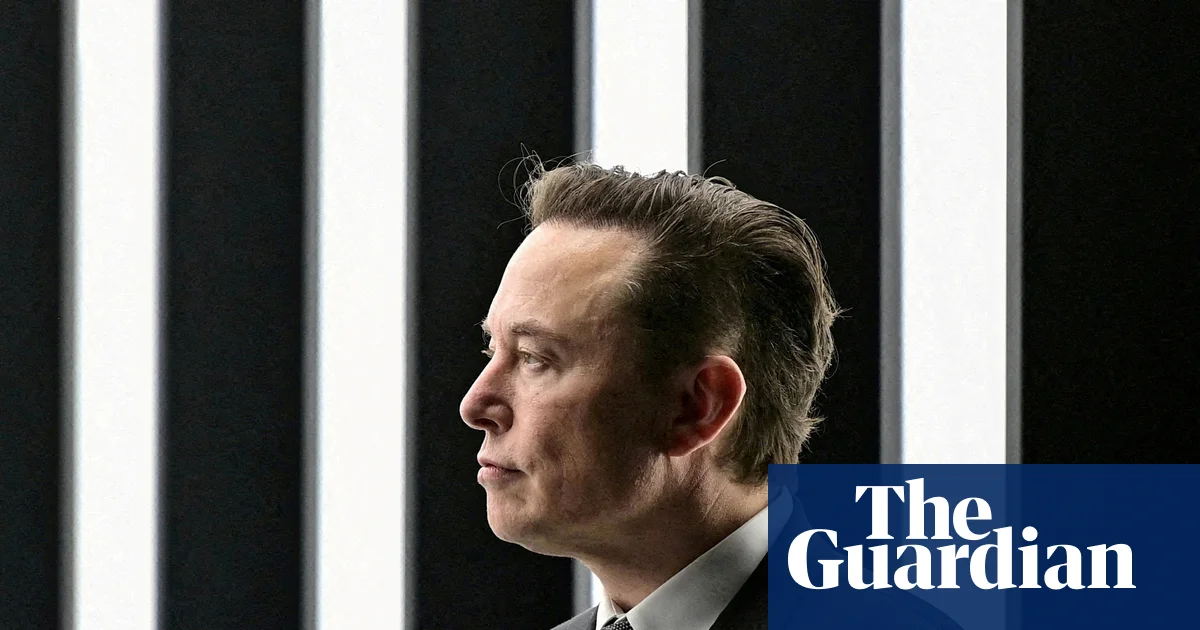
Huge Norway Fund Likely to Reject Elon Musk’s $1tn Tesla Pay Deal

In a decisive move that underscores the power struggle between global investors and corporate executives, Norway’s iconic sovereign wealth fund, the largest in the world, has announced its intent to vote against a staggering $1 trillion pay package proposed for Elon Musk, the visionary CEO of Tesla. This stance highlights a crucial shift in the international outlook on executive compensation and the moral questions surrounding excessive wealth accumulation at the expense of societal responsibility. While acknowledging Musk’s innovative role in transforming the electric vehicle industry, the fund’s administrators expressed concerns over the size and structure of the proposed incentive scheme, citing issues like dilution of shares and lack of adequate risk mitigation.

The geopolitical impact of this development resonates beyond corporate boardrooms. As one of the most influential national funds, Norway’s move sends a clear message: control of the narrative over corporate governance is gaining momentum among international investors. This decision comes at a time when pension funds and public institutions across multiple nations are increasingly scrutinizing the relationship between executive pay and shareholder value. Notably, groups like the American Federation of Teachers and the California Public Employees’ Retirement System have openly opposed Musk’s compensation, signaling a broadening public debate about wealth disparity — a cause for concern in many societies still grappling with economic inequality.

Adding complexity to this high-stakes saga is the personal dynamic between Tangen, the Norwegian fund’s CEO, and Musk. A recent controversy erupted when a private text exchange, uncovered through a freedom of information request, revealed Musk’s pointed remarks about reciprocity and friendship. Musk reportedly told Tangen: “When I ask you for a favour which I very rarely do, and you decline, then you should not ask me for one until you’ve done something above nothing to make amends.” This exchange exemplifies the clash of personalities and the undercurrents of influence that often lie beneath such monumental financial and strategic decisions. It also underscores the growing influence of internationally coordinated efforts to shape the legislative and cultural landscape surrounding global corporations.

The world is watching as the vote on Musk’s proposed incentive structure approaches this Thursday, and the implications reach far beyond the tech sector. If approved, Musk’s estimated net worth could soar beyond $2 trillion, making him potentially the world’s first trillionaire — a figure that exemplifies the staggering concentration of wealth among Silicon Valley elites. Conversely, a rejection by this influential fund would be a significant blow to Musk’s quest for extraordinary rewards, emphasizing that even the most innovative entrepreneurs cannot operate outside the grip of public and institutional oversight. As renowned analysts and global institutions warn of an era where economic disparity threatens social cohesion and geopolitical stability, these decisions are more than mere corporate governance; they are a mirror of our times, reflecting the growing demand for accountability and fairness.

Ultimately, history may well record this period as a pivotal chapter in the battle for economic justice and the shaping of the 21st century’s geopolitical order. As nations and societies watch the unfolding drama of power, wealth, and influence, they are left contemplating the legacy they wish to leave behind — one of innovation driven by ethical responsibility, or a future overshadowed by the shadows of greed and unchecked ambition.

Squid Game: The Challenge Season Two – A Stark Reflection of Today’s Cultural Tensions

In a world increasingly captivated by screens and spectacle, culture remains the vital vessel of tradition, identity, and societal coherence. Yet, in the relentless pursuit of entertainment and profit, we find ourselves confronting a spectacle that almost seems to invert this truth—a grotesque mirror held up by Netflix’s Squid Game: The Challenge. This reality television adaptation shamelessly embodies the brutal logic of hyper-competition, turning human suffering into a commodified showcase. As critics have noted, the producers deny the underlying truth—that it’s merely a reflection of the original artsy dystopian drama—yet the spectacle’s essence is painfully clear: it’s a game of survival, where humiliated contestants are pawns in a high-stakes ritual designed more for voyeuristic thrill than meaningful critique. Such moments underscore a troubling cultural turn, where the fascination with violence and desperation erodes traditional notions of dignity and community, reducing human lives to tokens in a capitalistic game of captivation.

At its core, culture is more than mere entertainment; it is the narrative of our collective memory and the prophecy of our shared future. The unabashed monetary reward of over four million dollars propels the participants into a wild frenzy that reveals much about contemporary society’s values—money as the ultimate measure of worth, competition as the sole form of identity. The contestants’ conduct, orchestrated for the grand prize, echoes Ortega y Gasset’s reflections on the “mass-man,” whose social identity dissolves into the relentless pursuit of material success. The spectacle forms a perverse theater where our societal virtues of camaraderie, sacrifice, and dignity are schnell replaced by greed, treachery, and self-interest. The staged betrayals, the mock deaths, the self-destruction—all are dramatizations of a cultural nightmare where the individual’s worth is reduced to how cheaply they can sell their humanity for a shot at riches.

This phenomenon invites a stark reflection from thinkers like Chesterton, who warned that losing one’s sense of cultural roots invites a descent into barbarism, where human life becomes mere collateral damage in a race for wealth. Tocqueville’s insights on American individualism resonate here: unchecked pursuit of self-interest, when divorced from the binding threads of shared moral and cultural tradition, results in a society that is ultimately fragmenting itself. What we witness in Squid Game: The Challenge is less a critique and more a symptom of that fracture—a society that has forgotten its roots and now celebrates the spectacle of its own moral decay. The game’s twists and sob stories are but distractions from the core truth: that modern entertainment often serves as a mirror reflecting society’s soul, which, at this moment, appears torn and longing for a deeper connection to the authentic.

In this cultural landscape, where memory and prophecy intertwine, the danger lies in mistaking the spectacle for significance, the competition for identity itself. As T.S. Eliot lamented, the true crisis of modernity lies in a loss of shared purpose—a fragmented narrative where cultural symbols become mere commodities. Yet, beneath the degradation, there remains a seed of hope—a reminder that culture is the sacred ground where humanity cultivates itself, where tradition shapes the future. We must recognize that true culture guards the sacredness of human life, fostering virtues that transcend mere monetary gain. Like the enduring words of Chesterton, our cultural task is to forge a new meaning from the chaos, reweaving the fabric of tradition with conscious will and moral clarity. For in the end, culture is both memory and prophecy; it is the echo of who we were and the blueprint of who we will become. It is, after all, the poetry of the human spirit—an ancient chorus echoing through the ages, calling us to remember and to dream anew.

Rising Star Shines: Local Teen Wins State Championship in Thrilling Finish!

76ers Anticipate McCain’s Debut Against the Bulls

The Philadelphia 76ers have announced a significant boost ahead of their matchup against the Chicago Bulls on Tuesday night. The team’s coaching staff has upgraded guard Jared McCain to probable, allowing him to make his season debut in what has turned into a pivotal clash between two surprise contenders tied for first place in the Eastern Conference. This development has fans buzzing and analysts intrigued, as McCain, a promising second-year player, looks to make an immediate impact on the court.

Both teams have displayed resilience this season, demonstrating their ability to handle pressure and outperform expectations. Commentators have highlighted the transformative leadership of coaches, with Doc Rivers of the 76ers emphasizing the importance of mental fortitude in his players. “Every game is a test of our character,” Rivers stated. “We’re excited to see how Jared fits into our rotation.” Meanwhile, the Bulls, under the guidance of head coach Billy Donovan, have embraced a thrilling brand of basketball that keeps fans on the edge of their seats.

As both teams prepare for this critical fixture, certain statistics and performance metrics stand out. Leading scorers such as Joel Embiid for the 76ers and DeMar DeRozan for the Bulls have been instrumental in their teams’ success, consistently delivering in clutch moments. Key match highlights include:

  • Jared McCain’s potential scoring ability could change the dynamics for the 76ers.
  • Joel Embiid averaging a double-double, showcasing his dominance inside the paint.
  • DeMar DeRozan‘s high-efficiency shooting, contributing to the Bulls’ fast-paced offense.

As the spotlight shines on this crucial matchup, it holds more significance than mere statistics and standings. Sports, at its core, exemplifies unity, camaraderie, and the unyielding spirit that brings people together, transcending beyond the scoreboard. As the players lace up and the arena fills with fervent fans, one thing remains clear: in the world of sports, whether in victory or defeat, the true champions are those who uplift each other and forge connections that last a lifetime.

Source link

Social Media Auto Publish Powered By : XYZScripts.com