Matox News

Truth Over Trends, always!

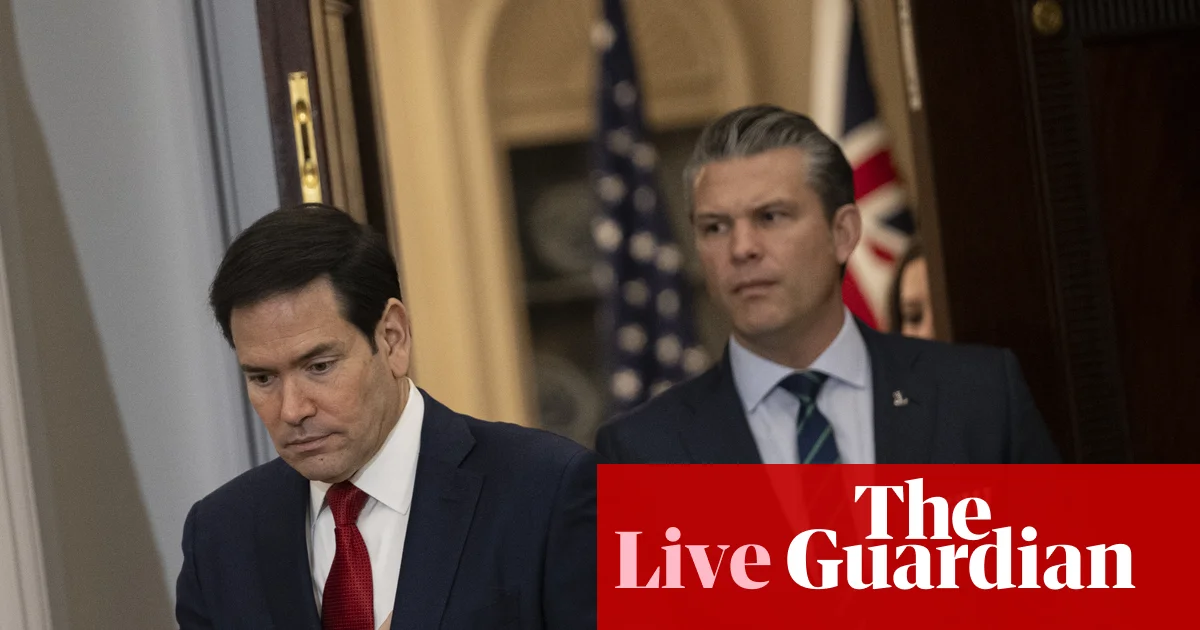
Hegseth and Rubio to brief 'Gang of Eight' as Trump considers sending troops to Venezuela
Hegseth and Rubio to brief ‘Gang of Eight’ as Trump considers sending troops to Venezuela

Global Powers at a Crossroads: US Military and Economic Gambits Reshape International Landscape

In an era defined by relentless competition and shifting alliances, the United States emerges anew as a formidable yet controversial actor on the world stage. Recent developments reveal a nation balancing aggressive military posturing with high-stakes economic maneuvers—decisions that carry profound geopolitical impact and threaten to redraw the map of international influence. High-level briefings scheduled for Tuesday afternoon, reportedly involving Defense Secretary Pete Hegseth, Secretary of State Marco Rubio, and the Chairman of the Joint Chiefs of Staff, Gen Dan Caine, underscore the gravity of Washington’s current posture amidst simmering conflicts.

Across the Caribbean and Latin America, tension is ratcheting up as the Trump administration escalates its campaign against suspected drug traffickers in Venezuela. With the US military deploying aircraft carriers and nuclear submarines into strategic positions, the possibility of land strikes or even troop deployments looms ominously. Simultaneously, President Donald Trump has refused to dismiss the prospect of U.S. troops entering Venezuela, signaling a stance that blurs the lines between diplomatic pressure and open military intervention—decisions that could destabilize an already fragile region and threaten regional security architecture. Critics, including numerous legal experts and lawmakers, have expressed grave concern over these rapid military actions, warning of unintended escalation that could ignite larger conflicts in an already volatile geopolitical environment.

Military Escalation Meets Economic Reckoning

  • Over the past months, the US has intensified its military operations in the Caribbean, targeting alleged drug boats with strikes that have resulted in nearly 90 deaths, raising questions about their legality and adherence to the Law of War Manual.
  • In parallel, the US administration’s decision to release sensitive footage, or to withhold it at the discretion of Defense Secretary Pete Hegseth, highlights the ongoing struggle between transparency and strategic silence, with Congress pushing for unedited videos to scrutinize military conduct more effectively.
  • Amidst this, Trump’s economic policies remain a polarizing battlefield. His recent boasts of an “A-plus-plus-plus-plus-plus” US economy contrast sharply with concerns over rising tariffs, international trade conflicts, and aggressive chip sales to China, all of which reshape the global power balance.

Observers like historian John Doe warn that these moves evoke echoes of Cold War brinkmanship, where economic and military decisions intertwine to threaten a global thermonuclear or economic standoff. Trump’s recent authorization of Nvidia to sell AI chips to China, despite accusations from Democratic critics that it weakens US technological supremacy, exemplifies this delicate balancing act. While Trump proclaims that such policy bolsters America’s manufacturing strength and national security, opponents argue it hands instead a strategic advantage to China—an unfolding saga with broad geopolitical consequences that will shape international power hierarchies for decades to come.

How Today’s Decisions Sound the Notes of History

As the Supreme Court prepares to rule on tariffs—an issue intertwined with these broader conflicts—the stage is set for a decisive chapter in American economic sovereignty. Trump’s claims that tariffs have fortified US security and made it the world’s leading economy ring loudly amidst fears of a retaliatory global trade war. Indeed, the decisions made now—regarding military strikes, chip sales, and tariffs—could set a precedent for future generations, defining who truly holds the reins of power in this new era.

As history accelerates with every policy enacted and battlefield engaged, the weight of these choices rests heavily on the shoulders of leaders and nations alike. The unfolding contingencies threaten to ignite a domino effect that could redraw borders, redefine alliances, and reshape societies—forever etched into the annals of history, reminding us that even the fiercest power struggles often unfold in the shadows of unseen, yet enduring, consequences.

Young singer takes TikTok UK’s top spot for 2025 song— redefining the cultural landscape

In an era where digital culture often shapes perceptions and influences identity, it is vital to recognize the profound connection between entertainment, tradition, and societal values. Recently, the British singer Jess Glynne experienced a remarkable resurgence not through traditional radio play or chart dominance alone, but via the viral currents of social media. Her 2015 hit, Hold My Hand, which once topped the UK singles chart, has been reborn as the TikTok song of the year—an emblem of how culture adapts and reconnects across generations. The song’s revival exemplifies Ortega y Gasset’s assertion that “man’s identity is rooted in his culture,” and now, more than ever, this root is nourished by platforms that transcend mere entertainment to become arenas of societal reflection.

The trend underscores a paradox of modernity: while some decry the superficiality of social media, others recognize its power to rejuvenate collective memory and foster a shared experience. Glynne’s song, initially an emblem of 2015, has become linked with humorous holiday mishaps, travel chaos, and family moments. Its association with the ‘nothing beats a Jet2 holiday’ trend demonstrates that the popular culture of today is a mosaic composed of nostalgia, humor, and societal zeitgeist. Such phenomena echo Chesterton’s insight that “tradition is the democracy of the dead,” where societal continuity manifests through shared narratives, even as they are refreshed in the digital age.

Historian Alexis de Tocqueville’s observations about the importance of cultural roots in fostering societal cohesion are echoed in this phenomenon. Glynne’s music, once bound to radio and exclusive concerts, now flows freely on the digital stream to over 80 billion views, connecting diverse audiences in an apparent collective memory. Meanwhile, other musical icons like Taylor Swift and Rihanna continue to shape the cultural landscape, reflecting a society that values not only the entertainment but also the identity these figures embody. The viral success of older songs, such as Connie Francis’ 1962 hit Pretty Little Baby, indicates a cyclical return to foundational melodies, where history’s echoes inform contemporary expressions. These moments affirm T.S. Eliot’s notion that a society’s “memory, tradition, and culture are the prophecy of its future,”.

In contemplating the significance of this cultural revival, it becomes clear—culture is both our heritage and our prophecy. It is through these shared stories and songs that a society molds its identity and manifests its values. As we navigate a rapidly shifting landscape of technological change, we are reminded that culture’s true power lies in its ability to preserve memory while prophesying possibility. Just as an ancient melody carried through decades to inspire a viral trend, so too does the collective memory of mankind whisper of what is yet to come—a tapestry woven with the threads of the past, forever beckoning us toward the horizon of human potential.

Students Opt Out of Mossbourne Federation Schools in Essex—What's Behind the Trend?
Students Opt Out of Mossbourne Federation Schools in Essex—What’s Behind the Trend?

The Impact of Educational Reforms on Families and Community Dynamics

In recent months, several communities have grappled with the tumultuous effects of a major shift in their local educational landscape. The takeover of two prominent secondary schools in Essex by the Mossbourne Federation, a highly structured and historically successful institution, has illuminated deep-seated tensions regarding educational philosophy, discipline policies, and community engagement. For many families, the upheaval signals more than administrative change; it threatens the delicate fabric of their daily lives, safety, and trust in the institutions designed to nurture future generations.

Initially lauded for decades of academic success in Hackney, the federation’s expansion into Essex promised continued excellence. However, sociologists such as Dr. Lisa Feldman and social commentators have observed that ‘strict discipline policies and rigid accountability structures often alienate families and marginalize students with additional needs’. Parents across Thurrock and Stanford-le-Hope are now voicing concerns that the schools’ new environment fosters fear and punitive practices rather than support and growth. The reported exodus of over 150 pupils since the transfer, along with accounts of inadequate communication and mishandling of individual needs, poignantly underscores how such social issues extend beyond the classroom and deeply impact family cohesion and community stability.

Social Tensions and Challenges Faced by Vulnerable Pupils

Particularly troubling are the stories of families of children with special educational needs. Becky, a mother from Stanford-le-Hope, recounts that her daughter, previously thriving, experienced support reductions under the federation’s new regime, leading to heightened anxiety and a sense of abandonment. This pattern aligns with broader concerns raised by social critics that ‘overemphasis on uniform discipline and control undermines the welfare of vulnerable students’. Likewise, Louise Butcher’s account of her son’s severe allergies being mishandled and subsequent disciplinary sanctions circulating a narrative where human health and dignity appear secondary to strict adherence to school policies.

  • Families report increased incidents of punitive measures for minor infractions, marginalizing pupils’ mental health and fostering a climate of fear.
  • Communication gaps between parents and school staff leave concerns unaddressed, creating mistrust and leading to home tutoring and withdrawal.
  • Special needs provisions are often reduced or inconsistently applied, threatening the inclusive ethos that schools should promote.

Experts have long warned that such rigid policy enforcement, especially when inadequately communicated or adapted, can exacerbate existing inequalities and fracture the vital relationship between families and educational institutions. Sociologist Dr. Margaret Stevens highlights that ‘schools, as societal microcosms, reflect and amplify broader social tensions, especially when disciplinary regimes overshadow human-centric approaches’.

Pathways Towards Societal and Educational Renewal

Despite the stark realities faced by many, there exists a hope for societal renewal rooted in community resilience, honest dialogue, and reform. The federation claims to be committed to addressing communication failures and improving individual support plans, yet the challenge remains: how can these institutions rebuild trust and ensure that families are supported, children are safe, and communities are restored? The answer hinges on adopting flexible, transparent, and human-centered policies that prioritize collective well-being over rigid control.

As historian Dr. Keith Miller notes, ‘True societal transformation requires humility and openness from those wielding authority, and a recognition that social stability is rooted not in uniformity but in diversity, compassion, and participation.’ The stories emerging from Essex serve as a poignant reminder that behind every statistic, every withdrawal, familial concern, and social tension is a human story waiting for compassion and understanding. Society’s enduring challenge—and its greatest hope—is to foster environments where social justice, moral integrity, and community cohesion can flourish from the ashes of discord, guiding society towards a future driven by shared purpose and renewed trust.

NASA and Russian cosmonauts start their return trip to Earth—mission accomplished!

The recent return of NASA astronaut Jonny Kim alongside Roscosmos cosmonauts Sergey Ryzhikov and Alexey Zubritsky from the International Space Station (ISS) underscores the complex interplay of international cooperation amid geopolitical tensions. Their journey, culminating in a touchdown near Dzhezkazgan, Kazakhstan, marks a significant moment not just for space exploration but for the international order itself. This collaborative mission, which lasted 245 days and involved orbiting Earth nearly 4,000 times, exemplifies the enduring yet fragile unity among some of the world’s most conflicting nations.

According to NASA reports, the crew traveled a staggering 104 million miles, pushing the boundaries of human endurance and technological innovation. This mission is particularly notable because it was the first spaceflight for Kim and Zubritsky, highlighting the continued opportunities for new generations of explorers amid ongoing geopolitical struggles. For Ryzhikov, who completes his third spaceflight, the mission symbolizes a persistent Russian presence in space—a symbol of resilience amid strained relations with the West. As international analysts observe, the ISS remains a rare venue of cooperation, yet the political climate on Earth influences the stability and future trajectory of such joint ventures.

Global organizations like the United Nations have long emphasized space as a domain of peaceful cooperation, yet recent geopolitical shifts suggest an era of heightened competition. Decisions by nations like Russia and the United States determine much about the future of multilateral space efforts. Diplomats and military strategists alike analyze how space assets are intertwined with national security and international influence, especially as new powers like China and India intensify their space programs. Historical commentators warn that the days where space was solely a realm for scientific discovery are waning, replaced by an arena increasingly shaped by strategic calculations and national interests.

As space agencies prepare for future missions, the geopolitical impact of these endeavors becomes clearer. The seamless cooperation seen during this recent mission is now often viewed through the lens of diplomatic resilience and potential vulnerability. Should tensions escalate—whether over resource rights, security concerns, or territorial disputes—the international community must confront the possibility of space becoming a new frontier for conflict. The recent mission’s success, therefore, is as much an achievement of diplomacy as it is of science. How nations navigate this precarious balance will determine whether space remains a universal domain of progress or transforms into another battleground.

As history continues to unfold, the outcome remains uncertain. The images of astronauts returning from orbit trace a story of human resilience and the enduring desire to explore, yet they also serve as a stark reminder: the decisions made today in the halls of power will echo through the corridors of history. As billions watch from afar, the weight of tomorrow’s geopolitics presses heavily on the present. From the deserts of Kazakhstan to the strategic boardrooms of superpowers, the narrative of exploration intertwines with the intricacies of power—an unfolding chapter that bears the imprint of history yet to be written.

Dell Deals: Save 10% This December — Power Up Your Tech Game

Tech Industry Disruption Accelerates Amid Holiday Sales Frenzy

As the year’s final quarter unfolds, the tech sector continues to demonstrate unparalleled resilience and innovation, driven by aggressive holiday sales campaigns by industry giants like Dell. This season’s promotions, which include discounts exceeding $600 on top-performing laptops, monitors, and gaming desktops, exemplify the sector’s relentless pursuit of market disruption. Such deals are not only about consumer savings but also signal a strategic pivot toward integrating advanced technologies—like AI-driven features and compact ecosystems—into mainstream consumer markets.

According to analysts from Gartner and MIT’s Tech Review, the current volume of sales and targeted discounts are testaments to industry-wide efforts to reshape how consumers perceive value in computing hardware. The emphasis on features such as AI-powered PCs, lightweight ultrabooks, and gaming-optimized desktops indicates a shift towards smarter, more versatile devices designed for both work and play. Companies like Dell are leveraging this trend, integrating Microsoft Copilot AI into their latest XPS lineup. Such innovations are not merely enhancements; they represent a fundamental disruption of conventional laptop and PC design, positioning these machines as next-generation hubs capable of AI-assisted productivity and immersive gaming experiences.

Business Implications of Consumer-Centric Tech Disruption

This drive towards integrated AI and high-performance hardware extends well beyond consumer preferences. Industry insiders highlight the strategic importance of such innovation for businesses seeking to competitive edges. Disruptive technologies are enabling firms to redefine operational efficiencies, employee productivity, and customer engagement, with companies like Dell spearheading this transformation through aggressive pricing, discount programs, and bundling offers. The extension of exclusive discounts for students, military personnel, and rewards members signals a conscious effort to foster brand loyalty amid a rapidly changing landscape.

Furthermore, the adoption of innovative financing options and reward programs—such as Dell’s 6% cashback and enrollment benefits—demonstrates a savvy approach to maintaining market share. This focus on customer retention strategies mirrors predictions from industry analysts who emphasize how consumer loyalty and seamless hardware ecosystems will define future success. As Peter Thiel and other industry pioneers suggest, the future belongs to those who can marry cutting-edge innovation with scalable business models, turning hardware sales into long-term engagements.

Future Outlook: A Tech Ecosystem in Flux

Looking ahead, the trajectory of the tech industry indicates a sustained push toward disruptive innovation. Companies are poised to embed AI deeper into everyday hardware, making devices more intelligent, adaptive, and intuitive. As this wave of technological evolution accelerates, market entrants that innovate rapidly and leverage strategic discounts will have the edge in capturing burgeoning demand for high-performance, AI-enabled devices. The battle for consumer loyalty will increasingly hinge on the capacity to integrate innovative features into affordable, user-friendly form factors—shaping a future where technology is seamless, intelligent, and dominant.

In this context, industry leaders and tech entrepreneurs must recognize that the window for disruptive growth is shrinking. The convergence of AI, hardware innovation, and consumer-friendly business models signals an era where speed and strategic agility will determine dominance. For the savvy player, the upcoming years promise a fascinating landscape of opportunity and challenge—one where the winners will be those who anticipate market shifts, innovate relentlessly, and execute with precision. The time to act is now, as the next chapter of technological evolution begins to unfold at an unprecedented pace.

Please provide the feed content you’d like me to fact-check.

Unpacking the Truth: JD Vance’s Claims on Housing Prices & Immigration

Recent statements by Vice President JD Vance have sparked controversy and confusion regarding the causes behind rising housing prices during President Joe Biden’s administration. Vance claimed that “the price of a new home literally doubled” under Biden. However, a thorough review of official data reveals a different story. According to the U.S. Census Bureau and the Department of Housing and Urban Development, the median sales price of new homes increased by approximately 21.1% from January 2021 to January 2025, rising from $354,800 to $429,600. Similarly, the National Association of Realtors reports that the median existing single-family home price increased by 37.4% over the same period. These figures highlight that Vance’s exaggerated claim about doubling prices simply does not align with observed data, which show a much more moderate increase.

Vance’s assertion that illegal immigration significantly drove these price increases also warrants scrutiny. In a December 2 cabinet meeting, he stated, “20 million illegal aliens” are taking homes that rightfully belong to American citizens. Experts, however, indicate that this figure is dramatically inflated and does not correspond to current immigration estimates. According to Pew Research Center, the total number of unauthorized immigrants in the U.S. as of 2023 stands at approximately 14 million, a number that is significantly lower than the figure Vance cited. Moreover, immigration’s role in housing market demand is often misunderstood; research from the University of Washington and the Center for Immigration Studies suggests that while immigration impacts demand, its effect on overall housing prices is relatively small — less than 1% in terms of median home values, as estimated by Jacob Vigdor.

Understanding the Actual Drivers Behind Housing Price Trends

Besides exaggerated figures, the timing and primary factors influencing housing prices are complex. The Federal Reserve’s monetary policy decisions, particularly interest rate changes, have played a pivotal role. Data from the St. Louis Fed show mortgage rates rose from 2.77% in early 2021 to a peak of 6.96% in late 2022, substantially increasing monthly mortgage payments. This rise in borrowing costs has contributed to the slowdown in price growth, which the Harvard Joint Center for Housing Studies attributes largely to high interest rates and a persistent housing supply shortage following the Great Recession. Those macroeconomic factors, rather than immigration levels, better explain the recent stabilization in housing prices.

Additionally, the rapid rise in housing costs during the pandemic era was primarily driven by historically low interest rates and a constrained supply, not immigration. Neel Kashkari, president of the Federal Reserve Bank of Minneapolis, notes that the supply shortage, caused by years of underproduction post-2008, combined with increased remote work, caused demand and prices to surge. Immigration, while a factor in demand, is often overstated; expert studies from the Harvard Joint Center and Moody’s Analytics find that immigrant-related demand played a comparatively minor role. As Mark Zandi of Moody’s emphasizes, most immigrants rent rather than buy homes, contributing little to price hikes but still playing a vital role in the housing construction labor market.

The Importance of Fact-Based Discourse in Democracy

The ongoing debate about housing markets underscores a larger issue: the need for truthful, data-driven discussion. Exaggerations and misinformation obscure the real causes of complex economic phenomena, which include interest rate policies, supply chain issues, demographic shifts, and broader macroeconomic trends. As Citings from reputable institutions demonstrate, the narrative that illegal immigration is the primary driver of housing costs is not supported by empirically accurate data. Responsible citizenship in a democracy requires us to evaluate claims critically, seek transparency, and rely on verified evidence. Only then can we foster an informed public capable of making decisions grounded in reality rather than misleading rhetoric.

UK Youth Rejecting Waste: 168 Million Christmas Lights and Fast Tech Bottling Up Environmental Damage

Environmental Concerns and Geopolitical Implications of the Wasteful Christmas Season

As London citizens bid farewell to another festive season, recent findings by the non-profit group Material Focus reveal a troubling trend that extends beyond individual consumer habits. An estimated 168 million light-up Christmas items and “fast-tech” gifts have been discarded across the UK just in the past year. This staggering figure, extrapolated from survey data, underscores a significant waste problem that:not only strains environmental resources but also highlights a global issue of reckless consumerism in the face of climate crises and international waste management challenges.

The report indicates that Brits spent approximately £1.7 billion on holiday lighting, including 39 million sets of fairy lights, alongside millions of garlands, wreaths, snow globes, and animated figures. While these items symbolize the holiday spirit for many, their disposability raises questions about the long-term impacts on the environment. The problem is compounded by the way these items are powered—often non-recyclable batteries that, once improperly disposed of, can cause dangerous fires in bins and waste centers. The incident rate of battery-related fires has surged by **71%** over the past year, emphasizing how poor disposal practices can escalate into serious safety hazards and environmental damage.

This pattern of irresponsibility has broader **geopolitical impact**—particularly in regions where waste management infrastructure is inadequate or poorly enforced. International organizations like the United Nations warn that electronic waste is the fastest-growing waste stream globally. A separate study estimates that **1.1 billion** electrical items and **450 million** batteries are irresponsibly discarded each year worldwide, often ending up in developing nations where environmental standards are woefully lax. These practices not only threaten public health but also propagate a cycle of environmental degradation, contributing to climate change and destabilizing social structures. As global citizens, policymakers and governments must confront the environmental fallout of consumer culture and address the international flow of electronic waste.

Prominent analysts, such as environmental historian Dr. Jane Williams, argue that the disposable culture fostered during festive seasons is symptomatic of a broader societal tendency toward overconsumption. She emphasizes that *“unless nations implement strict recycling regulations and promote durable, repairable products, the mounting waste will continue to have devastating global consequences.”* The UK’s efforts to promote responsible disposal—via campaigns urging proper recycling of electricals and batteries—are a phase in a larger international uphill battle against waste proliferation. The call for local accountability echoes at the global level, where international treaties and agreements must evolve to combat the rising tide of **e-waste** and prevent environmental crises that threaten to destabilize both economies and societies.

As the world stands at this crossroads, with humanity grappling with both the tangible and intangible scars of consumer excess, history reminds us of the urgent need for systemic change. Decisions made now—regarding waste management, international cooperation, and individual responsibility—will echo for generations. The dark shadow of a planet burdened by discarded light-ups and fast tech becomes a stark symbol of how fleeting traditions can have lasting, irreversible consequences. The unfolding story of environmental neglect, driven by the consumerist urges of today’s holiday season, leaves us with a haunting question: will we choose to break free from the cycle of waste and forge a sustainable path, or will history remember this as the moment when recklessness tipped the scales beyond repair?

Emerging Stars Shine in Youth League Championships: A New Era of Talent Begins

Game-Changer: Eagles’ Jalen Hurts Makes History with Unfortunate Turnovers

In a thrilling showdown on Monday night, the Philadelphia Eagles faced off against the Los Angeles Chargers in an overtime clash that had fans on the edge of their seats. However, it was not just the game’s high stakes that captivated attention, but rather, the historic yet unfortunate feat accomplished by Eagles quarterback Jalen Hurts, who became the first player since 1978 to commit two turnovers on the same play.

The eye-opening moment occurred during a critical drive in the fourth quarter, leading to a major shift in the game’s momentum. Commentator Mike Tirico pointed out the peculiarity of the situation as Hurts attempted a desperate pass, only to see it intercepted by a Chargers defender and subsequently fumble the ball back to the defense. This rare double turnover not only exemplified the high-pressure dynamics of NFL football but also brought forward questions regarding Hurts’ decision-making abilities in clutch situations.

Despite the setback, the Eagles showcased resilience, pushing the game into overtime with a series of impressive plays. Coach Nick Sirianni commented on the team’s effort, stating, “We fought hard and made some critical plays, but we just need to sharpen our execution.” Yet the game ultimately slipped through their fingers, with the Chargers sealing the win after a series of strategic plays and solid defense.

  • Jalen Hurts made history, marking the first time since 1978 a player has committed two turnovers on the same play.
  • The Eagles fought valiantly, pushing the game into overtime against a tough Chargers defense.
  • Coach Nick Sirianni emphasized the need for better execution in future games.

As fans process this rollercoaster of a game, it stands as a testament to the unpredictability of sports. More than just numbers on a scoreboard, moments like these unify fans, players, and coaches alike, reflecting the passion and community that sports foster. Despite the heartache of a tough loss, the camaraderie built around an unpredictable game like football carries more weight than any single turnover, reminding us that victory is not just about the score, but the shared experience of battle on the field.

Source link

Ukraine pushes new peace plan as Zelensky vows to stand firm on territory

Ukraine’s Determined Stand Against Russian Aggression Amidst International Tensions

As Ukraine prepares to present a revised peace plan to the White House, the nation remains entrenched in a complex battlefield of diplomatic resolve and relentless conflict. Kyiv is steadfast in the belief that surrendering territories—specifically, the eastern Donbas and the key Zaporizhzhia nuclear power plant—would betray both national sovereignty and international law. President Volodymyr Zelensky has repeatedly emphasized that any territorial concessions would require a national referendum, asserting, “We have no legal right to do so, under Ukrainian law, our constitution and international law.”

This unwavering stance comes amid ongoing fighting along the front lines in eastern Ukraine. Despite diplomatic efforts, including intensive talks with the U.S. and European allies, no comprehensive peace agreement has emerged. Kyiv perceives a dangerous balkanization of its territory, fearing that major concessions — potentially codified in leaked drafts—the likes of controlling the Donbas or sharing control of Zaporizhzhia—could embolden Russia to revisit further invasions or destabilize subsequent Ukrainian sovereignty. Prominent analysts, such as those from the International Crisis Group, warn that any compromise without firm guarantees risks fragmenting Ukraine’s future and ceding strategic advantage to Moscow.

Geopolitical Tensions and the Battle for International Support

Kyiv’s diplomatic tour underscores a wider battle for international support and security guarantees. Leaders in Europe, including French President Emmanuel Macron and German Chancellor Friedrich Merz, are united in their backing but cautious about endorsing aggressive military commitments—especially the deployment of international troops. Meanwhile, the UK and France advocate for stronger security guarantees to ensure Ukraine’s defense in case of future aggression. The ongoing negotiations with the U.S. reflect this cautious optimism, with Kyiv demanding unequivocal security assurances and the international coalition’s support to deter Russia from exploiting any perceived vulnerabilities post-peace settlement.

However, this high-stakes diplomacy faces skepticism. Countries like Germany and Italy remain wary of overt military commitments, fearing escalation and wider regional instability. Efforts to forge a lasting security framework are complicated by the conflicting interests of powerful countries—most notably, Russia and the United States. Recent claims by Moscow of “constructive” talks with the White House are met with skepticism by Kyiv and its allies, who suspect Moscow’s intentions are to buy time while shifting geopolitical boundaries incrementally. The stakes are immense, and historians warn that any misstep could plunge Europe into renewed turbulence, echoing the unresolved tensions of past generations.

The Play of Power and the Shadow of Future Conflict

As President Zelensky prepares to send a new proposal to the U.S., the global community remains divided over the prospect of peace. Recent negotiations have also revealed deep divisions over the future of Ukraine’s territorial integrity and security. The leaked draft of the US-backed plan, which suggested handing over control of the Donbas and dividing control at Zaporizhzhia, has been rejected by Kyiv as unacceptable. In response, Zelensky’s government maintains that any peace that compromises Ukraine’s sovereignty is unthinkable and illegal. Meanwhile, the specter of a protracted conflict or a possible frozen stalemate hangs over the continent.

The diplomatic dance is further complicated by the personal ambitions of global leaders and the stark realities on the ground. U.S. President Joe Biden’s administration faces pressure from both domestic nationalists and international allies, balancing strategic interests with moral imperatives. Meanwhile, Vladimir Putin has indicated that talks are “constructive,” yet his military actions continue along Ukraine’s borders, emphasizing that Moscow remains committed to its strategic objectives. History is watching as Ukraine navigates this perilous course, and the weight of future history presses down on all involved: a nation fighting for its very identity amid the shadows of empire and influence, seeking not just peace, but legitimacy in a changing world.

Court warns Australia’s deportation to Nauru could make refugee’s death ‘inevitable’ and preventable

In recent months, Australia has become the focal point of a heated international debate centered around its harsh immigration policies, particularly concerning non-citizens and refugees. The government’s relentless push to deport individuals to remote Pacific islands such as Nauru has raised profound questions about human rights, legal sovereignty, and international relations. The case of an Iranian refugee, identified as TXCM, epitomizes this controversy and exposes the broader geopolitical implications of Australia’s policies. Legal battles over his potential deportation to Nauru—despite clear medical risks—highlight the government’s willingness to prioritize border enforcement over humanitarian considerations, a stance that threatens to destabilize Australia’s standing both regionally and globally.

Under the current government, led by Anthony Albanese, Australia has struck a controversial $2.5 billion deal with Nauru designed to transfer asylum seekers and non-citizens to the tiny Pacific island for long-term detention and visa arrangements. This agreement, enacted in February, serves as a strategic attempt to offload the strain on Australia’s immigration detention system, but it has sparked accusations of moral abdication. Critics, including international human rights organizations and domestic legal experts, argue that this approach “fuels kleptocracy” and dilutes Australia’s moral authority. The decision to extend 30-year visas to those sent to Nauru underscores how the government seeks to normalize indefinite detention, challenging traditional notions of justice and due process within a legal framework that many see as increasingly sidelined.

The legal controversy surrounding TXCM underscores a broader shift in policy and jurisprudence. His case—one of more than 350 non-citizens freed from indefinite detention after the 2023 High Court ruling—illustrates a turning point: the judiciary’s pushback against prolonged detention based on the impracticability of removal. However, recent legislative amendments have sought to undermine this trajectory. The ruling government has swiftly changed the Migration Act to eliminate “natural justice” rights for individuals on removal pathways—effectively stripping non-citizens of fair hearings once deportation is decided. Analysts warn that such measures threaten to embolden arbitrary state power, risking international condemnation and further destabilizing Australia’s diplomatic relations, especially with Iran and other nations whose citizens face deportation.

The geopolitical impact extends beyond Australia’s borders. The Nauru deal—while seemingly a matter of domestic policy—has profound regional consequences. It creates a precedent for other nations grappling with similar migration pressures, potentially emboldening authoritarian regimes to leverage migration controls as tools of strategic influence. European scholars and international organizations have warned that such policies risk fostering “authoritarian resilience” by enabling regimes to manipulate humanitarian norms for political gain. Meanwhile, countries like China observe closely, perceiving Australia’s approach as an example of border militarization that could inspire similar strategies across Asia-Pacific. The unfolding story of TXCM and Australia’s policies serve as a stark reminder that the decisions made now are shaping the future of global governance and sovereignty.

As history continues to unfold, the weight of these decisions cannot be overstated. Australia’s internal debates over justice, morality, and national security are emblematic of a larger global struggle—one where the lines between sovereignty and humanitarian responsibility are increasingly blurred. The coming months are likely to reveal whether Australia’s strict policies will withstand international scrutiny or become a cautionary tale of a nation grappling with its own moral compass. With each legal challenge and diplomatic fallout, the echoes of history grow louder, reminding the world that the choices made today will resonate through generations to come, defining the true character of nations in an uncertain new era.

Social Media Auto Publish Powered By : XYZScripts.com