Matox News

Truth Over Trends, always!

Trump Shares and Quickly Deletes Wild AI Clip Promoting MedBed Conspiracy

In an era where technological innovation relentlessly redefines the boundaries of possibility, recent developments highlight both the disruptive potential of emerging technologies and the perils of misinformation that threaten to undermine public trust. AI-generated content and virtual medicine are quickly transforming industries, creating unprecedented opportunities for forward-looking businesses and challenging existing regulatory and ethical frameworks. These advancements, while promising, demand a vigilant approach to discern genuine progress from manufactured narratives that can distort public perception.

The controversy surrounding the supposed announcement of the world’s first MedBed hospital system exemplifies the profound impact of AI-driven misinformation on market stability and technological credibility. The floating claim of a universal, all-curing medical device—widely circulated in fringe online communities—mirrors historical patterns of conspiracy-driven disruption. Major tech analysts, such as those at Gartner, warn that this type of narrative can divert investment away from genuinely transformative innovations like regenerative medicine and personalized healthcare. Meanwhile, mainstream institutions are racing to develop real bioengineering breakthroughs that could revolutionize patient care, from CRISPR gene-editing to advanced biocompatible implants.

Concurrently, the proliferation of AI-generated media, including manipulated videos and synthetic personalities, underscores both the rapid innovation within deepfake technologies and the pressing need for industry and regulatory responses. Notable figures such as Elon Musk and Dr. Michio Kaku have voiced concern over how unchecked AI content can distort public discourse and manipulate markets. This presents an urgent challenge for businesses: developing resilient verification protocols and safeguarding against malicious use. The disruption could be profound—imagine AI-powered scams that imitate CEOs or government officials, threatening the integrity of digital commerce and national security itself.

Emerging reports emphasize that the convergence of AI, biotechnology, and blockchain will accelerate an **industry revolution**—a shift that surpasses the explosive growth seen during the dot-com boom. The market implications are clear: investments in authentic innovation will determine the future landscape of healthcare, cybersecurity, and consumer technology. As MIT researchers highlight, **the next decade will be defined by a race to harness AI’s potential responsibly, with real-world applications emerging faster than regulatory frameworks can adapt**. Warnings aside, the window to capitalize on these breakthroughs is shrinking fast, with entrepreneurs and investors urged to seize opportunities rooted in *credible* scientific progress rather than fabricated hype.

Looking forward, the onus is on industry leaders and policymakers to foster an ecosystem where genuine innovation flourishes amidst an increasingly complex digital battlefield. The rapid pace of technological progress necessitates a proactive stance—embracing disruption while guarding against its darker implications. In this new digital epoch, those who can harness truth and transparency will lead the charge, shaping a future where technology serves humanity’s highest ambitions. The clock is ticking; the next wave of transformative breakthroughs is on the horizon, demanding both urgency and strategic foresight from every stakeholder committed to a brighter, smarter tomorrow.
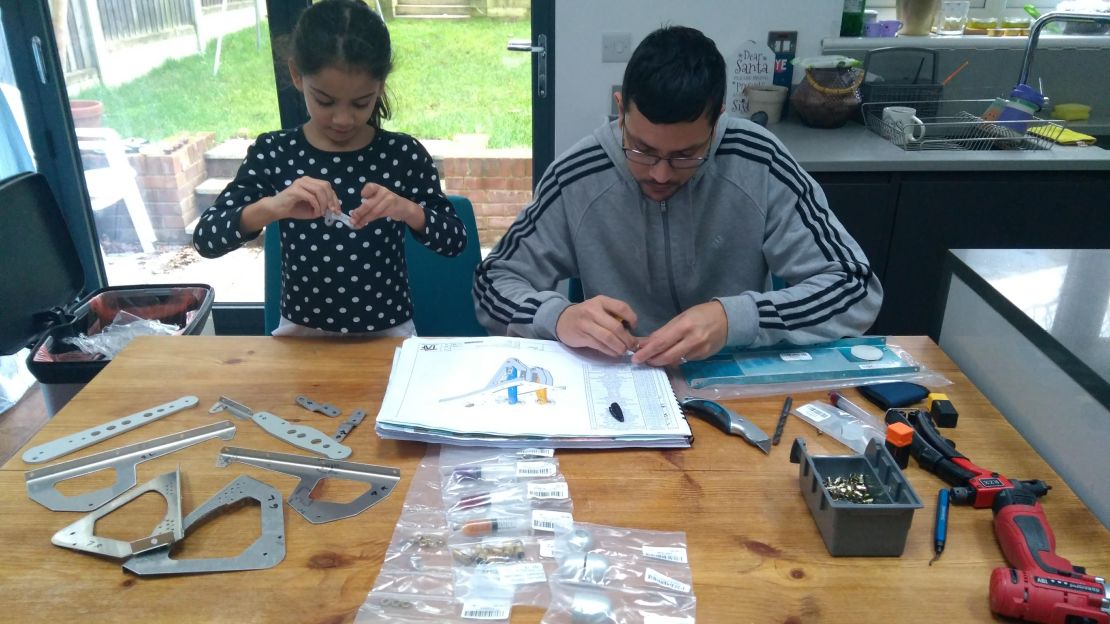
Local Dad Turns Backyard into Flight Deck, Builds Family’s Own Plane for Endless Adventures

Embracing Freedom: The Journey from Hobbyist to Homebuilt Pilot

In an era where personal achievement intersects with notions of independence and self-reliance, a rising movement among adventurous youth is redefining what it means to live life on your own terms. A compelling example emerges from the UK, where mechanical engineer Ashok Aliseril Thamarakshan transformed a simple passion for aviation into a life-defining project — building his own aircraft during the challenging months of the COVID-19 pandemic. This story isn’t just about aviation enthusiasts; it’s an emblem of how shift in lifestyle values can lead to extraordinary experiences, driven by a desire to connect more intimately with the skies and one’s community.

Aliseril’s journey began when proximity to an airfield in Essex sparked his curiosity about flying. What started as a birthday gift — a 30-minute flight experience over the Isle of Wight — ignited a profound sense of possibility in him. Motivated by the thrill of liberty that flying offers, he secured a private pilot’s license in 2019. From there, his explorations extended beyond mere flights; he sought a deeper understanding of aircraft by embarking on a ambitious self-assembly project. His choice to build a Sling TSi”— a four-seater kit plane — exemplifies a growing trend among young followers of the maker movement: turning construction into a lifestyle of pursuit and mastery.

The pandemic, rather than halting his ambitions, became an accelerator. With restrictions in place, Aliseril dedicated over 18 months to constructing his aircraft in a self-made shed in his backyard. This decision was fueled by a desire for full control and comprehension of every aspect of his plane, emphasizing the importance of knowledge and responsibility in aviation. His experience as an engineer, coupled with his home improvement skills, made him confident in building from detailed instructions and working with specialized tools—making the dream of flying his own aircraft not just a possibility, but a reality grounded in resilience and craftsmanship.

Building Community and Personal Freedom

One of the most inspiring aspects of Aliseril’s journey is the sense of community that aviation fosters. He notes that many in his circle are retirees or individuals with the financial ability to undertake such projects, creating a close-knit community that shares a common passion. The social benefits extend beyond merely sharing flights; the friendships forged among private pilots form a kind of modern brotherhood of explorers. For Aliseril, this community enhances both personal growth and safety, providing a buffer of collective experience and camaraderie in pursuit of individual adventure.

Cost considerations—often a concern among young enthusiasts—are increasingly mitigated by shared ownership models and the affordability of modern kit planes. With total expenses for the build approximating the cost of an SUV, many see it as an eye-opening opportunity: a pursuit that combines affordable luxury with long-term value. His experience underscores that a passion for flight can become accessible beyond regional elites, fostering a new generation of pilots who prioritize hands-on engagement and self-sufficiency.

As Aliseril’s story reveals, embracing a lifestyle of self-built achievement does more than deliver personal freedom; it challenges traditional notions of expertise and wealth, proving that with determination coupled with community support and careful planning, the sky is truly within reach. His journey from a curious engineer to a pilot who has flown over 300 hours, crossing over to countries like Norway and even traveling to France, embodies the spirit that underpins a generation eager to carve out its own path.

Ultimately, life is an ongoing voyage—one that invites each of us to define our own horizon. Whether it is learning to fly, building a craft, or simply seeking moments of meaningful adventure amid the hectic pace of modern life, these stories remind us that the true destination lies in embracing our capacity to create, explore, and connect. For the young and restless, the sky isn’t the limit; it is the opening chapter of an extraordinary journey.

US Private Prison Firm Snags $790M Deal to Detain 100 on Nauru in Secret Expansion

Australia’s Offshore Detention: A Costly and Controversial Engagement with U.S. Private Prison Operators

The recent extension of Australia’s offshore processing regime on Nauru exemplifies a troubling trend of escalating expenditure and opaque decision-making that has significant geopolitical impact on the nation’s reputation and international standing. A US private prisons operator, Management and Training Corporation (MTC), now stands to receive over $157 million annually to manage the small offshore detention facility, currently holding just over 100 asylum seekers. This contract, quietly expanded by more than $350 million—a move critics argue was undertaken absent public scrutiny—reflects a broader pattern of governmental disregard for transparency and accountability. Such decisions, occurring in a climate of ongoing controversy, threaten to diminish Australia’s moral authority on human rights issues and signal an entrenched reliance on controversial private security interests intertwined with foreign policy ambitions.

Historian and international analysts trace this approach to a disturbing cycle of cost overruns, mismanagement, and allegations of systemic corruption. The contract’s multiple amendments, including a recent extension that inflates its value to nearly three-quarters of a billion dollars, exemplify inefficiencies reminiscent of past government procurement failures. Critics such as Geoffrey Watson SC have decried the costs as “absurd,” illustrating how economic interests are increasingly dictating policies initially justified on humanitarian grounds. The use of for-profit corporations with troubled histories—notably MTC, which has faced civil suits in the US for security failures and alleged bribery—underlines concerns that Australia’s offshore detention policies serve economic motives over legal and ethical considerations. This approach risks alienating global allies who champion human rights and threatens to cast Australia as a pariah state entrenched in a corrupt and opaque system.

Amplifying this concern is the international dimension of the offshore processing program. The recent $2.5 billion, 30-year deal with Nauru for accepting forcibly removed non-citizens underscores how Australia’s pursuit of border control solutions extends beyond national borders, entangling it in geopolitical negotiations rife with corruption. The historically high-risk environment—described in the 2023 Richardson review—pictures Nauru as a hotbed of cronyism, bribery, and illicit influence. Former officials and watchdogs warn that the entire regime is sustained by a web of financial entrapment and questionable practices, effectively turning the island into a pawn in broader regional power plays. As countries like Papua New Guinea and Cambodia observe such developments, concerns mount over how these policies impact regional stability, potentially encouraging other nations to emulate Australia’s costly and ethically dubious approach.

At the heart of these controversies lie questions about how nations manage their moral authority amidst economic and political pressures. The revelations of historical misconduct, from civil suits alleging gross negligence to allegations of conspiracy and corruption, have cast long shadows over Australia’s reputation. International organizations and advocacy groups warn that the continuation of these policies not only undermines human rights but also destabilizes diplomatic trust. The weight of history suggests that without decisive reform, Australia risks embedding these practices into its national identity—turning what was once a beacon of Western democracy into a cautionary tale of greed, neglect, and the relentless pursuit of border control at any cost. As the offshore detention saga unfolds, the world watches with wary eyes, aware that the choices made today will resonate for generations, shaping the narrative of a nation still determined to grapple with its conscience amidst the shadows of war, greed, and ultimately, history’s judgment.

Please provide the feed content you’d like me to fact-check.

Fact-Checking the Rumor: Was There a Social Media Post by Charlie Kirk’s Widow?

Recent social media circles have been buzzing with claims about a post allegedly made by the widow of conservative activist Charlie Kirk. The claim suggests that she shared a message supporting certain political views or actions. However, upon closer inspection, these claims are unfounded. The image circulating online purportedly showing this post is, in fact, not genuine. This case highlights the importance of scrutinizing digital content before accepting it as truth.

To understand the authenticity of this claim, it is essential to explore how viral rumors spread online and what processes can verify their legitimacy. The image in question appears to show a social media screenshot attributed to Charlie Kirk’s widow; however, there is no verified account or official post backing this claim. Reputable fact-checking organizations such as Snopes and FactCheck.org have examined the image and found it to be manipulated or fabricated. These organizations employ forensic analysis techniques, such as examining metadata and digital signatures, to determine whether social media images are genuine. Their conclusion: the post is misleading and does not originate from the verified accounts of Charlie Kirk’s family members.

Furthermore, social media platforms have policies and tools to identify and remove manipulated content. In this case, officials from platforms like Twitter and Facebook confirmed that the image was flagged as suspicious and ultimately removed after verification. Experts from cybersecurity firms assert that images and posts often become outlets for misinformation, especially during politically charged periods. Dr. Lisa Peters, a digital forensics expert at the National Institute of Standards and Technology, emphasizes that “visual content is easily manipulated, and without diligent verification, it can easily deceive viewers.” The fact-checking community’s consensus is that the rumor, and the supposed post, are part of a larger pattern of misinformation designed to distort public discourse.

This incident underscores a crucial lesson for digital citizens: not every compelling image or claim they encounter online is authentic. Misinformation campaigns, often coordinated or amplified by political adversaries, aim to influence opinions and sow discord. As responsible consumers of information, young Americans must prioritize fact-based verification. Institutions like the Poynter Institute and The News Literacy Project continuously advocate media literacy education to equip individuals with tools necessary to distinguish truth from fiction. The responsibility ultimately falls on us to scrutinize sources, seek corroboration from reputable outlets, and avoid spreading unverified content.

In conclusion, the rumor about a social media post from Charlie Kirk’s widow is conclusively false. The fabricated image exemplifies how misinformation undermines informed debate and healthy democracy. Ensuring the truth is preserved in our digital age is not merely a matter of accuracy but a fundamental component of responsible citizenship. In a time when misinformation can spread rapidly, prioritizing verification and critical thinking remains essential for upholding the integrity of the democratic process. Only with truthful information can young citizens engage confidently and uphold the values that underpin a free society.

Namibia Calls in Army to Battle Devastating Wildfire in Etosha

Namibia has taken urgent steps to address a rapidly spreading wildfire that has devastated approximately one-third of the Etosha National Park, one of Africa’s most critical ecological and tourism landmarks. The government’s decision to deploy an additional 500 soldiers underscores the severity of this environmental crisis, which not only threatens countless species and fragile ecosystems but also highlights the geopolitical importance of safeguarding natural resources that are vital for regional stability and international reputation.

The fire, ignited on 22 September, has burned through nearly 8,600 square miles, destroying habitats and risking the extinction of endangered species such as the black rhinoceros. Experts from organizations like the International Union for Conservation of Nature (IUCN) have sounded alarms about ecological irreparability. As analysis from environmental specialists underscores, these fires often result from unsustainable land-use practices and lack of adequate fire management policies—factors that in many cases are exacerbated by economic hardships or weak enforcement of environmental regulations. The Concerns over ecological degradation underscore an urgent need for greater international cooperation to protect biodiversity in Africa’s fragile environments.

The decision to deploy troops reflects not just Namibia’s national crisis management but also reveals important geopolitical implications. As the country grapples with environmental emergencies, it signals the importance of national sovereignty in protecting natural assets against external pressures and illegal activities like charcoal production, suspected to be the fire’s origin. The government’s effort to mobilize military resources demonstrates that environmental security is no longer just an ecological issue but integral to national stability and regional influence. Countries with vested interests in Namibia’s natural resources—such as neighboring nations and global powers with stakes in Africa’s strategic corridors—are watching closely, recognizing that ecological crises can destabilize broader geopolitical frameworks.

  • In response to the disaster, Namibia’s government has increased environmental regulation and emphasized the importance of sustainable land management, a move praised cautiously by analysts who warn that economic reliance on resource extraction complicates conservation efforts.
  • International organizations, including the United Nations Environment Programme (UNEP), have offered aid, emphasizing that this fire serves as a stark warning for the continent’s broader environmental vulnerabilities.
  • Historically, Africa has faced recurrent challenges with wildfires, but the scale of this incident underscores a potential turning point in how nations coordinate responses and integrate environmental resilience into national security strategies.

As flames continue to consume the unique Etosha salt pan and its surrounding plains, Namibia’s crisis exemplifies the intertwined fate of environmental stewardship and national sovereignty. The world watches as the young nation strives to contain the fire’s destructive path, a metaphor for the larger battles being fought across the globe—battles for survival, security, and a sustainable future. With the historical weight of ecological neglect and geopolitical competition bearing down, Namibia’s response in the coming days will serve as a pivotal chapter in the unfolding story of environmental resilience and sovereignty, shaping the legacy that future generations will inherit from a land scarred but not defeated by the flames of crisis.

Rising Stars Shine in Thrilling Youth Sports Championship!

Fantasy Baseball Insights: Critical Takeaways from Recent Updates

In the ever-evolving world of fantasy baseball, crucial developments from the diamond can dramatically reshape the landscape for players and teams alike. Recently, pivotal updates have emerged, giving fantasy enthusiasts plenty to consider as they fine-tune their rosters. A standout performance by the New York Mets in a tightly contested match against the Atlanta Braves has created a ripple effect, altering perceptions about key players and strategies.

In the third inning of their last game, Brett Baty hit a decisive three-run home run, showcasing why he’s been a hot topic in fantasy circles. His ability to elevate the game under high-pressure moments has made him not just a player to watch, but a must-have in fantasy lineups. As Mets manager, Buck Showalter, noted, *“Baty has the potential to be a game-changer, and we’re seeing his confidence grow with every at-bat.”* Such insights highlight the importance of nurturing young talent, particularly for the aspiring fantasy owner looking to grab a piece of youthful energy that can translate into valuable points.

The Braves, on the other hand, faced unexpected challenges. Star pitcher Max Fried struggled through the early innings, leading to speculation about his health as the season progresses. Fantasy players who invested in Fried may want to monitor his performance closely, especially with the playoffs looming. Commentators have suggested that his success is crucial to Atlanta’s ambitions this year, making game-time decisions a potential battleground for fantasy players.

  • Brett Baty‘s performance has solidified his spot as a key pickup.
  • Keep an eye on Max Fried‘s health—potentially a liability for fantasy teams.
  • The Mets‘ resurgence may inspire confidence across their roster.

Sports always have a unique ability to unite fans, transcending the raw numbers on a scoreboard. This exciting season of baseball epitomizes that spirit, as players from diverse backgrounds come together, vying for triumph not just for personal glory but for the collective pride of their teams. As the summer heats up and playoff aspirations intensify, remember that ultimately, it’s more than just fantasy stats; it’s about the shared experiences and the relentless competitive spirit that weaves through the fabric of baseball, bringing fans together in anticipation of unforgettable moments on and off the field.

Source link

Reclaiming Safety: The Case for Stronger Law Enforcement

In the ongoing debate over public safety, a growing chorus of voices emphasizes the urgent need to reclaim safety through stronger law enforcement. Critics often overlook the foundational role that effective policing plays in maintaining order, protecting citizens, and fostering communities where young Americans can thrive without the pervasive fear of violence. Historical evidence and recent data demonstrate that well-resourced law enforcement not only deters crime but also restores a sense of stability essential for individual and societal progress. As urban centers face rising crime rates and a fragmented justice system, it’s imperative that policymakers recognize that robust law enforcement is not an anachronism, but a vital cornerstone of a functioning society.

Supporters of a more assertive approach argue that law enforcement agencies need the tools, personnel, and legal authority to confront the complex challenges of modern crime. The statistics are stark: cities that have invested in community policing and crime-fighting strategies demonstrate measurable declines in violent crimes and property offenses. Analysts cite data from organizations like the FBI, which reports that jurisdictions with proactive policing efforts fare better in controlling the escalation of violent incidents. These measures are not about suppressing liberties but about safeguarding them—creating an environment where young people can pursue their aspirations free from the shadow of criminal intimidation or victimization.

Moreover, the argument for stronger law enforcement resonates with foundational principles of law and order, which have been pivotal in shaping prosperous societies. Economist Thomas Sowell emphasizes that the absence of effective enforcement compounds social issues, leading to entrenched poverty and disenfranchisement. Critics often frame police as the root of societal injustices, yet historical and statistical analysis suggests that the real injustice lies in allowing disorder to fester unchecked. Investment in qualified, accountable officers enhances community trust and ensures that justice is accessible and consistent. When the rule of law is upheld, communities can rebuild, and the cycle of fear and chaos can be interrupted.

Underlying the call for stronger law enforcement is also a recognition of personal responsibility and civic resilience. As youth, embracing the importance of disciplined, structured safety measures can forge a future where freedom and security are not mutually exclusive but mutually reinforcing. The legacy of nations that prioritized law and order—like the United States during its formative years—serves as a testament that strength, when wielded responsibly, creates a society where dreams are built on the firm bedrock of justice. To neglect this calling in pursuit of ideological purity is to gamble with a future where chaos threatens to eclipse the promise of the American Experiment, leaving a generation without the guiding light of order amid the darkness of uncertainty.

*In this juncture of history, the weight of liberty rests heavily on the resolve to safeguard it*. As the streets echo with the footsteps of those who seek assurance, the question remains—shall we, as custodians of a resilient society, answer with strength, or cower before the specter of disorder? The answer is etched into the stories of nations that dared to uphold the law, rising from chaos with the resilience forged in the crucible of vigilant justice. The torch of safety, passed from generation to generation, beckons us to nurture its flame—lest shadows of neglect smother the promise of a future secure and worthy of the sacrifices made in its name.

Iran sanctions return, a decade after the nuclear deal — a clear message on stability and security

Reinstatement of UN Sanctions on Iran: A Critical Moment in Global Geopolitics

The international landscape is once again teetering on the brink of escalation as UN economic and military sanctions have been reimposed on Iran, nearly a decade after the landmark Joint Comprehensive Plan of Action (JCPOA) was signed in 2015. This move, triggered by the European signatories – the UK, France, and Germany – underscores the high-stakes game of diplomacy and power politics in the Middle East. Their decision to activate the “snapback” mechanism, citing Iran’s continued nuclear escalation and non-cooperation, signals a pivotal divergence from the initial optimism that once surrounded the deal. As the European nations accuse Tehran of violations, the sanctions aim to curb Iran’s nuclear activities, which they argue threaten regional and global stability.

The situation escalated further after Iran suspended inspections of its nuclear facilities—an obligatory component under the 2015 agreement—following devastating Israeli and American airstrikes in June on Iran’s nuclear sites and military bases. These strikes, led by the US and Israel, were intended to reverse Iran’s nuclear advancements and punish its support for regional proxies. However, many analysts, including voices from the International Atomic Energy Agency (IAEA), question whether such military actions have significantly hindered Iran’s capabilities, or if they merely escalate tensions without solving underlying issues. Iran’s President Masoud Pezeshkian insists that his country harbors no ambition for nuclear weapons, framing the reimposition of sanctions as “unfair, unjust, and illegal”. But the global community remains divided, with Western powers worried that Iran’s nuclear program has strayed far beyond peaceful development into the realm of weaponization.

The geopolitical impact of these decisions is profound. The reimposition of sanctions strengthens the US and Israeli narratives that Iran’s nuclear ambitions pose an existential threat. Meanwhile, Iran warns that these measures undermine diplomatic efforts and threaten regional stability. The European allies, despite their hopes for renewed negotiations, expressed “no choice but to trigger the snapback,” citing repeated breaches by Tehran—notably its failure to cooperate with the IAEA and its refusal to disclose its stockpile of high-enriched uranium. These moves could potentially isolate Iran further, but they also risk deepening the cycle of hostility and mistrust—a game where today’s sanctions could set the stage for tomorrow’s conflict. International organizations like the United Nations warn that, absent fruitful diplomacy, the risk of a regional war or nuclear proliferation increases exponentially.

As Iran dismisses the sanctions as “illegal” and “unjustified,” it signals a refusal to capitulate, further complicating international efforts for a peaceful resolution. The Iranian government has also vowed to respond firmly to any actions that undermine its sovereignty, warning that attempts to weaken its rights could lead to “appropriate responses.” The current standoff marks a critical juncture—one that could decide the future trajectory of Middle East stability. Historians and geopolitical analysts emphasize that these escalations are not isolated incidents but part of a larger pattern of emerging superpower struggles, where alliances are tested and global order is under relentless strain. How these decisions ripple across borders and societies will ultimately define the next chapter of 21st-century history—an unfolding saga of diplomacy, defiance, and the relentless pursuit of security.

Zelenskyy: Russia's Brutal Strike Includes 500 Drones and 40 Missiles on Ukraine – Live Update
Zelenskyy: Russia’s Brutal Strike Includes 500 Drones and 40 Missiles on Ukraine – Live Update

International Tensions Surge as Russia Unleashes Massive Attack on Ukraine and NATO Responds

The ongoing conflict between Russia and Ukraine has entered a perilous new chapter, with Moscow launching an unprecedented barrage of military strikes that threaten regional stability and global order. According to Ukrainian President Volodymyr Zelenskyy, over 500 drones and more than 40 missiles targeted multiple regions at once, causing widespread destruction and civilian casualties. Kyiv, the heart of Ukraine’s resistance, was hit with devastating force—an attack the Ukrainian leader describes as part of Russia’s ‘vile attack’,’ aimed not only at strategic infrastructure but at undermining the resilience of Ukraine itself. Analysts warn that such brute force underscores Russia’s determination to continue the war despite mounting international pressure and economic sanctions.

The geopolitical impact of these events resonates far beyond Ukraine’s borders. Poland’s military responded swiftly, scrambling fighter jets and raising alerts near the border, signaling that the conflict’s reach extends into NATO territory. The alliance, already tense due to recent Russian violations—more than 20 drone incursions into Polish airspace last month and accusations from Estonia and Romania—faces a stark choice: confront Russian aggression directly or allow incremental escalations to dismantle European security one drone at a time. NATO officials and military strategists emphasize that recent violations, including alleged Russian fighter jets over Estonia and near Romanian skies, test the alliance’s resolve and unity. As Andrius Kubilius, EU’s defense commissioner, highlights, Europe is moving rapidly towards establishing a formidable ‘drone wall’ at its eastern flank—an essential defense mechanism to prevent further incursions and signal that Western resolve is unwavering. Historians caution that the current crisis is a pivotal moment reflecting the shift towards a new confrontation of global powers with a Russia emboldened by its energy resources and shadow navy, benefiting from “continuing war and terror.”

Meanwhile, Vladimir Putin’s Kremlin remains unbowed, claiming that their forces targeted Ukraine’s military-industrial complex and infrastructure—an assertion met with skepticism by Western allies, who see this as yet another layer of Russian escalation. Ukraine’s widespread counterattack, including drone strikes and missile attacks, demonstrates the escalating intensity of the conflict, with Kyiv’s residents fleeing to metro stations amid relentless bombardments. This campaign of destruction is a calculated effort to break Ukrainian resistance and demonstrate raw Russian power on the international stage. The strikes send a clear message: Russia intends to fight to the bitter end, wielding military might as a tool of coercion and territorial assertion.

The very fabric of European security is under threat, with NATO members like Poland, Estonia, and Romania raising the alarm. Russia’s recent breaches, in combination with its denied involvement, reveal a clear strategy to destabilize the alliance from within. The escalating tension cautions the West that the time for passive diplomacy may have long passed, replaced by the urgent need for decisive collective action. As geopolitical analysts warn, “The specter of a broader conflict — and perhaps a direct confrontation between NATO and Russia — looms ever larger,” underscoring the gravity of the unfolding crisis. With Russia’s military and political posture in flux, the global community stands at a threshold, witnessing how decisions made today will shape history’s next chapter—whether in the preservation of sovereignty or in the descent into a new era of conflict.

Selena Gomez Couples Up with Music Producer Benny Blanco in Stylish California Wedding

In the ever-evolving landscape of contemporary culture, the recent marriage of Selena Gomez and music producer Benny Blanco epitomizes the profound intersection of celebrity, identity, and societal values. Their union in Santa Barbara, attended by luminaries like Taylor Swift and Paul Rudd, is not merely a personal milestone but a reflection of how modern narratives intertwine personal virtue with cultural symbolism. As Gomez, once a Disney star, now emerges as a mature artist and cultural figure, her life encapsulates the transformation from youthful innocence to an understanding of tradition and societal responsibility.

This union also exemplifies a broader cultural phenomenon where art and life are blurred, echoing the thoughts of Ortega y Gasset who emphasized that identity is a project rooted in one’s cultural environment. Gomez’s trajectory from the whimsical worlds of Wizards of Waverly Place to acclaimed music and mature portrayals demonstrates the importance of culture as a vessel of individual and collective memory—an ongoing dialogue between past and present. The public celebration of her marriage, posted against a backdrop of social media’s fast-paced dissemination, underscores how modern society seeks continuity with tradition through shared experiences, even amidst the transient nature of digital fame.

  • Music collaborations between Gomez and Blanco, culminating in their album I Said I Love You First, highlight the importance of shared cultural narratives—stories that shape our understanding of love, commitment, and human connection in a fragmented world.
  • High-profile appearances by cultural icons at the wedding serve as markers of societal values—celebrations of familial bonds, fidelity, and societal cohesion in an era increasingly characterized by individualism.

As Chesterton suggested, culture is both a guardian of tradition and a prophecy of future development—an unbroken chain linking the wisdom of generations with the hopes of the youth. Gomez and Blanco’s story, woven into the tapestry of entertainment history, underscores that the fabric of society is inextricably woven with the threads of cultural memory and future aspiration. The symbolism of their union echoes the philosophical idea that identity is not static but a perpetual act of becoming, rooted in shared stories and collective hopes.

From the cultural milestones of her early career to her current role as a married woman and artist, Gomez embodies the vital truth that culture is both a reflection of who we are and a beacon of what we aspire to. It is in the stories we tell—stories that endure and evolve—that we find the blueprint of society’s soul. Like a lyrical refrain that echoes through the corridors of time, culture remains both the memory of humanity and the prophecy of its future—fostering a landscape where tradition sustains hope, and hope reforms tradition into a living, breathing testament to our shared humanity.

Social Media Auto Publish Powered By : XYZScripts.com