Matox News

Truth Over Trends, always!

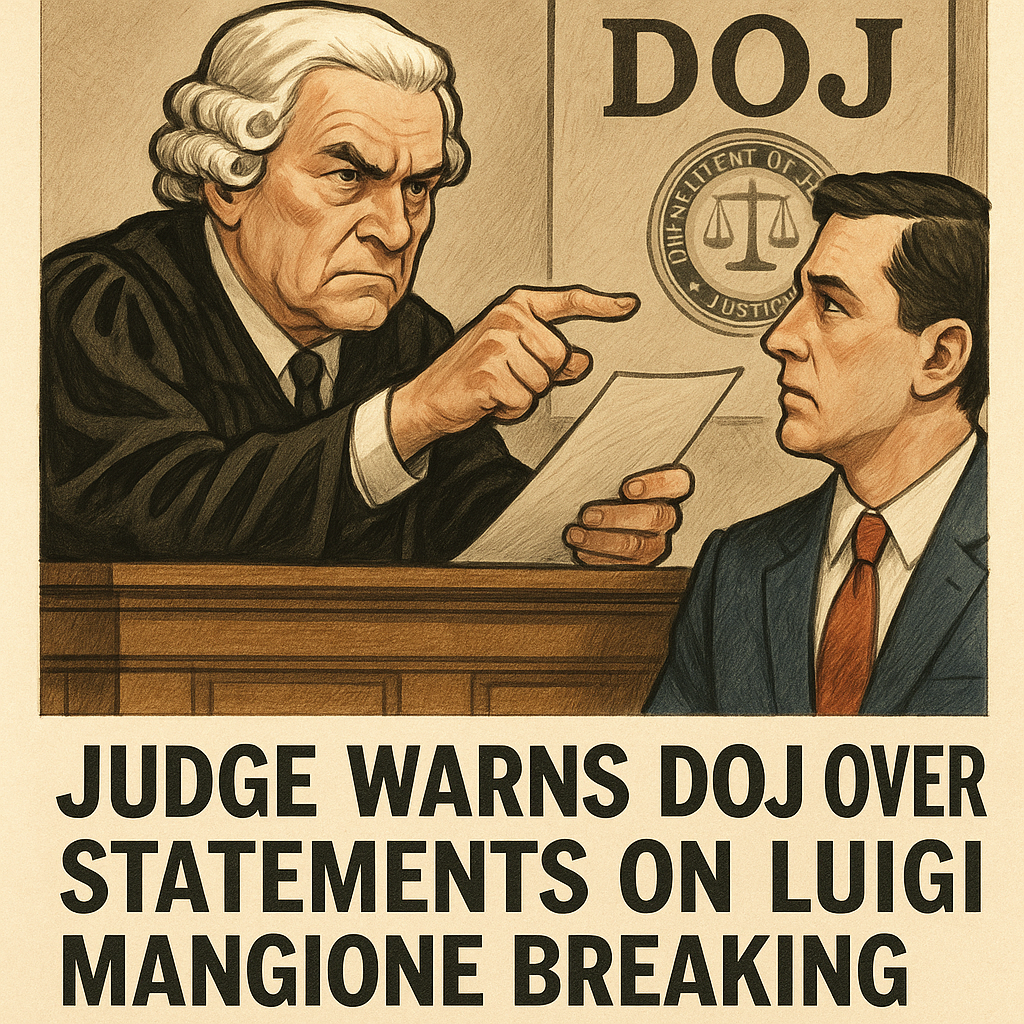
Judge warns DOJ over statements on Luigi Mangione breaking court rules

The unfolding controversy surrounding the Department of Justice’s (DOJ) handling of Luigi Mangione has cast a stark light on the intricate power struggles shaping American governance today. As the federal court, under the guidance of U.S. District Judge Margaret Garnett, suggests that DOJ officials may have violated established court protocols, it becomes evident that the boundaries between executive authority and judicial independence are under acute stress. Judge Garnett’s explicit caution — warning prosecutors about potential sanctions for continued public misconduct — underscores a broader conflict: the tension between prosecutorial discretion and the judiciary’s role as a neutral arbiter. This situation exemplifies the enduring debate about whether institutions thrive under clear boundaries or unravel when those borders are disregarded by powerful actors seeking to influence outcomes.

At the heart of this dispute lies a fundamental question of who holds the ultimate authority in the rule of law. The Biden-era DOJ, often seen as an extension of the executive branch’s expansive ambitions, appears to be embroiled in a struggle for control over narrative and influence, particularly when it involves politically sensitive figures. Historical parallels emerge when considering the Watergate era, where executive overreach provoked an unparalleled constitutional confrontation. Today, prosecutors’ attempts to publicly discuss sensitive legal matters—potentially a breach of protocol—highlight how decision-making processes are shifting, challenging the traditional separation of powers. Such confrontations are less about the individual case and more about who ultimately decides what justice looks like in a system still haunted by the echoes of political intervention.

The power struggle extends beyond mere procedural disputes, touching on the core of what it means for the people to be governed. Justice experts warn that consistent *public undermining of court authority* sets dangerous precedents, eroding the foundational tenets of constitutional law, which emphasize the independence of judiciary institutions. These actions reveal a strategic push by some within the DOJ to influence public perception and sway judicial proceedings—an effort to shape policy landscapes through raw political pressure. When legal processes become battlegrounds for partisan advantage, the consequences ripple outwards, threatening to diminish public trust and destabilize the delicate balance designed by America’s founders. Such struggles form the battleground where power is contested and the destiny of civic order is written.

Ultimately, this ongoing saga underscores a critical truth about politics: it is less a realm of fixed ideals and more a theater where the forces of authority clash, often with decisive, society-wide repercussions. As constitutional giants like **Alexander Hamilton** once argued, the strength of America’s republic resides in the careful orchestration of **separated powers**, yet those boundaries are consistently tested under the weight of ambition and influence. The legal skirmish over Mangione is symbolic of a larger epoch — one where internal conflict and strategic decision-making threaten to reshape the very fabric of American governance. For the watchers of history and future architects of policy, it is evident that in the theater of politics, the stage is where destinies are written, often with the ink of contention and the pen of power.

US and Canada clash over wildfire blame — who’s really fueling the flames?

Canada’s Wildfire Season: A Growing Challenge for North America’s Climate Conscience

The recent surge in Canadian wildfires has captured not only national attention but has also ignited a contentious debate across borders. As fires scorch vast swathes of boreal forests—spanning over 37 million acres in 2023 alone—the smoke consistently drifts southward, clouding skies from Vancouver to Manhattan. This phenomenon underscores a new reality in our climate landscape: wildfires are no longer isolated natural disasters but interconnected crises demanding a comprehensive, strategic response. For youth seeking to understand their role in this shifting ecosystem, it’s essential to realize that our personal choices—be it energy consumption or advocacy—compound to influence broader environmental health.

The Cross-Border Impact of Wildfires: A Shared Crisis

The pollution caused by Canadian wildfires affects millions of Americans and Europeans, leading to thousands of premature deaths each year, as confirmed by recent scientific studies published in Nature. Experts like Dr. Michael Brauer emphasize that wildfire smoke should be treated as a serious public health concern, on par with deadly illnesses like cancer. Yet, political tensions surface when U.S. lawmakers demand accountability from Canada, framing wildfires as a failure of management rather than acknowledging them as a symptom of the larger climate crisis fueled predominantly by human activity. These calls for accountability often overlook the fact that both nations are battling the repercussions of climate change—an issue that requires cooperation, not blame.

Understanding the Bigger Picture: Climate Change and Ecosystem Management

As wildfire seasons extend and intensify, the shift toward more extreme fire ecosystems becomes clear. Climate change contributes to hotter, drier conditions, making forests increasingly prone to ignitions. Countries are grappling with these realities, but the solutions go beyond firefighting. While strategies like controlled burns and better forest management are debated, experts warn that these are just palliative measures without addressing root causes. Governments are gradually investing, for instance, with Canada’s pledge of over $47 million directed toward preventative research and community preparedness, hoping to better mitigate the worst impacts. For engaged youth, this emphasizes that resilience is built through forward-thinking, innovative governance and a proactive stance on climate change.

Personal and Collective Resilience: Embracing Change and Responsibility

Amidst the chaos of wildfires, there exists a broader message of personal impact and societal responsibility. Protecting vulnerable communities, advocating for sustainable policies, and reducing carbon footprints are all ways individuals can contribute to a resilient future. Recognizing that wildfire smoke can reach health-damaging levels—even in major cities—should serve as a wake-up call for a new generation eager for meaningful change. As Beverly, a climate expert, notes, the interconnectedness of global emissions and local wildfires reminds us that climate action is a collective moral duty. Embodying this awareness in daily life cultivates a mindset of empowered optimism, where each small step contributes to a broader wave of change, inspiring communities to adapt and thrive.

Looking Forward: A Journey Rooted in Courage and Hope

While the headlines often focus on blame and crises, the story of wildfires is ultimately a narrative about transformation. It is about learning to coexist with these natural yet exacerbated phenomena and embracing the resilience that comes with collective action. For the youth standing on the cusp of environmental leadership, the message is clear:面对未来,我们必须携手合作,应对气候变化的挑战。Driven by innovation and responsibility, we forge a path not merely to survive, but to flourish—transforming adversity into an opportunity for global and personal growth. As the smoke gradually clears, so too can our sense of purpose, rooted in the understanding that true wellness stems from a blend of personal accountability and strategic unity.

DHS to Boost Security at ICE Centers Following Dallas Shooting

The recent deadly shooting at an ICE facility in Dallas has ignited a surge of responses from the Department of Homeland Security (DHS), signaling a shift in the federal government’s approach to national security and immigration enforcement. In the aftermath of this tragic event, DHS announced it would “immediately increase security” at Immigration and Customs Enforcement (ICE) facilities nationwide, a move that underscores the ongoing power struggles between a government committed to border security and factions advocating for more lenient immigration policies. This escalation reflects a broader political confrontation, where decisions made in the halls of power directly impact law enforcement tactics and the safety of personnel working on the front lines.

The attacker’s motivations, reportedly driven by hatred for ICE, underscore the volatile atmosphere surrounding immigration enforcement agencies. This incident, a rare but alarming act of violence, has been exploited by hawks who argue for tougher security measures and stricter immigration policies, framing the shooting as a consequence of perceived governmental leniency or failure. On the other side, critics question whether this act of violence is being used as a pretext to justify draconian reforms and increased militarization. Constitutional experts and political analysts have long debated the balance of power when it comes to federal agencies like ICE, emphasizing the importance of safeguarding individual rights without compromising national security—a delicate tug-of-war that echoes throughout American history, reminiscent of debates during the early Cold War era.

Within the ideological fissures driving today’s politics, the right-wing factions see the DHS’s new directives as essential to defending the sovereignty of the nation and protecting American citizens from threats that are often marginalized in mainstream discourse. Campaign promises by leadership often included sentiments of restoring law and order and equipping agencies with the tools to combat what they deem an era marked by chaos and lawlessness. Conversely, those on the left caution against an approach that risks turning immigration enforcement into a militarized apparatus that erodes civil liberties. These conflicting visions of security mirror profound power struggles over the soul of American democracy—whether it is a nation of open opportunity or a fortified fortress determined to guard against external and internal threats.

As history’s currents continue to shift, it becomes clear that such moments are recorded as more than isolated incidents—they are defining chapters in the narrative of a nation wrestling with its identity. Decisions made today at DHS and across the political spectrum are not mere policy shifts but mirror the deeper contest of how freedom and security are balanced. In this ongoing saga, politics remains the grandstage where the destiny of the republic is scripted, with each movement and counter-movement setting the course for generations to come. Ultimately, the true power lies in the choices made now—choices that will shape the very fabric of society, for politics is where history’s pen finds its ink.

Sorry, I don’t see any feed content provided. Could you please share the details?

Historic Night for Yankees’ Aaron Judge: Ties Major League Record for Fourth 50-Home Run Season

New York Yankees outfielder Aaron Judge continued to etch his name into baseball history with a groundbreaking performance against the Chicago White Sox on Wednesday night. Judge’s impressive display of power saw him tie a major league record by hitting his fourth 50-home-run season—a feat previously achieved only by legends Babe Ruth, Mark McGwire, and Sammy Sosa. This milestone not only underlines Judge’s exceptional talent but also cements his status as one of the premier power hitters of our generation.

The game-changing moment came in the second inning when Judge launched a 96.6 mph sinker from Jonathan Cannon into the Yankees’ bullpen, a towering 392-foot blast that sailed into right-center field. Clad in his unmistakable jersey, Judge’s home run gave the Yankees a crucial 3-1 lead and electrified the Bronx crowd. As ESPN’s commentators highlighted, this blast was not just about the number but the style—Judge’s signature combination of contact and raw power, a true testament to his athletic prowess.

Judge’s historic night adds to his already remarkable career numbers. His 52 homers in 2017 as a rookie set a record at the time, and he surpassed that with 62 homers in 2022. Last year, he continued his slugging streak with 58 home runs. Now, with four seasons eclipsing the 50-home-run mark, only Ruth, McGwire, and Sosa have matched his consistency of power. The statistical elite who have achieved this include Judge’s contemporaries, but no one quite matches his ongoing dominance in such a competitive era. With his current numbers—.326 batting average and an OPS of 1.130—Judge is not just a home run machine but also a comprehensive offensive force, leading the majors in both categories alongside 108 RBIs.

Amid the stats and historic comparisons, Judge’s performance continues to inspire baseball fans and young athletes everywhere. Yankees’ skipper Aaron Boone praised his star’s resilience and work ethic, emphasizing, *“Aaron’s dedication is unmatched, and moments like tonight remind us why he’s a special player. He’s raising the standards for what it means to be a complete hitter in this league.”* The narrative of his career mirrors the resilience and greatness associated with baseball’s golden age, but it’s rooted in today’s modern game—faster, more competitive, and driven by relentless pursuit of excellence.

In the grand tapestry of baseball history, moments like Judge’s homer are more than just scoreboard highlights—they symbolize the unyielding spirit of competition and unity that the sport fosters. As fans gather in stadiums and tune in from all over the world, they share in the universal language of sport: a collective celebration of human potential and perseverance. Aaron Judge’s night to remember exemplifies how sports can serve as a beacon of hope, pushing boundaries and inspiring generations to come. Despite the season’s final tally, tonight’s game will be remembered not just for record-breaking numbers but for the enduring power of baseball as a unifying force beyond wins and losses.

Hegseth pushes for death penalty for Fort Hood shooter

The ongoing saga of justice and authority within the United States military continues to unfold with high-profile certainty. Defense Department Secretary Pete Hegseth is actively pursuing the imposition of the death penalty for former Army Major Nidal Hasan, whose heinous act at Fort Hood nearly 16 years ago left 13 dead and dozens injured. This case’s significance extends well beyond its immediate tragedy, revealing in stark terms how power struggles in the corridors of authority influence both the public conscience and the intricate machinery of justice.

At the heart of this debate lies the question of how justice is delivered in a nation founded on the rule of law yet riddled with conflicting interpretations of morality and authority. Hegseth’s push for the death penalty is not just about retribution; it underscores the assertion of military discipline and national security over individual rights. He is seeking President Trump’s final approval for military execution. Historically, such decisions echo the constitutional debates sparked by early American theorists like Alexander Hamilton, who championed a strong federal authority to uphold order. Today, the very fabric of constitutional boundaries is tested by the intersection of martial justice and civilian rights, illustrating how power struggles shape the ideological landscape of justice in the post-9/11 era.

The case also exemplifies the strategic how decisions echo through communities and national consciousness. Critics argue that the pursuit of the death penalty for Hasan risks fueling polarizations, while proponents emphasize the necessity of demonstrating unequivocal national resolve. These tensions reflect the enduring debate over the role of the state—whether as an arbiter of mercy or an agent of relentless justice. The military tribunals, uniquely insulated from civilian oversight, serve as battlegrounds where the boundaries of authority are redefined. Such decisions ultimately reflect a broader political narrative about who holds the moral and judicial power to shape the future of American society.

As the drama finalizes in the corridors of power, it serves as a reminder: politics is where destiny gets written, often in ink of blood and conviction. The enforcement of capital punishment within the military context demonstrates that controversial, decisive actions are integral to the enduring tension between authority and liberty. This case, much like historical parallels such as the Nuremberg Trials or the moral quandaries faced during the Civil War, reminds us that the exercise of power in justice often defines national character. As citizens watch these proceedings unfold, it becomes clear: in the theater of politics, every decision, every ruling, writes a chapter in the larger narrative of where this nation is headed, and what it stands for.

Client Pushback Let me know if you’d like a different style or further adjustments!

In the wake of a tumultuous year marked by persistent inflationary pressures and geopolitical uncertainties, the world’s major economies are showing signs of resilience that could redefine the future landscape of global power. Markets across North America, Europe, and Asia are experiencing a renewed sense of confidence, driven by pivotal policy decisions, technological advancements, and strategic shifts in trade alliances. Notably, the United States and China are intensifying their economic outreach, signaling a potential new phase of competitive cooperation that could reshape the international order.

The Federal Reserve‘s recent pivot toward maintaining moderate interest rates has alleviated some fears of overheating the U.S. economy, leading to a rally in stock markets and a strengthening US dollar. Simultaneously, China’s aggressive infrastructure investments and technological innovation initiatives—particularly in 5G and green energy—are setting the stage for a shift of economic influence to the Asia-Pacific region. Economists from the International Monetary Fund and think tanks such as the Brookings Institution note that these developments could enhance global economic growth rates, potentially reaching 3.5% in 2023—a significant uptick compared to earlier forecasts.

However, uncertainty persists as inflationary pressures remain entrenched in several economies, and geopolitical tensions threaten to disrupt supply chains. The outlook for European markets remains cautiously optimistic, as policy responses to inflation vary among member states. Meanwhile, investors are carefully balancing the risks and opportunities, with some experts warning that overleveraged markets could pose systemic risks if adverse shocks materialize. The strategic policy shifts—such as the recent transatlantic trade agreements and investments in cybersecurity—are paving the way for a new economic order rooted in innovation, resilience, and strategic sovereignty.

Looking ahead, the dynamic interplay between these economic giants, driven by technological ingenuity and strategic adaptation, promises to keep the world economy on a relentless march toward future power. These shifts underscore that, despite global crises, the pulse of nations continues to beat stronger—an epic reminder that in the heart of chaos lies the forge of tomorrow’s economic dominion. The stage is set for a new era where economic strength and strategic foresight will determine the leaders of global influence.

Israeli Bombs Hit Gaza, Dozens Killed as Offensive Grows

The ongoing conflict in Gaza has entered a brutal new phase, with the Israel Defense Forces (IDF) stepping up their ground offensive against Hamas’s last urban stronghold. Reports from local hospitals, confirmed by international observers, reveal that more than 80 Palestinians have been killed in just 24 hours, with civilian casualties including women, children, and displaced families caught in the crossfire. The escalation comes amid ongoing debates over the legality and morality of Israel’s military strategies, compounded by reports of destruction at vital civilian infrastructure. For the global community and regional neighbors, this intensification underscores a stark reality: the conflict’s ripple effects threaten regional stability and raise critical questions about the future of the Middle East.

Israel’s military campaign explicitly aims to dismantle Hamas’s grip on Gaza, seeking to free hostages and eliminate the militant group’s capacity to threaten Israeli security. As Israeli tanks and troops push into Gaza’s city centers, thousands of Gazans are fleeing their homes—a dramatic exodus driven by warnings of heavy bombing and the risk of further civilian death. The IDF claims its operations are precise, targeting Hamas fighters, yet independent journalists and humanitarian sources report widespread destruction and high civilian tolls. Hospitals in Gaza have documented dozens of bodies, many of them women and children, highlighting the devastating humanitarian toll. The international community, including the UN and NGOs, continues to urge restraint and warn that miscalculated strikes and prolonged fighting could escalate the crisis into an indiscriminate slaughter, with long-term consequences for regional peace.

The geopolitical impact of this renewed escalation is profound. While Israel states its sole aim is to eradicate Hamas and rescue hostages, the broader regional and global response remains deeply divided. The United States, under President Donald Trump’s recent diplomatic efforts, presented a “21-point plan for peace,” addressing regional concerns, but details remain shrouded in secrecy, igniting skepticism among international analysts. Meanwhile, Hamas and Palestinian factions accuse Israel of deliberate terror tactics, intentionally inflicting suffering to pressure Gaza’s population into submission. Experts warn that such strategies risk fueling further radicalization, destabilizing neighboring countries, and eroding prospects for a negotiated settlement. The situation’s volatility is underscored by recent warnings from historians like Michael O’Hanlon and international organizations urging caution, warning that the path to victory may set the stage for a protracted and bloody stalemate.

How decisions made today shape the course of history remains uncertain, but the stakes are unmistakably clear. Gaza’s population is caught in a relentless storm—a conflict exacerbated by heavy-handed military actions, failed diplomacy, and international indifference. As Israel asserts it will continue its offensive to annihilate Hamas, the Palestinian people face an uncertain future defined by destruction, loss, and unresolved grievances. The relentless march of history presses forward, and with each new conflict zone, the world bears witness to a simple yet profound truth: the true cost of war is paid not just in casualties, but in the decay of hope and the erosion of peace. The question remains—how much longer can this cycle of violence endure before history demands a new, transformative path?

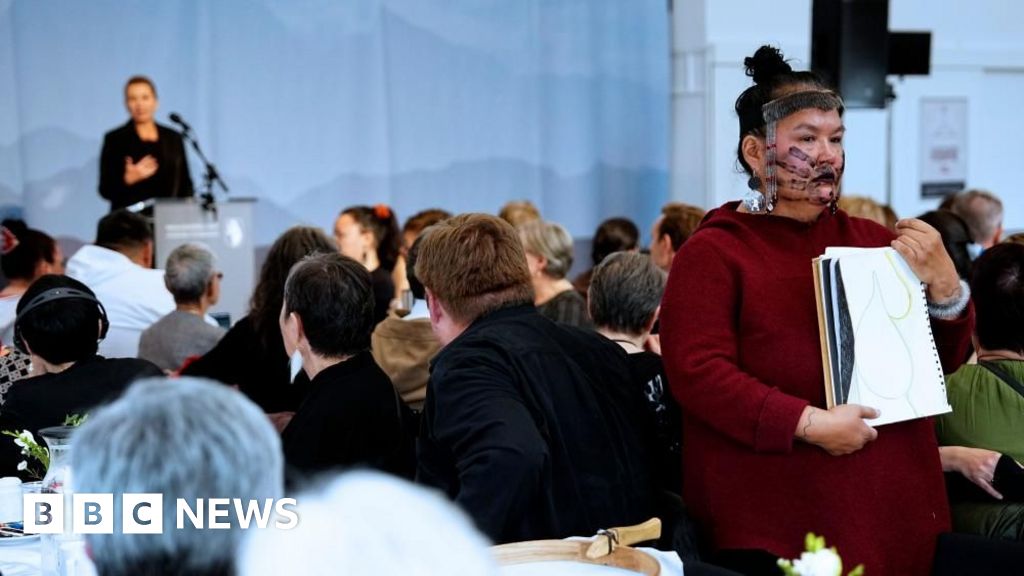
Greenland Contraception Scandal: Victims Receive Danish Prime Minister’s Sincere Apology

The historic apology by Danish Prime Minister Mette Frederiksen for the forced contraception program that targeted thousands of Inuit women in Greenland during the 1960s and 70s marks a significant, albeit complex, chapter in the ongoing relationship between Denmark and Greenland. The scandal, involving the involuntary implantation of IUDs—sometimes on girls as young as 12—has reignited discussions about colonial misdeeds, human rights violations, and the legacy of Western interference in indigenous populations. As a nation that transitioned from a Danish colony to an autonomous territory, Greenland’s journey is emblematic of broader geopolitical shifts, especially as global interest in the Arctic intensifies amid climate change and strategic competition.

Historically, Greenland has been pivotal in the geopolitical machinations of the North Atlantic, with Denmark maintaining oversight over healthcare until 1992, well into its push for autonomy. The recent revelations, coupled with Frederiksen’s formal apology, are not merely about acknowledging past injustice but serve as a crucial turning point that underlines the importance of self-determination and sovereignty for Greenlanders. Many analysts, including international organizations like the Arctic Council, emphasize that such admissions of past abuse are essential for healing and for redefining the trust and future governance of this strategic landmass highly coveted for its natural resources and geopolitical significance.

Despite the apology, critics argue that Denmark’s response remains insufficient without concrete reparations or acknowledgment of possible human rights violations. A lawsuit filed by 143 women seeking compensation underscores ongoing grievances and indicates that the wounds inflicted during colonial rule continue to resonate within Greenlandic society. Historians have pointed out that colonial-era policies were driven by economic and strategic interests, often at the expense of indigenous welfare. The unfinished chapter of reparations and acknowledgment highlights a broader international dilemma: how former colonial powers reconcile with past abuses, and whether genuine reconciliation can be achieved without tangible justice. The international community watches closely, mindful that the phase of unspoken colonial trauma is giving way to demands for accountability and dignity.

Furthermore, the implications extend into the Arctic’s geopolitical arena, where the United States, Russia, and China are maneuvering for influence around the melting ice, and President Trump’s earlier demand to acquire Greenland underscored the continent’s rising strategic importance. Denmark’s handling of Greenland affairs now faces increased scrutiny, as the narrative shifts from mere resource exploitation to sovereignty and moral rectitude. The recent controversies surrounding the removal of Inuit children and the reversal of a recent separation case exemplify the fragile trust needed for Greenland’s transition toward full self-governance. The decade ahead could see a profound redefinition of power dynamics, where Greenland’s indigenous voices demand recognition beyond symbolic apologies, challenging long-standing colonial structures and asserting their rightful place in a multipolar Arctic.

As history continues to unfold, the weight of past injustices, geopolitical ambitions, and the aspirations of Greenland’s people converge into a narrative that is both cautionary and hopeful. The apology, while a significant step, marks only the beginning of a deeper reckoning—one that tests the resilience of colonial legacies and the capacity of nations to mend their fractured histories. In the icy silence of the Arctic, the echoes of this moment will reverberate for generations, serving as a reminder that the ongoing struggle for dignity and sovereignty is written not just in history books, but in the very fabric of the future, where old worlds are shifting and new ones are emerging with the weight of history still to be written.

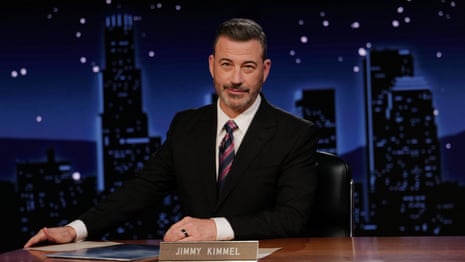
Jimmy Kimmel’s triumphant return shatters YouTube monologue viewership records

In an era where the pulse of culture often seems dictated by controversial headlines and fleeting trends, the fundamental role of culture as both a mirror and a molder of society remains undiminished. This recent flurry of media spectacle surrounding Jimmy Kimmel’s return to television underscores an enduring truth: culture is the custodian of tradition, identity, and societal values. As his monologue garnered record-breaking viewership—over fifteen million in just 16 hours—what emerges is not merely a spectacle of celebrity but a reflection of the collective consciousness grappling with freedom of expression, political pressures, and the visceral desire for authentic voice. It is a clarion call that, even amidst the cacophony of modernity, our cultural artifacts continue to serve as a battleground for the principles that define us.

Kimmel’s return was marked not solely by ratings but by the symbolic significance of a voice unshackled from censorship. His decisive stance against the recent suspension—an act driven by political and corporate interests—pays homage to the classical understanding of cultura: the cultivation of societal morals through art and dialogue. Such moments remind us of thinkers like Ortega y Gasset, who argued that culture is the collective memory which guides us through chaos, and also the prophecy of what we might yet become. In defending free speech, Kimmel echoes the sentiments of Chesterton, who saw humor and critique as the vital arteries of a truly free society, asserting that to silence voices is to stifle the very soul of democracy.

Moreover, the incident unveils the delicate nexus between media, public discourse, and tradition. Disney’s initial suspension, followed by the swift pushback from cultural advocates—Hollywood stars, free speech defenders, even political figures such as Senator Ted Cruz—reflects an underlying tension: the struggle to preserve the role of entertainment and commentary as custodians of societal integrity. Drawing parallels with the revolutions of thought during the Enlightenment, the confrontation underscores an essential truth: culture is not merely entertainment but a moral instrument, shaping the fabric of society and challenging the boundaries of political power. When these boundaries are threatened, it is not just a show that is suspended; it is the moral and intellectual shield that culture provides to a free society.

As the dust settles, the narrative of Kimmel’s resilience emerges as a testament to the enduring importance of cultural memory. His references to icons like Lenny Bruce, George Carlin, and Howard Stern evoke the long lineage of comedians who recognized their role as societal harbingers—challenging the establishment and pushing the frontiers of free thought. In this light, culture becomes both the archive of our collective experiences and the prophecy of our future. It reminds us that the act of creating, questioning, and even mocking is rooted in a profound desire to carve out space for the human spirit—a spirit that refuses to be subdued by censorship or manipulation. The echoes of T.S. Eliot’s call for poetry to carry the ‘distances of history’ and the ‘intimacies of today’ resonate in this ongoing battle for cultural authenticity.

In its essence, culture is the memory of humanity—layered with stories, struggles, triumphs, and follies. Yet it is also prophecy: a luminous beacon guiding us towards a future where truth, vitality, and individual sovereignty remain unyielded. As the great critic and thinker Chesterton observed, you cannot maintain a vibrant society without a lively culture—one that laughs, criticizes, and dares to dream beyond the constraints of superficiality. For in that dance of memories and prophecies, the human soul finds its voice, echoing through time as both witness and herald. And so, culture persists—not merely as the reflection of who we are, but as the silent architect of what we might become, whispering to each new generation that within the creative act lies the very hope of human destiny.

White House swaps Biden portrait for autopen image, signaling new era

The unveiling of a new “Presidential Walk of Fame” at the White House signals an ongoing effort by U.S. leadership to shape national memory and influence public perception of its political legacy. The exhibit, located adjacent to the iconic Oval Office, features portraits of former Presidents, serving as a visual narrative of American history. Yet, the deliberate omission of President Joe Biden and the replacement of his portrait with an image of an autopen signing his name mark a subtle yet profound statement about the current political climate.

Historically, the U.S. has used public commemorations to reinforce the legitimacy of its leaders and the enduring ideals of democracy. However, this recent move reflects deep-rooted tensions and ongoing debates about leadership authenticity and election legitimacy. Prominent conservative analysts and former officials have raised concerns over the administration’s transparency, with some claiming that President Biden’s use of an autopen—a mechanical signing device—undermines the perceived integrity of critical presidential decisions, including pardons. These claims, articulated by figures like Donald Trump, aim to sow skepticism about the administration’s sincerity and fuel narratives that question the authenticity of current leadership.

From an international standpoint, such domestic controversies have far-reaching geopolitical implications. As global institutions analyze shifts within the United States, allies and adversaries alike interpret these visual cues and political signals as indicators of internal instability or strategic ambiguity. Analysts from think tanks such as the Council on Foreign Relations warn that these internal divisions, if left unresolved, could weaken the U.S. position on the international stage, affecting alliances, trade negotiations, and military commitments. The strategic calculus by which nations gauge the reliability of the world’s superpower hinges upon these symbolic acts—acts that now cast shadows over the endurance of American leadership in the 21st century.

Indeed, the actions surrounding the “Presidential Walk of Fame” come at a critical juncture. As the world watches, global institutions monitor whether internal turmoil within America precipitates broader instability. The current landscape underscores a profound truth: decisions made within the corridors of power—whether symbolic like portraits or procedural like signing documents—are inseparable from their consequences on society. It is a reflection of a nation grappling with its identity, legacy, and future under the weight of history still yet to be written.

Social Media Auto Publish Powered By : XYZScripts.com